Blocked Currency: Definition, Implications, and Examples
Understanding blocked currencies, their causes, effects on trade, and global examples.

Understanding Blocked Currencies
A blocked currency is a monetary unit that cannot be freely converted into other currencies or transferred internationally due to government-imposed exchange controls. These restrictions prevent citizens and businesses from exchanging the domestic currency for foreign currencies, effectively isolating the nation’s economy from international capital flows. Blocked currencies typically belong to countries experiencing significant economic instability, political turmoil, or severe geopolitical tensions that prompt their governments to implement strict capital controls.
The concept of a blocked currency differs fundamentally from freely traded currencies in major foreign exchange markets. While the US dollar, euro, and British pound can be exchanged readily at market rates determined by supply and demand dynamics, blocked currencies operate outside these normal market mechanisms. Instead, their exchange rates and availability are controlled entirely by government authority, making them largely inaccessible to international traders and investors.
What Makes a Currency Blocked?
Governments block currencies through formal legislative and regulatory measures that prohibit or severely restrict currency conversion and international transfers. When a currency is officially blocked, it becomes non-convertible, meaning banks and authorized dealers cannot exchange it for foreign currency at any rate. This differs from currencies that are merely restricted, which may allow limited conversions under specific circumstances or with government approval.
The blocking of a currency typically involves several mechanisms working in concert. Governments may implement strict capital controls that prevent residents from exporting money or holding foreign currency assets. Additionally, they may ban domestic use of foreign currencies entirely, forcing all economic transactions to occur exclusively in the blocked domestic currency. Some governments even criminalize attempts to circumvent these restrictions by trading blocked currencies on black markets or through unofficial channels.
Historical Examples of Blocked Currencies
Throughout modern financial history, several notable currencies have been blocked by their governments. The North Korean won has remained almost entirely blocked from international markets, reflecting North Korea’s isolation and strict state control over all economic activity. The Angolan kwanza experienced periods of blocking as Angola struggled with economic instability and currency management challenges. The Chilean peso was also blocked during certain political and economic upheavals. More recently, Venezuela’s bolivar has become effectively blocked due to hyperinflation and government restrictions on currency conversion, while the Russian rouble faced unprecedented restrictions following 2022 sanctions imposed by Western nations in response to geopolitical tensions in Ukraine.
Why Governments Block Currencies
Economic Stability and Inflation Control
Governments primarily implement currency blocking to protect their domestic economies from external financial shocks and currency volatility. By preventing free conversion and capital flight, authorities maintain better control over monetary supply and inflation rates. When citizens cannot freely exchange domestic currency for foreign alternatives, they are forced to spend domestically, supporting local businesses and reducing inflationary pressures from capital outflows.
Preventing Capital Flight
Capital flight occurs when residents rapidly move their wealth out of a country due to economic concerns, political instability, or investment opportunities abroad. Currency blocking acts as a barrier to capital flight by making it impossible or illegal to convert large sums of domestic currency into foreign currencies for transfer outside the country. This protects the nation’s foreign exchange reserves and maintains domestic money supply levels.
Trade Balance Management
Currency fluctuations directly affect import and export values, creating trade imbalances that can damage economic growth. By blocking their currency and controlling exchange rates, governments can manipulate trade dynamics to favor domestic industries and protect them from international competition. This strategy attempts to maintain favorable trade balances and protect strategic economic sectors from external pressure.
Geopolitical and Sanctions-Related Restrictions
International economic sanctions and geopolitical tensions frequently result in currency restrictions. When countries face sanctions from other nations or international bodies, they may implement currency blocking as both a defensive measure and a means of managing the resulting economic isolation. The Russian rouble’s restrictions following 2022 sanctions exemplify how geopolitical conflicts translate into currency controls, with Western countries cutting Russia from the SWIFT banking system and freezing assets, necessitating comprehensive domestic currency restrictions.
How Blocked Currencies Affect International Trade
Blocked currencies create significant barriers to international commerce. Importers and exporters cannot easily settle transactions in the blocked currency, requiring instead to use alternative currencies or engage in complex barter arrangements. This dramatically increases transaction costs and reduces bilateral trade between the country with the blocked currency and its trading partners.
Foreign investors face particular challenges when dealing with blocked currencies. They cannot easily repatriate profits or dividend payments back to their home countries, making investments in countries with blocked currencies unattractive. This capital restriction reduces inflows of foreign direct investment and limits economic growth opportunities for the country implementing the block.
Distinguishing Between Blocked, Restricted, and Exotic Currencies
Blocked Currencies
Blocked currencies cannot be converted into other currencies under any normal circumstances. They are completely non-convertible and typically associated with countries facing severe economic crises or international isolation. No legitimate international market exists for blocked currencies.
Restricted Currencies
Restricted currencies can sometimes be converted, but only under specific conditions, through government-approved channels, or with special licenses and regulatory approval. The restrictions limit but do not completely eliminate the possibility of currency conversion. Many countries employ currency restrictions as a middle ground between free convertibility and complete blocking.
Exotic Currencies
Exotic currencies are not necessarily restricted by government control but are thinly traded on foreign exchange markets with limited liquidity and significant volatility. These currencies belong to emerging markets or developing countries and lack the market depth of major world currencies. While technically convertible, their illiquidity and volatility create practical trading difficulties.
Currency Pegging as an Alternative to Blocking
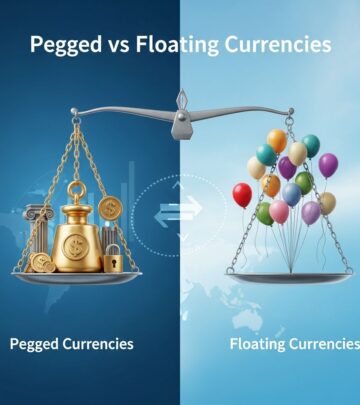
Rather than completely blocking currencies, some governments choose to peg their currency value against another stable currency, typically the US dollar or euro. Currency pegging fixes the exchange rate at a specific level, allowing trading while eliminating natural currency fluctuations. For example, the Swiss franc was pegged to the euro at 1.20 in 2011 to stabilize its value and prevent excessive appreciation.
Pegging provides governments with significant control over currency value while still permitting legitimate international trade. However, pegged currencies can develop artificial valuations that eventually become unsustainable, sometimes leading to speculative attacks or the abandonment of the peg. Currency pegging requires maintaining sufficient foreign exchange reserves to defend the fixed rate against market pressures.
Trading and Accessing Blocked Currencies
Legitimate trading in blocked currencies is extremely difficult or impossible for most market participants. Banks and authorized dealers in most countries cannot legally trade blocked currencies. However, specialized financial institutions and certain authorized channels may facilitate limited access to blocked currencies under strict regulatory oversight and with appropriate licenses.
Some businesses operating internationally can access restricted currencies through government-approved intermediaries or bilateral trade arrangements between countries. These transactions typically occur at government-set rates rather than market rates and involve substantial regulatory compliance requirements. Individual investors should not attempt to trade blocked currencies outside official channels, as doing so violates exchange control regulations and can result in serious legal consequences.
Frequently Asked Questions About Blocked Currencies
What is the legal definition of a blocked currency?
A blocked currency is officially defined as a monetary unit that is not freely convertible to other currencies due to government-imposed exchange controls. The government prohibits or severely restricts conversion and international transfer of the currency.
Which countries currently have blocked currencies?
North Korea, Venezuela, and until recently certain Russian currency controls represent examples of countries with blocked or severely restricted currencies. Each situation reflects different circumstances, from political isolation to economic crisis to international sanctions.
Can tourists use blocked currencies?
Tourists visiting countries with blocked currencies typically cannot freely exchange these currencies outside those countries. Some tourists may exchange limited amounts at official rates before traveling, but converting blocked currency back to foreign currency upon return is generally impossible or highly restricted.
How do blocked currencies affect ordinary citizens?
Citizens in countries with blocked currencies cannot legally hold foreign currency or transfer wealth abroad. They are restricted to domestic currency use and cannot easily access international financial markets or repatriate earnings from international sources. This creates significant financial hardship, particularly for entrepreneurs and professionals with international income sources.
What is the difference between a blocked currency and devaluation?
Currency devaluation is a decrease in a currency’s value relative to other currencies. A blocked currency, conversely, cannot be traded internationally at any rate. While devaluation affects currency value, blocked currencies are removed from international markets entirely.
Can governments unblock currencies?
Yes, governments can remove currency restrictions by eliminating exchange controls and allowing free convertibility. However, this typically occurs only when underlying economic or political conditions improve sufficiently to make restrictions unnecessary. The process requires formal policy changes and often involves phased implementation to avoid economic shock.
How do international sanctions lead to currency blocking?
Sanctions restrict a country’s access to international banking systems and foreign currency reserves. When sanctioned countries cannot easily convert their currency internationally through normal channels, they must implement domestic currency blocking and alternative trading arrangements to maintain economic function.
What happens to currency value when it is blocked?
Blocked currencies typically experience significant depreciation on unofficial black markets, where desperate holders trade them at steep discounts. The official exchange rate may remain artificially high, but the real market value reflects the currency’s non-convertibility and limited utility internationally.
Are there any legitimate ways to invest in countries with blocked currencies?
Investment in countries with blocked currencies is extremely limited. Direct foreign investment typically focuses on acquiring physical assets or long-term ownership stakes rather than liquid investments. Specialized investment funds and country-specific opportunities may provide limited access, but these investments carry substantial political and economic risk.
How do blocked currencies affect global financial markets?
Blocked currencies are excluded from global foreign exchange markets, creating information gaps and pricing inefficiencies. Countries with blocked currencies cannot participate fully in international capital markets, reducing their access to foreign investment and development financing. This isolation can perpetuate economic challenges and limit long-term growth prospects.
Future Outlook for Blocked Currencies
The landscape of blocked and restricted currencies continues evolving based on geopolitical developments and economic conditions. While modern financial systems and digital currencies theoretically reduce the effectiveness of traditional blocking mechanisms, governments retain powerful tools through financial infrastructure control and regulatory enforcement. International cooperation on sanctions and financial restrictions shows how blocked currencies remain relevant policy instruments in contemporary geopolitics.
Understanding blocked currencies remains essential for international business professionals, investors, and policymakers. These restrictions significantly impact trade flows, investment decisions, and broader economic relationships between nations. As global tensions and economic challenges persist, blocked currencies will likely continue playing a role in international financial dynamics, making comprehensive knowledge of their mechanics and implications increasingly valuable.
References
- Restricted and Exotic Currencies — Privalgo. 2025. https://www.privalgo.co.uk/restricted-and-exotic-currencies/
- Blocked Currency Definition — Nasdaq. https://www.nasdaq.com/glossary/b/blocked-currency
Similar Articles








Read full bio of Sneha Tete