Block Cash Advances on Credit Cards
Discover effective strategies to prevent costly credit card cash advances and protect your finances from high fees and interest.

Credit card cash advances provide quick access to funds but often lead to significant financial drawbacks due to immediate interest accrual and hefty fees. While completely disabling this feature isn’t always straightforward, cardholders can take proactive steps to restrict or avoid it entirely.
Understanding Credit Card Cash Advances
A cash advance allows you to borrow against your credit card’s available limit to obtain physical cash or transfer funds, typically through ATMs, bank tellers, or online portals. Unlike regular purchases, these transactions bypass any grace period, meaning interest starts accumulating from the moment the advance is taken. This can quickly escalate costs, making cash advances one of the priciest ways to access money.
Cash advances are limited to a portion of your total credit limit, often around 30% or less, depending on the issuer. For instance, on a $15,000 limit card, you might access up to $4,500. Certain transactions, such as buying money orders, lottery tickets, or cryptocurrency, may also be classified as cash advances, triggering the same penalties.
Hidden Costs of Taking a Cash Advance
The financial burden of cash advances stems from multiple layered charges. Here’s a breakdown:
- Cash Advance Fee: Usually 3% to 5% of the borrowed amount or a flat minimum like $10, whichever is higher. For a $200 advance at 5%, expect a $10 fee upfront.
- Higher APR: Rates often exceed those for purchases, sometimes by several percentage points, with no grace period.
- ATM or Network Fees: Additional charges from out-of-network ATMs, similar to debit card withdrawals.
These costs compound rapidly. A $500 advance at 5% fee ($25) and 25% APR could accrue over $30 in interest within a month if unpaid, far outpacing standard purchase interest. Moreover, advances don’t earn rewards and increase credit utilization, potentially harming your credit score.
| Cost Type | Typical Range | Example on $500 Advance |
|---|---|---|
| Cash Advance Fee | 3-5% or $10 min | $25 |
| ATM Fee | $2-5 | $3 |
| Monthly Interest (25% APR) | ~2% of balance | $10+ |
Ways to Access Cash Advances and Why to Avoid Them
Issuers offer several methods to obtain advances, each with procedural hurdles that can be leveraged to deter usage:
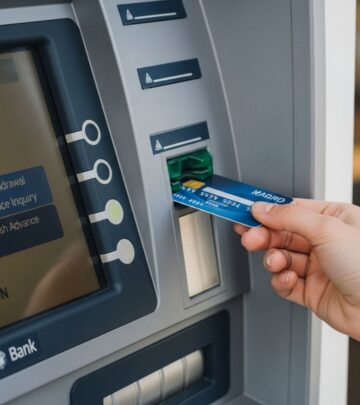
- ATM Withdrawal: Requires a PIN; insert card, select advance option, subject to daily limits.
- Bank Teller: Present card and ID at a branch for over-the-counter cash.
- Online/Mobile Transfer: Move funds from credit card to checking account via app.
- Convenience Checks: Special checks that draw from your credit line like regular payments.
- Phone Request: Some issuers allow transfers to linked accounts.
While convenient in emergencies, these options are best avoided. The immediate interest and fees make them costlier than payday loans in many cases.
Can You Completely Disable Cash Advances?
Most credit card issuers do not offer a simple toggle to permanently disable cash advances, as it’s a standard account feature. However, you can effectively block access through targeted actions:
- Request Limit Reduction: Contact your issuer to lower or set your cash advance limit to $0. This prevents ATM, teller, or transfer advances.
- Opt Out of Convenience Checks: Ask not to receive these checks, or destroy any sent to you.
- Disable PIN: Refuse or revoke the PIN needed for ATM use, rendering that method unusable.
- Account Alerts: Set up notifications for advance transactions to catch and dispute them promptly.
Call the number on your card’s back or use secure messaging in your online account to make these requests. Policies vary by issuer—Chase, Discover, and Capital One allow limit adjustments, but confirm specifics.
Steps to Restrict Cash Advances on Popular Cards
- Review Your Card Agreement: Check terms for cash advance provisions and limits.
- Log Into Online Banking: Navigate to account services; look for limit management tools.
- Call Customer Service: Speak to a representative; reference your desire to minimize high-cost features.
- Monitor Statements: Watch for unexpected advances classified from quasi-cash transactions.
- Follow Up in Writing: Document requests for a paper trail.
Success rates are high, as issuers aim to accommodate responsible usage preferences.
Smarter Alternatives to Credit Card Cash Advances
Instead of tapping your credit card for cash, consider these lower-cost options:
- Personal Loan: Fixed rates from banks or credit unions, often under 10% APR for good credit.
- 0% APR Balance Transfer Cards: Move debt to promotional low-interest cards.
- Emergency Savings: Build a fund covering 3-6 months of expenses.
- Peer-to-Peer Lending: Platforms like LendingClub offer competitive rates.
- Sell Assets: Liquidate non-essentials via apps or local markets.
These alternatives preserve credit health and avoid punitive fees.
Impact on Credit Score and Long-Term Finances
Cash advances inflate utilization ratios, a key credit scoring factor (30% of FICO score). High balances signal risk to lenders. Repeated use can lead to debt spirals, with average household credit card debt exceeding $6,000 annually. Prioritizing restrictions fosters better habits and scores.
Frequently Asked Questions
Is there a grace period for cash advance interest?
No, interest accrues immediately, unlike purchases.
What transactions count as cash advances?
Include money orders, casino chips, wire transfers, and crypto buys.
Can I get a cash advance without a PIN?
Yes, via teller, checks, or online, but PIN blocks ATM access.
How do I check my cash advance limit?
Review statements or contact your issuer.
Do cash advances build credit?
They can if paid on time, but high utilization hurts more.
Pro Tips for Financial Protection
- Pay down balances aggressively to free limits.
- Use debit cards for cash needs to avoid interest.
- Compare issuer policies before applying for new cards.
- Track spending with budgeting apps.
By proactively managing cash advance access, you safeguard against impulsive, expensive borrowing. Regular reviews ensure your credit tools align with financial goals.
References
- Credit Card Cash Advance: What It Is & How It Works — Chase. 2023. https://www.chase.com/personal/credit-cards/education/basics/how-do-credit-card-cash-advances-work
- What Is a Cash Advance on a Credit Card? — Discover. 2023. https://www.discover.com/credit-cards/card-smarts/cash-advance-on-credit-card/
- What Is a Cash Advance on a Credit Card? — Capital One. 2023. https://www.capitalone.com/learn-grow/money-management/cash-advance/
- What Is a Cash Advance and How Does It Work? — Experian. 2023. https://www.experian.com/blogs/ask-experian/what-is-a-cash-advance/
- What Is a Cash Advance on a Credit Card? — PNC Bank. 2023. https://www.pnc.com/insights/personal-finance/spend/what-is-a-cash-advance-on-a-credit-card.html
Similar Articles








Read full bio of medha deb