Black Tuesday: The Stock Market Crash of 1929
Understanding Black Tuesday: The historic 1929 stock market crash that triggered the Great Depression.

Black Tuesday: Understanding the 1929 Stock Market Crash
Black Tuesday refers to October 29, 1929, the day the stock market experienced one of the most catastrophic crashes in financial history. On this single day, investors traded approximately 16 million shares on the New York Stock Exchange, wiping out nearly $14 billion in stock value. This devastating market collapse marked the beginning of the Great Depression, one of the worst economic periods in American history. The crash fundamentally changed how markets operate and led to significant regulatory reforms in the financial industry.
What Is Black Tuesday?
Black Tuesday represents the climax of a multi-day stock market collapse that began in late October 1929. The term specifically refers to October 29, 1929, when panic selling reached its peak on Wall Street. On this infamous day, the Dow Jones Industrial Average lost approximately 12 percent of its value, closing at 198 after dropping 183 points in less than two months. The scale of trading activity was unprecedented—the volume of shares traded on October 29 reached 16,410,030, more than double the previous record set just months earlier. This extraordinary volume overwhelmed the stock exchange’s infrastructure, with ticker machines unable to keep pace with the rapid flow of orders.
Historical Context and Events Leading to the Crash
The stock market crash of 1929 did not occur in isolation. Several events and conditions preceded Black Tuesday, setting the stage for the catastrophic market collapse.
The Boom of the 1920s
Throughout the 1920s, the American stock market experienced unprecedented growth. Investor confidence soared as industrial production increased and new technologies emerged. This period, often called the Roaring Twenties, encouraged widespread speculation in the stock market. Many ordinary Americans participated in the market for the first time, often with little understanding of investment fundamentals or market risks.
Warning Signs in September and October
By September 1929, more experienced investors recognized that stock prices could not continue rising indefinitely. Share prices began to stall and then decline, prompting early sell-offs. The Dow Jones 30 Industrial Stocks had peaked at 381 on September 3, 1929. By October 28, 1929, just before Black Tuesday, the index had plummeted to 299 when the exchange opened. This represented a 40 percent decline in fewer than eight weeks.
Black Thursday: October 24, 1929
Before Black Tuesday came Black Thursday, October 24, 1929, the first day of genuine panic in the market. On this day, a record 12.9 million shares were traded as investors attempted to salvage their investments. However, major banks and investment companies intervened by purchasing large blocks of stock to stem the panic. Their efforts proved temporarily successful, with the Dow closing down only six points for the day. This intervention strategy had worked during the Panic of 1907, giving investors false hope that the crisis could be contained.
Black Monday: October 28, 1929
The market’s brief respite proved short-lived. On October 28, 1929, dubbed Black Monday, panic selling resumed with renewed intensity. Investors facing margin calls rushed to exit their positions. The Dow experienced a record loss of 38.33 points, or 12.82 percent, for the day. This sharp decline demonstrated that the bankers’ intervention had only temporarily halted the broader market collapse.
The Events of Black Tuesday
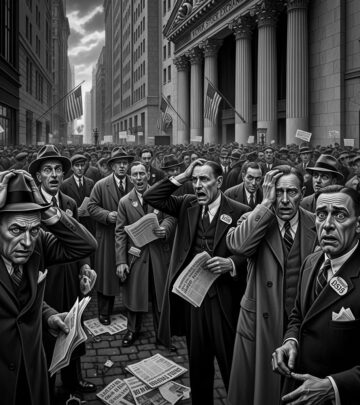
October 29, 1929, was the culmination of the market’s precipitous decline. Early in the morning, anxious investors jammed into brokerages and stock exchanges across the country. Orders poured in constantly over telephone lines and telegraph wires as investors desperately attempted to sell their holdings.
Record Trading Volume
The volume of trading on Black Tuesday was staggering. More than 16 million shares changed hands in a single day, with some stocks having no buyers at any price regardless of how low the asking price fell. This extraordinary activity overwhelmed the stock exchange’s capacity. The ticker machines that recorded transactions could not keep pace with the volume, leaving traders uncertain about actual prices and contributing to further panic.
Market Movements and Losses
On Black Tuesday, the Dow Jones Industrial Average declined an additional 30.57 points, or 11.73 percent. Combined with the previous day’s losses, the index fell 68.90 points, or 23.05 percent, in just two trading sessions. The accumulated decline over the crash period was devastating—from the September high of 381, the Dow had fallen to 230 by the end of Black Tuesday, representing a 40 percent loss in fewer than two months.
Regional Impact: The Seattle Stock Exchange
The chaos of Black Tuesday extended beyond New York’s Wall Street. In Seattle, stock clearing houses and brokerages were packed with anxious stockholders throughout the day. Trading at the Seattle Stock Exchange and Seattle Curb Exchange reflected the national panic, with significant price declines in local stocks. United National Corporation suffered the largest one-day drop in Seattle Stock Exchange history, falling from 45 5/8 to 36, a 9-point decline. Marine Bancorporation, traded by 7,000 stockholders, dropped 15 percent from 32 to 27 per share. At the Seattle Curb Exchange, mining stocks collapsed, with Fulton Petroleum plummeting from a high of 15.30 to a range of 5 to 8.
Who Lost the Most During Black Tuesday?
While the stock market crash affected many investors, certain groups suffered disproportionately significant losses.
Margin Investors
The biggest losers were stock market speculators who had purchased stock on margin. Margin buying allowed investors to purchase stock by paying only a small percentage of the stock’s value, with brokers providing the remainder as a loan. Investors only had to pay the balance when they sold the stock. This arrangement created enormous potential profits if stock prices rose—a small percentage gain could translate into substantial returns on the investor’s actual cash investment.
However, margin buying also created catastrophic losses if prices fell. If a stock declined by more than the percentage the investor had initially paid, the investor faced a margin call and had to cover the difference or lose both the stock and their down payment. When prices plummeted on Black Tuesday, many margin investors found their entire investments wiped out simultaneously. The sudden liquidation of margin positions accelerated the market’s decline and contributed to the panic.
Individual Investors
Ordinary Americans who had been encouraged to participate in the stock market during the 1920s boom lost substantial sums. Many investors, lacking experience or understanding of market dynamics, had invested their life savings. These losses had profound psychological and economic consequences, contributing to the loss of consumer confidence that deepened the subsequent Great Depression.
The Aftermath and Continuation of the Decline
The collapse did not end on Black Tuesday. The free fall in stock prices continued for the next two weeks. On November 13, 1929, the Dow Jones 30 Industrials closed at 198.69, nearly 50 percent of its September peak value. The market continued declining for the next 30 months until reaching its nadir in mid-1932, when the Dow closed at 41.22, representing an 89 percent decline from its peak. The stock market did not recover to its pre-crash levels until November 1954, more than 25 years later.
Economic and Social Consequences
Beyond the immediate financial losses, the stock market crash triggered the Great Depression. Consumer confidence evaporated, spending declined, businesses failed, unemployment skyrocketed, and agricultural prices collapsed. The crash exposed fundamental weaknesses in the American economy and financial system, leading to bank failures, business bankruptcies, and widespread poverty.
Market Infrastructure Failures
The trading volume on Black Tuesday exposed critical deficiencies in market infrastructure. Ticker machines could not process transactions quickly enough, leaving investors and brokers with outdated price information. This technology gap contributed to panic and mispricing of securities. These infrastructure failures highlighted the need for better technology and regulatory oversight in financial markets.
Regulatory Changes and Market Reforms
The crash of 1929 prompted sweeping reforms in financial regulation. Congress passed the Securities Act of 1933 and the Securities Exchange Act of 1934, which established the Securities and Exchange Commission (SEC) to oversee financial markets. These regulations implemented requirements for disclosure, prohibited certain manipulative practices, and established margin requirements to reduce excessive speculation. The Federal Reserve also gained tools to manage monetary policy more effectively during financial crises.
Lessons and Historical Significance
Black Tuesday remains a pivotal moment in financial history, offering important lessons for modern investors and policymakers. The crash demonstrated the dangers of excessive speculation, inadequate regulation, and leverage in financial markets. It highlighted how quickly investor confidence can evaporate and how panic can cause markets to disconnect from underlying economic values. The event also showed the interconnectedness of financial markets and the potential for crises in one market to spread throughout the broader economy.
Frequently Asked Questions
Q: Why is October 29, 1929, called Black Tuesday?
A: October 29, 1929, is called Black Tuesday because it was the day the stock market experienced its worst crash in history up to that time. The term “Black” refers to the calamitous nature of the event, while “Tuesday” simply denotes the day of the week. This naming convention had been used for previous market crises, such as Black Thursday on October 24.
Q: How much money was lost on Black Tuesday?
A: Approximately $14 billion in stock value was lost on Black Tuesday alone. When combined with losses from the preceding days of the crash, the total value destroyed exceeded $30 billion, an enormous sum for 1929. This represented the wealth of millions of investors and had catastrophic economic consequences.
Q: Did anything stop the market decline on Black Tuesday?
A: No significant intervention occurred on Black Tuesday itself. The bankers’ buying strategy that had worked on Black Thursday proved ineffective when the panic resumed. The market’s decline continued unabated throughout the day, with selling pressure overwhelming any potential intervention efforts.
Q: How did Black Tuesday contribute to the Great Depression?
A: Black Tuesday destroyed wealth and shattered investor confidence, leading consumers and businesses to cut spending and investment. Bank failures cascaded as depositors rushed to withdraw funds. Unemployment rose sharply, agricultural prices collapsed, and the economy spiraled into the Great Depression, which lasted throughout the 1930s.
Q: Could Black Tuesday happen again today?
A: While modern markets have circuit breakers and regulations designed to prevent extreme one-day losses, significant crashes remain possible. However, the regulatory frameworks established after 1929, including SEC oversight and margin requirements, make a repeat of the exact conditions unlikely. Modern technology also allows for faster information dissemination and more efficient market operations.
References
- Stock Market Crash of 1929 — Federal Reserve History, Federal Reserve System. 2013. https://www.federalreservehistory.org/essays/stock-market-crash-of-1929
- Stock market crash of 1929 — Britannica Encyclopedia. 2024. https://www.britannica.com/event/stock-market-crash-of-1929
- Wall Street crash of 1929 — U.S. History Encyclopedia. 2024. https://en.wikipedia.org/wiki/Wall_Street_crash_of_1929
- Stock market crash, called Black Tuesday, hits on October 29, 1929 — HistoryLink.org, University of Washington. 2000. https://www.historylink.org/File/1430
- The New York Stock Market Crash of 1929 Preludes the Great Depression — Goldman Sachs Historical Moments. 2024. https://www.goldmansachs.com/our-firm/history/moments/1929-financial-crash
Similar Articles








Read full bio of Sneha Tete