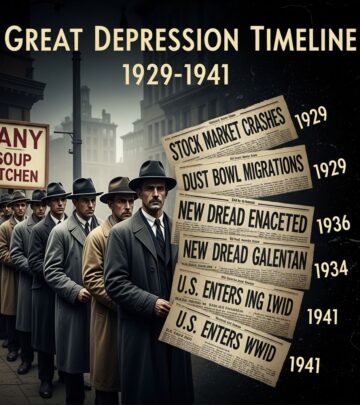
Black Tuesday: Definition, Causes & Great Depression
Understanding Black Tuesday: The stock market crash that triggered the Great Depression.
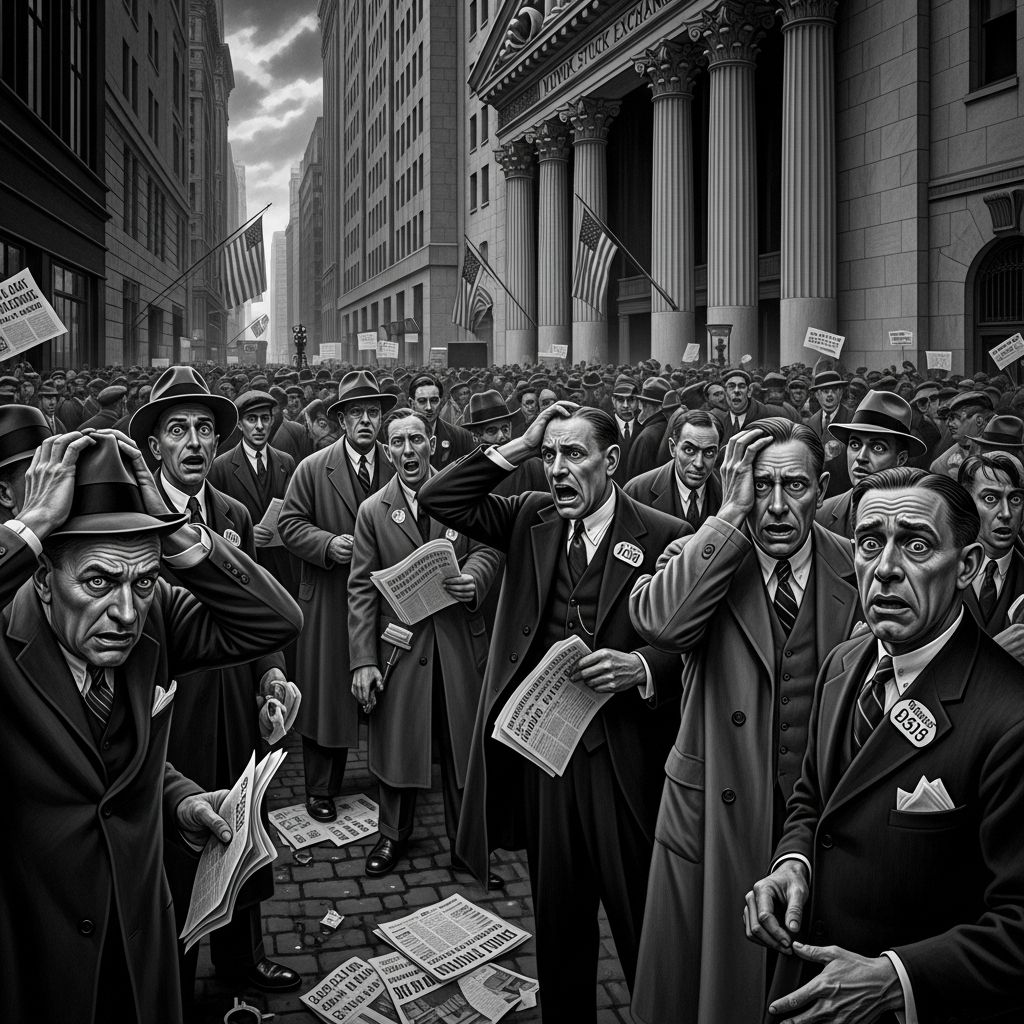
Black Tuesday: Definition, Cause, and Kickoff to the Depression
The term “Black Tuesday” refers to one of the most significant financial catastrophes in American history, occurring on October 29, 1929, when the stock market experienced a devastating collapse. This pivotal moment marked the beginning of the Great Depression, an economic downturn that would grip the nation for over a decade and reshape the financial landscape forever. On this fateful day, more than 16 million shares were traded on the New York Stock Exchange, representing an unprecedented volume of panic selling that wiped out billions in wealth and left thousands of investors financially ruined.
What Is Black Tuesday?
Black Tuesday represents the climactic day of the 1929 stock market crash, a period of financial turmoil that unfolded over several critical trading days in late October. The name “Black Tuesday” distinguishes this particular day from “Black Thursday” (October 24) and “Black Monday” (October 28), each representing successive waves of market collapse. The Dow Jones Industrial Average lost approximately 12 percent on Black Tuesday alone, following a 12.8 percent decline on the previous day.
The scale of this crash was extraordinary. The total stock value lost on Black Tuesday reached approximately $14 billion—an enormous sum for the era, equivalent to roughly $200 billion in today’s currency. This represented not merely a market correction or temporary downturn, but a complete breakdown of investor confidence and the systematic destruction of wealth on an almost incomprehensible scale. Many stocks fell to prices where no buyers existed at any price, creating a situation of absolute panic and desperation among investors seeking to exit their positions.
The Broader Crash: Black Thursday Through Black Tuesday
Black Tuesday cannot be understood in isolation; it was the culmination of a four-day financial catastrophe that began on Black Thursday, October 24, 1929. Understanding this broader context illuminates how rapidly confidence evaporated and how the crisis intensified day after day.
Black Thursday: October 24, 1929
The panic began in earnest on Black Thursday when nearly 12.9 million shares changed hands—a record number at the time that overwhelmed the ticker tape system. On this day, the Dow Jones Industrial Average lost 11 percent of its value at the opening bell, and in the first three minutes alone, nearly three million shares worth $2 million changed hands. The infrastructure of the market could not keep pace with this volume; ticker tape machines fell hours behind, leaving investors without real-time information about stock prices. This information gap created a dangerous feedback loop where investors made decisions based on stale data, intensifying panic.
Major banks and investment firms, drawing lessons from the Panic of 1907, attempted to stabilize the market by purchasing blue-chip stocks at prices above market value. Richard Whitney, representing J.P. Morgan, placed bids to purchase 25,000 shares of U.S. Steel at $205 per share—well above current market rates—to signal confidence and halt the decline. These initial efforts succeeded temporarily, with the Dow closing down only 2.09 percent for the day, providing false hope that the crisis could be contained.
Black Monday: October 28, 1929
Over the weekend separating Black Thursday from Black Monday, investor confidence continued to erode. Many shareholders resolved to sell their holdings when markets reopened, fearing further deterioration. When trading resumed on October 28, the market declined 12.8 percent, representing a catastrophic one-day loss that dwarfed Black Thursday’s panic. The Dow lost 38.33 points—a record loss that demonstrated the earlier banking intervention had merely postponed rather than prevented the crisis.
Black Tuesday: October 29, 1929
Black Tuesday represented the absolute nadir of the crash. Over 16 million shares traded on the New York Stock Exchange in a single day—a volume so massive that it surpassed all previous records and would not be exceeded until 1968. The Dow Jones Industrial Average plummeted an additional 11.73 percent, losing 30.57 points and closing at 198. Across the two worst days (October 28-29), the Dow dropped 68.90 points, representing a devastating 23.05 percent decline in just 48 hours.
The panic selling on Black Tuesday reached such intensity that certain stocks had no buyers at any price. Brokerage houses were overwhelmed with sell orders, and the psychological panic was almost palpable. The ticker tape machines, still unable to keep pace, created an information vacuum that terrified investors further. The loss of $14 billion in stock value on this single day represented more wealth destruction than most Americans could comprehend.
Root Causes of the Crash
The 1929 crash did not occur spontaneously; rather, it resulted from a convergence of structural, economic, and psychological factors that had been building throughout the 1920s.
Speculation and Margin Buying
Throughout the 1920s, a speculative mania gripped the American investing public. Investors purchased stocks based on the assumption that prices would perpetually rise, with many engaging in margin buying—purchasing stocks with borrowed money without having sufficient capital to back these purchases. This practice amplified gains during the bull market but created catastrophic losses when prices reversed. Brokers extended credit freely, and many investors bought stocks on 10 percent margin, meaning a 10 percent decline in stock value would wipe out their entire investment.
Lack of Regulation and Oversight
The regulatory environment of the 1920s was remarkably permissive by modern standards. The Securities and Exchange Commission did not yet exist; stock markets operated with minimal federal oversight and limited disclosure requirements. There were no circuit breakers to halt trading during panic scenarios, no uptick rules to prevent runaway selling, and no insurance on deposit accounts. This laissez-faire environment encouraged reckless speculation and leverage.
Economic Slowdown and Declining Fundamentals
By September 1929, more experienced investors recognized that stock prices had become disconnected from underlying economic realities. Economic growth had slowed, and corporate earnings could not justify the stratospheric valuations that stocks commanded. More sophisticated investors began liquidating holdings, a process that encouraged others to follow suit. The selling, once initiated by informed investors, created a cascade effect as less sophisticated participants followed suit.
International Economic Events
The London Stock Exchange crash preceded Black Tuesday, and the arrest of British financier Clarence Hatry on fraud allegations in September 1929 damaged investor sentiment on both sides of the Atlantic. These international events, combined with concerns about trade policy and tariffs, created an environment of uncertainty that made nervous investors even more eager to exit the market.
Rising Interest Rates and Monetary Policy
The Federal Reserve had tightened monetary policy in an effort to cool speculation, raising the discount rate and reducing the money supply. Additionally, news about public utility regulation and rising interest rates in the United States and abroad created anxiety among investors, triggering the initial selling pressure that would crescendo into panic.
The Immediate Aftermath and Market Recovery Attempts
Contrary to popular belief, the market did not experience a one-way decline after Black Tuesday. Beginning November 14, 1929, the market embarked on a recovery that lasted several months, with the Dow gaining 18.59 points on the first day and continuing upward momentum. This recovery created a secondary peak (bear market rally) of 294.07 on April 17, 1930, giving some investors hope that the crisis had passed.
Unfortunately, this recovery proved illusory. Starting in April 1930, the market embarked on a much longer, steady decline that would continue for over two years. The Dow descended inexorably from April 1930 until July 8, 1932, when it closed at 41.22—its lowest level of the entire twentieth century. This represented an 89.2 percent loss from peak to trough in less than three years, and investors would not recover their losses until November 1954—a full 25 years later.
The Transition to Great Depression
While the stock market crash itself was completed by early November 1929, it served as the catalyst for a much broader economic catastrophe. By mid-November, the Dow had lost almost 50 percent of its value from the peak. The stock market crash triggered a chain of catastrophic macroeconomic events that included mass bankruptcies, soaring unemployment, dramatic declines in production, severe monetary contraction, and the failure of thousands of banks.
The Great Depression that followed was not merely a financial crisis but a systemic economic collapse affecting every sector of the economy and every level of society. Agricultural prices collapsed, construction halted, manufacturing output plummeted, and unemployment reached 25 percent by 1933. The crisis would grip the American economy throughout the 1930s and eventually spread globally, affecting economies worldwide and contributing to geopolitical instability that would eventually culminate in World War II.
Market Conditions and Panic Dynamics
The market conditions during the crash reveal the mechanics of panic selling in an age before modern safeguards.
Ticker Tape Technology Overwhelmed
The ticker tape machines that reported stock prices to brokerage offices nationwide became so overwhelmed with volume that they fell hours behind real-time trading. This technological bottleneck meant investors often made decisions based on prices that were several hours old, creating a dangerous disconnect between actual market conditions and investor perception. When margin calls were issued, investors often could not determine what prices were actually being achieved, creating confusion and amplifying panic.
Cascading Margin Calls
As prices fell, brokers issued margin calls to investors who had borrowed money to purchase stocks. These forced liquidations occurred in cascade fashion—as one investor’s holdings were sold to meet margin requirements, prices fell further, triggering margin calls for other investors, creating a vicious cycle of forced selling.
Psychological Panic and Herd Behavior
The psychological dimension of the crash cannot be overstated. When investors realized prices could not continue rising indefinitely, and when they witnessed the collapse beginning, fear overwhelmed rational calculation. The frenzied selling that characterized Black Tuesday was driven by panic psychology—the desperate desire to exit positions before prices fell further and before brokers issued margin calls.
Frequently Asked Questions About Black Tuesday
Q: Why is October 29, 1929, specifically called “Black Tuesday”?
A: October 29 fell on a Tuesday in 1929, and the term “Black” was applied to this and other crash days to denote calamity and disaster. The market also experienced Black Thursday (October 24) and Black Monday (October 28), but Black Tuesday represents the worst single day of the crash.
Q: How much wealth was lost on Black Tuesday?
A: Approximately $14 billion in stock value was lost on October 29, 1929. In today’s currency, this would represent roughly $200 billion—an astronomical sum that devastated millions of investors.
Q: Could the crash have been prevented?
A: While the crash’s severity might have been moderated with better regulation, circuit breakers, or different Federal Reserve policies, some market correction was virtually inevitable given the speculative excess and margin buying that characterized the 1920s.
Q: How long did it take for the stock market to recover?
A: The Dow Jones Industrial Average did not return to its pre-crash peak until November 1954—a full 25 years later. This represents one of the longest bear markets in history.
Q: Did Black Tuesday directly cause the Great Depression?
A: The stock market crash served as a catalyst and accelerant for the Great Depression, but underlying economic weaknesses, monetary contraction, and policy errors also contributed significantly to the depression’s onset and severity.
Q: What reforms were implemented after Black Tuesday?
A: The Securities and Exchange Commission was established in 1934, the Securities Act of 1933 imposed disclosure requirements, margin requirements were increased, and circuit breakers were eventually implemented to halt trading during extreme volatility.
Historical Significance and Lessons
Black Tuesday represents a watershed moment in American financial history and continues to serve as a cautionary tale nearly a century later. The crash demonstrated the dangers of unregulated speculation, inadequate disclosure, excessive leverage, and the vulnerability of financial systems to panic dynamics. It illustrated how technological limitations (ticker tape machines) can amplify crises, and how psychological factors can overwhelm rational decision-making in financial markets.
The reforms implemented in the 1930s—the Securities and Exchange Commission, margin requirements, and disclosure rules—were designed to prevent similar disasters. Yet subsequent market crashes and crises suggest that the fundamental dynamics of speculative excess and panic remain ever-present risks in financial markets. Black Tuesday thus stands as both a historical event and a timeless reminder of the consequences of financial excess and the importance of prudent regulation and risk management.
References
- Wall Street Crash of 1929 — Wikipedia. https://en.wikipedia.org/wiki/Wall_Street_crash_of_1929
- Stock Market Crash of 1929 — Federal Reserve History. https://www.federalreservehistory.org/essays/stock-market-crash-of-1929
- Black Tuesday – 1929 Stock Market Crash — Corporate Finance Institute. https://corporatefinanceinstitute.com/resources/equities/black-tuesday-crash/
- Stock Market Crash of October 1929 — Social Welfare History Project, Virginia Commonwealth University. https://socialwelfare.library.vcu.edu/eras/great-depression/beginning-of-great-depression-stock-market-crash-of-october-1929/
- Stock Market Crash of 1929 — EBSO Research Starters. https://www.ebsco.com/research-starters/history/stock-market-crash-1929
- Stock Market Crash of 1929: Summary, Causes, & Facts — Britannica. https://www.britannica.com/event/stock-market-crash-of-1929
- The New York Stock Market Crash of 1929 Preludes the Great Depression — Goldman Sachs. https://www.goldmansachs.com/our-firm/history/moments/1929-financial-crash
Similar Articles








Read full bio of medha deb