Black Monday: Stock Market Crashes in 1929, 1987, and Beyond
Understanding historic market crashes: 1929, 1987, and their lasting financial impact.

Understanding Black Monday: A History of Stock Market Crashes
Black Monday refers to devastating stock market crashes that have occurred throughout financial history, with the most notable events taking place on October 28, 1929, and October 19, 1987. These dates represent some of the most catastrophic days in market history, fundamentally changing how investors, regulators, and financial institutions approach market stability and risk management. Understanding these crashes requires examining their causes, the immediate market reactions, and the long-term consequences that shaped modern finance.
Black Monday 1929: The Start of the Great Depression
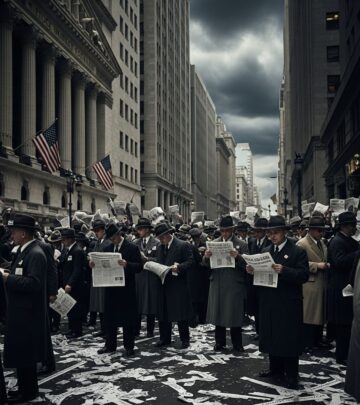
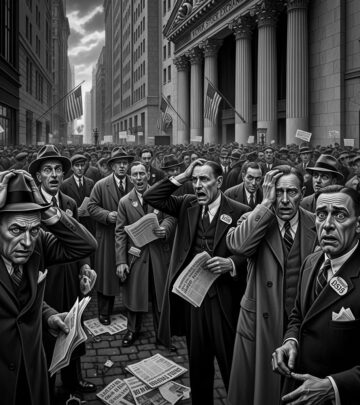
The original Black Monday occurred on October 28, 1929, marking the beginning of one of the most severe economic crises in history. On this fateful day, the Dow Jones Industrial Average declined nearly 13 percent, establishing a pattern of market turmoil that would continue for years. The following day, Black Tuesday, October 29, 1929, saw the market drop an additional nearly 12 percent, compounding investor losses and creating widespread panic throughout the financial system.
The Severity of the 1929 Crash
The impact of the 1929 crash extended far beyond those two days. By mid-November of that year, the Dow had lost almost half of its entire value, devastating millions of investors and destroying trillions in wealth. The market continued its downward spiral through the following years, with the slide persisting through the summer of 1932, when the Dow closed at 41.22, representing its lowest value of the twentieth century—a staggering 89 percent below its peak. This prolonged decline transformed a market crash into the Great Depression, one of the most significant economic disasters in world history.
The Long Road to Recovery
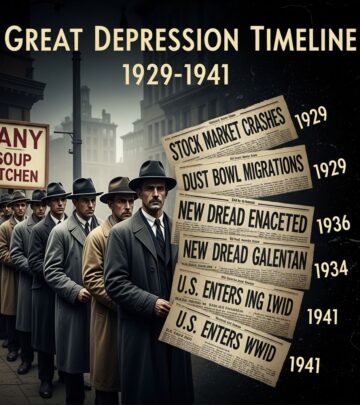
The recovery from the 1929 crash proved remarkably slow. The Dow Jones Industrial Average did not return to its pre-crash heights until November 1954, meaning investors had to wait more than twenty-five years to break even on their investments. This extended recovery period underscored the severity of the 1929 crash and its role in triggering the Great Depression, which lasted throughout the 1930s and into the early 1940s.
Black Monday 1987: The Modern Market Crash
Nearly six decades later, the stock market experienced another catastrophic collapse on October 19, 1987, in what became known as Black Monday of the modern era. On this single day, the Dow Jones Industrial Average fell 508.32 points, representing a decline of 22.61 percent—a record that remains the largest one-day percentage drop in Dow Jones history. This collapse ended a bull market that had lasted since August 1982 and demonstrated how dramatically market dynamics had changed with the advent of computerized trading.
Global Scope of the 1987 Crash
Unlike the 1929 crash, which was primarily a U.S. phenomenon, the 1987 Black Monday crash was truly global in nature. A record volume of 604.33 million shares traded hands on October 19, 1987—three times the daily average. The New York Stock Exchange lost more than US$500 billion in market capitalization, its largest loss since the beginning of World War I in 1914. Beyond the United States, international markets experienced similar devastation. Between October 19 and 23, the Financial Times 100 Index in London was down 25 percent, and in Tokyo, the Nikkei Dow Jones average dropped 13.2 percent. Both the Chicago Board Options Exchange and the Chicago Mercantile Exchange were forced to suspend trading due to the overwhelming volume of sell orders.
Worldwide Losses and Interconnected Markets
The 1987 Black Monday crash resulted in worldwide losses estimated at US$1.71 trillion, starkly illustrating how interconnected and interdependent global financial markets had become. The severity of the crash sparked fears of extended economic instability or a reprise of the Great Depression. However, unlike 1929, modern circuit breakers and market safeguards helped prevent an economic downturn comparable to the 1930s crisis. The impact extended to markets across Asia, Europe, Australia, Mexico, Singapore, and Hong Kong, all experiencing significant crashes in their stock markets.
Comparing the Two Black Monday Events
| Aspect | Black Monday 1929 | Black Monday 1987 |
|---|---|---|
| Date | October 28-29, 1929 | October 19, 1987 |
| DJIA Decline (Single Day) | Nearly 13% (October 28) | 22.61% (508 points) |
| Two-Day Decline | Nearly 25% | Over 12% from peak |
| Scope | Primarily U.S.-focused | Global financial crisis |
| Market Value Lost | Roughly 50% by November | US$1.71 trillion worldwide |
| Recovery Timeline | 25+ years (until 1954) | Recovered by 1989 |
| Ensuing Crisis | Great Depression (1930s) | No major economic depression |
The comparison between these two events reveals how market dynamics, regulatory frameworks, and global interconnectedness have evolved. While the 1929 crash was sharper in percentage terms for a single day, the 1987 crash affected a larger portion of the world’s wealth and demonstrated the dangers of computerized trading systems.
Causes of the 1987 Black Monday Crash
Warning Signs Before the Crash
Several warning signs preceded the catastrophic October 19, 1987 collapse. On October 14, the Dow experienced a major decline of nearly 4 percent. It dropped another 2.5 percent the following day, and on October 16, the Friday before Black Monday, London stock markets saw a devastating 5 percent loss. These declines occurred amid broader economic concerns, including growing trade deficits and international monetary policy tensions.
Computerized Trading and Portfolio Insurance
One of the most significant factors contributing to the 1987 crash was the rise of computerized trading programs and automated portfolio insurance strategies. By 1987, investors had begun using computerized trading programs designed to send sell or buy orders whenever stock prices behaved in certain ways. New automated portfolio insurance tools used software to automatically sell stocks whenever they dropped below a certain price, creating a cascade of selling pressure that overwhelmed the market. When stock prices began to slip on October 19, 1987, these computer-driven portfolio insurance programs triggered massive sell orders in stock index futures. This flood of selling spread rapidly into the broader market, with billions of dollars worth of futures and stocks sold within minutes, overwhelming buyers and sending prices into freefall.
Market Panic and Trading System Breakdown
Significant selling created steep price declines throughout the day on Black Monday, particularly during the last 90 minutes of trading. Deluged with sell orders, many stocks on the NYSE faced trading halts and delays. Of the 2,257 NYSE-listed stocks, there were 195 trading delays and halts that day. Total trading volume was so large that the computer and communications systems were overwhelmed, leaving orders unfilled for an hour or more. Large funds transfers were delayed and the Fedwire and NYSE SuperDot systems shut down for extended periods, further compounding traders’ confusion and accelerating the panic selling.
Market Movements During Black Monday 1987
The DJIA fell from 2,246.74 at the open to 1,738.74 at the close, representing the 508-point decline. The S&P 500 Index suffered a similar decline of 20.4 percent. Following the initial crash, stocks continued to fall at a less precipitous rate, reaching a trough in mid-November at 36 percent below its pre-crash peak. However, unlike the aftermath of 1929, stocks began to recover relatively quickly. Stocks did not begin to recover until 1989, but within just a couple of years after 1987, the Dow had fully recovered and reached record-breaking highs.
Why Black Monday Matters Today
Regulatory Changes and Circuit Breakers
The 1987 Black Monday crash led to significant regulatory changes aimed at preventing similar catastrophic crashes in the future. Modern exchanges implemented circuit breakers—automatic trading halts that activate when markets decline by a certain percentage. These safeguards have proven effective in limiting panic selling and preventing free-fall market conditions similar to those experienced in 1987.
Lessons for Modern Investors
Black Monday events serve as important reminders about market volatility and the importance of diversification, risk management, and long-term investment perspectives. The contrast between the 1929 and 1987 crashes also demonstrates how regulatory frameworks and technology, when properly implemented, can help mitigate financial crises. Modern investors benefit from understanding these historical events and the mechanisms put in place to prevent their recurrence.
Frequently Asked Questions
Q: What is Black Monday?
A: Black Monday refers to devastating single-day stock market crashes, most notably October 28, 1929, and October 19, 1987. These dates saw unprecedented percentage declines in major stock indices and triggered widespread financial consequences.
Q: Why is it called Black Monday if the 1929 crash occurred on a Tuesday?
A: The October 28, 1929 collapse is technically called Black Monday, though the following day, October 29, was even worse and became known as Black Tuesday. The 1987 event was called Black Monday because it occurred on a Monday and evoked memories of the 1929 crash.
Q: How did the 1987 crash compare to the 1929 crash?
A: The 1987 crash saw a larger single-day percentage decline (22.61% versus 13%), affected global markets rather than just the U.S., and resulted in faster recovery due to modern regulatory safeguards. However, the 1929 crash had more severe long-term consequences, leading to the Great Depression.
Q: Could Black Monday happen again?
A: While modern circuit breakers and regulatory frameworks help prevent catastrophic market collapses, significant market corrections can still occur. However, the safeguards implemented after 1987 make extreme single-day declines less likely and provide mechanisms to prevent panic-driven free falls.
Q: What role did computerized trading play in the 1987 crash?
A: Automated portfolio insurance programs and computerized trading systems created a cascade of selling when prices dropped, overwhelming human traders and amplifying market declines. These technologies were not designed to handle such extreme market conditions.
Q: How long did it take markets to recover from Black Monday 1987?
A: The Dow Jones fully recovered from the 1987 crash and reached record-breaking highs within a couple of years, by 1989. This was significantly faster than the 25+ year recovery period following the 1929 crash.
References
- Stock Market Crash of 1929 — Federal Reserve History. https://www.federalreservehistory.org/essays/stock-market-crash-of-1929
- Global Financial Markets Crash on Black Monday — Goldman Sachs. https://www.goldmansachs.com/our-firm/history/moments/1987-black-monday
- Black Monday (1987) — Federal Reserve History. https://www.federalreservehistory.org/essays/stock-market-crash-of-1987
- Black Monday: The 1987 Stock Market Crash Explained — The Bubble Bubble. https://www.thebubblebubble.com/1987-crash/
- This Day in Business History: The Black Monday Stock Market Crash — Emory University Business School. https://scholarblogs.emory.edu/gbsl/tdibh-black-monday/
- Black Monday Market Crash — Corporate Finance Institute. https://corporatefinanceinstitute.com/resources/equities/black-monday/
Similar Articles








Read full bio of Sneha Tete