Biweekly Savings Challenge: 5 Simple Plans To Grow Savings
Unlock financial freedom with proven biweekly savings strategies that turn small deposits into substantial wealth over time.
Biweekly savings challenges offer a structured path to financial growth by aligning deposits with common pay cycles. These plans encourage consistent contributions every two weeks, helping individuals accumulate significant sums over a year without overwhelming their budgets.
Why Adopt a Biweekly Savings Approach?
Most Americans receive paychecks every two weeks, making this rhythm ideal for saving. By dedicating a portion of each payday to savings, you leverage natural cash flow patterns to build wealth gradually. This method outperforms sporadic saving by fostering discipline and compounding interest over 26 periods annually.
Key advantages include psychological momentum from visible progress and automation potential, reducing reliance on willpower. Financial experts note that such challenges can yield $1,000 to $2,000 yearly, depending on starting amounts, providing a buffer for emergencies or goals like vacations.
Core Principles of Biweekly Saving
Success hinges on three pillars: realistic goal-setting, tracking mechanisms, and adaptability. Begin by assessing your income minus essentials to determine feasible deposits. Use digital tools or apps for reminders and automation to ensure transfers occur seamlessly post-payday.
- Goal Alignment: Target specific needs like debt reduction or home down payments.
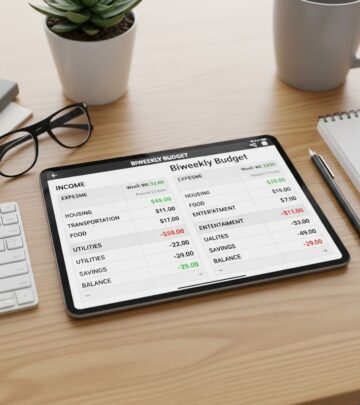
- Progress Monitoring: Log deposits in spreadsheets or apps to celebrate milestones.
- Flexibility: Adjust amounts if income varies, prioritizing consistency over perfection.
Progressive Deposit Challenge
This popular variant starts with modest sums and ramps up every period, easing entry while maximizing end totals. Ideal for building habits as contributions grow with comfort levels.
Structure your plan: Initiate with $5, then $10, increasing by $5 biweekly. By period 26, deposits reach $130, totaling approximately $1,755. Customize by scaling increments to $10 for aggressive savers, potentially exceeding $3,000 yearly.
| Period | Deposit Amount | Cumulative Total |
|---|---|---|
| 1 | $5 | $5 |
| 2 | $10 | $15 |
| 3 | $15 | $30 |
| … | … | … |
| 26 | $130 | $1,755 |
Pro tip: Pair with a high-yield savings account where rates often surpass 4% APY, amplifying returns through compounding.
Fixed Amount Envelope Method
For simplicity seekers, commit to a constant sum like $20 per payday. Physically envelope cash or digitally segregate funds to visualize growth, curbing impulse spends.
Over 26 periods, $20 yields $520; scale to $50 for $1,300. This tactile approach boosts motivation, as seeing stacks grow reinforces behavior. Digital alternatives use app-based ‘envelopes’ for virtual separation.
Percentage-Driven Savings Strategy
Adapt to fluctuating incomes by saving 5-10% of net pay biweekly. A $2,000 paycheck at 5% means $100 saved, auto-adjusting to earnings.
This scalable method suits freelancers or commission workers, ensuring savings scale without strain. Start at 2% if conservative, ramping as budget allows. Annual potential: 10% of $50,000 income saves $2,500 effortlessly.
Randomized Deposit Game
Inject fun via unpredictability: Generate random amounts between $10-$50 using apps or slips. Minimums prevent skimping; averages yield steady growth.
This gamification combats boredom, with trackers revealing surprising totals like $1,000+ yearly. Set bounds to fit budgets, enhancing engagement.
No-Spend Periods for Maximum Impact
Dedicate 2-3 days per biweekly cycle to essentials only, redirecting avoided spends to savings. Track skips on dining out or shopping, transferring equivalents.
Average no-spend savings: $50-100 per cycle, totaling $1,300-$2,600 annually. Distinguish needs (groceries, bills) from wants (entertainment) for sustainability.
Step-by-Step Launch Guide
- Define Objectives: Quantify targets, e.g., $5,000 emergency fund.
- Calculate Per-Period: Divide goal by 26; $5,000 / 26 ≈ $192 biweekly.
- Select Account: Opt for high-yield options; FDIC-insured up to $250,000.
- Automate Transfers: Schedule post-direct deposit to bypass temptation.
- Track Weekly: Use printables or apps for visual progress.
Extend timelines if needed; weekly payers divide by 52, monthlies by 12.
Tools and Tech for Seamless Execution
Leverage banking apps for auto-transfers, rounding-up features, or challenge templates. High-yield accounts from credit unions or online banks offer superior rates.
- Apps like Acorns or Qapital for micro-savings.
- Spreadsheets for custom trackers.
- Printable charts for tangible motivation.
Overcoming Common Hurdles
Unexpected expenses? Pause increases, resume next cycle. Motivation dips? Share goals with accountability partners. Taxes or bonuses? Allocate portions to accelerate.
Combine challenges: Pair progressive with rounding for hybrid gains.
Long-Term Wealth Building
Post-challenge, maintain 20% savings rate. Reinvest totals into index funds for growth. Consistent biweekly habits compound into six-figure nests over decades.
Real results: Participants report $1,400-$1,655 yearly, funding trips or funds.
Frequently Asked Questions
What if I miss a biweekly deposit?
Add to next period or split across two; consistency trumps perfection.
Can I adjust for weekly pay?
Yes, halve amounts for 52 periods or adapt to your cycle.
Is a separate account necessary?
Recommended for isolation and interest maximization.
How much can I realistically save?
$1,000+ yearly with modest starts; scales with income.
Does this work for variable income?
Perfectly via percentage method.
References
- Benefit from a Biweekly Money Saving Challenge — Remitly. 2023. https://www.remitly.com/blog/finance/biweekly-money-saving-challenge/
- 5 Viral Savings Challenges to Try This Year — Fulton Bank. 2024. https://www.fultonbank.com/Education-Center/Saving-and-Budgeting/5-Viral-Savings-Challenges-to-Try-This-Year
- How to Start the Biweekly Money-Saving Challenge — Stash Learn. 2024-07-22. https://www.stash.com/learn/biweekly-money-saving-challenge/
- How to Do a Biweekly Savings Challenge — Members 1st. 2023. https://www.members1st.org/blog/articles/how-to-do-a-biweekly-savings-challenge
- Money Saving Challenge: Fun Ways to Build Your Emergency Fund — First Alliance Credit Union. 2024. https://www.firstalliancecu.com/blog/money-saving-challenge
Similar Articles








Read full bio of Sneha Tete