Biweekly Mortgage Payment Calculator Guide
Accelerate your mortgage payoff and save thousands in interest with biweekly payments.
Biweekly Mortgage Payment Calculator: Accelerate Your Path to Homeownership
Homeownership is one of the most significant financial commitments most people make in their lifetime. While traditional monthly mortgage payments are the standard for most borrowers, an alternative payment strategy known as biweekly payments can dramatically reduce the time it takes to pay off your home and save thousands of dollars in interest charges. A biweekly mortgage payment calculator is an essential tool that helps homeowners evaluate whether accelerating their monthly mortgage payments makes financial sense for their specific situation.
This comprehensive guide explores how to use a biweekly mortgage payment calculator, explains the mechanics of biweekly payment plans, and provides detailed insights into whether this strategy aligns with your financial objectives.
How to Use a Biweekly Mortgage Payment Calculator
A biweekly mortgage payment calculator is designed to help homeowners make informed decisions about whether accelerating their mortgage payments is the right move. The calculator simplifies complex financial calculations by requiring just a few key pieces of information.
To use the calculator effectively, begin by entering your current loan balance on the left side of the tool. This represents the remaining principal you owe on your mortgage. Next, input your mortgage interest rate, expressed as a percentage. This rate remains constant for fixed-rate mortgages but may vary for adjustable-rate mortgages. Finally, enter the length of your loan in years, typically ranging from 15 to 30 years depending on your original mortgage term.
Once you’ve entered these three critical numbers, the calculator processes the information and displays a comprehensive comparison. You’ll see exactly how much interest you’ll pay over the life of your loan if you continue making standard monthly payments, and how much you could save by switching to a biweekly payment schedule. This side-by-side comparison makes it easy to visualize the financial impact of this payment strategy.
Understanding How Biweekly Mortgage Payments Work
Most homeowners are familiar with traditional monthly mortgage payments, where a single payment is made once per month. Biweekly payments operate on a fundamentally different schedule that can produce substantial financial benefits.
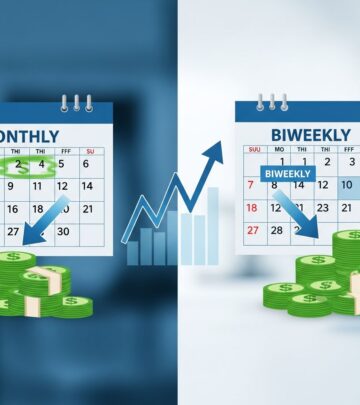
With biweekly payments, you split your normal monthly payment in half and pay that amount every two weeks. Since there are 52 weeks in a year, this payment schedule results in 26 half-payments annually. This is mathematically equivalent to making 13 full monthly payments per year instead of the traditional 12. That single extra payment each year makes a remarkable difference over the life of your mortgage.
The crucial element that makes biweekly payments so effective is what happens to that extra payment. When you confirm with your mortgage servicer that the additional payment should be applied directly to your loan’s principal balance, you’re reducing the amount of money that accrues interest. This accelerates equity accumulation and dramatically shortens your payoff timeline.
Real-World Example of Biweekly Mortgage Payments
Consider a practical example to illustrate how biweekly payments work. Suppose you purchase a $410,000 home with 10 percent down, financed with a 30-year, fixed-rate mortgage at 6.4 percent interest. Your initial monthly payment would be approximately $2,308 (excluding taxes and insurance), broken down as follows:
| Payment Component | Amount |
|---|---|
| Monthly Payment | $2,308 |
| Principal | $340 |
| Interest | $1,968 |
To convert this to a biweekly payment, you simply divide the monthly payment in half: $2,308 ÷ 2 = $1,154. This $1,154 payment is made every two weeks instead of the full amount once monthly.
By the end of the first year with biweekly payments, you would have paid $30,004 total—which is $2,308 more than you would have paid with monthly payments. However, this extra payment goes entirely toward your principal, creating substantial long-term savings:
| Payment Frequency | Total Interest Paid | Payoff Timeline |
|---|---|---|
| Monthly Payments | $461,922 | 30 years |
| Biweekly Payments | $353,621 | 24 years |
In this scenario, switching to biweekly payments would save approximately $108,301 in interest charges and reduce your payoff timeline by six years. This demonstrates the powerful impact of making just one extra payment annually.
Considering Your Mortgage Interest Rate
Your current mortgage interest rate plays a critical role in determining whether biweekly payments make sense for your situation. If you secured a favorable rate—perhaps a 3 percent mortgage locked in several years ago—the financial advantage of biweekly payments may be less compelling. In this scenario, deploying extra money toward investments or other financial goals that generate better returns might be more advantageous than directing those funds toward your mortgage.
Conversely, if you have a higher mortgage interest rate, the biweekly payment strategy becomes increasingly attractive. The higher your interest rate, the more interest you’re paying with each payment, and the greater the benefit of aggressively working to eliminate that debt. Current market conditions have resulted in many borrowers facing rates in the 6 to 8 percent range, making biweekly payments particularly valuable for these homeowners.
Advantages of Making Biweekly Mortgage Payments
Biweekly mortgage payments offer several compelling benefits that make this strategy worth serious consideration for eligible homeowners.
Significant Long-Term Interest Savings
The most substantial advantage of biweekly mortgage payments is the dramatic reduction in total interest paid over the life of your loan. By making one additional full payment each year, you’re directly reducing the principal balance on which interest accrues. This compounds dramatically over time, resulting in tens of thousands of dollars in savings for many borrowers. For borrowers with higher interest rates, these savings become even more pronounced.
Accelerated Equity Accumulation
With biweekly payments, you accumulate home equity more rapidly than with traditional monthly payments. This accelerated equity building opens up valuable borrowing options. If you need capital for home improvements, education expenses, or other major purchases, you can tap into your home equity through a home equity loan or line of credit, typically at more favorable interest rates than unsecured personal loans or credit cards.
Increased Net Proceeds from Home Sale
If you sell your home at a profit, a biweekly payment strategy means you’ll have paid down more of your mortgage principal, resulting in higher net proceeds from the sale. This extra capital can be reinvested in a new property, used for retirement funding, or deployed toward other financial objectives.
Psychological Benefits
For some homeowners, the psychological satisfaction of paying off their mortgage years ahead of schedule and knowing they’re saving substantial sums in interest provides significant motivation to maintain their financial discipline and stay committed to their long-term goals.
Is Biweekly Payment Right for Your Situation?
While biweekly payments offer substantial benefits, they’re not ideal for everyone. Consider whether you meet these important criteria before committing to this payment strategy.
You Have a Relatively High Mortgage Interest Rate
If your mortgage interest rate is significantly above current market averages, or if it exceeds the expected return on alternative investments, biweekly payments become more attractive. Higher rates mean you’re paying more in interest with each payment, making the acceleration strategy more worthwhile.
Your Financial Situation Is Stable and Secure
Before implementing biweekly payments, ensure that your other financial priorities are addressed. Your emergency fund should contain three to six months of living expenses. Retirement accounts should be adequately funded, particularly if your employer offers matching contributions. Credit card balances should be paid in full or near zero. Only after these foundational elements are secure should you direct extra money toward mortgage payments.
You Can Comfortably Afford Extra Payments
The additional payment should not create financial stress or reduce your quality of life. If you’re uncertain whether you can sustain biweekly payments, consider starting with monthly accelerated payments or extra annual payments before committing to the biweekly schedule. Financial flexibility is important—you never know when unexpected expenses or income disruptions might occur.
How to Set Up a Biweekly Mortgage Payment Plan
Implementing a biweekly payment strategy involves several straightforward steps, though it’s essential to follow proper procedures to ensure your extra payments are handled correctly.
Contact Your Mortgage Servicer
Your mortgage servicer may or may not be the same entity that originated your loan. To determine who handles your payments, check your monthly mortgage statement. Contact this servicer to inquire about biweekly payment options. Ask specifically whether they offer an automatic biweekly payment program or whether you’ll need to make manual payments.
Verify Principal Application
This step is critically important. Before implementing biweekly payments, confirm in writing that any extra payments will be applied directly to your loan’s principal balance rather than held in escrow or applied to future payments. Some servicers may have policies about how extra payments are handled, so getting this clarification upfront prevents confusion later.
Establish Your Payment Method
If your servicer offers automatic biweekly payments, you can authorize them directly. If they don’t, you can manually send biweekly payments yourself. For example, if your monthly payment is $2,000, send $1,000 biweekly. Some borrowers set up automatic transfers through their bank to ensure consistent payments every two weeks.
Monitor Your Account
After implementing biweekly payments, review your statements periodically to confirm that extra payments are being applied to principal as agreed. Keep detailed records of all payments made outside your standard monthly obligation.
Frequently Asked Questions About Biweekly Mortgage Payments
Q: What’s the difference between biweekly and bimonthly payments?
A: Biweekly payments occur every 14 days (26 times per year), while bimonthly payments occur every two calendar months (typically 6 times per year). Biweekly payments result in one extra full payment annually, while bimonthly payments do not.
Q: Can I use biweekly payments with an adjustable-rate mortgage (ARM)?
A: Yes, biweekly payments work with ARMs. The primary difference is that your payment amount will adjust periodically when your interest rate changes. The extra principal payments you make each year will still apply to your principal balance.
Q: How much can I save with biweekly payments?
A: Savings depend on your loan balance, interest rate, and remaining term. On a $500,000 30-year mortgage at 7.73 percent, switching to biweekly payments could save over $220,000 in interest and reduce your payoff timeline by approximately eight years.
Q: What happens if I need to access the extra money I’m putting toward my mortgage?
A: If financial circumstances change, you can stop making extra payments and revert to standard monthly payments. However, once extra payments are applied to principal, you cannot recover those funds without refinancing or taking out a home equity loan.
Q: Do all mortgage servicers accept biweekly payments?
A: Most servicers accommodate biweekly payments, though policies vary. Some may charge a fee to set up automatic biweekly payments, while others allow manual extra payments without charges. Always verify with your specific servicer before implementing this strategy.
Q: Is biweekly payment the same as making one extra payment annually?
A: Mathematically, yes. Biweekly payments result in 26 half-payments or 13 full payments per year, which is equivalent to making one additional monthly payment annually.
References
- Biweekly Mortgage Payment Calculator — Bankrate. 2025. https://www.bankrate.com/mortgages/bi-weekly-mortgage-calculator/
- Biweekly Mortgage Payments: What You Need To Know — Bankrate. 2025. https://www.bankrate.com/mortgages/should-you-make-biweekly-mortgage-payments/
- Why You Should Make Bi-Weekly Mortgage Payments — CBS News. 2025. https://www.cbsnews.com/news/why-you-should-make-bi-weekly-mortgage-payments/
- Is Prepaying Your Mortgage A Good Decision? — Bankrate. 2025. https://www.bankrate.com/mortgages/prepaying-your-mortgage/
- The Smart Way to Make Extra Mortgage Payments — Kiplinger. 2025. https://www.kiplinger.com/article/real-estate/t040-c001-s002-sign-up-to-pay-extra-mortgage-payments.html
Similar Articles








Read full bio of medha deb