Bimonthly Payments: Definition, Benefits & Applications
Understand bimonthly payments: frequency, benefits, and practical applications in personal and business finances.
What Are Bimonthly Payments?
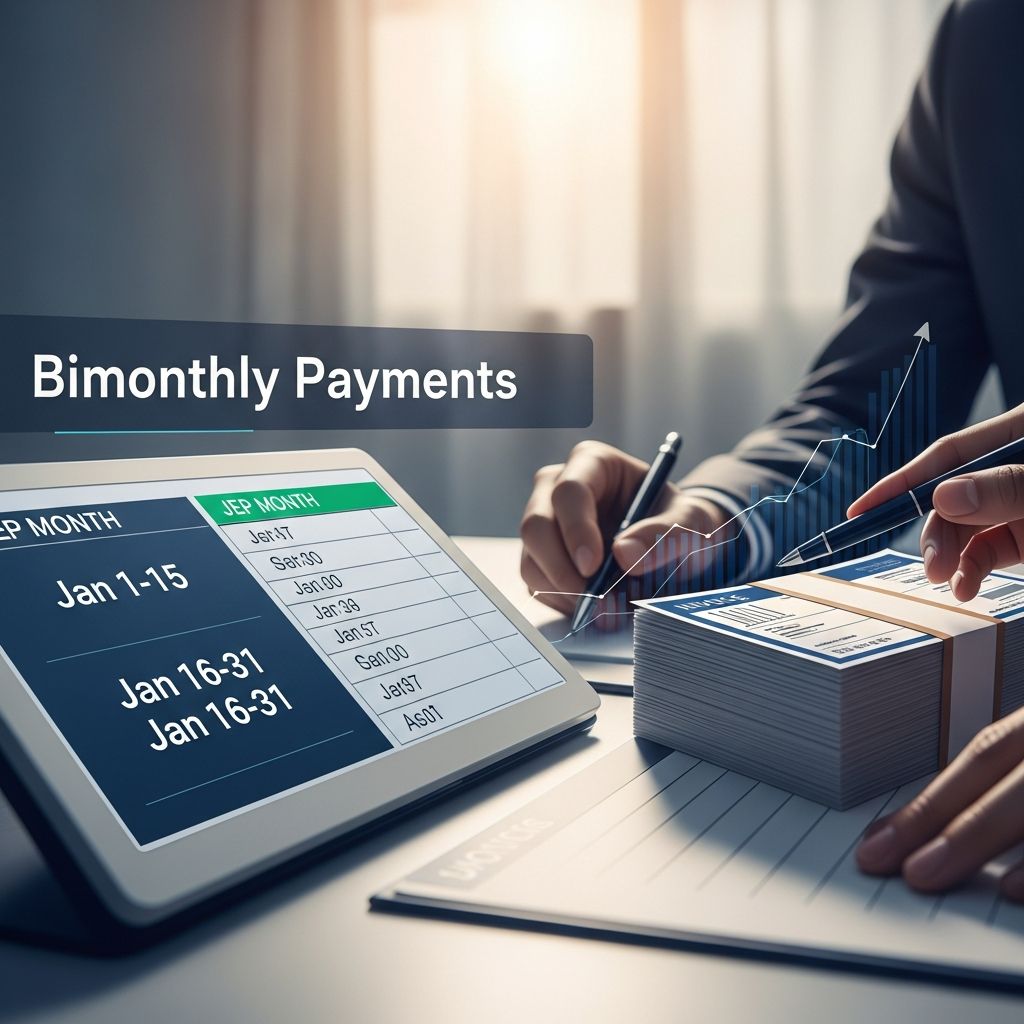
Bimonthly payments refer to a payment schedule where an individual or business makes payments every two months, or six times per year. This payment frequency sits between monthly and quarterly arrangements, offering a flexible middle ground for various financial obligations. The term “bimonthly” can sometimes create confusion, as it may be interpreted differently depending on context, but in most financial and business settings, it specifically means payments occurring once every two months.
Understanding bimonthly payment schedules is essential for anyone managing finances, whether at the personal level with loan repayments and utility bills, or at the organizational level with vendor payments and employee compensation. This payment frequency has gained popularity across multiple sectors due to its balanced approach to cash flow management.
Understanding the Definition and Frequency
A bimonthly payment schedule means you make payments six times throughout the calendar year. For example, if you establish a bimonthly payment plan beginning in January, subsequent payments would be due in March, May, July, September, and November. This creates a consistent pattern that spans the entire fiscal year.
The key distinction to understand is that bimonthly differs from semi-monthly payments, which occur twice each month (typically on the 15th and the last day). While both result in 24 payments annually, the timing and structure are fundamentally different. Bimonthly payments follow a two-month cycle, whereas semi-monthly payments are tied to specific dates within each calendar month.
Key Characteristics of Bimonthly Payments
- Frequency: Six payments per calendar year
- Interval: Exactly 60 days (or approximately two months) between each payment
- Predictability: Established schedule allows for consistent budgeting
- Flexibility: More manageable than monthly payments for some obligations
- Cash Flow Impact: Larger individual payments compared to monthly schedules
Bimonthly Payments vs. Other Payment Schedules
To fully grasp the utility of bimonthly payments, it’s important to compare them with other common payment frequencies. Each payment schedule has distinct advantages and disadvantages depending on your financial situation and obligations.
Monthly vs. Bimonthly Payments
Monthly payments occur 12 times per year, making them the most common payment frequency. Monthly payments typically result in smaller individual amounts compared to bimonthly payments. However, bimonthly payments may appeal to those who find managing 12 separate payment dates challenging or who prefer handling payments less frequently.
Bimonthly vs. Semi-Monthly Payments
Semi-monthly payments occur 24 times annually, typically on the 15th and the final day of each month. This frequency is common for salaried employees who receive paychecks twice monthly. While semi-monthly payments are more frequent than bimonthly payments, they often align better with standard employment practices and budgeting cycles tied to calendar months.
Bimonthly vs. Quarterly and Annual Payments
Quarterly payments happen four times yearly, while annual payments occur just once. These less frequent schedules result in significantly larger individual payment amounts. Bimonthly payments offer a middle ground—more frequent than quarterly or annual arrangements, but involving fewer transactions than monthly or semi-monthly schedules.
Advantages of Bimonthly Payment Plans
Bimonthly payment arrangements offer several compelling benefits for both borrowers and businesses seeking to optimize their financial management strategies.
Improved Cash Flow Management
For businesses, bimonthly payments can align better with specific revenue cycles. Companies that receive payments from clients on extended schedules may find bimonthly payments more manageable than monthly obligations. This reduced payment frequency allows businesses to maintain better liquidity between payment dates.
Reduced Administrative Burden
Making six payments annually rather than twelve reduces the administrative overhead associated with processing, tracking, and reconciling transactions. For small businesses and individuals managing multiple obligations, this simplified schedule can save considerable time and effort.
Flexibility in Budgeting
Bimonthly payments provide flexibility for those who find traditional monthly budgeting restrictive. Some individuals and organizations prefer handling financial obligations in larger, less frequent blocks rather than managing numerous small transactions monthly.
Larger Payment Amounts May Reduce Total Interest
When applicable, larger bimonthly payments toward debt can accelerate payoff timelines and reduce total interest paid compared to spreading payments more thinly across monthly installments. This advantage is particularly relevant for high-interest debt like credit cards.
Disadvantages of Bimonthly Payment Plans
Despite their advantages, bimonthly payment arrangements present certain challenges worth considering before commitment.
Larger Individual Payments
The primary drawback of bimonthly payments is that each transaction involves a larger amount than monthly payments. For individuals with tight monthly budgets, accumulating sufficient funds between payments may prove challenging. This larger payment requirement can create cash flow difficulties if income is received monthly.
Potential for Payment Delays
The extended interval between payments increases the risk of missed or late payments. If you’re accustomed to monthly payment deadlines, remembering bimonthly dates requires more active calendar management and planning.
Misalignment with Income Cycles
Many individuals receive income monthly, creating potential misalignment with a bimonthly payment schedule. If a payment is due before the next paycheck arrives, it may create temporary cash flow stress.
Limited Availability
Not all creditors or service providers offer bimonthly payment options. The availability of this payment frequency varies significantly across different industries and organizations, limiting its applicability for many financial obligations.
Common Applications of Bimonthly Payments
Bimonthly payment schedules appear across numerous financial contexts and industries.
Business and Commercial Use
- Vendor Payments: Companies often pay suppliers on bimonthly schedules to manage cash flow and reduce transaction processing costs
- Loan Repayments: Some commercial loans feature bimonthly payment structures
- Insurance Premiums: Certain business insurance policies offer bimonthly payment options
- Utilities and Services: Some utility companies allow bimonthly billing arrangements
Personal Finance Applications
- Personal Loan Payments: Some lenders offer bimonthly repayment options for personal loans
- Mortgage Payments: Certain mortgage lenders provide bimonthly payment plans that can accelerate payoff
- Insurance Premiums: Homeowners and auto insurance often offer bimonthly payment choices
- Subscription Services: Some subscription-based services offer bimonthly billing cycles
How to Set Up Bimonthly Payments
Establishing a bimonthly payment arrangement typically involves contacting your creditor or service provider directly. Many organizations have moved toward online account management systems where you can select your preferred payment frequency. Here are general steps for setting up bimonthly payments:
- Contact your lender, creditor, or service provider’s customer service department
- Express your preference for bimonthly payment scheduling
- Confirm that this option is available for your specific account
- Discuss the payment amount and specific payment dates
- Establish automatic payments if desired to ensure timely submissions
- Verify the arrangement in writing through email or official documentation
- Set calendar reminders for upcoming payment dates
Bimonthly Payments and Debt Management
For those managing significant debt, bimonthly payment arrangements can serve as an effective debt reduction strategy when properly implemented. By making larger bimonthly payments toward principal debt, borrowers can reduce the total interest paid over the life of the loan and accelerate the payoff timeline.
This strategy works particularly well for credit card debt, personal loans, and mortgage obligations. However, careful budgeting is essential to ensure that larger bimonthly payments don’t create cash flow problems. Financial advisors often recommend analyzing your specific income pattern and expense cycle before committing to bimonthly arrangements.
Special Considerations and Potential Issues
When considering bimonthly payments, several factors warrant careful attention. Late fees and penalties may apply if you miss a bimonthly payment deadline. Some lenders charge higher interest rates for less frequent payment schedules, offsetting potential savings from accelerated payoff.
Additionally, some creditors may not offer bimonthly options, limiting your ability to restructure existing obligations. It’s essential to thoroughly review the terms and conditions of any bimonthly arrangement before committing, ensuring that the structure aligns with your financial situation and goals.
Frequently Asked Questions (FAQs)
Q: What is the difference between bimonthly and semi-monthly payments?
A: Bimonthly payments occur six times yearly on a two-month cycle, while semi-monthly payments occur 24 times annually, typically on the 15th and last day of each month. Semi-monthly payments align with calendar months, whereas bimonthly follows a consistent 60-day interval.
Q: Can I switch from monthly to bimonthly payments on my existing loan?
A: Many lenders allow payment schedule modifications, but availability varies. Contact your creditor directly to inquire about switching to bimonthly payments. Some may require formal request documentation or charge minimal processing fees.
Q: Are bimonthly payments better for paying off debt faster?
A: Bimonthly payments can accelerate debt payoff if the larger payment amounts are allocated toward principal. However, this depends on your financial capacity to make larger payments without compromising your budget or emergency fund.
Q: Do bimonthly payments save money on interest?
A: Potentially, yes. If bimonthly payments are larger than what you’d pay monthly and are applied to principal, you’ll reduce the overall interest paid. However, some lenders may charge higher rates for less frequent payment schedules, which could offset these savings.
Q: What should I do if I miss a bimonthly payment?
A: Contact your creditor immediately to discuss payment options. Late fees typically apply, and your credit score may be negatively impacted. Many creditors offer grace periods or payment plan adjustments, so communication is crucial.
Q: Are bimonthly payments available for all types of loans?
A: No. Bimonthly payment options vary by lender and loan type. Some mortgages, personal loans, and auto loans offer this option, but availability is not universal. Always verify with your specific lender.
Conclusion
Bimonthly payments represent a practical middle ground between monthly and less frequent payment arrangements. While they offer advantages such as reduced administrative burden, improved cash flow management for businesses, and potential debt reduction benefits, they also present challenges including larger individual payment amounts and potential misalignment with monthly income cycles. Understanding how bimonthly payments compare to other payment frequencies and carefully evaluating whether they align with your financial situation is essential before adopting this payment schedule. For those whose income and expense patterns accommodate larger bimonthly payments, this approach can be an effective tool for financial management and debt reduction.
References
- Understanding Loan Payment Frequencies and Structures — U.S. Consumer Financial Protection Bureau. 2024. https://www.consumerfinance.gov
- Debt Management and Payment Scheduling Strategies — Federal Reserve Board. 2024. https://www.federalreserve.gov
- Personal Finance: Payment Plans and Cash Flow Management — U.S. Securities and Exchange Commission. 2024. https://www.sec.gov
- Interest Calculation and Loan Amortization Methods — American Bankers Association. 2024. https://www.aba.com
- Best Practices in Creditor-Borrower Payment Arrangements — National Foundation for Credit Counseling. 2024. https://www.nfcc.org
Similar Articles








Read full bio of Sneha Tete