Where Billionaires Went to College: Top 21 Universities
Discover which elite universities educated the world's billionaires and global leaders.
Where Billionaires Went to College: Understanding Elite Education and Wealth
What do Michael Bloomberg, the Winklevoss twins, former Microsoft CEO Steve Ballmer, former U.S. commerce secretary Penny Pritzker, Patriots owner Robert Kraft, and ex-Chilean President Sebastián Piñera have in common? They’re all alumni of Harvard University. Oh, and they’re all billionaires.
A groundbreaking research study has revealed fascinating patterns about where the world’s billionaires and global elites obtained their educational credentials. The analysis, conducted by Kevin Young, an economics professor at the University of Massachusetts Amherst, and Ricardo Salas Díaz, a lecturer in the economics department at Dartmouth College, provides an in-depth examination of the degrees held by members of the global elite. Published in the journal Global Networks, their research extends beyond billionaires alone to include corporate board members, government officials, and leaders of international organizations.
The Dominance of Harvard University
It won’t surprise many observers that Harvard ranks as the number one institution for educating billionaires. However, what is truly shocking is just how dramatically Harvard stands out from its peers, with over 100 billionaires holding degrees from the institution. According to Young, “Harvard, it’s not just standing out — it’s completely abnormal. It’s totally incomparable to any other university.”
The research demonstrates that Harvard has granted degrees to 662 global elites, representing 9% of the entire sample studied. This figure significantly surpasses other top contenders in the rankings. The university’s influence over the global elite is unprecedented, establishing it as the undisputed leader in educating those who would go on to accumulate tremendous wealth and power.
Notable Harvard billionaire alumni include Michael Bloomberg, founder of Bloomberg L.P.; the Winklevoss twins, known for their involvement in cryptocurrency and rowing; Steve Ballmer, former CEO of Microsoft; Penny Pritzker, former U.S. commerce secretary; Robert Kraft, owner of the New England Patriots; and numerous others who have shaped industries and influenced global affairs.
Stanford: The Tech Hub’s Second-Place Finish
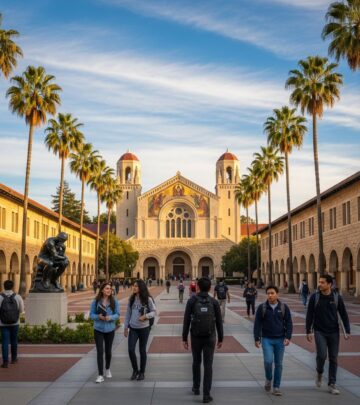
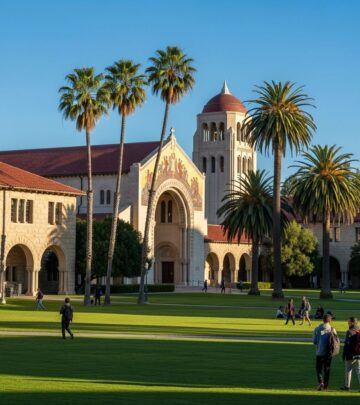
Stanford University claims the number two position with 69 billionaire alumni and degrees awarded to over 300 global elites. The institution’s prominence is largely due to its concentration of ultra-wealthy alumni with technology fortunes. Stanford’s billionaire class includes founders and cofounders of some of the world’s most influential tech companies.
The Stanford billionaire network encompasses leaders from companies including Palantir, DoorDash, Workday, Robinhood, Snapchat, WhatsApp, Yahoo, Instagram, Google, TSMC, Netflix, Zillow, and LinkedIn. This tech-centric concentration reflects Stanford’s location in Silicon Valley and its deep historical connections to the technology industry. The university has positioned itself as the epicenter of entrepreneurial wealth creation in the digital age.
The Complete Ranking: 21 Universities with the Most Billionaire Alumni
The research identified 21 universities that have educated the most billionaires. Here is the comprehensive ranking:
| Rank | University | Billionaire Alumni |
|---|---|---|
| 1 | Harvard University | 104 |
| 2 | Stanford University | 69 |
| 3 | University of Pennsylvania | 38 |
| 4 | Columbia University | 32 |
| 5 | Massachusetts Institute of Technology | 28 |
| 6 | Yale University | 24 |
| 7 | Cornell University | 22 |
| 8 | University of Mumbai (India) | 22 |
| 9 | Tsinghua University (China) | 19 |
| 10 | New York University | 18 |
| 11 | University of Southern California | 17 |
| 12 (tie) | University of California, Berkeley | 15 |
| 12 (tie) | University of Michigan | 15 |
| 14 | Peking University (China) | 14 |
| 15 (tie) | Moscow State University (Russia) | 13 |
| 15 (tie) | Princeton University | 13 |
| 17 (tie) | University of California, Los Angeles | 12 |
| 17 (tie) | University of Chicago | 12 |
| 17 (tie) | Fudan University (China) | 12 |
| 17 (tie) | Seoul National University (South Korea) | 12 |
| 17 (tie) | Zhejiang University (China) | 12 |
Notable Institutions Beyond the Top Tier
The University of Pennsylvania ranks third with 38 billionaire alumni, including Tesla CEO Elon Musk and President Donald Trump. Columbia University follows with 32 billionaires, while MIT contributes 28 billionaire alumni. Yale University has produced 24 billionaires, and Cornell University rounds out the traditional Ivy League representation with 22 alumni.
Interestingly, the research reveals that the pattern extends to institutions worldwide. The University of Mumbai in India and several Chinese universities, including Tsinghua, Peking, Fudan, and Zhejiang, feature prominently on the list. This reflects the growing wealth creation in emerging markets and the increasing diversity of the global billionaire class.
Understanding Educational Credentials and Global Power
The primary purpose of the research conducted by Young and Salas Díaz was to understand how educational credentials relate to the distribution of power among global elites. What they discovered was compelling: there exists “evidence for a distinct pattern of hierarchy in the distribution of educational credentials.” The researchers identified “the super-prominent position of a small number of elite universities, which play an enormously central role in the education of global elites.”
This hierarchy is not limited to billionaires alone. The patterns observed in billionaire education mirror those found in other elite groups. Young explains: “Basically, the patterns we find for billionaires going to certain places are similar for corporate leaders, are similar for the heads of international organizations, are similar for think tanks, foundations, NGOs.” This suggests that a small number of prestigious institutions serve as gatekeepers for entry into positions of global influence and power.
The Education of the Elite: Beyond Wealth Creation
It’s important to clarify that this research is not intended as an evaluation of universities’ abilities to produce billionaires or create wealth. Young emphasizes that the researchers did not differentiate between self-made billionaires and those who inherited their fortunes. Instead, the research highlights how educational institutions serve as nodes in networks of privilege and opportunity.
The researchers note that advantages such as legacy admissions and preparatory school backgrounds play significant roles in helping children of existing elites secure admission to these prestigious institutions. The concentration of privilege compounds across generations, with elite families leveraging existing connections to maintain their children’s access to the same institutions that launched their own success.
The Value of Educational Credentials in Professional Settings
A degree from a prestigious university functions as a “loud signal” in professional and business settings. Beyond the specific knowledge and skills acquired through coursework, the primary value lies in the lasting associations and networks that accompany the degree. Young explains this distinction clearly: “Maybe you learn some special tricks at Yale Law School. I have no doubt that there’s some content there that might be helpful. But the main thing you’re getting is you have Yale associated with you for the rest of your life.”
The alumni networks of elite institutions operate as self-perpetuating systems of opportunity and advantage. Graduates maintain connections with fellow alumni throughout their careers, creating webs of relationships that facilitate business deals, job placements, investment opportunities, and strategic partnerships. These networks continue to provide benefits throughout individuals’ professional lives, contributing significantly to the pathway toward billionaire status.
The Research Methodology and Data
The data used in this analysis originates from March 2021, with the research compiled and published in September 2024. The study examined the educational credentials of the global elite, including billionaires, corporate board members, government officials, and leaders of international organizations. The comprehensive nature of the research provides insights into broader patterns of elite education beyond the billionaire category alone.
It’s worth noting that the billionaire list includes only individuals who graduated from the institutions listed. This distinction excludes some notable figures. For example, while former Facebook executive Sheryl Sandberg appears on the list as a Harvard graduate, Mark Zuckerberg, arguably Facebook’s most prominent figure and one of the world’s wealthiest individuals, does not appear because he did not complete his degree at Harvard.
Frequently Asked Questions
Q: Why doesn’t Mark Zuckerberg appear on the Harvard billionaire list?
A: The research focuses exclusively on individuals who graduated from the listed universities. Mark Zuckerberg attended Harvard but did not graduate, so he is not included in the billionaire count, even though he is one of the world’s wealthiest individuals.
Q: Do all billionaires from Stanford come from the technology industry?
A: While Stanford’s billionaire alumni are heavily concentrated in technology due to the university’s proximity to Silicon Valley and historical connections to the tech industry, not all of them come exclusively from tech. However, technology represents the dominant source of wealth creation among Stanford’s billionaire class.
Q: Is this research suggesting that attending an elite university guarantees billionaire status?
A: No. The research examines where billionaires received their education but does not suggest that a degree from these institutions automatically leads to billionaire wealth. Many factors beyond education contribute to wealth accumulation, including entrepreneurial ability, market timing, and inherited advantages.
Q: Why do Chinese universities appear on the billionaire list?
A: The emergence of Chinese universities reflects the rapid wealth creation occurring in China’s growing economy. Universities like Tsinghua, Peking, Fudan, and Zhejiang have educated entrepreneurs and business leaders who have accumulated significant wealth in the country’s booming markets.
Q: What role do legacy admissions play in this pattern?
A: Legacy admissions and preparatory school backgrounds significantly help children of existing elites secure admission to prestigious institutions. This perpetuates the concentration of privilege among a small number of universities and contributes to intergenerational wealth maintenance among elite families.
Q: Do the patterns hold for other types of global elites beyond billionaires?
A: Yes. The research shows that similar educational patterns exist among corporate leaders, heads of international organizations, think tank directors, and leaders of foundations and NGOs. Harvard and Stanford maintain their prominence across all elite categories studied.
References
- These 21 Universities Have the Most Billionaire Alumni — Nasdaq. 2024-09. https://www.nasdaq.com/articles/these-21-universities-have-most-billionaire-alumni
- These 21 Universities Have the Most Billionaire Alumni — Money Magazine. 2024. https://money.com/where-billionaires-went-to-college/
- Global Networks — Academic Journal. Published research by Kevin Young (University of Massachusetts Amherst) and Ricardo Salas Díaz (Dartmouth College). 2024. https://onlinelibrary.wiley.com/journal/14705931
Similar Articles








Read full bio of medha deb