Bill of Lading: Definition, Types, and Uses
Essential shipping document: Understanding bills of lading in international trade and logistics.
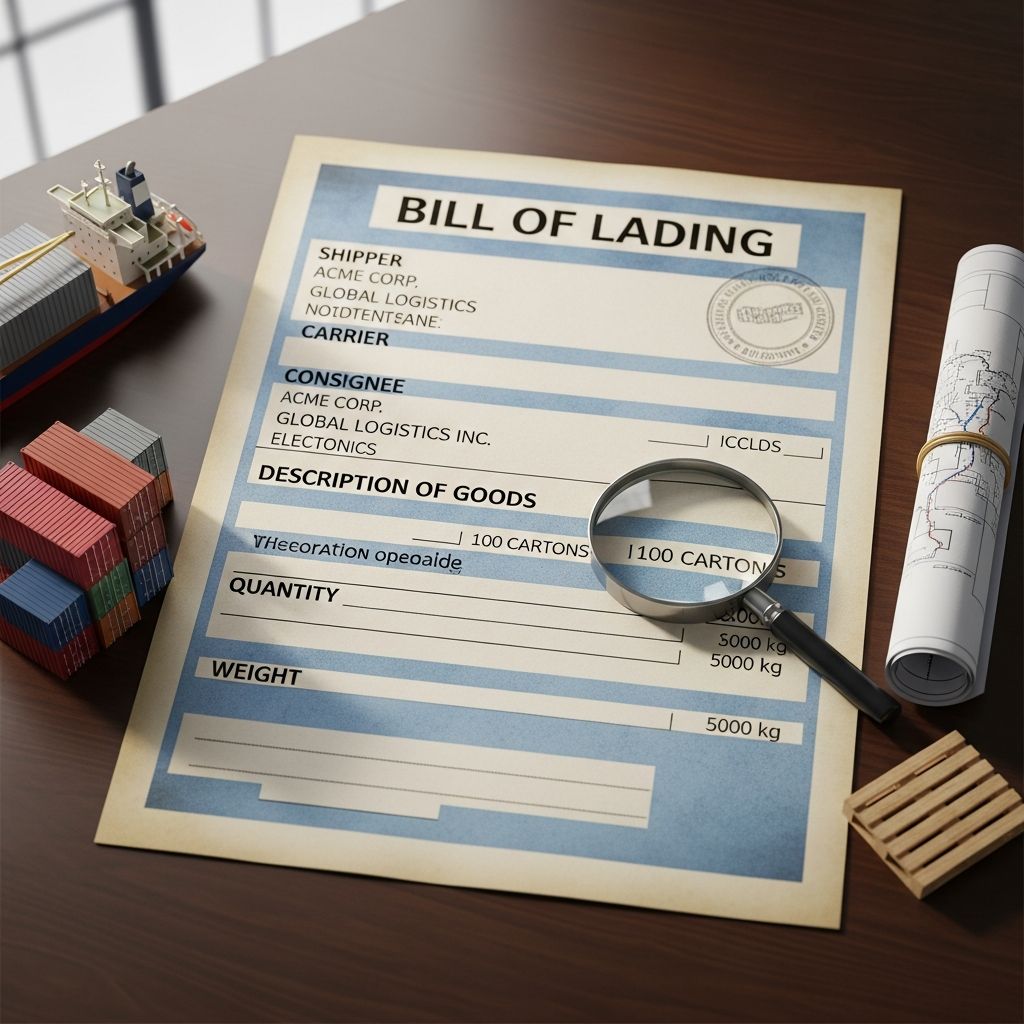
A bill of lading (BOL) is one of the most important documents in international trade and shipping logistics. It serves as a legal contract between a shipper and a carrier, outlining the terms and conditions of transporting goods from one location to another. Understanding bills of lading is essential for anyone involved in importing, exporting, or managing supply chains. This document plays a crucial role in facilitating commerce across borders and ensuring that all parties involved in a transaction have a clear understanding of their responsibilities and obligations.
What Is a Bill of Lading?
A bill of lading is a document issued by a carrier or a carrier’s agent to acknowledge receipt of goods for shipment. It serves as a receipt for the shipper, a contract of carriage, and a document of title for the goods being transported. The bill of lading contains detailed information about the shipment, including the type of goods, quantity, weight, destination, and shipping terms. It is typically issued in multiple copies, with different copies serving different purposes for various parties involved in the transaction.
The primary functions of a bill of lading include providing evidence that goods have been loaded onto a vessel or transport vehicle, establishing proof of ownership or possession of the goods in transit, and serving as a negotiable instrument in international trade. The document is recognized internationally and is governed by various maritime laws and regulations, including the Carriage of Goods by Sea Act (COGSA) in the United States and the Hague-Visby Rules in international maritime commerce.
Key Characteristics of a Bill of Lading
Bills of lading possess several important characteristics that make them indispensable in international shipping:
- Receipt Function: It acknowledges that the carrier has received the goods in apparent good order and condition
- Contract of Carriage: It establishes the terms and conditions under which goods will be transported
- Document of Title: It serves as proof of ownership and can be transferred between parties
- Legal Evidence: It provides documentary evidence that can be used in disputes or legal proceedings
- Insurance Documentation: It is often required for insurance claims related to shipped goods
- Customs Clearance: It facilitates the clearing of goods through customs authorities
- Financial Instrument: It can be used as collateral for loans or letters of credit
Types of Bills of Lading
There are several types of bills of lading, each serving specific purposes in different shipping scenarios:
Straight Bill of Lading
A straight bill of lading is consigned to a specific named party and is non-negotiable. This type cannot be transferred to another party without the consent of the carrier. It is commonly used in domestic shipments and situations where the goods are being shipped to a predetermined recipient. The straight bill of lading provides a direct route from shipper to consignee with no intermediaries involved in the ownership transfer.
Order Bill of Lading
An order bill of lading is negotiable and can be transferred from one party to another through endorsement. This type is frequently used in international trade where goods may change hands during transit. The order bill of lading allows for the transfer of goods ownership without physical transfer of the merchandise itself. It is particularly useful when goods are sold while in transit or when the buyer is not yet known at the time of shipment.
Bearer Bill of Lading
A bearer bill of lading is payable to whoever possesses it. This type is less common in modern shipping practices due to security concerns, but it remains a negotiable instrument that can be transferred simply by delivery without endorsement. Bearer bills of lading are rarely issued in contemporary maritime commerce due to the risks associated with their transferability.
Clean Bill of Lading
A clean bill of lading indicates that goods have been received in apparent good order and condition, with no noted defects or damage. This type is preferred by banks and financial institutions when issuing letters of credit, as it provides assurance that the goods have not been damaged before shipment. The absence of any clauses or notations about damage or defects makes this bill of lading highly valuable in trade finance.
Claused or Foul Bill of Lading
A claused bill of lading contains notations about defects, damage, or shortages in the goods or their packaging. These notations, called clauses or remarks, indicate that the carrier received the goods in less than satisfactory condition. Banks typically refuse to accept claused bills of lading as part of documentary credit transactions, as they suggest potential quality or quantity issues with the shipment.
House Bill of Lading
A house bill of lading is issued by a freight forwarder or non-vessel operating common carrier (NVOCC) to a shipper. It consolidates multiple shipments into one larger shipment and is used when a freight forwarder handles the shipment on behalf of the actual carrier. The house bill of lading allows small shippers to benefit from consolidated shipping rates.
Master Bill of Lading
A master bill of lading is issued by the actual carrier and covers the entire shipment, including multiple house bills of lading consolidated by freight forwarders. It serves as the primary document of title and is used to track the overall shipment from port to port.
Essential Information on a Bill of Lading
A comprehensive bill of lading contains numerous pieces of critical information necessary for proper shipment handling and tracking:
| Information Element | Description |
|---|---|
| Shipper Details | Name, address, and contact information of the party sending the goods |
| Consignee Information | Name and address of the party receiving the goods at the destination |
| Notify Party | Party to be notified upon arrival of the shipment (often the buyer or customs broker) |
| Vessel Information | Name of the vessel, voyage number, and expected arrival dates |
| Port of Loading | Port where goods are loaded onto the vessel |
| Port of Discharge | Port where goods will be unloaded |
| Goods Description | Detailed description of cargo, including commodity type and HS codes |
| Quantity and Weight | Number of packages, total weight, and measurement of cargo |
| Freight Terms | Indication of whether freight is prepaid or collect |
| Bill of Lading Number | Unique identification number for tracking and reference |
Functions and Importance in International Trade
The bill of lading serves multiple critical functions in international commerce and logistics:
Evidence of Contract
The bill of lading provides written evidence of the agreement between the shipper and the carrier regarding the transportation of goods. It details the terms and conditions under which the carrier will transport the goods, including liability limitations and compensation terms.
Proof of Ownership
In international trade, the bill of lading functions as a document of title. The party in possession of the original bill of lading has the right to claim the goods. This is particularly important in sales transactions where ownership may change hands multiple times before the goods reach their final destination.
Trade Finance Instrument
Banks and financial institutions use bills of lading extensively in trade financing arrangements. An original bill of lading is typically required to establish letters of credit, which are fundamental instruments in international trade finance. The bill of lading serves as collateral for loans and provides banks with security for credit extended to importers and exporters.
Customs Documentation
Customs authorities require bills of lading as part of import and export documentation. The information contained in the bill of lading helps customs officials verify that the goods being imported or exported match the declared information and allows for proper tariff classification and duty assessment.
Insurance Claims
In the event of loss or damage to cargo during transit, the bill of lading serves as essential documentation for filing insurance claims. It provides proof of the goods’ condition at the time of shipment and establishes the carrier’s responsibility for any damage occurring during transport.
Digital and Electronic Bills of Lading
The shipping industry has increasingly adopted electronic bills of lading (e-bills of lading or eBLs) to streamline processes and reduce paperwork. Digital bills of lading offer several advantages, including faster processing, reduced costs, improved transparency, and enhanced security. However, the transition from paper to electronic bills of lading requires standardized formats and legal frameworks to ensure widespread acceptance. Various platforms and blockchain-based solutions are being developed to facilitate the adoption of digital bills of lading in international trade.
Common Issues and Discrepancies
Bills of lading frequently contain discrepancies that can create problems in trade finance and customs clearance. Common issues include:
- Misspelled shipper or consignee names
- Incorrect cargo descriptions or quantities
- Mismatched port information
- Unclear or missing bill of lading numbers
- Incorrect freight charges or payment terms
- Inconsistencies between the bill of lading and the commercial invoice
- Late issuance after goods have been shipped
Such discrepancies can result in rejected letters of credit, delayed shipments, and increased costs. Careful attention to detail when preparing bills of lading is essential to avoid these common pitfalls.
Liability and Legal Considerations
Bills of lading are governed by international maritime law and vary by jurisdiction. Under the Carriage of Goods by Sea Act (COGSA) in the United States and similar legislation in other countries, carriers have specified responsibilities and limitations of liability. The bill of lading typically includes clauses that limit the carrier’s liability for loss or damage to cargo, often capping compensation at a specified amount per container or per unit weight. Understanding these legal frameworks is crucial for all parties involved in international shipping.
Frequently Asked Questions (FAQs)
Q: What is the primary purpose of a bill of lading?
A: The primary purpose of a bill of lading is to serve as a receipt from the carrier acknowledging receipt of goods, a contract outlining the terms of carriage, and a document of title proving ownership of the goods in transit. It facilitates international trade by providing all parties with documented evidence of the shipment details and terms.
Q: Can a bill of lading be transferred to another party?
A: This depends on the type of bill of lading. Order bills of lading and bearer bills of lading are negotiable and can be transferred through endorsement or delivery. Straight bills of lading, however, are non-negotiable and cannot be transferred without the carrier’s consent.
Q: What is the difference between a clean and claused bill of lading?
A: A clean bill of lading indicates that goods were received in good condition with no apparent damage or defects. A claused or foul bill of lading contains notations about damage, shortages, or quality issues. Banks typically prefer clean bills of lading for letters of credit transactions.
Q: How many copies of a bill of lading are typically issued?
A: Bills of lading are typically issued in multiple copies, commonly three original copies plus additional non-negotiable copies. The specific number may vary depending on the shipping arrangement and the requirements of the parties involved.
Q: What is an electronic bill of lading?
A: An electronic bill of lading (e-bill of lading) is a digital version of the traditional paper bill of lading. It offers faster processing, reduced costs, and improved efficiency in international shipping. However, legal frameworks and standardized formats continue to evolve to ensure universal acceptance.
Q: Why is a bill of lading important in trade finance?
A: Banks require original bills of lading to establish letters of credit, which are essential instruments in international trade financing. The bill of lading serves as proof of shipment and ownership, providing security for credit extended by financial institutions to importers and exporters.
References
- Carriage of Goods by Sea Act (COGSA) — United States Congress. 1936. https://www.govinfo.gov/content/pkg/USCODE-2011-title46/pdf/USCODE-2011-title46-chap3.pdf
- International Convention for the Unification of Certain Rules of Law Relating to Bills of Lading (Hague-Visby Rules) — International Maritime Organization. 1968. https://www.imo.org/en/About/Conventions/Pages/International-Convention-for-the-Unification-of-Certain-Rules-of-Law-Relating-to-Bills-of-Lading.aspx
- Electronic Bills of Lading: Legal Framework and Implementation — United Nations Commission on International Trade Law (UNCITRAL). 2022. https://uncitral.un.org/en/texts/ecommerce/conventions/electronic_commerce
- Global Trade and Logistics: Best Practices in Bill of Lading Management — International Chamber of Commerce (ICC). 2023. https://iccwbo.org/publication/incoterms-2020/
- Shipping and Logistics Documentation Standards — International Organization for Standardization (ISO). 2023. https://www.iso.org/standard/68740.html
- Port Operations and Maritime Commerce Guide — U.S. Department of Transportation, Maritime Administration. 2024. https://www.maritime.dot.gov/
Similar Articles








Read full bio of medha deb