The Big 4 US Banks: Overview and Comparison
Explore America's largest financial institutions and their market dominance.
Understanding America’s Big 4 Banks
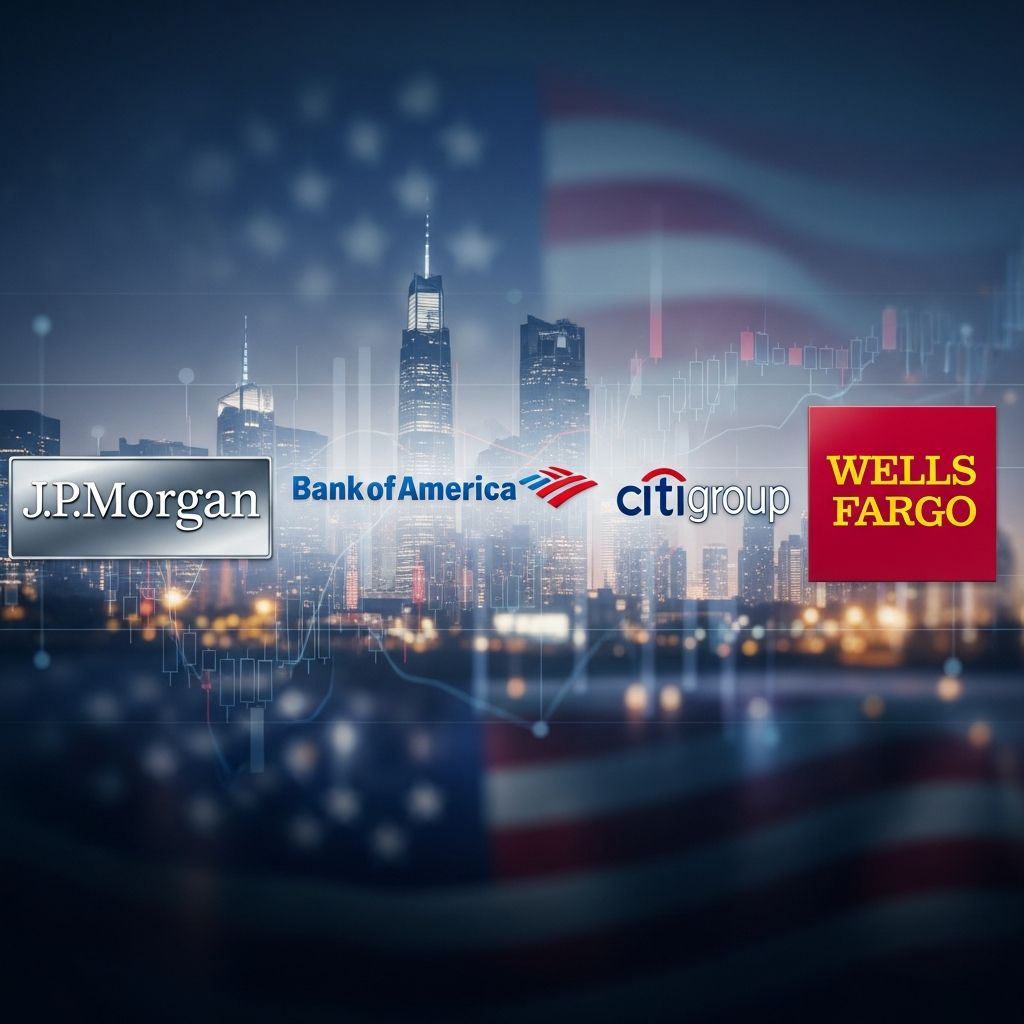
The American banking landscape is dominated by four massive financial institutions that collectively hold a significant portion of the nation’s deposits and assets. These institutions—JPMorgan Chase, Bank of America, Citigroup, and Wells Fargo—are known as the Big 4 banks and represent the largest players in the US financial sector. Understanding these banks, their history, services, and market position is essential for consumers, investors, and anyone interested in the American economy.
The Big 4 banks emerged from a series of strategic mergers and acquisitions, particularly during and after the 2008 financial crisis. Their dominance reflects not only their size but also their extensive branch networks, digital capabilities, and comprehensive financial services. Together, these institutions serve millions of customers and manage trillions of dollars in assets.
JPMorgan Chase: The Nation’s Largest Bank
JPMorgan Chase stands as the largest bank in the United States by total assets. With consolidated assets of $3.64 trillion, JPMorgan Chase holds a commanding position in the American financial system. The bank is headquartered in New York and operates one of the most extensive branch networks in the country.
Chase Bank, the consumer banking division of JPMorgan Chase, operates more than 4,700 branches and more than 15,000 ATMs across the United States. The bank maintains branches in all 48 continental states and boasts the largest branch network of any bank in the nation. This extensive physical presence, combined with robust digital banking platforms, allows JPMorgan Chase to serve customers through multiple channels.
Beyond retail banking, JPMorgan Chase operates divisions specializing in investment banking, asset management, and commercial banking. The bank’s diversified business model has contributed to its resilience and market leadership over decades.
Bank of America: Serving Millions Globally
Bank of America ranks as the second-largest bank in the United States with total assets of $2.62 trillion. Headquartered in Charlotte, North Carolina, Bank of America serves approximately 69 million consumers and small business clients worldwide, making it one of the most customer-centric institutions in the industry.
The bank has distinguished itself through its commitment to digital innovation and customer service improvements. In early 2022, Bank of America eliminated its nonsufficient funds (NSF) fee and reduced its overdraft fee, demonstrating responsiveness to consumer needs and broader industry trends. The bank offers robust digital tools, including a versatile mobile app that enables customers to manage their finances conveniently.
Bank of America’s domestic assets constitute $2.44 trillion (94% of its total assets), with operations spanning 3,669 branches across the United States and 21 foreign locations. This extensive network allows the bank to provide comprehensive financial services to its diverse customer base, from basic checking and savings accounts to complex wealth management and commercial banking solutions.
Citigroup: A Global Financial Giant
Citigroup represents the third-largest bank in the United States by assets, holding $1.76 trillion in consolidated assets. The bank operates with a unique global perspective, as only 62% of its assets are domestic, with the remainder derived from international operations. This international focus distinguishes Citigroup from many of its competitors and reflects its status as a truly global financial institution.
Citigroup operates 649 US branches alongside an extensive international network of 110 foreign branches, providing services across more than 160 countries and jurisdictions. The bank serves corporate, institutional, and consumer clients, offering services ranging from retail banking to sophisticated treasury and capital markets solutions.
The bank’s diversified revenue streams from global operations provide stability and growth opportunities, though they also create complexity in managing international regulatory requirements and geopolitical risks.
Wells Fargo: A Historic American Bank
Wells Fargo, founded in 1852, ranks as the fourth-largest bank in the United States with total assets of $1.71 trillion. Headquartered in San Francisco, Wells Fargo has maintained its position as one of America’s most established financial institutions. Nearly all of its holdings ($1.68 trillion or 99%) are domestic, reflecting its strong focus on the American market.
The bank operates 4,227 branches in the United States and 10 foreign locations, making it one of the most widely accessible banking institutions. Wells Fargo has invested significantly in digital banking innovation, introducing a dedicated savings app and a mobile banking app specifically designed for millennials to meet the evolving preferences of its customer base.
Wells Fargo has undergone significant rebranding efforts in recent years, focusing on repairing its relationship with customers following a series of operational challenges. In June 2025, the Federal Reserve removed the asset growth restriction the bank had been operating under since 2018, signaling progress in the bank’s turnaround efforts.
Comparative Analysis of the Big 4 Banks
Understanding the differences between the Big 4 banks helps consumers and investors identify which institution best suits their needs. Here is a comprehensive comparison:
| Bank | Total Assets | US Branches | Headquarters | International Presence |
|---|---|---|---|---|
| JPMorgan Chase | $3.64 trillion | 4,700+ | New York | 32 foreign branches |
| Bank of America | $2.62 trillion | 3,669 | Charlotte, NC | 21 foreign locations |
| Citigroup | $1.76 trillion | 649 | New York | 110 foreign branches |
| Wells Fargo | $1.71 trillion | 4,227 | San Francisco | 10 foreign locations |
History and Formation of the Big 4
The current composition of the Big 4 banks resulted largely from strategic acquisitions and mergers, particularly during the 2008 financial crisis. During this period, the federal government facilitated mergers to stabilize the financial system and prevent institutional failures. JPMorgan Chase acquired Washington Mutual, Bank of America acquired Merrill Lynch and Countrywide, Wells Fargo acquired Wachovia, and Citigroup restructured its operations to focus on core businesses.
These consolidations increased the concentration of banking assets among the largest institutions. Today, the Big 4 banks collectively hold approximately 45% of total banking sector assets when including other major financial institutions like Goldman Sachs and Morgan Stanley.
Services and Capabilities
The Big 4 banks offer comprehensive financial services that extend far beyond traditional retail banking. Their service portfolios include:
Retail Banking: Checking and savings accounts, consumer lending, mortgages, auto loans, and personal financial management tools through digital platforms.
Commercial Banking: Business accounts, commercial lending, treasury services, and cash management solutions for businesses of all sizes.
Investment Banking: Underwriting services, merger and acquisition advisory, capital markets services, and corporate finance solutions.
Asset Management: Wealth management, investment advisory, portfolio management, and retirement planning services.
Global Banking: International payment services, foreign exchange, trade finance, and cross-border lending.
Market Dominance and Profitability
The Big 4 banks maintain extraordinary market dominance in the American financial sector. These institutions capture a disproportionate share of industry profits and deposits. In recent years, the Big 4 banks have reported combined profits of approximately $88 billion in the first nine months of 2024, representing their largest profit share in nearly a decade.
This profitability reflects both the scale of their operations and the favorable interest rate environment. The concentration of profits among these four institutions has implications for financial stability, competition, and regulatory oversight.
Digital Innovation and Technology
All four banks have invested substantially in digital banking technology to remain competitive and meet evolving customer expectations. Mobile banking applications, online account management, digital payment systems, and artificial intelligence-powered customer service represent key areas of innovation.
JPMorgan Chase, Bank of America, and Wells Fargo have all developed sophisticated mobile applications that allow customers to perform virtually any banking transaction remotely. These digital platforms include features for account monitoring, bill payment, person-to-person transfers, check deposit through mobile imaging, and personalized financial recommendations.
Regulatory Environment and Oversight
As systemically important financial institutions, the Big 4 banks operate under heightened regulatory scrutiny from the Federal Reserve, the Office of the Comptroller of the Currency, and other regulatory bodies. These banks must maintain higher capital reserves, undergo regular stress tests, and comply with comprehensive regulatory frameworks designed to protect financial stability.
The regulatory environment reflects the lessons learned from the 2008 financial crisis and the recognition that the failure of any of these institutions could pose systemic risks to the entire financial system.
Frequently Asked Questions
Q: What makes these banks the “Big 4”?
A: The Big 4 banks are designated as such based on their total assets, making them the four largest banks in the United States. They collectively hold a substantial portion of US banking assets and serve the vast majority of American consumers and businesses.
Q: Are the Big 4 banks too big to fail?
A: These banks are classified as systemically important financial institutions, meaning their failure could threaten the stability of the entire financial system. This designation subjects them to enhanced regulatory requirements and oversight to prevent such scenarios.
Q: Which Big 4 bank has the most branches?
A: JPMorgan Chase operates the most branches among the Big 4, with more than 4,700 branches and 15,000 ATMs across the United States, providing the most extensive physical banking network.
Q: How do the Big 4 banks differ in their international operations?
A: Citigroup has the most extensive international presence with 110 foreign branches and operations in over 160 countries. JPMorgan Chase, Bank of America, and Wells Fargo maintain more limited but still significant international operations.
Q: What services do the Big 4 banks offer to small businesses?
A: All four banks offer comprehensive small business services including business checking and savings accounts, commercial lending, lines of credit, merchant services, and payroll processing through their commercial banking divisions.
Q: How are the Big 4 banks performing financially?
A: The Big 4 banks reported combined profits of approximately $88 billion in the first nine months of 2024, representing their largest profit share in nearly a decade, demonstrating strong financial performance and market dominance.
References
- These Are The 15 Largest Banks In The US — Bankrate. 2024. https://www.bankrate.com/banking/biggest-banks-in-america/
- Top 10 biggest US banks by assets: Data drop — eMarketer. 2024. https://www.emarketer.com/content/top-10-biggest-us-banks-by-assets–data-drop
- The big four banks: The evolution of the financial sector, Part I — Brookings Institution. 2015. https://www.brookings.edu/wp-content/uploads/2016/06/big_four_banks_evolution_financial_sector_pt1_final.pdf
- FRB: Large Commercial Banks — Federal Reserve Board. 2025. https://www.federalreserve.gov/releases/lbr/current/
- US Big Four Banks Capture Largest Profit Share in Nearly a Decade — GuruFocus. 2024. https://www.gurufocus.com/news/2639362/us-big-four-banks-capture-largest-profit-share-in-nearly-a-decade
Similar Articles








Read full bio of Sneha Tete