Bid-Ask Spread: 4 Smart Strategies To Cut Trading Costs
Discover how the bid-ask spread influences trading costs, liquidity, and your investment decisions in stock markets.
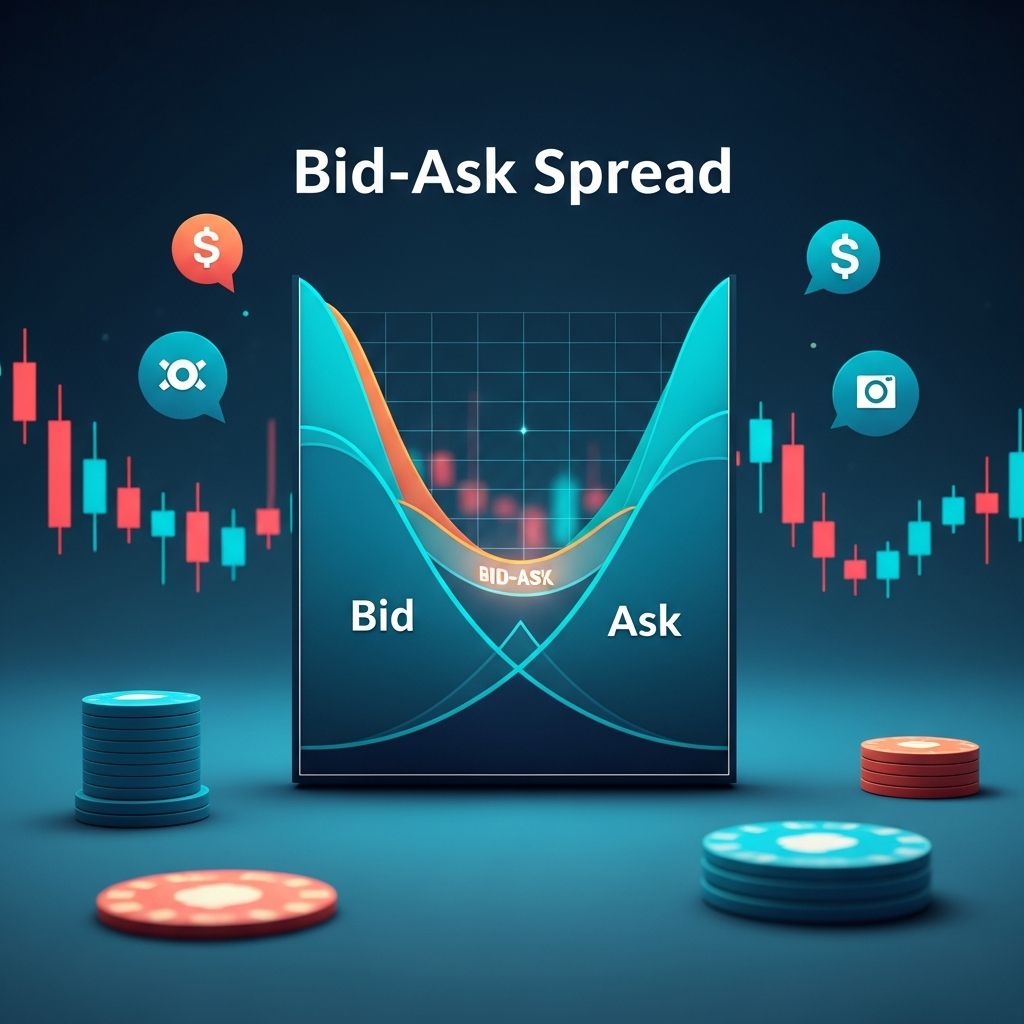
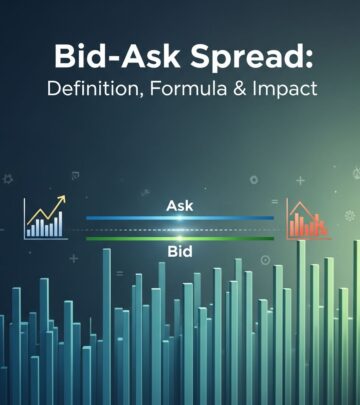
The bid-ask spread represents the fundamental gap between the highest price buyers are willing to pay for a security and the lowest price sellers are willing to accept. This difference serves as a core indicator of market liquidity and directly affects trading expenses for investors.
Defining Core Trading Prices
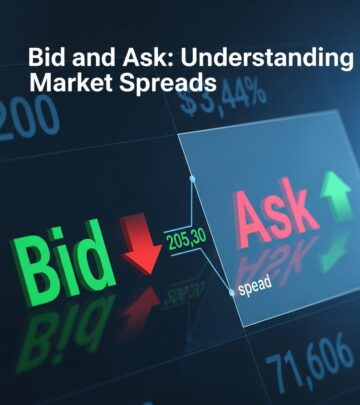
In any financial market, transactions occur through quoted prices that reflect current supply and demand dynamics. The bid price is the top amount purchasers offer, determining what sellers receive upon immediate execution. Conversely, the ask price, also known as the offer, marks the minimum figure vendors demand for quick sales.
These prices form the backbone of order books on exchanges, where market makers—specialized firms or individuals—continuously update quotes to facilitate smooth trading. Market makers profit from the spread by buying at the bid and selling at the ask, absorbing temporary risks.
Calculating the Spread Precisely
Computing the bid-ask spread is straightforward: subtract the bid from the ask. For absolute value, it’s Ask – Bid; for relative measure, use (Ask – Bid) / Ask × 100 to express as a percentage.
Consider this table of examples:
| Asset | Bid Price | Ask Price | Absolute Spread | Percentage Spread |
|---|---|---|---|---|
| Popular Stock A | $10.00 | $10.05 | $0.05 | 0.50% |
| ETF B | $50.52 | $50.55 | $0.03 | 0.06% |
| Illiquid Stock C | $125.00 | $126.00 | $1.00 | 0.79% |
Narrow spreads, like 0.03 on highly liquid assets, signal efficient markets, while wider gaps indicate higher friction.
Liquidity’s Direct Link to Spread Width
Market liquidity profoundly shapes spread size. Liquid securities, traded in high volumes daily, feature tight spreads due to abundant buyers and sellers competing aggressively. Illiquid assets, with sparse activity, exhibit wider spreads as participants demand greater compensation for risk.
- High-volume stocks (e.g., 25 million shares/day) often have spreads of 1 cent.
- thinly traded options or small-cap stocks may span several percentage points.
- Forex majors like EUR/USD maintain ultra-tight spreads from massive global turnover.
The realized spread formula further quantifies this: ( 2 times frac{|Midpoint_{k+1} – Traded Price_k|}{Midpoint_k} times 100 ), capturing post-trade adjustments by dealers.
Hidden Costs Embedded in Every Trade
Spreads impose immediate transaction costs. Buying at the ask and selling at the bid means round-trip trades incur the full spread as a loss, independent of price direction.
For frequent traders, cumulative spreads erode returns significantly. A 0.05 spread on a $10 stock costs 0.5% per round trip—multiplied across thousands of shares, it adds up. This ‘cost of immediacy’ rewards patient investors who avoid urgent market orders.
Market Makers: Bridging Buyers and Sellers
Market makers provide continuous quotes, ensuring orders execute promptly. They manage inventory risk by dynamically adjusting bids and asks based on trade flow and information.
In limit order books, aggregated public orders set prices, but designated makers narrow spreads during volatility. Their role minimizes disruptions, though wider spreads emerge in turbulent conditions.
Strategies to Navigate and Minimize Spread Impact
Smart trading mitigates spread costs through deliberate order types and asset selection.
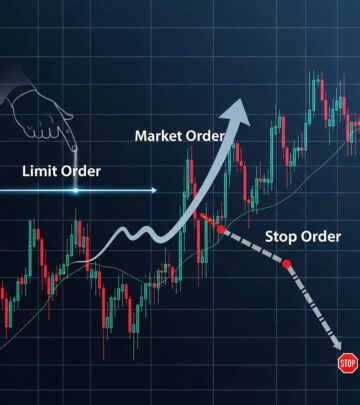
- Limit Orders: Specify exact prices, avoiding unfavorable fills. Place buys between bid and ask to potentially capture better execution.
- Market Orders: Reserve for ultra-liquid assets with spreads under 0.1%, ensuring minimal slippage.
- Liquidity Focus: Prioritize high-volume names; avoid thinly traded securities unless using limits.
- Time Trades: Execute during peak hours when competition tightens spreads.
Advanced traders monitor order book depth—volume at each price level—to gauge true liquidity beyond surface quotes.
Spread Variations Across Asset Classes
Spreads differ markedly by market segment.
| Asset Class | Typical Spread Range | Liquidity Drivers |
|---|---|---|
| Blue-Chip Stocks | 0.01-0.05% | High daily volume, institutional interest |
| ETFs | 0.02-0.10% | Creation/redemption mechanisms |
| Options | 0.10-1.00% | Strike proximity, expiration time |
| Cryptocurrencies | 0.05-0.50% | Exchange volume, volatility |
| Penny Stocks | 1.00-10.00% | Low trading activity |
Highly traded equities boast the narrowest spreads, while exotic derivatives widen due to complexity.
Volatility’s Effect on Spread Dynamics
During market stress, uncertainty prompts wider spreads as makers protect against adverse selection—trades informed by superior knowledge. Post-news events, spreads briefly expand before normalizing with new information.
Conversely, stable periods foster competition, compressing spreads to fractions of a cent.
Practical Tools for Monitoring Spreads
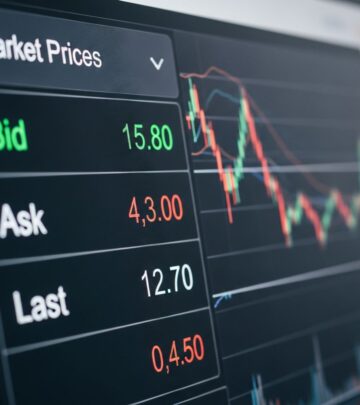
Trading platforms display real-time bid-ask data. Key metrics include:
- Last Price: Most recent transaction, often between bid and ask.
- Spread Percentage: Relative cost gauge.
- Volume at Bid/Ask: Depth indicating fill reliability.
Use Level 2 quotes for full order book visibility, revealing stacked orders beyond top quotes.
Frequently Asked Questions
What does a wide bid-ask spread indicate?
A wide spread signals low liquidity, higher risk, and elevated trading costs, common in illiquid or volatile assets.
Is a zero spread possible?
Yes, in perfectly frictionless markets, but real-world spreads persist due to maker profits and risks. Zero-spread assets are theoretical.
How do spreads affect long-term investors?
Less impact for buy-and-hold strategies, but frequent rebalancing amplifies costs—favor low-spread index funds.
Can retail traders beat wide spreads?
Yes, via limit orders and patient execution, avoiding market orders in sparse markets.
Why do forex spreads differ from stocks?
24/7 trading and massive volumes yield tighter forex spreads, often under 1 pip for majors.
Advanced Metrics: Beyond Basic Spreads
Effective spread measures actual execution versus midpoint: ( 2 times frac{|Trade Price – Midpoint|}{Midpoint} ). Price impact assesses larger orders’ effect on quotes.
High-frequency traders exploit micro-spreads, but retail focus remains on cost control.
References
- Bid–ask spread – Wikipedia — Wikipedia. 2023-10-15. https://en.wikipedia.org/wiki/Bid%E2%80%93ask_spread
- Bid Ask Spread: How It Works and Why It Matters – Gotrade — Gotrade. 2024-01-12. https://heygotrade.com/en/blog/what-is-bid-ask-spread
- Understanding Bid-Ask Spread in Trading | IG International — IG International. 2024-02-07. https://www.ig.com/en/trading-strategies/bid-ask-spread–what-is-it-and-how-does-it-work–250207
- The Bid-Ask Spread and How It Affects Trading, Prices, and Orders — Trade That Swing. 2023-11-20. https://tradethatswing.com/the-bid-ask-spread-and-how-it-affects-trading-and-orders/
- What is a bid/ask spread? – Robinhood — Robinhood. 2024-05-10. https://robinhood.com/us/en/learn/articles/what-is-a-bid-ask-spread/
- Bid and Ask – Definition, Example, How it Works in Trading — Corporate Finance Institute. 2023-09-05. https://corporatefinanceinstitute.com/resources/equities/bid-and-ask/
Similar Articles








Read full bio of Sneha Tete