Bid-Ask Spread: Definition, Formula & Impact
Understanding bid-ask spreads and their critical role in trading costs and market liquidity.
What Is a Bid-Ask Spread?
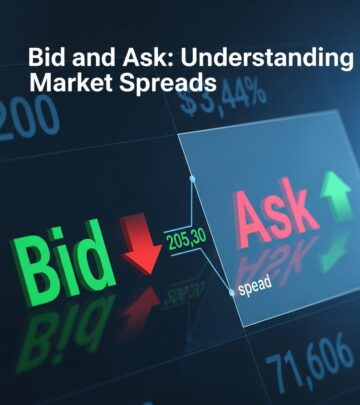
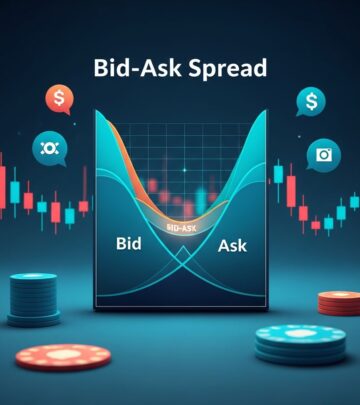
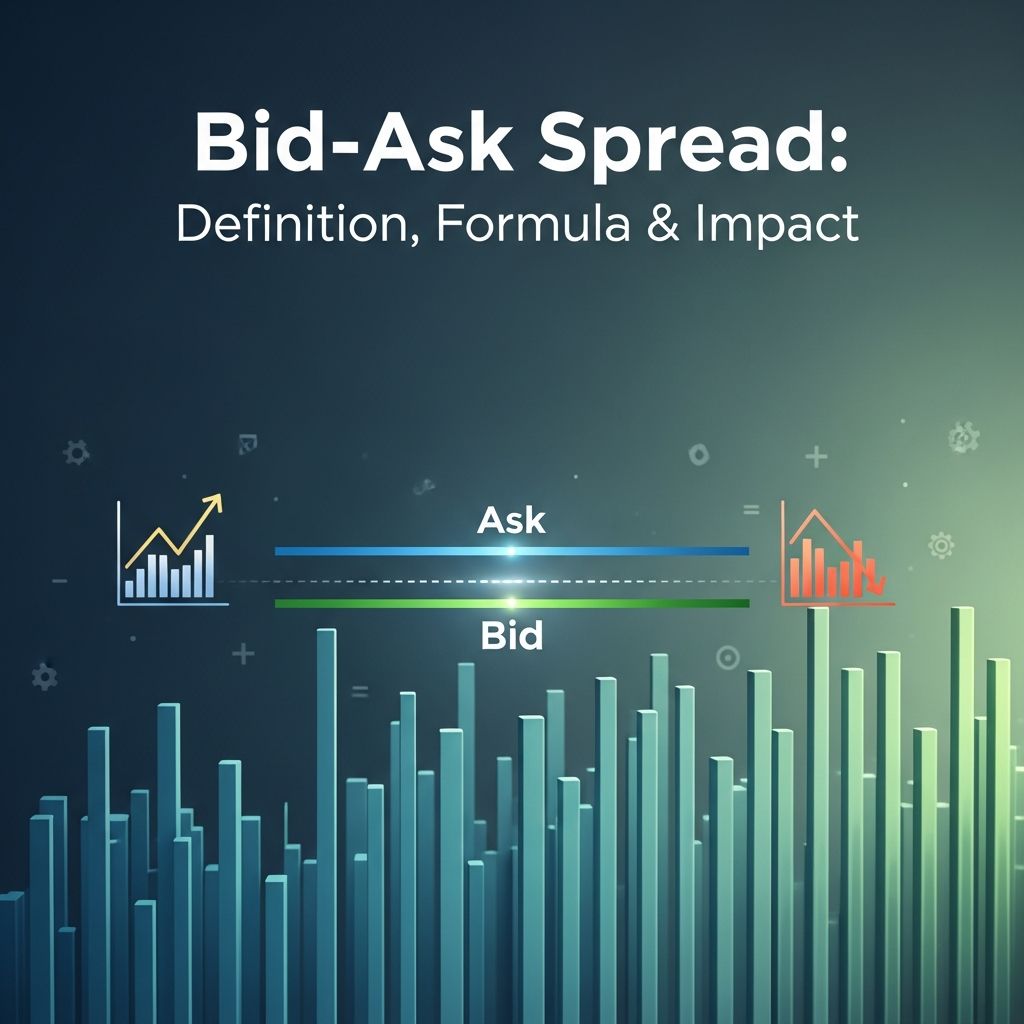
The bid-ask spread is the difference between the highest price a buyer is willing to pay for a security (the bid price) and the lowest price a seller is willing to accept (the ask price). This fundamental concept in financial markets represents one of the most critical transaction costs that investors encounter when buying or selling securities. Understanding bid-ask spreads is essential for anyone involved in trading stocks, options, futures contracts, or currency pairs.
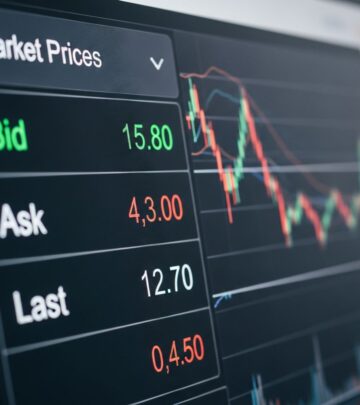
Every security traded on financial markets has two prices at any given moment. The bid price represents what buyers are currently offering to pay, while the ask price (also called the offer price) represents what sellers are asking to receive. The spread between these two prices is not arbitrary—it reflects market conditions, liquidity levels, and the costs associated with facilitating trades.
For example, if a stock has a bid price of $100 and an ask price of $100.05, the bid-ask spread would be $0.05. This spread can also be expressed as a percentage of the ask price: ($100.05 – $100.00) ÷ $100.05 × 100 = 0.05 percent. While this may seem insignificant, bid-ask spreads represent real trading costs that accumulate over time, particularly for active traders making numerous transactions.
Understanding Bid Price and Ask Price
The Bid Price is the maximum price at which traders are willing to buy an asset at any given moment. This is the price at which sellers can immediately sell their securities. The bid price is always lower than the market price and is set by market makers based on factors such as market liquidity and trading volume. When you sell a security, you receive the bid price (minus any commissions or fees).
The Ask Price is the minimum price at which traders are willing to sell an asset. Also called the offer price, the ask price is the price at which buyers can immediately purchase securities. The ask price is always higher than the market price and is also determined by market makers. When you buy a security, you pay the ask price (plus any applicable commissions or fees).
The relationship between bid and ask prices is fundamental to market mechanics. In competitive markets, the bid price will always be lower than the ask price. This gap between the two prices is where market makers earn their profit and where investors encounter their first transaction cost.
How the Bid-Ask Spread Is Calculated
The bid-ask spread is calculated through a straightforward formula. Simply subtract the bid price from the ask price:
Bid-Ask Spread = Ask Price – Bid Price
For percentage calculation, divide the spread by the ask price and multiply by 100:
Bid-Ask Spread (%) = (Ask Price – Bid Price) ÷ Ask Price × 100
Consider this example: if the ask price is £10.05 and the bid price is £10.00, the spread would be £0.05 or 0.5 percent. In forex trading, spreads are typically measured in pips—the fourth decimal place for most currency pairs, but the second decimal place for pairs involving JPY.
There is also a more complex measure called the realized spread, which accounts for how prices move after each trade:
Realized Spread = 2 × |Midpoint(k+1) – Traded Price(k)| / Midpoint(k) × 100
This formula measures the cost of immediacy by examining how dealer quotes adjust after each trade to reflect new information and inventory effects.
The Relationship Between Spreads and Market Liquidity
The bid-ask spread serves as a crucial indicator of market liquidity—the ease with which securities can be bought or sold without significantly affecting their price. One of the most important aspects of bid-ask spreads is their relationship with liquidity levels in the market.
Narrow Spreads Indicate High Liquidity When there is strong demand for a security and many buyers and sellers are actively trading, the bid-ask spread tends to be narrow. A narrow spread indicates that the security is highly liquid and actively traded. For instance, Facebook Inc., a highly traded stock with a 50-day average daily volume of 25 million shares, has a bid-ask spread of just one cent.
Wide Spreads Indicate Low Liquidity When few investors are trading a particular security, the spread widens. Markets with wide bid-ask spreads are typically less liquid than markets with narrow spreads. The spread widens because there aren’t high levels of supply and demand, making it difficult to quickly match buy and sell orders. The higher transaction cost, in the form of a larger spread, compensates the market maker for dealing with illiquid securities.
Generally, smaller spreads indicate more actively traded and liquid assets, while larger spreads suggest less frequently traded securities. This relationship is consistent across different asset classes, including stocks, options, futures, and currency pairs.
Why Bid-Ask Spreads Exist and Who Benefits
Bid-ask spreads exist for several important reasons in financial markets. First, they represent compensation to market makers for providing liquidity and facilitating trades. Market makers are intermediaries who stand ready to buy and sell securities, keeping markets orderly and ensuring that buyers and sellers can complete transactions efficiently.
Without bid-ask spreads, market makers would have no incentive to provide this essential service. The spread is essentially their profit margin—the difference between what they pay to buy a security and what they receive when selling it. This spread compensates them for their role in maintaining continuous market operation and reducing transaction friction.
Additionally, bid-ask spreads reflect the immediate cost of trading without delay. When traders need to execute orders immediately rather than wait for better prices, they must accept the current bid or ask price, effectively paying the spread as a cost for speed and certainty of execution.
Impact of Bid-Ask Spreads on Trading Costs
Every time you open or close a position, you pay the spread—it’s built directly into the price you trade at. When you buy a security, you pay the higher ask price. When you sell, you receive the lower bid price. This means you start each trade at a small loss equal to the spread, which must be recovered through favorable market movement before you can achieve profitability.
While bid-ask spreads may appear insignificant on individual trades, they represent real and measurable transaction costs. In extreme cases, wide spreads may amount to a non-trivial percentage of a trade’s value. This is particularly important for active traders who execute numerous transactions daily, as spreads can accumulate into substantial costs.
The transaction cost composition of financial markets typically includes two primary elements: brokerage fees and bid-ask spreads. Under competitive conditions, the bid-ask spread measures the cost of making transactions without delay, representing the difference in price paid by an urgent buyer and received by an urgent seller.
Factors Affecting Bid-Ask Spread Width
Several factors influence how wide or narrow a bid-ask spread will be at any given time:
Trading Volume: Securities with higher trading volumes typically have narrower spreads because there are more market participants willing to buy and sell at similar prices.
Market Volatility: During periods of high volatility, market makers often widen spreads to compensate for increased risk and uncertainty in price movements.
Company Size: Bid-ask spreads tend to be wider for small-cap stocks than they are for large-cap stocks. Large, well-established companies attract more traders and institutional investors, resulting in higher liquidity and narrower spreads.
Time of Day: Spreads often vary throughout the trading session, typically being tighter during peak trading hours when volume is highest.
Market Conditions: During market stress or uncertainty, spreads tend to widen as market makers become more cautious.
Strategies for Minimizing Bid-Ask Spread Costs
Active traders and investors can employ several strategies to minimize the impact of bid-ask spreads on their trading:
Work Your Order: Rather than accepting the current ask price when buying, you could offer a lower price, or when selling, offer a higher price. This strategy involves patience and willingness to wait for more favorable execution.
Trade More Liquid Securities: Focus on stocks and securities with high trading volumes and narrow bid-ask spreads. These typically offer better execution prices and lower overall transaction costs.
Use Market-Timing Strategies: Trading during peak market hours when volume is highest often results in tighter spreads and better liquidity.
Limit Orders: Using limit orders allows you to specify the exact price at which you’re willing to buy or sell, potentially avoiding the full ask or bid spread.
Consider the Midpoint: The mark price—halfway between the bid and ask—might offer a better price, though your order may not fill as quickly.
Bid-Ask Spreads in Different Markets
Bid-ask spreads manifest differently across various financial markets:
Stock Markets: In equity markets, spreads are typically quoted in cents or dollars, with highly liquid large-cap stocks showing spreads of just a few cents.
Options Markets: Getting a fill on options orders often involves a tradeoff between price and speed, with wider spreads more common in less actively traded options contracts.
Futures Markets: Futures spreads vary based on contract liquidity and market conditions, measured in points or price increments specific to each contract.
Currency Markets: Forex spreads are measured in pips, with major currency pairs like EUR/USD typically showing very tight spreads due to high trading volume, while exotic pairs may have wider spreads.
Bid-Ask Spread as a Measure of Liquidity
The bid-ask spread is an accepted measure of liquidity costs in exchange-traded securities and commodities. It provides investors and traders with valuable information about market conditions and the ease of executing trades. A frictionless asset would have a spread of zero, but this is rarely achieved in real markets.
Understanding what the spread tells you in different market situations is important for making informed trading decisions. Wide spreads signal illiquidity and higher transaction costs, while narrow spreads indicate an active, liquid market where trading is efficient and costs are minimized.
Frequently Asked Questions
Q: How does the bid-ask spread affect my investment returns?
A: The bid-ask spread represents an immediate cost when you trade. You lose money equal to the spread every time you buy or sell, which must be recovered through favorable price movements before you see a profit. For frequent traders, these costs accumulate significantly.
Q: Why is the bid price always lower than the ask price?
A: The bid price is always lower because it represents what buyers are willing to pay, while the ask price represents what sellers are willing to accept. This difference creates the spread that compensates market makers for facilitating trades and providing liquidity.
Q: Can the bid-ask spread ever be zero?
A: In theory, a frictionless asset would have a zero spread, but this rarely occurs in real markets. Even the most liquid securities have some spread, though it may be very small.
Q: How can I find securities with narrow bid-ask spreads?
A: Focus on large-cap stocks, major currency pairs, and other highly traded securities. You can check bid-ask spreads on your brokerage platform before trading, and compare spreads across different securities to find the most liquid options.
Q: Is the bid-ask spread the same as the brokerage commission?
A: No, they are different. The bid-ask spread goes to the market maker, while commissions are fees paid to your broker. Together, these two costs comprise most transaction costs in trading.
References
- Bid–ask spread — Wikipedia. https://en.wikipedia.org/wiki/Bid%E2%80%93ask_spread
- What is a bid/ask spread? — Robinhood Financial. https://robinhood.com/us/en/learn/articles/what-is-a-bid-ask-spread/
- Bid-Ask Spread: How It Works In Trading — Bankrate. https://www.bankrate.com/investing/what-is-bid-ask-spread/
- Understanding Bid-Ask Spread in Trading — IG International. https://www.ig.com/en/trading-strategies/bid-ask-spread–what-is-it-and-how-does-it-work–250207
- Bid and Ask – Definition, Example, How it Works in Trading — Corporate Finance Institute. https://corporatefinanceinstitute.com/resources/equities/bid-and-ask/
Similar Articles








Read full bio of Sneha Tete