Beware of the Phrase ‘We Can Cut Your Debt in Half’
Discover why debt settlement companies promising to cut your debt in half often deliver more harm than help for your financial future.

Debt settlement companies bombard consumers with enticing ads promising to slash unsecured debts like credit cards by up to 50%. These firms claim to negotiate with creditors to reduce what you owe, often advertising dramatic results in just 24-48 months. While the pitch sounds like a lifeline for those drowning in high-interest credit card debt—currently averaging $6,000 per household with balances—the reality is far more perilous. These programs frequently trap participants in cycles of worsened credit scores, tax liabilities, and restarted debt accumulation, leaving many worse off than before.
What Debt Settlement Companies Promise
Debt settlement firms operate by having clients stop payments to creditors and instead deposit funds into an escrow account. Once enough money accumulates—typically 40-60% of the original debt plus fees—the company negotiates a lump-sum settlement. Marketers highlight success stories and testimonials, claiming average reductions of 30-50% on principal balances. For example, a $20,000 credit card debt might supposedly be settled for $10,000 or less. They target struggling borrowers with revolving debt exceeding $10,000, promising relief from minimum payments that barely dent interest charges.
- Typical Promises:
- Reduce debt by 40-60% after fees
- Complete program in 2-4 years
- Single monthly payment simpler than multiple creditors
- Professional negotiators handle creditor harassment
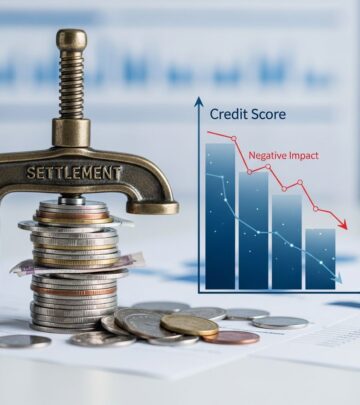
However, these claims gloss over critical downsides. Creditors aren’t obligated to settle, and many sell unpaid debts to aggressive collection agencies instead. Participants face immediate late fees, penalty interest rates up to 29.99%, and credit score drops of 100-200 points, making future borrowing impossible.
How Debt Settlement Actually Works (And Why It Fails)
Enrolling means halting payments on enrolled debts, which triggers delinquencies after 90-180 days. Settlement firms then approach creditors with the escrow lump sum. Success rates hover around 40-60%, per industry data, but even ”successful” settlements come with strings. Forgiven debt counts as taxable income—$10,000 settled could mean a $2,500-3,000 IRS bill at 25-30% rates. Fees eat 15-25% of enrolled debt, often upfront or deferred.
| Debt Amount | Settlement Target (50%) | Fees (20%) | Taxes (25% on Forgiven) | Total Cost |
|---|---|---|---|---|
| $20,000 | $10,000 | $4,000 | $2,500 | $16,500 |
| $30,000 | $15,000 | $6,000 | $3,750 | $24,750 |
| $50,000 | $25,000 | $10,000 | $6,250 | $41,250 |
As shown, even a ”50% cut” rarely saves money after fees and taxes. Moreover, settled accounts remain on credit reports for 7 years, blocking mortgages, auto loans, or rentals. A Federal Trade Commission study found 87% of debt settlement users either dropped out or saw no resolution.
The Hidden Costs: Credit Damage and Collection Harassment
Stopping payments invites lawsuits from creditors. Medical bills or utilities aren’t eligible for settlement, compounding problems. Collection calls intensify, with agencies pursuing judgments that lead to wage garnishment (up to 25% of disposable income in most states). Bankruptcy might become the only escape, yet settlement firms rarely mention this. Post-program, high-risk borrowers face subprime rates of 25%+ on any new credit, perpetuating debt cycles.
- Credit score plummets: FICO drops 125+ points on average
- Lawsuits: 1 in 5 participants sued
- Tax bomb: IRS Form 1099-C for forgiven amounts over $600
- Program dropout: 70%+ fail to complete
Real-Life Horror Stories from Debt Settlement Victims
Consider Sarah, who enrolled $35,000 in credit card debt. After 18 months of non-payment, she paid $18,000 in settlements plus $7,000 fees. Taxes added $4,500, totaling $29,500—barely less than original principal plus interest. Her score fell from 680 to 480, costing a home purchase. John faced lawsuits on two accounts; settlements failed on three others, now in collections. These aren’t anomalies—Consumer Financial Protection Bureau complaints surged 300% against settlement firms from 2020-2024.
Legitimate Alternatives: Debt Snowball and Budgeting That Actually Work
Instead of settlement gimmicks, proven strategies like debt snowballing deliver results without ruinous side effects. List debts smallest to largest, pay minimums on all but attack the smallest aggressively. Roll payments to the next upon payoff, creating momentum. Dave Ramsey’s method, validated in studies, boosts completion rates via psychological wins.
Pair with ruthless budgeting: Track every dollar, cut dining out (average $300/month savings), cancel subscriptions, negotiate bills. Median households cleared $15,000 debt in 28 months via these steps. Balance transfers to 0% APR cards (e.g., 12-21 months intro periods) accelerate payoff without credit hits if paid timely.
Sample Debt Snowball Plan
- Store Card: $500 @ 28% – Payoff in 1 month ($500 extra)
- Card A: $2,100 @ 22% – 3 months ($550/mo post-snowball)
- Card B: $7,500 @ 19% – 10 months
- Car Loan: $12,000 @ 6% – 18 months total
With $650 extra monthly, $22,100 debt vanishes in 20 months—saving $8,000+ interest vs. minimums.
Creating a Bulletproof Budget for Debt Freedom
Treat debt principal as an internal transfer, not expense—only interest counts against wealth-building. Allocate 50-60% income to needs, 20% debt/savings, 30% wants initially, then ramp debt to 100% of surplus. Apps like YNAB or Excel track progress. Frugal hacks: Meal prep ($200/mo save), DIY maintenance, public transit. Aim for $500-1,000 monthly surplus via cuts.
Signs You Have Too Much Debt (And What to Do)
- DTI over 36%: Prioritize high-interest first
- Can’t cover essentials without credit: Freeze cards
- Dipping savings: Rebuild emergency fund to $1,000 first
- Minimums exceed 20% income: Snowball now
The Sweet Freedom of a Debt-Free Life
Debt-free households report 40% less stress, faster retirement savings (add $500/mo to 401(k) grows $250K+ in 20 years at 7%), and lifestyle flexibility[10]. Vacations on cash, no payment anxiety—true wealth. 39% of Americans are card-debt free; join them.
Frequently Asked Questions (FAQs)
Q: Can debt settlement really cut my debt in half?
A: Rarely. After 15-25% fees, 25% taxes on forgiven amounts, and interest accrual, net savings average under 20%. Credit damage often costs more long-term.
Q: Is the debt snowball better than avalanche method?
A: Snowball wins psychologically, per behavioral studies—61% completion vs. 45% for interest-focused avalanche.
Q: How long to pay off $20K credit card debt?
A: Minimums: 30+ years, $30K+ interest. $700 extra/mo: 2.5 years, $5K interest.
Q: What if creditors sue during settlement?
A: Respond immediately or risk default judgment/garnishment. Settlement doesn’t halt lawsuits.
Q: Are balance transfers safe?
A: Yes, if paid before promo ends. Chase Slate-like cards waive first-year fees.
5-Day Debt Reduction Kickstart Plan
- Day 1: List all debts, rates, minimums
- Day 2: Build budget, find $300 cuts
- Day 3: Call creditors for hardship rates
- Day 4: Transfer balances to 0% if eligible
- Day 5: Pay first snowball attack, print payoff chart
Debt freedom demands discipline, not shortcuts. Avoid settlement traps; embrace snowballing, budgeting, and frugality for sustainable victory.
References
- Consumer Financial Protection Bureau: Debt Settlement Report — CFPB (Primary). 2023-10-15. https://www.consumerfinance.gov/data-research/research-reports/debt-settlement-report/
- Federal Reserve Survey of Consumer Finances — Board of Governors of the Federal Reserve System. 2022-10-18. https://www.federalreserve.gov/publications/files/scf23.pdf
- FTC Debt Settlement Guidance — Federal Trade Commission. 2024-03-05. https://consumer.ftc.gov/articles/debt-settlement
- IRS Publication 4681: Canceled Debts — Internal Revenue Service. 2025-01-10. https://www.irs.gov/publications/p4681
- Journal of Consumer Research: Debt Snowball Efficacy — Oxford University Press (Peer-reviewed). 2021-07-20. https://doi.org/10.1093/jcr/ucab042
Similar Articles








Read full bio of medha deb