Best Stock Brokers for Fractional Share Investing
Discover top brokers offering fractional shares with low minimums and zero commissions.

Understanding Fractional Shares: A Gateway to Affordable Investing
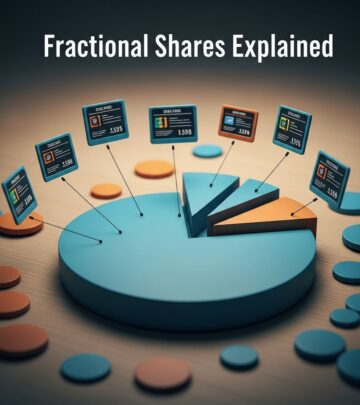
Fractional shares have revolutionized how everyday investors can build their investment portfolios. Rather than requiring enough capital to purchase an entire share of an expensive stock, fractional shares allow you to invest any dollar amount, making stock market investing accessible to virtually anyone. Whether you have $5, $25, or $100 to invest, fractional shares enable you to own a proportional piece of companies regardless of their share price.
The concept is straightforward yet powerful. When you buy a fractional share through a broker, you’re purchasing a portion of a whole share that the broker holds in custody. Your account reflects your specific slice of that pooled share, and your fractional position rises and falls directly with the underlying stock’s price movements. This democratization of investing has opened doors for beginners, small investors, and anyone looking to diversify their portfolio without the burden of high minimum investments.
How Fractional Shares Work
Understanding the mechanics of fractional share trading helps demystify this investment approach. The process differs fundamentally from traditional whole share trading, involving multiple steps that ensure fairness and accuracy for all investors.
The Broker’s Role
Your broker aggregates orders from thousands of customers and purchases whole shares in their custody. Rather than you directly owning a full share, your account reflects your specific fraction of that aggregated pool. For example, if Tesla trades at $250 per share and you invest $25, you receive 0.1 TSLA in your account. This fraction is not a synthetic derivative or promise—it represents real ownership in the company proportional to your investment.
Ownership and Control
You own a genuine proportional slice of a share held by the broker on your behalf. When the underlying stock price changes, your fractional share value changes proportionally. If Tesla rises to $300 per share, your 0.1 shares would be worth $30. You maintain full control over your fractional position, able to sell it during normal market hours just as easily as you would a whole share.
Dividend Payments
One significant advantage of fractional share ownership is that you receive dividends proportionally based on your stake. If a company pays $1 per share in dividends and you own 0.5 shares, you receive $0.50. Many brokers allow you to reinvest these dividends directly into additional fractional shares, enabling compound growth even with small positions. This feature transforms fractional shares from a limited trading tool into a comprehensive wealth-building mechanism.
Liquidity and Selling
Selling fractional shares is as simple as buying them. During normal market hours, you can liquidate your fractional position at the current market price, and the broker converts your fraction back into cash. This immediate liquidity ensures you’re never trapped in a position, and the bid-ask spreads you experience are proportionally equivalent to the spreads for whole shares.
Top Stock Brokers for Fractional Share Investing
Multiple brokers now offer fractional share programs, each with distinct features, minimums, and security selections. Here’s a comprehensive comparison of the leading platforms:
Charles Schwab: Stock Slices
Charles Schwab’s Stock Slices program offers an excellent entry point for fractional share investors. You can purchase fractional shares of any stock in the S&P 500 Index with just a $5 minimum investment. The program allows you to buy up to 30 slices at a time, providing substantial diversification opportunities even with limited capital. Like all Charles Schwab equity trades, fractional share purchases carry zero commissions, and you can reinvest any dividends back into fractional shares of the same stock. With access to approximately 500 securities including all S&P 500 constituents, Charles Schwab provides excellent breadth for both conservative and growth-oriented investors.
Fidelity Investments: Stocks by the Slice
Fidelity’s Stocks by the Slice program stands out for its remarkably low $1 minimum investment, the lowest among major brokers. This feature makes Fidelity particularly appealing for investors testing the fractional share waters or those with very limited capital. You can purchase fractional shares of more than 7,000 stocks and ETFs listed on U.S. exchanges, providing exceptional breadth. Fidelity maintains zero trading commissions for online U.S. stock and ETF trades, and their dividend reinvestment program works seamlessly with fractional shares, allowing you to build positions automatically without manual intervention.
Robinhood: Fractional Shares for Everyone
Robinhood has built its reputation on commission-free trading and fractional share accessibility. What sets Robinhood apart is its extreme granularity—you can purchase as little as one-millionth of a share of your favorite stocks. This capability appeals to investors who want maximum flexibility in position sizing. Eligible securities include stocks trading over $1 per share with market capitalization greater than $25 million, plus a wide range of ETFs. Robinhood also enables dividend reinvestment into fractional shares, though you must activate this feature first to participate.
Firstrade: Affordable Access with Broad Selection
Firstrade offers fractional shares with a $5 minimum investment across more than 4,000 stocks and ETFs. Their commission-free structure extends not just to stock and ETF trades but also to options trading, making Firstrade a comprehensive platform for diverse trading strategies. The broker enables dividend reinvestment into fractional shares, supporting passive wealth accumulation alongside active trading.
Tastytrade: Advanced Fractional Trading
While primarily known for short-term trading capabilities, Tastytrade has expanded its appeal to long-term investors through fractional shares. The platform requires a $5 minimum purchase and charges a $0.10 clearing fee per fractional share transaction—a minor cost for most investors. Tastytrade offers thousands of stocks and ETFs for fractional investment and supports dividend reinvestment, making it suitable for building diversified long-term positions while maintaining access to advanced trading tools.
SoFi Active Investing: Low-Cost Leaders
SoFi Active Investing extends its low-cost leadership philosophy to fractional shares. You can buy fractional shares directly with a $5 minimum and reinvest dividends into fractional shares—a combination not universally available at competitors. To reinvest dividends, the stock price must exceed $4 per share, which covers most U.S. stocks and foreign securities trading on U.S. exchanges. This requirement is rarely restrictive and captures the vast majority of investable stocks.
Key Benefits of Fractional Share Investing
Fractional shares offer multiple compelling advantages that extend far beyond simply requiring less capital:
Lower Barriers to Entry
The primary benefit is accessibility. Instead of needing hundreds or thousands of dollars to purchase shares of expensive stocks like Berkshire Hathaway (valued above $500,000 per share), you can invest any dollar amount. This democratization of stock ownership means beginners and capital-constrained investors can participate in wealth-building opportunities previously reserved for the wealthy.
Complete Capital Deployment
With whole share investing, capital inefficiency is common. If you have $1,000 and a stock trades at $450, you can only purchase two shares for $900, leaving $100 uninvested. With fractional shares, that entire $1,000 deploys into 2.222 shares, ensuring your full capital works for you. This complete deployment substantially improves returns over time, especially for investors who execute trades frequently.
Simplified Decision-Making
Fractional shares eliminate complex calculations. Instead of determining how many whole shares your capital permits, you simply decide your investment amount. The broker handles the conversion to fractional shares automatically, streamlining the investment process and reducing decision friction.
Dividend Reinvestment Efficiency
When receiving dividends on fractional shares, reinvesting those payments immediately rather than accumulating cash improves compounding efficiency. Many brokers automate this process, enabling truly passive wealth building with minimal investor intervention.
Important Considerations and Limitations
Transfer Restrictions
A significant limitation of fractional share investing is transfer inflexibility. Some brokers prohibit directly transferring fractional shares to other firms. Instead, they liquidate fractional positions, sell the remaining fractions, and transfer the resulting cash. While you can repurchase fractional shares at your new brokerage, this forced liquidation may trigger unintended tax consequences, broker fees, and additional costs. Additionally, different brokerages may not offer the same fractional stocks, making transfers even more complicated.
Voting Rights Complications
Fractional shareholders typically lack voting rights in company matters. Brokerage policies vary significantly—some only grant voting rights to whole share owners, while others provide proxy voting rights by aggregating fractional votes into whole shares before reporting to company issuers. This limitation matters for activist investors but is immaterial for most passive investors.
Corporate Action Handling
During stock splits, mergers, acquisitions, and dividend distributions, brokers handle fractional shares inconsistently. Some pay out a fraction’s value in cash, others adjust fractional holdings proportionally, and policies may vary within a single broker across different corporate actions. Understanding your broker’s specific policies prevents unwanted surprises.
Bid-Ask Spread Considerations
While fractional shares experience proportionally equivalent bid-ask spreads to whole shares, the absolute dollar impact of these spreads is smaller. This is advantageous—you pay less in spreads due to your smaller position size. However, the percentage impact may feel more significant on tiny positions, so consider this when investing very small amounts.
Comparison Table: Top Fractional Share Brokers
| Broker | Minimum Investment | Available Securities | Commission | Dividend Reinvestment | Transfer Restrictions |
|---|---|---|---|---|---|
| Charles Schwab | $5 | ~500 (S&P 500 stocks) | Free | Yes | Moderate |
| Fidelity | $1 | 7,000+ | Free | Yes | Moderate |
| Robinhood | Variable | Thousands | Free | Yes (manual activation) | Significant |
| Firstrade | $5 | 4,000+ | Free | Yes | Moderate |
| Tastytrade | $5 | Thousands | $0.10/trade | Yes | Moderate |
| SoFi Active Investing | $5 | Thousands | Free | Yes (stock price >$4) | Moderate |
Is Fractional Share Investing Right for You?
Fractional shares are ideally suited for several investor profiles. Beginners with limited capital can access stock market investing without overwhelming themselves with large positions. Young professionals saving gradually can invest consistently through dollar-cost averaging, purchasing more shares when prices are high and fewer when prices are low. Investors seeking to allocate capital across numerous holdings for diversification can do so efficiently with small amounts per position. Additionally, those wanting to reinvest dividends automatically benefit from fractional share dividend reinvestment programs that compound wealth passively.
Conversely, fractional shares may not be optimal for active traders executing frequent transfers between brokers, tax-loss harvesting specialists concerned about wash sale implications, or investors primarily focused on exercising shareholder voting rights.
Frequently Asked Questions
Q: Are fractional shares real ownership?
A: Yes, fractional shares represent genuine ownership in the company. You own a proportional slice of a share held by your broker. Your fractional stake rises and falls directly with the underlying stock price, and you receive dividends proportional to your ownership percentage.
Q: Can I sell fractional shares anytime?
A: Yes, you can sell fractional positions during normal market hours just like whole shares. The broker converts your fraction back into cash at the executed market price. Liquidity is immediate, and there’s no lock-in period.
Q: Do I receive dividends on fractional shares?
A: Absolutely. The dividend amount you receive is proportionate to your share ownership. If a company pays $2 per share and you own 0.5 shares, you receive $1. Many brokers allow automatic reinvestment of these dividends into additional fractional shares.
Q: What happens to fractional shares during stock splits?
A: Stock splits typically create fractional shares for investors who don’t own an exact multiple of the split ratio. For a 2-for-1 split, an investor with 9 shares receives 18 shares. The handling varies by broker—some adjust holdings proportionally while others may handle differently based on corporate action policies.
Q: Can I transfer fractional shares between brokers?
A: This is complicated. Many brokers prohibit direct fractional share transfers. Instead, they liquidate fractional positions, sell remaining fractions, and transfer resulting cash. You can repurchase at your new brokerage, but forced liquidation may trigger tax consequences and fees. Check with both brokers before transferring.
Q: How precise can fractional share quantities be?
A: Most brokers allow fractional shares out to three decimal places (.001). For example, you could own exactly 1.234 shares. This precision enables dollar-based ordering—specifying investment amounts rather than share quantities.
Q: Do fractional share owners have voting rights?
A: This varies by broker. Some brokers only grant voting rights to whole share owners, while others provide proxy voting rights by aggregating fractional votes. Check your broker’s specific policy if voting rights are important to you.
Q: Are there any trading fees for fractional shares?
A: Most major brokers offer commission-free fractional share trading. Notable exceptions include Tastytrade, which charges $0.10 per fractional share transaction. Compare fee structures across platforms to minimize trading costs.
References
- Fractional Shares: What are they and how do they work? — Apex Fintech Solutions. 2024. https://apexfintechsolutions.com/news-resources/blog/fractional-shares-what-are-they-and-how-do-they-work/
- Best Brokers For Fractional Share Investing — Bankrate. 2024. https://www.bankrate.com/investing/best-brokers-fractional-share-investing/
- Fractional Shares | Dollar-based Investing — Fidelity Investments. 2024. https://www.fidelity.com/learning-center/trading-investing/fractional-shares
- Fractional Shares Explained: Invest In US Stocks From Any Amount — HeyGoTrade. 2024. https://www.heygotrade.com/en/blog/fractional-shares-explained/
- What are Fractional Shares? — Curvo. 2024. https://curvo.eu/article/what-are-fractional-shares
- What are Fractional Shares and How do You Buy Them? — Chase. 2024. https://www.chase.com/personal/investments/learning-and-insights/article/what-are-fractional-shares-and-how-do-they-work
- Fractional Shares — Interactive Brokers. 2024. https://www.interactivebrokers.com/campus/trading-lessons/fractional-shares/
Similar Articles








Read full bio of Sneha Tete