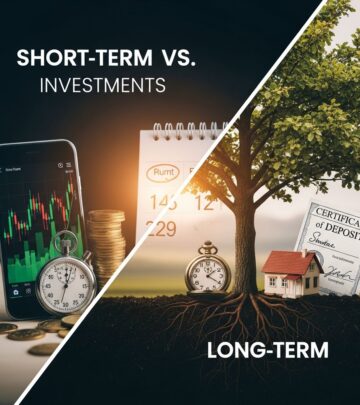
Short-Term Investments: 8 Best Options For 2025
Discover safe, accessible short-term investments with competitive returns for your financial goals.

Understanding Short-Term Investments in 2025
Short-term investments represent a fundamental component of a well-balanced financial strategy. Unlike their long-term counterparts, these investment vehicles prioritize liquidity and capital preservation while still offering competitive returns. The primary advantage of short-term investments is their accessibility—you can tap into your funds when needed without incurring significant penalties or losses. This characteristic makes them ideal for holding emergency funds, saving for near-term goals, or parking cash while you decide on longer-term investments.
The investment landscape has shifted considerably, with current economic conditions making short-term investments increasingly attractive. Higher interest rates have enhanced the returns available through various short-term vehicles, allowing investors to earn meaningful income on their cash without excessive risk exposure.
Why Choose Short-Term Investments?
Short-term investments offer distinct advantages for specific financial situations. They provide peace of mind through capital preservation, ensure rapid access to funds when circumstances change, and deliver competitive returns in today’s interest-rate environment. These investments typically carry significantly lower risk than equities or long-term bonds, making them suitable for conservative investors or those with defined short-term financial objectives.
The safety profile of short-term investments stems from federal insurance protections, established institutional backing, and the predictable nature of shorter maturity periods. For investors with a time horizon of less than three years, short-term investments present a compelling alternative to keeping money in traditional savings accounts that offer minimal returns.
1. High-Yield Savings Accounts
High-yield savings accounts represent one of the most accessible entry points into short-term investing. These accounts function similarly to traditional savings accounts but offer substantially higher interest rates through online banks and credit unions. The fundamental appeal lies in their simplicity: deposit your money, earn competitive interest, and maintain complete access whenever needed.
High-yield savings accounts currently offer annual percentage yields of 4.20% or higher, dramatically exceeding the pittance offered by conventional savings accounts. These accounts maintain Federal Deposit Insurance Corporation (FDIC) protection up to $250,000 per depositor, ensuring your principal remains safe regardless of market conditions. The interest accrues regularly and compounds over time, though you can withdraw funds without penalties whenever necessary.
These accounts are particularly well-suited for emergency funds, short-term savings goals, and money you need readily accessible. There are no trading fees, no market risk, and no complex investment decisions required—simply open an account and begin earning immediately.
2. Cash Management Accounts
Cash management accounts offer a hybrid approach that bridges traditional banking and investment management. These accounts, typically offered by brokers and robo-advisors, allow you to invest in multiple short-term vehicles simultaneously while maintaining liquidity and earning competitive interest rates.
The primary benefit of cash management accounts is flexibility. Rather than being confined to a single investment type, you can diversify your short-term holdings across various securities and accounts. Many cash management accounts include features resembling traditional checking and savings accounts, such as debit cards and bill-pay functionality, while potentially offering higher yields than standard bank accounts.
These accounts work exceptionally well for investors who want professional management of their liquid cash reserves without the complexity of managing multiple separate accounts. They’re ideal for those transitioning between investment positions or building an emergency reserve with enhanced earning potential.
3. Money Market Accounts
Money market accounts occupy a middle ground between traditional savings accounts and investment products. These bank deposits typically offer higher interest rates than regular savings accounts while still maintaining FDIC protection. However, they generally require higher minimum deposits than standard savings accounts, creating a barrier for some investors.
Money market accounts work well for individuals who can maintain substantial minimum balances and need flexible access to their funds. The higher interest rates compensate for the increased minimum deposit requirements, making these accounts attractive for those with larger sums to invest short-term. You maintain check-writing privileges and debit card access while earning significantly more than conventional savings vehicles.
4. Certificates of Deposit (CDs)
Certificates of deposit represent a time-tested short-term investment vehicle that has remained popular for decades. CDs are issued by banks and involve depositing money for a fixed period in exchange for a guaranteed interest rate. Terms typically range from three months to five years, with shorter-term CDs perfectly suited for two to three-year investment horizons.
The advantage of CDs is certainty—you know exactly what return you’ll receive regardless of market fluctuations. Current CD rates offer 3.7% or higher for appropriate terms, and FDIC insurance protects your full principal investment. The primary drawback is liquidity: early withdrawal typically triggers penalties that reduce your earnings.
Short-term CDs are particularly valuable when you have a specific timeline for needing funds, such as saving for a down payment or known upcoming expenses. The guaranteed returns eliminate guesswork and provide peace of mind.
5. Short-Term Bond Funds
Short-term bond funds have gained prominence as higher interest rates have made fixed-income investments more attractive. These funds invest in bonds with maturities typically ranging from one to five years, offering superior returns compared to savings accounts while maintaining relatively low risk.
Popular short-term bond funds include the SPDR Portfolio Short-Term Corporate Bond ETF (SPSB) with a 4.7% yield and 0.04% expense ratio, the Vanguard Short-Term Bond ETF (BSV) offering 3.7% yield with minimal 0.03% expenses, and the Fidelity Short-Term Bond Fund (FSHBX) providing 4.2% yield. These funds hold investment-grade corporate bonds, government securities, and other high-quality debt instruments.
Short-term bond funds are ideal for investors saving for goals three to five years away who want returns exceeding savings account rates without the volatility of longer-term bonds or equities. The funds provide diversification across multiple issuers, reducing individual credit risk.
6. Treasury Securities and Treasury ETFs
U.S. Treasury securities represent the safest investment possible, backed by the full faith and credit of the federal government. Treasury bills expire in less than one year and currently provide safe returns that fluctuate with the Federal Reserve’s interest rate decisions. Treasury ETFs that hold short-term Treasury bills offer the convenience of mutual fund investing with government-backed security.
These vehicles suit investors prioritizing absolute safety over maximum returns. While Treasury yields are typically lower than corporate bonds or CDs, the unparalleled safety profile and liquidity justify their inclusion in short-term portfolios. Treasury ETFs pay accumulated interest monthly and slowly increase in value between distributions.
7. Money Market Funds
Money market funds invest in short-term securities including government bonds, corporate debt, and commercial paper, providing stable returns with minimal volatility. The JPMorgan Prime Money Market Fund (VMVXX), for example, yields 3.69% with a 0.48% expense ratio and $90.4 billion in assets.
These funds maintain a share price of approximately $1.00 while providing current income from accumulated interest. They’re particularly suitable for conservative investors seeking returns above savings account levels with stability comparable to bank deposits. Money market funds offer excellent liquidity—you can typically access funds within days—while maintaining professional management.
8. Corporate Bonds and Bond Funds
Direct corporate bond investment or exposure through bond mutual funds and ETFs provides another avenue for short-term investing. Investment-grade corporate bonds offer higher yields than government securities while maintaining reasonable safety for those with moderate risk tolerance. Short-term corporate bond funds specifically target companies’ debt with one to three-year maturities.
These investments suit investors seeking better returns than Treasury securities or CDs without accepting equity market volatility. Corporate bonds from established, financially sound companies provide meaningful income while preserving capital for defined investment periods.
Investment Timeline and Strategy Selection
Selecting the appropriate short-term investment depends significantly on your specific timeline and financial objectives. The following guidance helps align investments with timeframes:
| Investment Timeframe | Suitable Investments | Expected Returns | Risk Level |
|---|---|---|---|
| One year or less | High-yield savings, money market accounts, cash management accounts | 3.7% or higher | Low risk with FDIC protection |
| Two to three years | Treasury securities, bond funds, CDs | 3.7% or higher | Bank products and Treasuries safest; corporate bonds slightly riskier |
| Three to five years | CDs, bonds, bond funds, stocks for longer periods | Up to 4.2% or more with stocks | CDs and bonds relatively low-risk; stocks volatile and higher-risk |
Comparing Risk and Return Profiles
Understanding the risk-return tradeoff is essential for informed decision-making. Lower-risk investments like FDIC-insured savings accounts and Treasury securities offer modest but predictable returns. Moderate-risk options including investment-grade corporate bonds and bond funds provide enhanced yields with slight price volatility. Higher-risk short-term investments might include non-investment-grade bonds or dividend-focused equity strategies, though these less conventional approaches extend beyond traditional short-term investing.
For most short-term investors, the optimal strategy involves balancing multiple investment types to create a diversified short-term portfolio that aligns with risk tolerance and return expectations.
Getting Started with Short-Term Investments
Beginning your short-term investment journey requires minimal complexity. For high-yield savings accounts, simply compare options from online banks and credit unions, then complete an application process typically taking fifteen minutes. Purchasing CDs involves contacting your bank and specifying the desired term length. Investing in bond funds or ETFs requires an online brokerage account through platforms like Vanguard, Fidelity, or Schwab.
Most institutions impose minimal or no account minimums for high-yield savings accounts, though some money market accounts and CDs may require $500 to $2,500 initial deposits. Bond funds and ETFs typically have purchase minimums of one share, often costing $20 to $50.
Tax Considerations for Short-Term Investments
Interest earned from high-yield savings accounts, money market accounts, and CDs is fully taxable as ordinary income. Bond fund distributions are typically taxed as ordinary income for corporate bonds and potentially as qualified dividends for certain government securities. Municipal bonds offer tax advantages for high-income earners, though they typically yield less than taxable alternatives.
Considering tax implications helps maximize after-tax returns, particularly for investors in elevated tax brackets. Tax-advantaged accounts like IRAs can house short-term investments to shelter interest earnings from taxation.
Frequently Asked Questions
Q: How do short-term investments differ from long-term investments?
A: Short-term investments prioritize liquidity and capital preservation with timeframes under three years, while long-term investments accept volatility over extended periods—typically three to five years or longer—for higher growth potential. Stocks historically return approximately 10% annually over long periods but experience significant short-term fluctuations.
Q: Are short-term investments suitable for emergency funds?
A: Yes, short-term investments are ideal for emergency reserves. High-yield savings accounts and money market accounts provide immediate access to funds while earning competitive interest, making them perfect vehicles for emergency funds that require safety and liquidity.
Q: What is FDIC insurance and how does it protect my investments?
A: FDIC insurance protects up to $250,000 per depositor at each insured institution for deposits in savings accounts, money market accounts, and CDs. This federal protection ensures your principal remains safe even if the bank fails.
Q: Can I earn higher returns without taking excessive risk?
A: Short-term bond funds and investment-grade corporate bonds offer yields significantly higher than savings accounts—currently 3.7% to 4.7%—while maintaining relatively low risk. These investments provide middle-ground returns for investors seeking better yields than FDIC-insured products.
Q: How often should I review my short-term investment allocations?
A: Review your short-term investments quarterly or when significant life changes occur. Monitor interest rate changes, as rising rates can affect bond fund values while making new CDs and savings accounts more attractive.
Q: What are the advantages of cash management accounts?
A: Cash management accounts offer professional management of liquid reserves, combining features of multiple account types while often including banking conveniences like debit cards and bill pay, all while earning competitive yields.
References
- Best High-Yield Savings Accounts — Bankrate. 2025-11-01. https://www.bankrate.com/banking/savings/best-high-yield-interests-savings-accounts/
- 8 Best Short-Term Investments in 2025 — Bankrate. 2025-11-01. https://www.bankrate.com/investing/best-short-term-investments/
- 10 Best Low-Risk Investments in 2025 — Bankrate. 2025-11-01. https://www.bankrate.com/investing/low-risk-investments/
- Best Short-Term Bond Funds in November 2025 — Bankrate. 2025-11-01. https://www.bankrate.com/investing/best-short-term-bond-funds/
- 6 Best Money Market Funds in 2025 — Bankrate. 2025-11-01. https://www.bankrate.com/investing/best-money-market-funds/
- 10 Best Investments for 2025 — Bankrate. 2025-11-01. https://www.bankrate.com/investing/best-investments/
Similar Articles








Read full bio of Sneha Tete