Best Private Student Loans November 2025
Compare top private student loan lenders and find the best rates and terms for your education.

Best Private Student Loans of November 2025
Financing your education is a crucial decision that can impact your financial future for years to come. While federal student loans should be your first choice, private student loans can help bridge the gap when federal borrowing limits have been exhausted. Understanding your options and comparing the best lenders available can help you find a loan that fits your budget and educational needs.
Private student loans offer flexibility and competitive rates that can make higher education more affordable. With options starting at 2.89% APR and the ability to cover up to 100% of your school costs, borrowers have more choices than ever before. This guide walks you through the best private student loan lenders and what makes each one unique.
Why Choose Private Student Loans?
Before diving into specific lenders, it’s important to understand when private student loans make sense. Federal loans, issued by the U.S. Department of Education, should always be your first choice because they offer more flexible repayment terms, borrower protections, and access to forgiveness programs. However, once you’ve maximized your federal borrowing limit and exhausted other financial aid options, private student loans can help you cover the remaining cost of attendance—including tuition, fees, rent, food, and books.
Private lenders typically offer higher loan limits for undergraduate programs, no financial need requirements, and faster application processes. They also provide both fixed and variable rate options, allowing you to choose the payment structure that works best for your situation.
Top Private Student Loan Lenders Compared
Lowest Rates Available
Several lenders are currently offering some of the most competitive rates in the market. The lowest available rates start at 2.89% APR, making these lenders ideal for borrowers with strong credit profiles and stable income. These loans cover up to 100% of your school costs and come with no application, origination, or prepayment fees.
Key features of the lowest-rate lenders include flexible repayment options, the ability to check rates without affecting your credit score, and the capacity to borrow up to the full cost of attendance whether you’re studying online or on campus. Last year, students were 4 times more likely to be approved when they included a cosigner with their application.
Best for Borrower Protections: Abe
Abe stands out as an excellent choice for borrowers prioritizing comprehensive protection and support. This lender offers several features specifically designed to help students navigate their loans successfully:
- In-school default protection that safeguards your loan while you’re still studying
- Grace period of up to 12 months after graduation before repayment begins
- Multiple forbearance options if you experience financial hardship
- Principal reduction of 2% after graduation, reducing your overall debt burden
- Fixed APR rates ranging from 2.85% to 17.99%
- Loan amounts from $1,000 up to your school’s total cost of attendance
- Loan terms from 5 to 15 years, with up to 20 years available for medical, dental, and law school
However, Abe does have some limitations. As a newer lender, customer reviews are still limited compared to more established competitors. The lender also has lower lifetime borrowing maximums than some alternatives, and a minimum credit score requirement in the mid-600s.
Best for Member Perks: SoFi
SoFi (Social Finance) has built a reputation for offering exceptional member benefits beyond just competitive rates. Their private student loans come with multiple advantages:
- No late fees or insufficient fund fees, protecting your account from unexpected charges
- Multiple rate discounts available, including options for autopay and cosigners
- Extra member benefits and a strong community of borrowers
- Fixed APR rates from 3.18% to 15.99%
- Flexible loan terms of 5, 7, 10, or 15 years
- Loan amounts from $1,000 up to your school-certified cost of attendance
One consideration with SoFi is that their loans are not available for associate degree programs. Additionally, borrowers must make 24 months of consecutive payments before becoming eligible to apply for cosigner release. The lender does not publicly disclose minimum credit score or income requirements.
Customized Loan Options
Other leading private lenders provide customized solutions tailored to individual borrower needs. These lenders offer fixed APR starting at 2.89% and provide personalized loan options based on your specific situation. Features typically include no early prepayment penalties, the ability to skip one payment per year once repayment has restarted, and rates starting as low as 2.99%. Many of these lenders allow you to prequalify and estimate your rate without affecting your credit score, submit applications online in minutes, and access a student loan advisor to guide you through the process.
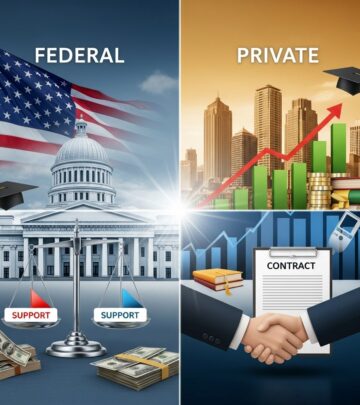
Comparing Federal vs. Private Student Loans
| Feature | Federal Student Loans | Private Student Loans |
|---|---|---|
| Interest Rates | Fixed rates determined by Congress | Fixed or variable rates starting at 2.89% APR |
| Credit Check Required | No credit check for most loans | Yes, credit check required |
| Financial Need Assessment | Based on FAFSA and financial need | No financial need requirement |
| Borrowing Limits | Strict annual and aggregate limits | Higher limits, up to full cost of attendance |
| Repayment Options | Multiple income-driven plans available | Limited repayment options |
| Loan Forgiveness | Eligible for federal forgiveness programs | Not eligible for federal forgiveness |
| Forbearance Options | Eligible if experiencing financial hardship | Limited hardship assistance programs |
| International Students | Only available to U.S. citizens and permanent residents | Available to qualifying international students |
| Cosigner Requirements | Not typically required | Often required for approval |
Understanding Private Student Loan Terms
Loan Amounts and Eligibility
Private student loan amounts typically start at $1,000 and can go up to your school’s certified cost of attendance. Most lenders allow you to borrow whether you’re studying online or on campus. You must be attending an approved school to qualify, and some lenders may limit eligibility to specific geographic areas such as the U.S., Puerto Rico, and the U.S. Virgin Islands.
Repayment Terms
Private lenders typically offer flexible repayment terms ranging from 5 to 15 years for undergraduate borrowers, with some lenders extending terms up to 20 years for graduate programs in medicine, dentistry, and law. Most private lenders suggest that borrowers start loan repayment while still in school, though many offer in-school deferment or grace periods. It’s important to note that interest will continue to accrue during these periods, increasing your total debt.
Interest Rates and Discounts
Private student loans offer both fixed and variable rate options. Fixed rates provide payment predictability, while variable rates may start lower but can increase over time. Many lenders offer rate discounts for features like autopay enrollment, which can save you 0.25 percentage points or more. Some lenders also offer discounts for continuing scholars or when cosigners take on additional student loans.
Application Process and Approval
Applying for private student loans is typically straightforward and can often be completed online in minutes. Most lenders allow you to check rates and prequalify without affecting your credit score, giving you the opportunity to compare options before formally applying. The application process usually includes:
- Online application submission with basic personal and financial information
- Credit check and verification of school enrollment
- Decision notification within days
- Funding directly to your school for covered expenses
Students approved without a cosigner tend to have stronger credit profiles and higher incomes. However, including a cosigner—typically a parent or trusted adult with good credit—significantly increases approval chances and may help you qualify for better rates.
Payment and Repayment Strategies
In-School and Grace Period Options
While in school, you have several repayment options. Most lenders allow you to defer payments until after graduation, though interest continues to accrue. Some borrowers choose to make interest-only payments while in school to reduce total interest costs. After graduation, borrowers typically enter a grace period ranging from a few months to 12 months before full repayment begins.
Repayment Plan Flexibility
Private lenders offer various repayment arrangements to fit different financial situations. Standard repayment involves fixed monthly payments of both principal and interest over your chosen term. Interest-only repayment allows lower initial payments for a specified period. Extended-term repayment can stretch payments up to 30 years, reducing monthly obligations but significantly increasing total interest paid. Some lenders also offer rate reduction programs for eligible borrowers.
Managing Student Loan Debt
Successful student loan management begins with understanding your total debt burden. Americans currently owe approximately $1.7 trillion in student debt—more than any other category of loans except mortgages. Strategic repayment planning can help you minimize interest costs and achieve financial freedom faster.
Tips for managing student loan debt include making extra payments when possible, prioritizing higher-interest loans, considering refinancing options as your financial situation improves, and staying in communication with your lender if you experience hardship. Many borrowers who took advantage of federal loan payment pauses have found success incorporating their loan payments into revised budgets.
Frequently Asked Questions
Q: Should I choose private loans over federal loans?
A: No. Always maximize federal student loans first, as they offer more flexible repayment options, borrower protections, and forgiveness opportunities. Private loans should only be used after exhausting federal borrowing limits and other financial aid options.
Q: What credit score do I need for private student loans?
A: Minimum credit scores vary by lender, typically ranging from mid-600s to higher. Some lenders don’t publicly disclose minimum requirements. Adding a cosigner can improve your chances of approval regardless of credit score.
Q: Can I get a rate discount with private student loans?
A: Yes. Most lenders offer rate discounts for autopay enrollment (typically 0.25%), continuing scholar status (0.125%), and when cosigners take additional loans (0.25%). These discounts can significantly reduce your overall interest costs.
Q: What happens if I can’t make my private student loan payments?
A: Private lenders offer limited hardship assistance compared to federal loans. Options may include forbearance, deferment, or income-based alternatives depending on your lender. Contact your lender immediately if you’re experiencing financial difficulty.
Q: Can private student loans be forgiven?
A: No. Private student loans are not eligible for federal forgiveness programs. Your options are limited to repayment, refinancing, or in rare cases, discharge due to permanent disability or school closure.
Q: How quickly can I get approved for a private student loan?
A: Most lenders offer quick online applications with decisions within days. The timeline depends on how quickly you submit required documentation and verify school enrollment.
References
- Best Private Student Loans of November 2025 — Money. 2025-11-29. https://money.com/student-loans/
- How to Pay Off Student Loans — and What to Do If You Can’t Make Your Payments — Money. https://money.com/paying-for-your-student-loans/
- Who Has the Most Student Loan Debt? — Money. https://money.com/student-debt-statistics/
- How Do Student Loans Work? — Money. https://money.com/how-do-student-loans-work/
- How to Pay Off Student Loans Fast — Money. https://money.com/how-to-pay-off-student-loans-fast/
Similar Articles








Read full bio of Sneha Tete