Best OTC Topical Cough Lozenges: Complete Guide
Discover the top-rated OTC cough lozenges to soothe throat irritation and suppress coughs effectively.
Understanding Topical Cough Lozenges
A topical cough lozenge, commonly referred to as a cough drop, is a small tablet designed to dissolve slowly in the mouth. These lozenges work by providing localized relief to irritated throat tissues while helping to suppress coughing. The mechanism typically involves delivering soothing compounds directly to the affected area, offering both symptomatic relief and comfort during periods of throat irritation or persistent coughing.
Topical cough lozenges function through various active ingredients that either numb the throat, provide a cooling sensation, or create a protective coating over irritated tissues. Unlike systemic cough medicines that enter the bloodstream, topical lozenges deliver their therapeutic benefits locally within the mouth and throat region, making them a convenient and accessible option for managing mild to moderate cough symptoms.
How We Selected the Best Products
The featured topical cough lozenges have been carefully evaluated using a comprehensive methodology that combines expert medical assessment with extensive analysis of online reviews, customer ratings, and user feedback data. This approach ensures that recommendations are based not only on clinical efficacy but also on real-world user experiences and satisfaction. Products were assessed across multiple dimensions including active ingredient quality, mechanism of action, side effect profiles, consumer accessibility, and overall value.
All featured products are available without prescription in the United States, though availability may vary in other locations. This guide focuses exclusively on over-the-counter options that consumers can readily access through retail pharmacies, supermarkets, and online retailers.
Top Rated Topical Cough Lozenges
1. Halls Cough Drops – Menthol
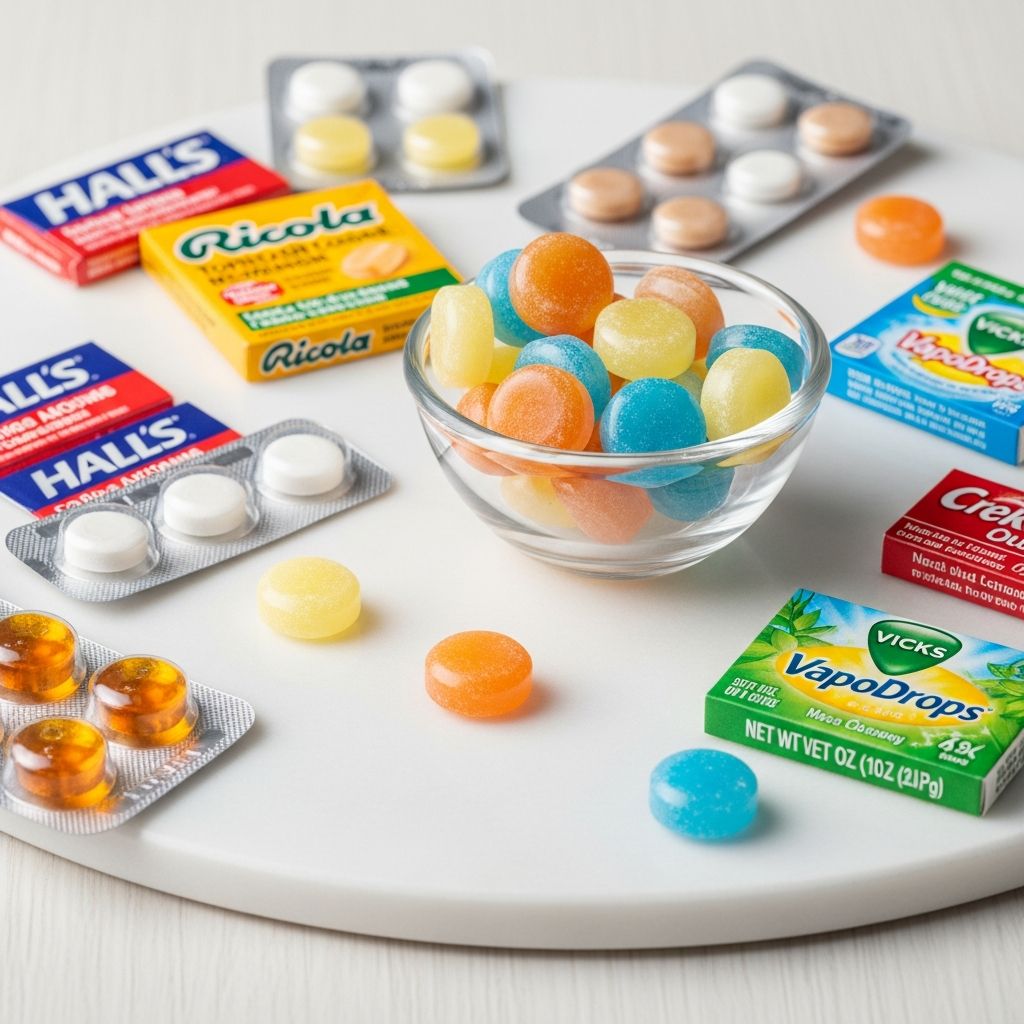
Halls Cough Drops remain a top choice for consumers seeking effective menthol-based throat relief. The active ingredient menthol provides a distinctive cooling sensation that helps soothe throat irritation and may help open airways. These drops are widely available, affordable, and come in various flavors to suit different taste preferences. The menthol formulation is particularly effective for those seeking a refreshing sensation alongside cough suppression.
2. Ricola Herbal Cough Drops – Menthol
Ricola specializes in herbal formulations combined with menthol, offering consumers a blend of natural ingredients alongside proven active components. These cough drops appeal to individuals interested in herbal remedies and natural approaches to throat care. The herbal proprietary blend, combined with menthol’s cooling properties, creates a comprehensive approach to symptom relief. Ricola products are known for their distinctive herb-forward flavor profile.
3. Luden’s Throat Drops – Pectin
Luden’s Throat Drops utilize pectin as their primary active ingredient, offering an alternative mechanism of action compared to menthol-based products. Pectin works by creating a protective coating over irritated throat tissues, providing sustained relief. This formulation is particularly suitable for individuals who prefer non-cooling throat relief options or who may be sensitive to menthol’s intense sensations. Luden’s comes in an extensive variety of flavors.
4. Fisherman’s Friend – Menthol
Fisherman’s Friend cough drops feature a menthol formulation that has maintained popularity for decades. These lozenges are known for their potency and strong menthol presence, making them ideal for individuals seeking significant cooling and decongestant effects. The brand appeals to consumers looking for a traditional, no-frills approach to cough relief with proven efficacy.
5. Cepacol Sore Throat & Cough Lozenges – Benzocaine and Dextromethorphan
Cepacol combines two active ingredients to address both throat pain and cough suppression. Benzocaine provides topical numbing effects, while dextromethorphan acts as a systemic cough suppressant. This dual-action formula makes Cepacol particularly effective for individuals experiencing both cough and sore throat symptoms simultaneously. The combination approach targets multiple aspects of throat discomfort.
6. Vicks VapoDrops – Menthol
Vicks VapoDrops leverage the brand’s expertise in menthol-based respiratory relief products. These lozenges provide the familiar cooling sensation associated with Vicks products, helping to ease cough symptoms and provide airway relief. The brand’s reputation for quality and efficacy extends to their lozenge line, making them a trusted choice for consumers familiar with Vicks formulations.
7. Smith Brothers Cough Drops – Pectin
Smith Brothers offers another pectin-based option for consumers preferring non-menthol throat relief. These drops provide protective coating benefits and have maintained market presence through consistent quality and consumer satisfaction. The pectin formulation appeals to those seeking milder relief or who experience discomfort with cooling sensations.
8. Jakemans Throat & Chest Lozenges – Menthol
Jakemans combines menthol with a focus on comprehensive throat and chest support. These lozenges are designed to address not only throat irritation but also chest-related cough symptoms. The menthol formulation works to open airways while providing soothing relief throughout the respiratory tract, making them suitable for more extensive cough and congestion symptoms.
9. Chloraseptic Total Sore Throat & Cough – Benzocaine and Menthol
Chloraseptic combines benzocaine numbing properties with menthol’s cooling effects for comprehensive relief. This dual-ingredient approach addresses throat pain through anesthetic action while providing cooling comfort through menthol. The combination makes Chloraseptic particularly effective for severe sore throat accompanied by cough, offering both immediate numbing and sustained cooling relief.
Understanding Active Ingredients
Menthol
Menthol is the most common active ingredient in topical cough lozenges, derived from peppermint plants or synthetically produced. This compound creates a cooling sensation that can help suppress cough reflexes and provide psychological relief. Menthol also has mild decongestant properties that may help open airways. Most users tolerate menthol well, though some may find the cooling sensation too intense. The ingredient is generally recognized as safe and provides temporary relief without significant systemic effects.
Pectin
Pectin is a natural polysaccharide derived from fruits that functions as a demulcent—creating a protective coating over irritated throat tissues. Unlike menthol, pectin provides relief through protective rather than cooling mechanisms, making it an ideal alternative for those sensitive to strong sensations. Pectin-based lozenges tend to provide sustained relief as they dissolve slowly in the mouth.
Benzocaine
Benzocaine is a local anesthetic that numbs throat tissues, providing direct pain relief for sore throat symptoms. This ingredient is particularly useful when throat pain accompanies cough symptoms. Benzocaine works quickly but provides relief that is typically more temporary than protective ingredients like pectin. It’s most effective for acute sore throat pain relief.
Dextromethorphan
Dextromethorphan (DXM) is a cough suppressant that works on the cough reflex centers in the brain, providing systemic rather than topical relief. When combined with topical ingredients in lozenges, it provides dual-action relief addressing both local throat symptoms and the cough reflex itself. This ingredient is particularly effective for dry coughs.
Comparing Active Ingredients by Type
| Active Ingredient | Primary Function | Best For | Typical Duration | Side Effects |
|---|---|---|---|---|
| Menthol | Cooling, airway opening | Dry coughs, airway congestion | 1-2 hours | Minimal, occasional sensitivity |
| Pectin | Protective coating | Throat irritation, sensitive throats | 2-4 hours | Very minimal |
| Benzocaine | Numbing, pain relief | Severe sore throat pain | 15-30 minutes | Rare allergic reactions |
| Dextromethorphan | Cough suppression | Dry, persistent coughs | 3-6 hours | Drowsiness, dizziness |
Efficacy and Effectiveness Considerations
The effectiveness of topical cough lozenges varies based on the specific active ingredients, individual patient factors, and the underlying cause of the cough. Menthol-based products are particularly effective for providing immediate relief and creating a sensation of improved breathing, though clinical studies show the relief is often primarily symptomatic. Pectin-based options provide sustained relief through their protective mechanisms and may be more effective for extended throat irritation. Combined-ingredient products often provide more comprehensive relief by addressing multiple symptoms simultaneously.
Individual responses to lozenges depend on personal sensitivity to specific ingredients, the severity of symptoms, and underlying health conditions. Some individuals may find menthol products highly effective while others prefer gentler pectin formulations. The key is selecting a product formulation that aligns with your specific symptoms and ingredient preferences.
Side Effects and Safety Considerations
Topical cough lozenges are generally considered very safe over-the-counter products with minimal side effects for most users. Menthol-based products rarely cause significant adverse effects, though some individuals may experience allergic reactions or sensitivity to the intense cooling sensation. Pectin formulations are well-tolerated by virtually all users with minimal reported side effects.
Benzocaine-containing lozenges occasionally cause allergic reactions in sensitive individuals and may cause mild local numbness that extends beyond the intended throat area. Dextromethorphan combinations may cause drowsiness or dizziness in some users, particularly at higher doses or in sensitive individuals. Most side effects are mild and temporary, resolving once the lozenge dissolves completely.
Consumers with known allergies to specific ingredients should always review product labels before use. Pregnant individuals should consult healthcare providers before using lozenges containing systemic ingredients like dextromethorphan, though topical-only products are generally considered safe during pregnancy.
How to Use Topical Cough Lozenges Effectively
For maximum benefit from topical cough lozenges, allow each lozenge to dissolve slowly in the mouth rather than chewing or swallowing whole. Most products recommend using one lozenge every two to three hours, with maximum daily doses typically ranging from 8-10 lozenges depending on the specific product. Always follow the manufacturer’s recommended dosage and maximum daily usage guidelines.
Allow adequate time between successive lozenges, typically at least two hours, to avoid exceeding recommended daily limits. Store lozenges in cool, dry conditions away from direct heat or moisture, which can compromise the formulation. Avoid eating or drinking immediately after using a lozenge to maximize the duration of relief.
When to Choose Which Type
Select menthol-based lozenges when you have a dry cough accompanied by nasal or chest congestion, as the cooling sensation can help open airways. Choose pectin formulations if you have mild throat irritation or sensitivity to intense flavors and sensations. Opt for benzocaine-containing products when sore throat pain is your primary concern. Select combination products like Cepacol when you experience simultaneous cough and sore throat symptoms requiring comprehensive relief.
FAQs About Topical Cough Lozenges
Q: How long do topical cough lozenges take to work?
A: Most topical cough lozenges begin providing relief within minutes as they dissolve in the mouth. However, the duration and intensity of relief vary based on the specific active ingredients and individual response, typically lasting 1-4 hours depending on the formulation.
Q: Can I use cough lozenges if I’m pregnant?
A: Topical-only lozenges like menthol and pectin products are generally considered safe during pregnancy. However, lozenges containing systemic ingredients like dextromethorphan should only be used with healthcare provider guidance. Always consult your obstetrician before using any new medication during pregnancy.
Q: Are topical cough lozenges safe for children?
A: Many topical cough lozenges are safe for children ages 4 and older, though choking risk should be considered in younger children. Always follow product recommendations for age-appropriate use and supervise children using lozenges. Some products specify minimum age requirements on their packaging.
Q: Can I use cough lozenges with other medications?
A: Topical-only lozenges typically have minimal drug interaction risks. However, lozenges containing systemic ingredients like dextromethorphan may interact with other medications. Review all product ingredients and consult a pharmacist if you take other medications before using combination lozenges.
Q: How often can I use cough lozenges daily?
A: Most products recommend using lozenges every 2-3 hours, with maximum daily limits typically ranging from 8-10 lozenges. Never exceed the manufacturer’s recommended maximum daily dosage. If symptoms persist beyond a few days, consult a healthcare provider.
Q: What’s the difference between cough lozenges and cough syrup?
A: Cough lozenges provide localized relief in the throat through direct contact, while cough syrups deliver systemic relief through ingestion. Lozenges offer convenience and are ideal for portable use, while syrups may be better for more severe symptoms requiring systemic treatment.
References
- Best OTC Choices in Topical Cough Lozenges — Money. 2024. https://money.com/best-otc-drugs/topical-cough-lozenges/
- What Is the Best OTC Cough Medicine for My Cough? — Cleveland Clinic Health. 2024. https://health.clevelandclinic.org/cough-syrup-cough-drops-menthol-rub-whats-best-for-my-cough
- Which Is the Best Cough Medicine: Prescription vs. OTC? — GoodRx. 2024. https://www.goodrx.com/conditions/cough/whats-the-best-cough-medicine
- Best OTC Choices in Sore Throat Products — Money. 2024. https://money.com/best-otc-drugs/sore-throat-products/
- Prevention and Treatment of the Common Cold — National Center for Biotechnology Information. 2014. https://pmc.ncbi.nlm.nih.gov/articles/PMC3928210/
Similar Articles








Read full bio of Sneha Tete