Best OTC Antibacterial Soaps: Expert Picks & Reviews
Discover the top-rated antibacterial soaps with expert recommendations and ingredient analysis.
Understanding Antibacterial Soaps: What You Need to Know
Antibacterial soaps, also referred to as antiseptic or antimicrobial soaps, represent a category of personal care products designed to reduce or prevent bacterial infection through the inclusion of specialized chemical ingredients. Unlike regular soaps that primarily rely on mechanical action to remove dirt and germs, antibacterial formulations contain active pharmaceutical ingredients specifically engineered to target and eliminate bacteria on the skin’s surface.
The fundamental difference between antibacterial soap and conventional soap lies in the presence of active ingredients such as benzalkonium chloride, chlorhexidine gluconate, and chloroxylenol. These compounds work by disrupting bacterial cell membranes or inhibiting their growth processes, theoretically providing enhanced protection against microbial contamination.
Active Ingredients in Antibacterial Soaps Explained
Understanding the active ingredients found in antibacterial soaps is crucial for making informed purchasing decisions. Different formulations contain varying compounds, each with distinct properties and applications.
Benzalkonium Chloride is a quaternary ammonium compound commonly found in many over-the-counter antibacterial soaps. This ingredient is particularly effective against a broad spectrum of bacteria and remains one of the few active ingredients still approved by regulatory agencies for consumer use in antibacterial products.
Chlorhexidine Gluconate is a powerful antimicrobial agent often used in clinical and medical-grade antibacterial cleansers. It provides rapid and sustained antimicrobial activity, making it popular in healthcare settings and prescription-strength products available without a prescription.
Chloroxylenol represents another FDA-approved active ingredient used in consumer antibacterial soaps. This compound demonstrates effectiveness against various bacteria and has been used in antibacterial formulations for decades.
Tea Tree Leaf Oil is a natural ingredient sometimes incorporated into antibacterial soap formulations, offering antimicrobial properties derived from botanical sources. This ingredient appeals to consumers seeking more natural or plant-based antibacterial options.
Top-Rated Antibacterial Soaps: Complete Rankings
Money’s comprehensive evaluation, conducted in collaboration with expert pharmacists and Drugs.com analysis, has identified the leading antibacterial soap products available in the United States market. These selections were determined through a rigorous methodology combining professional assessment with extensive analysis of online reviews, customer ratings, and consumer feedback data.
| Rank | Product Name | Active Ingredient(s) | Format |
|---|---|---|---|
| #1 | Dial Gold Antibacterial Hand Soap | Benzalkonium Chloride | Liquid |
| #2 | Softsoap Antibacterial Liquid Hand Soap | Benzalkonium Chloride | Liquid |
| #3 | Safeguard Liquid Hand Soap | Sodium Laureth Sulfate | Liquid |
| #4 | Hibiclens Antimicrobial Skin Cleanser | Chlorhexidine Gluconate | Liquid |
| #5 | Cuticura Medicated Anti-Bacterial Bar Soap | Sodium Tallowate, Sodium Cocoate | Bar |
| #6 | Defense Soap Antibacterial Cleansing Bar | Sodium Palmate, Tea Tree Leaf Oil | Bar |
| #7 | Cetaphil Gentle Cleansing Bar | Sodium Cocoyl Isethionate, Stearic Acid | Bar |
| #8 | Cetaphil Cleansing Bar | Sodium Cocoyl Isethionate, Stearic Acid | Bar |
| #9 | DermaKleen Antibacterial Lotion Soap | Chloroxylenol | Liquid |
| #10 | Lifebuoy Total 10 Antibacterial Soap | Sodium Palmate | Bar |
Featured Antibacterial Soap Products
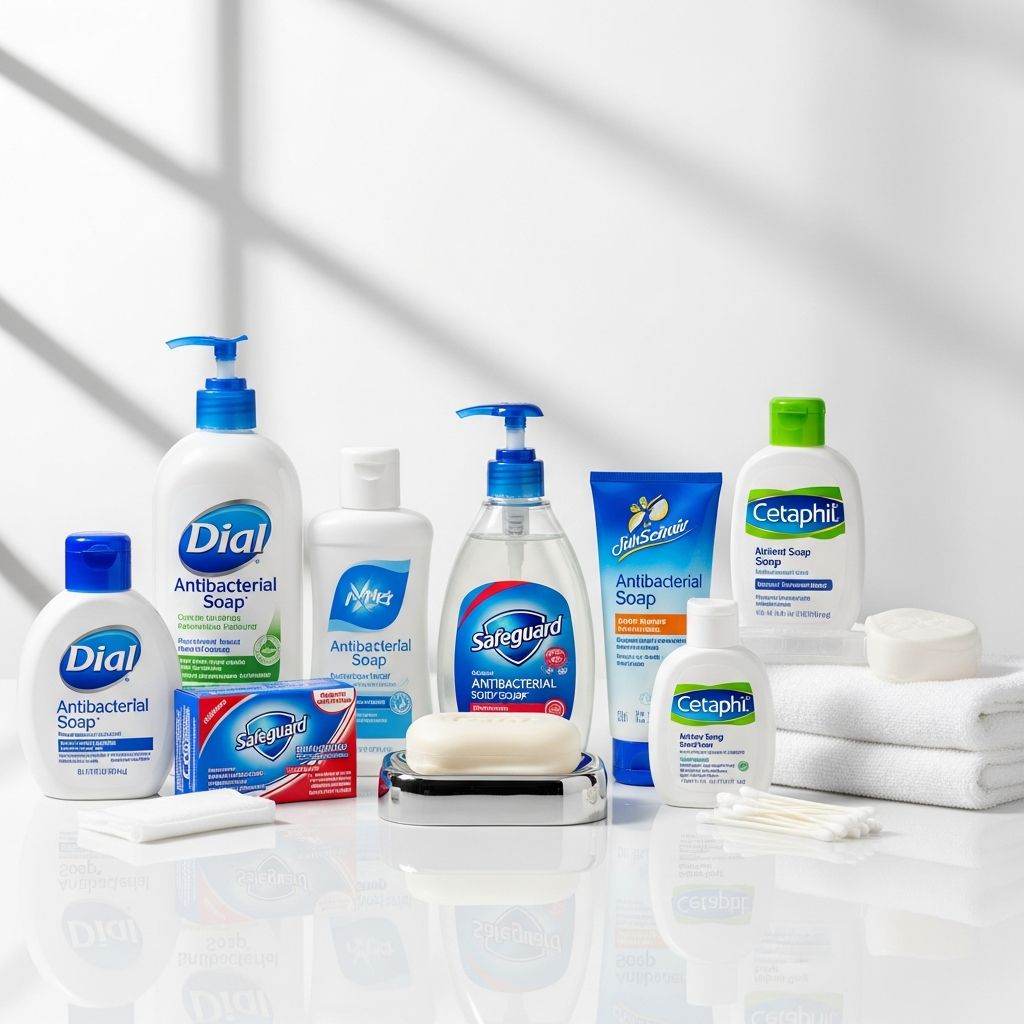
Dial Gold Antibacterial Hand Soap (Rank #1) leads the rankings as the top-rated antibacterial soap. This liquid formulation features benzalkonium chloride as its active ingredient, providing broad-spectrum bacterial protection. The Dial Gold formula is designed for frequent use and is available in convenient liquid dispensers suitable for bathrooms, kitchens, and commercial settings.
Softsoap Antibacterial Liquid Hand Soap (Rank #2) ranks as the second-best option, also utilizing benzalkonium chloride for its antimicrobial action. Softsoap’s formula is known for its gentle yet effective cleansing properties, making it suitable for regular handwashing throughout the day.
Safeguard Liquid Hand Soap (Rank #3) incorporates sodium laureth sulfate as its primary cleansing agent. This product represents a middle-ground option for consumers seeking antibacterial protection with a focus on gentle cleansing action.
Hibiclens Antimicrobial Skin Cleanser (Rank #4) features chlorhexidine gluconate, a more potent antimicrobial agent commonly used in healthcare environments. This product is particularly suitable for individuals seeking clinical-grade antibacterial protection for therapeutic purposes.
Cuticura Medicated Anti-Bacterial Bar Soap (Rank #5) offers antibacterial benefits in traditional bar form, featuring sodium tallowate and sodium cocoate as primary ingredients. This product appeals to consumers preferring solid soap bars over liquid formulations.
Defense Soap Antibacterial Cleansing Bar (Rank #6) combines sodium palmate with tea tree leaf oil, offering a more natural approach to antibacterial cleansing. This formulation targets consumers interested in botanical-based antimicrobial ingredients alongside traditional soap bases.
Cetaphil Gentle Cleansing Bar (Rank #7) and Cetaphil Cleansing Bar (Rank #8) represent the Cetaphil product line, recognized for dermatological gentleness. Both products feature sodium cocoyl isethionate and stearic acid, formulated to be non-irritating while providing cleansing benefits.
DermaKleen Antibacterial Lotion Soap (Rank #9) utilizes chloroxylenol as its active ingredient in a lotion-soap hybrid formulation. This product targets consumers seeking moisturizing properties alongside antibacterial efficacy.
Lifebuoy Total 10 Antibacterial Soap (Rank #10) completes the rankings, featuring sodium palmate as its primary ingredient in bar soap form.
Efficacy and Safety Considerations
While antibacterial soaps are widely available and commonly used, regulatory agencies have raised important questions regarding their actual effectiveness compared to plain soap and water. The U.S. Food and Drug Administration has determined that there is insufficient evidence demonstrating that over-the-counter antibacterial soaps provide superior protection against illness compared to regular soap and water alone.
In 2016, the FDA established a final rule prohibiting 19 active ingredients—including triclosan and triclocarban—from being marketed in nonprescription consumer antiseptic wash products. This determination was based on manufacturers’ inability to provide adequate safety and efficacy data for these ingredients. However, three active ingredients—benzalkonium chloride, benzethonium chloride, and chloroxylenol—remain permitted pending additional research and safety submissions from manufacturers.
Simple handwashing with plain soap and water remains one of the most effective ways to prevent the spread of infections and illnesses. The mechanical action of soap combined with friction effectively removes bacteria, viruses, and other contaminants from skin surfaces.
Liquid vs. Bar Antibacterial Soaps
When selecting an antibacterial soap, consumers must choose between liquid and bar formulations, each offering distinct advantages.
Liquid Antibacterial Soaps provide convenience through pump dispensers, are easily portioned, and minimize cross-contamination in shared bathrooms. Liquid formulations typically contain water and surfactants in addition to active antimicrobial ingredients, creating a lathering action that aids in mechanical removal of contaminants.
Bar Antibacterial Soaps offer environmental advantages through reduced packaging waste and typically longer product lifespan. Bar soaps concentrate active ingredients into solid form, often requiring less product per wash. However, bar soaps may require enhanced storage considerations to prevent excessive water exposure and degradation.
Choosing the Right Antibacterial Soap for Your Needs
Selecting an appropriate antibacterial soap depends on several individual factors. Consider your primary use case—frequent handwashing requires different formulations than occasional antibacterial use. Individuals with sensitive skin may benefit from gentler formulations like Cetaphil options, while those seeking clinical-grade protection might prefer Hibiclens with its potent chlorhexidine gluconate formulation.
Budget considerations also play a role, as prices vary significantly across brands and formulations. Additionally, personal preference regarding scent, texture, and whether you prefer bar or liquid formats should guide your selection process.
Important Notes on Product Availability
All featured antibacterial soaps discussed are available without prescription in the United States market. However, availability may vary in other geographic locations, and some products may require prescriptions or may be unavailable entirely outside the U.S. market.
When purchasing antibacterial soaps, look for products displaying “Drug Facts” labels on the packaging, which indicate the product contains active pharmaceutical ingredients. Products labeled as “antibacterial,” “antimicrobial,” or “antiseptic” typically contain these active compounds.
Frequently Asked Questions About Antibacterial Soaps
Q: Is antibacterial soap more effective than regular soap?
A: According to the FDA, there is insufficient evidence showing that over-the-counter antibacterial soaps are more effective than regular soap and water at preventing illness. Simple handwashing with plain soap remains highly effective.
Q: What active ingredients should I look for in antibacterial soap?
A: Currently approved active ingredients for consumer antibacterial soaps include benzalkonium chloride, benzethonium chloride, and chloroxylenol. Other ingredients like chlorhexidine gluconate are available in clinical-grade formulations.
Q: Are there any safety concerns with antibacterial soaps?
A: The FDA removed 19 active ingredients including triclosan and triclocarban due to insufficient safety data. However, approved ingredients have been deemed safe for consumer use, though manufacturers continue submitting additional safety studies.
Q: Can I use antibacterial soap every day?
A: Approved antibacterial soaps can be used daily, though dermatologists often recommend alternating with gentle, plain soaps to maintain skin health, particularly for individuals with sensitive skin conditions.
Q: What’s the difference between antibacterial soap and hand sanitizer?
A: Antibacterial soaps are used with water and rely on mechanical action combined with active ingredients. Hand sanitizers are waterless products designed for quick antimicrobial action without rinsing.
Q: Are natural antibacterial ingredients like tea tree oil effective?
A: While tea tree oil possesses antimicrobial properties, products like Defense Soap combine it with traditional soap bases. Effectiveness depends on concentration and formulation specifics.
Q: Which antibacterial soap is best for sensitive skin?
A: Cetaphil options, ranked #7 and #8, are specifically formulated to be gentle and suitable for sensitive skin while providing cleansing benefits.
Q: How often should I wash my hands with antibacterial soap?
A: Wash hands frequently throughout the day, especially before eating, after using the bathroom, after touching pets, and after being in public spaces. Regular handwashing is the most effective hygiene practice.
References
- Antibacterial Soaps — Money/Drugs.com. 2024. https://money.com/best-otc-drugs/antibacterial-soaps/
- Skip the Antibacterial Soap; Use Plain Soap and Water — U.S. Food and Drug Administration. 2024. https://www.fda.gov/consumers/consumer-updates/skip-antibacterial-soap-use-plain-soap-and-water
- Antibacterial Agents and Antimicrobial Resistance — Centers for Disease Control and Prevention. 2024. https://www.cdc.gov/drugresistance/
Similar Articles








Read full bio of Sneha Tete