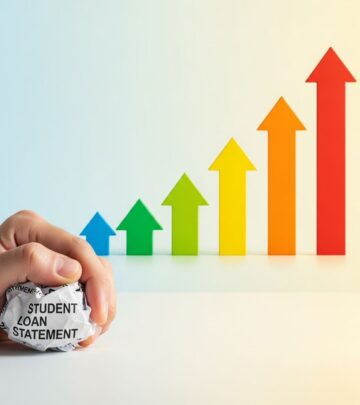
Best Money Tips: Ways to Deal With Student Loan Debt
Proven strategies and smart financial tips to conquer student loan debt and regain control of your financial future effectively.

Student loan debt has become a massive financial hurdle for millions of Americans, totaling nearly $2 trillion nationwide and $150 billion in California alone, making it the second-largest consumer debt after mortgages. With rising college costs and unequal impacts—particularly on Black and Latino borrowers who borrow more and face higher delinquency rates—this crisis delays homeownership, business startups, and wealth building. This article provides actionable strategies to tackle your loans head-on, drawing from real success stories and expert insights to help you escape the debt trap.
Understand Your Loan Types and Total Debt
The first step in conquering student loan debt is gaining full visibility into what you owe. Many borrowers overlook details like interest rates, repayment terms, and federal versus private loans, leading to prolonged payments. Log into the National Student Loan Data System (NSLDS) for federal loans to see your balances, servicers, and options. For private loans, contact each lender directly.
- Federal loans offer flexible plans like income-driven repayment (IDR), which caps payments at 10-20% of discretionary income.
- Private loans often have higher rates and fewer protections, making refinancing a priority if your credit has improved.
Average undergraduate debt exceeds $30,000, with Black borrowers owing nearly $4,000 more than white counterparts on bachelor’s degrees, exacerbating long-term financial insecurity. Calculate your total debt using free tools from the Federal Student Aid website to prioritize high-interest loans first.
Explore Income-Driven Repayment Plans
For those with limited income, federal income-driven repayment (IDR) plans adjust payments based on earnings and family size, potentially leading to forgiveness after 20-25 years. Plans like SAVE, PAYE, and IBR forgive remaining balances tax-free under certain conditions. Over 40 million Americans hold student debt, and IDR helps marginalized borrowers who face disproportionate burdens.
| Plan | Payment Calculation | Forgiveness Timeline |
|---|---|---|
| SAVE | 5-10% of discretionary income | 20-25 years |
| PAYE | 10% of discretionary income | 20 years |
| IBR | 10-15% of discretionary income | 20-25 years |
Apply via StudentAid.gov; recertify annually. Note: Black borrowers retain 95% of their original debt after 20 years, compared to 6% for white borrowers, highlighting why affordable plans are crucial.
Refinance to Lower Interest Rates
If you have strong credit (680+ FICO), refinance federal or private loans into a private loan with rates as low as 3-5%, saving thousands. However, this forfeits federal protections like IDR and forgiveness—ideal only for high earners committed to quick payoff. Tools like Credible or NerdWallet compare rates from lenders like SoFi and Earnest.
- Pros: Fixed lower rates, shorter terms (5-10 years).
- Cons: Lose borrower defenses; variable rates risk rising.
Stephanie Halligan refinanced her $30,000 debt post-graduation, paying it off in four years while launching a business.
Pursue Loan Forgiveness and Discharge Programs
Public Service Loan Forgiveness (PSLF) erases debt after 120 qualifying payments for government or nonprofit workers. Over 800,000 borrowers have received forgiveness via recent fixes. Teacher Loan Forgiveness offers up to $17,500 for educators in low-income schools. Check eligibility at StudentAid.gov/pslf.
Total and Permanent Disability (TPD) discharge applies if you’re disabled, and borrower defense covers school fraud. Black and Latino borrowers in minority neighborhoods are 4.2 times more likely to default, making these programs vital.
Aggressive Repayment Strategies: Pay Off Fast
Like Joe Mihalic, who eliminated $95,000 in seven months through extreme budgeting and high income, rapid payoff crushes interest. Aim for the debt snowball (smallest balances first for momentum) or avalanche (highest interest first for savings).
- Boost income: Side hustles, promotions, or career switches. One entrepreneur cleared $40,000 by age 24 via budgeting and gigs.
- Cut expenses: Live frugally—roommates, no dining out, cheap transport.
- Bi-weekly payments: An extra payment yearly shaves years off loans.
Even slow escapes work: Consistent payments under standard plans reduce balances steadily.
Budget Ruthlessly and Build an Emergency Fund
Allocate 50/30/20: 50% needs, 30% wants, 20% debt/savings. Apps like YNAB track every dollar. Before aggressive payoff, save $1,000 emergency fund to avoid new debt. Student loans can’t be discharged in bankruptcy, haunting credit for seven years.
Real story: A grad with $34,000 debt budgeted strictly, paid off in four years.
Avoid Common Pitfalls That Worsen Debt
Don’t assume pricey schools yield best ROI—value matters: graduation rates, job placement. Skip forbearance if possible; interest accrues. Five percent of borrowers owe over $100,000, derailing life milestones. Parents: Teach kids alternatives like community college or trades to avoid debt slavery.
Success Stories: Real People Who Conquered Debt
Joe Mihalic: $95K in seven months via minimalism and six-figure salary.
Stephanie Halligan: $34K in four years, plus business launch.
Young Entrepreneur: $40K by 24 with side jobs.
These stories prove discipline trumps debt size.
Frequently Asked Questions (FAQs)
Q: Can student loans be discharged in bankruptcy?
A: No, federal student loans generally cannot; they remain on credit reports for seven years even after default.
Q: How does student debt disproportionately affect Black and Latino borrowers?
A: They borrow more (90% of Black students vs. 66% white), earn less post-grad, and retain 95% of debt after 20 years.
Q: What’s the fastest way to pay off student loans?
A: Combine high income, refinancing, and avalanche method—one paid $95K in seven months.
Q: Are income-driven plans worth it?
A: Yes for low earners; payments as low as 5% of income with forgiveness after 20-25 years.
Q: Should I refinance federal loans?
A: Only if high credit and stable income; you lose federal benefits like PSLF.
State-Level Relief and Policy Changes
Track state forgiveness via tools like Boston University’s tracker, as policies evolve for equitable relief. California’s borrowers face unique burdens amid rising costs.
Student debt delays dreams, but informed action changes that. Start today: List debts, pick a plan, execute relentlessly.
References
- Student Loan Debt: A Disproportionate Burden on Black and Latino Borrowers — California Department of Financial Protection and Innovation (DFPI). 2023-approx. https://dfpi.ca.gov/news/insights/student-loan-debt-a-disproportionate-burden-on-black-and-latino-borrowers/
- Wage Slave, Debt Slave — Wise Bread. Pre-2025. https://www.wisebread.com/wage-slave-debt-slave
- 9 Financial Moves You Will Always Regret — Wise Bread. Pre-2025. https://www.wisebread.com/9-financial-moves-you-will-always-regret
- Rethinking Student Debt for Fairer Futures — Boston University Wheelock College. 2025-01-12 approx. https://www.bu.edu/wheelock/news/articles/2025/rethinking-student-debt-for-fairer-futures/
- How Joe Mihalic Paid Off $95K of Student Loans in 7 Months — Wise Bread. Pre-2025. https://www.wisebread.com/how-joe-mihalic-paid-off-95k-of-student-loans-in-7-months
Similar Articles








Read full bio of Sneha Tete