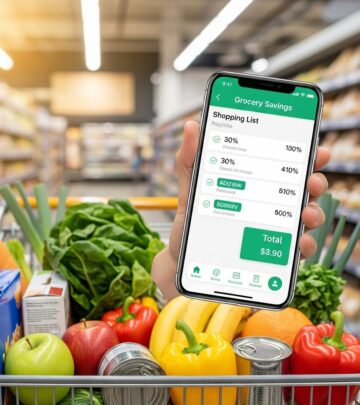
Best Money Tips: How to Stick to Your Grocery Budget
Master your grocery spending with proven strategies to create meal plans, shop smart, avoid waste, and save hundreds monthly on food costs.

Grocery bills can quickly spiral out of control, but with disciplined strategies, you can reclaim control over your food spending. This guide covers everything from setting realistic budgets based on USDA data to practical shopping hacks, ensuring you eat well without overspending. Whether you’re a single shopper or feeding a family of four, these tips will help you save hundreds annually.
Understand Average Grocery Budgets
Knowing national benchmarks is the first step to setting a realistic grocery budget. According to USDA estimates, monthly food costs vary by household size and plan type—thrifty, low-cost, moderate, or liberal. For a single person, thrifty plans range from $297 to $372 (around $300–$350), moderate from $386 to $458 ($400–$450), and liberal from $493 to $558 ($500–$550).
Couples can expect thrifty/low-cost at $614–$627 (over $600), moderate at $774+, and liberal at $963+. Families of four face thrifty/low-cost at $996–$1,076 ($1,000 mark), moderate at $1,326, and liberal at $1,630+. Overall averages hover at $300–$550 for singles, $600–$950 for couples, and $1,000–$1,500 for families of four. Inflation has pushed costs up 2.4–4% yearly, making budgeting essential for financial control.
| Household | Thrifty/Low-Cost | Moderate | Liberal |
|---|---|---|---|
| Single | $300–$350 | $400–$450 | $500–$550 |
| Couple | $600+ | $774+ | $963+ |
| Family of 4 | $1,000 | $1,326 | $1,630 |
Track your spending against these to identify if you’re over or under budget. Tools like budgeting apps ensure you stay within limits, providing peace of mind.
Set a Strict Grocery Budget
Start by assigning a fixed monthly amount, such as $350 for groceries plus $150 for eating out, covering all meals and snacks. Add up weekly receipts to enforce accountability. For a family of five, $100 weekly ($400 monthly) is achievable with discipline. Adjust based on income, goals, and household size—aim for 100% food utilization to maximize value.
- Review past statements to baseline current spending.
- Allocate separately for groceries vs. dining out.
- Use cash envelopes or apps to cap weekly spends.
Consistency builds power: sticking to your number prevents impulse buys and fosters long-term savings.
Plan Meals Around Sales and What’s on Hand
Meal planning is key to budget adherence. Inventory your pantry, fridge, and freezer first, then build a weekly menu around sales flyers and existing staples. This prevents duplicate buys and ensures 100% usage.
For example, if chicken is on sale, plan multiple meals like stir-fry, soup, and salads. Incorporate leftovers—eat dinner for breakfast to cut waste and speed mornings. Thursday Night Soup from scraps stretches budgets further.
- Check inventory Sunday evenings.
- Scan ads for deals on proteins, produce.
- Write a precise shopping list tied to meals.
- Prep bulk for the week.
Families report saving $80 monthly by going meatless one day weekly via Meatless Monday. Planning reduces stress and overspending.
Shop at Discount Stores Like Aldi
Store choice dictates costs. Aldi saves up to 36%—nearly $4,000 yearly for families of four—through efficiencies like quarter carts (minimal staff), limited selection, and no bagging. Shoppers exit faster with simpler layouts.
Compare: traditional stores mark up 20–50% higher. Stick to one or two budget chains; avoid organic boutiques unless budgeted. Bulk clubs like Costco work for staples if you control portions.
- Enter with list only.
- Ignore end-caps and samples.
- Shop midweek for fresh stock.
Aldi’s model proves location sets spending tone.
Buy Staples in Bulk and Fresh Produce Locally
Maximize savings by buying non-perishables—rice, beans, oats—in bulk at warehouse clubs or ethnic markets. Local farm stands or markets offer fresher, cheaper produce seasonally.
One household feeds five on $100 weekly by bulking grains and freezing produce. Avoid overbuying perishables; focus on versatile staples.
| Item | Regular Price (per lb) | Bulk Price (per lb) | Monthly Savings (10 lbs) |
|---|---|---|---|
| Rice | $1.50 | $0.80 | $7 |
| Dry Beans | $2.00 | $1.20 | $8 |
| Oats | $1.20 | $0.70 | $5 |
Combine with local buys for nutrition and cost balance.
Organize Your Pantry to Avoid Waste
A tidy pantry reveals duplicates, preventing waste. Categorize shelves: grains top, canned middle, snacks bottom. Use clear bins for visibility.
Inventory weekly; rotate stock FIFO (first in, first out). This cuts spoilage—common budget killer. Turn scraps into stocks or soups.
- Declutter expired items.
- Label everything.
- Track usage for future lists.
Proper organization ensures nothing goes unused.
Stop Buying So Much Junk Food
Junk drains budgets without nutrition. Limit to once weekly; replace with homemade versions—popcorn, fruit snacks. Brown-bag elaborate lunches save $2,500 yearly vs. eating out.
Cut meat several days weekly for $80+ savings. Focus on cheap, healthy intersects like beans, eggs, seasonal veggies.
Shop perimeter for whole foods; skip center aisles.
Don’t Buy More Meat Than You Need
Meat is pricey and planet-heavy. Buy family packs, portion, and freeze. Go meatless multiple days; use beans/lentils as substitutes.
Stretch with recipes: add veggies to chili, make veggie stir-fries. Savings compound quickly.
Use Coupons and Shop the Sales
Layer digital coupons, store apps, and sales. Apps track prices; buy only advertised deals. Stack with loyalty programs.
- Clip digitally pre-shop.
- Match to list.
- Avoid “buy 10” traps unless needed.
Consistent use amplifies budget power.
Reduce Food Waste
Waste equals thrown money. Aim for zero: freeze extras, repurpose leftovers, compost scraps. Eat dinners for breakfast; make bone broth. Track fridge weekly.
One tip: 52-week savings challenge alongside waste audits builds habits.
Frequently Asked Questions (FAQs)
Q: What’s a realistic grocery budget for a family of four?
A: USDA suggests $1,000 monthly for thrifty plans, up to $1,630 liberal. Aim low with planning.
Q: How much does Aldi really save?
A: Up to 36%, or $4,000 yearly for families of four via efficient model.
Q: Can I feed five on $100 weekly?
A: Yes, with strict lists, bulk staples, and full utilization.
Q: How to start meal planning?
A: Inventory first, check sales, list meals—saves waste and money.
Q: Best way to cut meat costs?
A: Meatless days save $80/month; sub plants.
References
- Average Family Grocery Budget (Are You Over or Under?) — Ramsey Solutions (YouTube). 2025-03. https://www.youtube.com/watch?v=l_2ceD7B4dQ
- How I Grocery Shop — Wise Bread. Accessed 2026. https://www.wisebread.com/how-i-grocery-shop-0
- 23 Frugal Living Resolutions Anyone Can Master — Wise Bread. Accessed 2026. https://www.wisebread.com/23-frugal-living-resolutions-anyone-can-master
- Save Money and Eat Better With a 7-Step Food Budget — Wise Bread. Accessed 2026. https://www.wisebread.com/save-money-and-eat-better-with-a-7-step-food-budget
- How to Grocery Shop for Five on $100 a Week — Wise Bread. Accessed 2026. https://www.wisebread.com/how-to-grocery-shop-for-five-on-100-a-week
- Eating at the Intersection of Cheap and Healthy — Wise Bread. Accessed 2026. https://www.wisebread.com/eating-at-the-intersection-of-cheap-and-healthy
Similar Articles








Read full bio of medha deb