Best Money Tips: How to Reduce Your Fixed Expenses
Discover proven strategies to slash your fixed expenses like housing, utilities, and insurance to boost savings and financial freedom.

Fixed expenses form the backbone of most household budgets, often consuming 50-70% of monthly income. These predictable costs—like rent, utilities, insurance, and loan payments—can feel unchangeable, but strategic adjustments can free up hundreds of dollars monthly. By tackling fixed expenses head-on, you create breathing room for savings, debt payoff, and variable spending. This guide covers proven methods across key categories, drawing from budgeting best practices to help you live leaner without sacrificing quality of life.
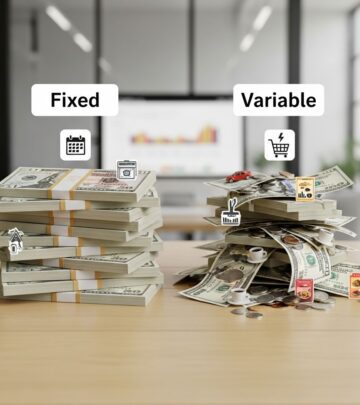
Understanding Fixed vs. Variable Expenses
Fixed expenses remain consistent month-to-month, such as mortgage payments or car loans, while variable ones fluctuate like groceries or entertainment. Prioritizing fixed cost reductions yields the biggest impact since they represent steady outflows. Include savings as a fixed line item—’pay yourself first’ by automating transfers to ensure wealth-building before other spending.
Start by listing all fixed expenses: housing, utilities, transportation, insurance, subscriptions, debt payments, and minimum savings. Track three months of statements to spot patterns. Tools like envelope methods or apps (e.g., Mint) simplify this.
1. Cut Housing Costs
Housing often claims the largest fixed expense slice, typically 30%+ of income. Reducing it unlocks massive savings.
- Get a roommate: Sharing rent or mortgage halves costs. Platforms like Craigslist or Roommates.com connect reliable housemates; screen thoroughly for compatibility.
- Downsize your home: Move to a smaller apartment or house in a cheaper area. A one-bedroom might save $300-500/month versus a two-bedroom.
- Refinance your mortgage: If rates drop (current averages ~6-7%), refinancing lowers payments. Check eligibility via lenders; aim for fees under 2% of loan value.
- House hack: Rent out a room via Airbnb for extra income offsetting costs.
Average U.S. rent is $1,700/month; trimming 20% equals $340 saved annually over $4,000.
2. Lower Utility Bills
Utilities average $400/month for a family of four. Simple habits and upgrades slash this by 10-30%.
| Utility | Tip | Potential Savings |
|---|---|---|
| Electricity | LED bulbs, smart thermostat, unplug devices | $50-100/month |
| Heating/Cooling | Seal drafts, programmable thermostat | $30-70/month |
| Water | Low-flow fixtures, shorter showers | $20-40/month |
| Internet/Cable | Switch providers, bundle, cut premium channels | $20-50/month |
Switch to energy-efficient appliances during replacements; rebates from utilities or ENERGY STAR programs cover costs. Negotiate bills—call providers annually; many offer loyalty discounts or match competitors.
3. Reduce Transportation Expenses
Car ownership costs $500-800/month including payments, insurance, gas, and maintenance. Alternatives reclaim this budget line.
- Go car-free or one-car household: Use public transit, biking, or rideshares. Cities like NYC save commuters $9,000/year sans car.
- Buy used/pay off loans: Eliminate payments by selling and buying outright cheaper models.
- Carpool or vanpool: Apps like Waze Carpool split gas/insurance.
- Refinance auto loans: Lower rates cut payments $50-100/month.
Maintenance tip: DIY oil changes, tires rotate every 5,000 miles. Fuel efficiency: Drive 55-65 mph, keep tires inflated.
4. Shop for Better Insurance Rates
Insurance (auto, home, health) totals $2,000-4,000/year. Annual shopping yields 15-25% savings.
- Bundle policies: Auto + home/renters saves 10-20%.
- Increase deductibles: From $500 to $1,000 drops premiums $200/year (if you have emergency fund).
- Drop extras: Comprehensive/collision if car is older; roadside via AAA alternatives.
- Discounts: Safe driver, good student, multi-car, or low-mileage programs.
Use comparison sites like The Zebra; quote three providers yearly. U.S. drivers save average $500 by switching.
5. Minimize Debt Payments
High-interest debt like credit cards inflates fixed minimums. Accelerate payoff to shrink this category.
- Debt snowball/avalanche: Pay minimums on all, extra on smallest (snowball) or highest interest (avalanche).
- Balance transfer cards: 0% APR promo periods (12-21 months) for 18-month payoff plans.
- Consolidate loans: Personal loans at 7-10% vs. 20%+ cards.
Post-emergency fund, allocate 10-20% income to debt; saves thousands in interest.
6. Eliminate or Downgrade Subscriptions
Streaming, gym, boxes average $200/month unnoticed. Audit and cancel non-essentials.
- Family plans: Share Netflix/Hulu ($8-15 savings).
- Free alternatives: Library e-books, YouTube workouts vs. gym ($50/month).
- Quarterly review: Use apps like Rocket Money to track/cancel.
Average household wastes $219/year on unused subs; reclaim it.
7. Negotiate Bills and Service Contracts
Many fixed bills are negotiable: phone, internet, even rent.
- Call retention departments: Threaten cancel—often match competitors.
- Prepay annually: Discounts on insurance/home services.
- Community solar/gardens: Offset energy without panels.
Success rate: 70% of callers get reductions averaging 15%.
8. Build Savings into Fixed Expenses
Treat savings as non-negotiable: 10-20% of income auto-transferred. After 3-6 months emergency fund, split to debt/investments.
Implementation Plan
- Month 1: Audit all fixed expenses; cancel subs, shop insurance.
- Month 2: Negotiate bills, adjust utilities.
- Month 3: Explore housing/transport changes; automate savings.
- Ongoing: Review quarterly, track with apps.
Expected savings: $300-800/month for average household, compounding to $10,000+ yearly.
Frequently Asked Questions (FAQs)
Q: How much of my income should go to fixed expenses?
A: Aim for under 50%; housing alone no more than 30%. Adjust lifestyle if exceeded.
Q: What’s the fastest fixed expense to cut?
A: Subscriptions and insurance—immediate impact without lifestyle change.
Q: Can I reduce rent without moving?
A: Yes, negotiate lease renewal or add roommate; many landlords prefer retention.
Q: How do I maintain motivation?
A: Track progress visually (e.g., savings thermometer); reward with variable budget fun.
Q: Are utility audits free?
A: Often yes via providers; reveals 10-20% inefficiencies instantly.
References
- Build Your First Budget in 5 Easy Steps — Wise Bread. 2023-05-15. https://www.wisebread.com/build-your-first-budget-in-5-easy-steps
- Consumer Expenditure Survey — U.S. Bureau of Labor Statistics (.gov). 2024-09-10. https://www.bls.gov/cex/
- Annual Energy Outlook — U.S. Energy Information Administration (.gov). 2025-03-20. https://www.eia.gov/outlooks/aeo/
- Insurance Information Institute Facts — III.org. 2025-01-05. https://www.iii.org/fact-statistic/facts-statistics-auto-insurance
- Household Debt and Credit Report — Federal Reserve Bank of New York (.gov). 2025-11-12. https://www.newyorkfed.org/microeconomics/hhdc.html
Similar Articles








Read full bio of medha deb