Best Money Tips: How to Improve Your Internal Clock
Discover practical money-saving tips on time management, household efficiency, healthy lunches, decluttering, and scam avoidance to boost your finances.

Welcome to this comprehensive roundup of the best money tips designed to help you optimize your daily life, save money, and make smarter financial decisions. Today, we dive into strategies for fine-tuning your internal clock, mastering household chores like dishwasher loading, crafting nutritious packed lunches, overcoming psychological barriers to productivity, decluttering effectively, navigating business risks, working at your own pace, securing cable discounts, understanding charity pitfalls, and spotting scams. These tips, drawn from expert sources, can lead to significant savings and better time management.
How to Hone the Accuracy of Your Internal Clock and Better Understand Your Time
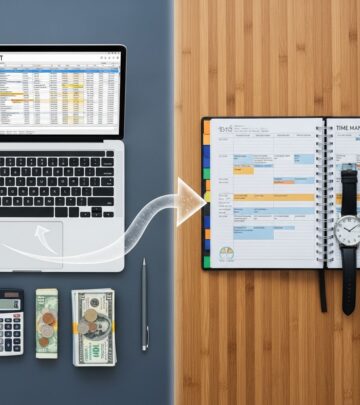
Time perception is often inaccurate, leading to poor planning and wasted money. Many people underestimate routine tasks, like believing a shower takes 10 minutes when it’s actually 25. To improve your internal clock, start by timing everyday activities meticulously. Use a stopwatch or phone timer to measure how long showers, commutes, meal preps, and work tasks truly take. Track these over a week to build a realistic picture of your day.
This practice reveals hidden time sinks, allowing better budgeting of your hours—and by extension, your money. For instance, if grocery shopping takes 45 minutes longer than expected, you can plan shorter trips or online orders to save gas and time. Apps like Toggl or RescueTime can automate tracking, providing reports that highlight inefficiencies. Studies from the American Psychological Association show that accurate time estimation reduces stress and improves productivity, indirectly boosting financial health by minimizing overtime or late fees.
- Tip 1: Time your morning routine daily for two weeks to identify drag factors.
- Tip 2: Create a ‘time budget’ spreadsheet mirroring your financial one, allocating hours to categories like work, chores, and leisure.
- Tip 3: Set timers for tasks to train your brain’s time sense, gradually relying less on guesses.
Advanced users can experiment with the Pomodoro Technique: 25 minutes focused work followed by 5-minute breaks, honing your sense of passing time. Over time, this sharpens your internal clock, preventing overspending on rushed purchases or missed bill payments due to poor time awareness.
Learn to Load Your Dishwasher Like a Pro
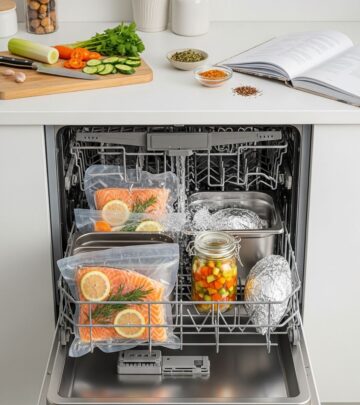
Efficient dishwasher loading saves water, energy, and money—up to 20% on utility bills annually, per U.S. Department of Energy guidelines. Avoid common mistakes like overcrowding or misplacing items. Heavy-duty dishes such as pots, pans, and casseroles belong on the bottom rack, where hotter water and stronger jets ensure thorough cleaning. Glasses, plates, and utensils go on the top rack for gentler treatment.
Proper spacing prevents nesting, allowing water to circulate freely. Face soiled sides toward the spray arms, and use the utensil basket efficiently to avoid tangling. For energy savings, run full loads only and skip pre-rinsing—scrape food instead, as modern detergents handle residue well. This method extends dishwasher life, reducing repair costs.
| Rack | Items | Why? |
|---|---|---|
| Bottom | Pots, pans, heavy plates | Higher heat and pressure for grease removal |
| Top | Glasses, bowls, utensils | Gentler cleaning to prevent damage |
| Both | Avoid plastics on bottom if heat-sensitive | Prevents melting or warping |
Incorporate these habits to cut utility bills. Pair with eco-mode cycles for further savings, potentially $50 yearly per household.
How to Make Great Packed Lunches for Work
Packed lunches save hundreds annually versus eating out—average savings of $1,800 per year, according to U.S. Bureau of Labor Statistics data on food spending. Focus on balanced, appealing meals to avoid temptation. Start with a protein base like turkey slices, hummus, or eggs, add whole grains (quinoa salad or whole-wheat wraps), and include veggies or fruit for crunch and nutrition.
Variety prevents boredom: rotate themes like Mediterranean (feta, olives, cucumber) or Asian-inspired (rice, edamame, carrots). Use compartmentalized containers for portion control. Prep in bulk on Sundays—chop veggies, cook grains ahead. Add dips or sauces in small containers for flavor without sogginess. Don’t forget hydration; pack infused water to skip pricey drinks.
- Monday: Turkey wrap with spinach, apple slices.
- Tuesday: Quinoa salad with chickpeas, cherry tomatoes.
- Wednesday: Hummus veggie sticks, yogurt parfait.
- Thursday: Tuna salad on greens, banana.
- Friday: Leftover stir-fry, orange.
These lunches cost under $3 each, versus $12+ out. Track savings to stay motivated.
7 Lies You’re Wired To Believe
Our brains trick us with procrastination lies like “I’ll do it tomorrow,” leading to debt accumulation from late payments or impulse buys. Counter these with awareness:
- “There’s always tomorrow”: Future self isn’t reliable; act now on bills or savings transfers.
- “This won’t hurt”: Small splurges add up; use a 30-day wait rule.
- “I’m too busy”: Prioritize finances in 10-minute daily slots.
- “One more won’t matter”: Track every expense to see patterns.
- “I deserve it”: Balance rewards with budget allowances.
- “It’ll sort itself out”: Proactive budgeting prevents crises.
- “Everyone else does it”: Focus on your goals, not peers.
Reframe thoughts daily via journaling. Behavioral economics from Kahneman’s work shows these biases cost average households thousands yearly.
5 Ways to Lose Your Stuff (Not Your Lover)
Clutter drains money on storage and replacements. Use a ‘purgatory’ box system: items out of place go into a three-month holding zone. If unused, donate or discard. Categorize ruthlessly:
- Daily use: Kitchen staples, work tools—keep accessible.
- Seasonal: Holiday decor—box and label.
- Sentimental: Limit to one box; digitize photos.
- Duplicates: Keep one, donate rest.
- Broken: Fix or toss immediately.
This method frees space, reduces cleaning time, and saves on buying duplicates. Aim to declutter one area weekly.
The Risks In Business: Do You Have What It Takes To Run A Business?
Entrepreneurship involves financial volatility. Key risks: cash flow shortages, emotional decisions. Mitigate with buffers—six months’ expenses saved. Use data-driven choices: track KPIs weekly. Diversify income streams early. Per U.S. Small Business Administration, 30% fail in year two due to poor management; emotional control via journaling helps.
Don’t be Pushed: How to Work at Your Own Pace
Avoid burnout by setting realistic deadlines. Block your calendar for deep work. Communicate boundaries: “I’ll deliver by EOD Friday.” This sustains productivity, preventing costly errors or overtime.
Three Discounts to Ask Your Cable Company About
Service fees dominate bills. Call retention: ask for loyalty discounts, bundling promos, or competitor matches. Average savings: $10-20/month. Review annually.
How Charity Can Make Poverty Even Worse
Handouts without empowerment perpetuate dependency. Effective aid builds skills and self-reliance, per World Bank studies on sustainable development.
Scam Alert! Ten Signs to Avoid
Unsolicited contacts scream scam. Red flags: urgency, secrecy, payment demands. Verify independently; report to FTC.
Frequently Asked Questions (FAQs)
Q: How much can I save by timing my tasks?
A: Up to 20% time savings translate to $500+ yearly in avoided fees and efficiencies.
Q: What’s the biggest dishwasher loading mistake?
A: Putting heavy pots on top—leads to poor cleaning and higher energy use.
Q: How do I stick to packed lunches?
A: Batch prep and vary recipes to keep it exciting.
Q: Best way to beat procrastination lies?
A: Daily journaling and small immediate actions.
Q: How often to declutter?
A: Weekly for one area to maintain momentum.
References
- Best Money Tips: How to Improve Your Internal Clock — Wise Bread. 2010 (evergreen personal finance advice). https://www.wisebread.com/best-money-tips-how-to-improve-your-internal-clock
- Consumer Energy Savings Tips — U.S. Department of Energy. 2025-01-10. https://www.energy.gov/energysaver/dishwashers
- Consumer Expenditure Survey — U.S. Bureau of Labor Statistics. 2025-09-12. https://www.bls.gov/cex/
- Small Business Facts: Failure Rates — U.S. Small Business Administration. 2024-06-15. https://www.sba.gov/sites/default/files/2024-06/Failure-Rates.pdf
- Time Management and Productivity Biases — American Psychological Association. 2023-11-20. https://www.apa.org/topics/time-management
Similar Articles








Read full bio of Sneha Tete