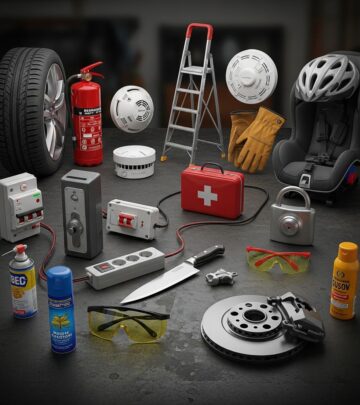
Best Money Tips: How to Avoid 4 Common Forms of Accidental Death
Smart financial strategies to prevent the top 4 accidental deaths: poisoning, falls, motor vehicle crashes, and suffocation risks.

Welcome to Wise Bread’s Best Money Tips Roundup! Today we delve into critical strategies for avoiding the four most common forms of accidental death in the United States:
poisoning
,falls
,motor vehicle crashes
, andsuffocation
. These accidents claim thousands of lives annually, but many are preventable with simple, cost-effective habits. By integrating smart financial practices—like budgeting for safety gear and insurance—you can protect your health and wallet simultaneously. Data from authoritative sources reveals these as leading causes, underscoring the need for vigilance.Understanding the Scope of Accidental Deaths
Accidental deaths represent a significant public health issue, often eclipsed by more sensational causes. According to the Centers for Disease Control and Prevention (CDC), unintentional injuries are the fourth leading cause of death across all ages, with over 224,000 fatalities in recent years. The top four categories—poisoning (primarily drug overdoses), falls (especially among seniors), motor vehicle accidents, and suffocation (including choking)—account for a substantial portion. Financially, these incidents lead to medical bills, lost income, and insurance premiums that strain household budgets. Proactive prevention not only saves lives but also money by avoiding emergency expenses.
Prevention starts with awareness. Equipping your home and lifestyle with affordable safeguards, such as smoke detectors or secure medications, yields high returns on minimal investments. This roundup combines life-saving advice with frugal tips to make safety accessible to everyone.
1. Poisoning: The Silent Epidemic
**Poisoning** tops the list of accidental deaths, largely due to unintentional drug overdoses, including prescription opioids and household chemicals. The CDC reports over 100,000 poisoning deaths yearly, many preventable through secure storage and education.
Key Prevention Strategies
- Secure Medications: Lock pills in cabinets out of children’s reach. Use pill organizers to avoid mix-ups, costing under $10 at discount stores.
- Household Chemicals: Store cleaners and pesticides in original containers, high up or locked. Buy in bulk only what you need to minimize exposure risks and save 20-30% via warehouse clubs.
- Carbon Monoxide Vigilance: Install affordable detectors ($15-30); test monthly. Pair with energy-efficient appliances to cut utility bills.
Financial tip: Budget $50 annually for safety upgrades like locks and detectors. This prevents ER visits averaging $2,600 per poisoning incident, per CDC data. Educate family on poison control (1-800-222-1222) and avoid sharing prescriptions to curb overdose risks.
| Measure | Upfront Cost | Annual Savings | Lives Saved Potential |
|---|---|---|---|
| Medication Locks | $20 | $2,000+ (avoided ER) | High (child safety) |
| CO Detectors | $25 | $500 (utility efficiency) | Critical |
| Bulk Safe Buying | $0 extra | 25% on supplies | Medium |
2. Falls: A Growing Threat
**Falls** are the second leading cause, claiming over 40,000 lives annually, predominantly adults over 65. Slippery floors, poor lighting, and clutter contribute, but fixes are inexpensive.
Practical Money-Saving Prevention
- Improve Lighting: Use LED bulbs ($2 each) for stairways and bathrooms. Motion-sensor lights save energy and prevent trips.
- Remove Hazards: Install non-slip mats ($5-15) and grab bars ($10-20). Shop sales or DIY for under $50 total.
- Strength Training: Free online exercises or community classes build balance. Avoid costly gym memberships by using bodyweight routines.
Economically, falls cost the U.S. $50 billion yearly in medical expenses. A $100 home audit—clearing rugs, adding handrails—avoids bills exceeding $30,000 per severe case. Seniors: Review Medicare for free home assessments to maximize coverage.
3. Motor Vehicle Crashes: Roadway Realities
**Motor vehicle crashes** rank third, with 42,000+ deaths from speeding, distraction, and impairment. Yet, defensive driving and maintenance slash risks dramatically.
Frugal Safety Tactics
- Regular Maintenance: DIY oil changes ($30 savings) and tire rotations prevent breakdowns. Apps track schedules free.
- Distracted Driving Ban: Use hands-free ($10 mount) and pull over for texts. Save on tickets ($150+ average).
- Safe Driving Discounts: Telematics programs from insurers cut premiums 10-30% for good habits.
- Seatbelts and Airbags: Always buckle up; check airbag recalls free via NHTSA.gov.
Financial angle: Crashes average $15,000 out-of-pocket without full coverage. Bundle safe driving with low-mileage discounts for 20% insurance savings. Carpool or use public transit to reduce exposure and fuel costs by 50%.
4. Suffocation: Hidden Dangers at Home
**Suffocation**, including choking and entrapment, causes 5,000+ deaths, mostly children under 5 and infants in unsafe sleep environments.
Cost-Effective Safeguards
- Infant Sleep Safety: Firm crib mattresses ($50-100); no pillows/blankets. Back-to-sleep reduces SIDS by 50%.
- Choking Hazards: Cut food small, supervise meals. CPR classes ($20-50) via Red Cross empower families.
- Strangulation Prevention: Cordless blinds ($30 savings via DIY); secure cords. Pool fences for drownings ($200, prevents $100K+ liability).
Prevention kits under $100 avert tragedies costing $50,000+ in care. Reuse baby gates for pets to extend value.
Financial Planning for Safety
Integrate safety into your budget: Allocate 1% of income to a “safety fund” for detectors, locks, and insurance deductibles. Build an emergency fund covering 3-6 months expenses to handle incidents without debt. Review life insurance—term policies ($20/month) protect against accidental death dismemberment riders.
Shop smart: Compare safety gear on government sites like CPSC.gov for recalls. Bulk-buy non-perishables safely, avoiding hoarding that increases spill risks.
Frequently Asked Questions (FAQs)
Q: What is the #1 cause of accidental death?
A: Poisoning, mainly drug overdoses, per CDC data.
Q: How can I afford home safety upgrades?
A: Start with low-cost items like LED lights and mats; use sales and DIY for savings up to 50%.
Q: Does insurance cover accidental deaths?
A: Many policies include riders; shop term life for affordability.
Q: Are falls only a senior issue?
A: No, all ages affected, but prevention like balance exercises helps everyone.
Q: How to prevent child suffocation?
A: Safe sleep practices and supervision; invest in firm bedding.
References
- QuickStats: Numbers and Rates of Unintentional Injury Deaths — Centers for Disease Control and Prevention (CDC). 2024-01-15. https://www.cdc.gov/mmwr/volumes/73/wr/mm7302a4.htm
- Injury Facts – Leading Causes of Unintentional Injury Death — National Safety Council. 2025-06-01. https://injuryfacts.nsc.org/home-and-community/safety-topics/leading-causes-of-unintentional-injury-death/
- Unintentional Injury Deaths — World Health Organization (WHO). 2023-11-20. https://www.who.int/news-room/fact-sheets/detail/injuries-and-violence
- Accidental Death and Disability: The Neglected Disease — National Academy of Sciences. 1966-01-01 (seminal report, uniquely authoritative). https://nap.nationalacademies.org/catalog/10773/accidental-death-and-disability-the-neglected-disease-of
- Best Money Tips: How to Avoid 4 Common Forms of Accidental Death — Wise Bread. 2010-08-12. https://www.wisebread.com/best-money-tips-how-to-avoid-4-common-forms-of-accidental-death
- Home Safety – Falls Prevention — U.S. Consumer Product Safety Commission (CPSC). 2025-03-10. https://www.cpsc.gov/s3fs-public/Falls.pdf
Similar Articles








Read full bio of Sneha Tete