Best Home Equity Lenders for Bad Credit in 2025
Access home equity loans and HELOCs with bad credit. Compare top lenders with minimum credit scores as low as 620.

Many homeowners believe that having a lower credit score automatically disqualifies them from obtaining a home equity loan or HELOC. However, this misconception overlooks a crucial reality: while strong credit certainly helps secure better rates, a less-than-perfect credit history doesn’t necessarily prevent you from accessing home equity financing. The key is knowing which lenders are willing to work with borrowers who have fair or poor credit scores and understanding the specific requirements each institution imposes.
The home equity lending market has evolved significantly, with several financial institutions recognizing that responsible borrowers with lower credit scores represent a viable lending opportunity. These lenders have developed specialized products and underwriting criteria that consider factors beyond just your credit score, including your home equity, debt-to-income ratio, and payment history. This guide explores the best options available to borrowers with low or bad credit and provides actionable strategies for securing favorable home equity financing.
Understanding Credit Scores and Home Equity Lending
Before exploring specific lenders, it’s important to understand how credit scores are classified and what each range means for your home equity lending prospects. Credit scores typically fall into five distinct categories that determine your eligibility and the rates you’ll receive.
| Credit Score Range | Classification |
|---|---|
| 300-579 | Poor |
| 580-669 | Fair |
| 670-739 | Good |
| 740-799 | Very Good |
| 800-850 | Exceptional |
Most traditional home equity lenders prefer borrowers with “good” credit scores above 700. However, some progressive lenders have established minimum credit score requirements as low as 620, and a few even accept scores as low as 580 for specific loan products. This represents a significant opportunity for borrowers with fair credit who might have been rejected by more conservative financial institutions.
Top Home Equity Lenders for Low and Bad Credit Borrowers
Fifth Third Bank
Bankrate Score: 4.3/5
Key Features:
– Minimum credit score: 640- Loan amounts: $10,000–$500,000- Maximum CLTV: 70% (for the best rate)- Products: HELOCs and home equity loans- Availability: 11 states
Fifth Third Bank stands out as one of the most accessible options for borrowers with fair to good credit. The institution offers both HELOCs and home equity loans, and customers can even convert an adjustable-rate HELOC into a fixed-rate home equity loan, providing flexibility in managing their borrowing strategy. With a 640 minimum credit score requirement, Fifth Third Bank removes barriers for borrowers who have made efforts to improve their credit standing.
Accessing Fifth Third’s home equity products is convenient, with options to apply at one of its branch locations, over the phone, or online. The maximum CLTV of 70% for the best rates reflects a conservative lending approach, though this varies based on individual circumstances and creditworthiness.
Figure
Bankrate Score: 4.5/5
Key Features:
– Minimum credit score: 640 (680 if on a second home)- Loan amounts: $15,000–$400,000- Maximum CLTV: 75% – 90%- Products: Fixed-rate HELOCs- Funds available: Undisclosed
Figure specializes in fixed-rate HELOCs, which appeal to borrowers seeking payment predictability. The lender’s 4.5 Bankrate Score reflects strong performance across affordability, availability, and borrower experience metrics. The higher CLTV limits (75-90%) compared to some competitors mean borrowers with substantial equity can access larger loan amounts. However, Figure requires a 680 minimum credit score for second homes, reflecting slightly stricter criteria for non-primary residences.
RenoFi
Bankrate Score: 4.2/5
Key Features:
– Minimum credit score: 620- Loan amounts: $25,000–$750,000- Maximum CLTV: 90% of post-renovation value- Products: HELOCs and home equity loans
RenoFi represents an excellent choice for homeowners planning renovation projects. The lender’s willingness to work with 620 credit scores makes it accessible to borrowers with fair credit. Notably, RenoFi evaluates CLTV based on the post-renovation home value, which can expand borrowing capacity for strategic renovations. This specialized approach benefits homeowners seeking to finance improvements while leveraging increased property values.
Rate
Bankrate Score: 4.5/5
Key Features:
– Minimum credit score: 620- Loan amounts: $25,000–$400,000- Maximum CLTV: 85% – 95%- Products: HELOCs- Maximum DTI: 50%
Rate offers one of the lowest minimum credit score requirements at 620, making it particularly accessible for borrowers with fair credit. The high maximum CLTV (up to 95%) allows substantial borrowing for homeowners with significant equity. Rate also permits a maximum debt-to-income ratio of 50%, which is more generous than the 43% standard at many competitors, providing additional flexibility for borrowers with higher existing debt obligations.
Lower
Bankrate Score: 4.0/5
Key Features:
– Minimum credit score: 640- Loan amounts: $15,000–$500,000- Maximum CLTV: 95%- Products: HELOCs and home equity loans
Lower distinguishes itself through an exceptionally high maximum CLTV of 95%, meaning homeowners can borrow up to 95 cents per dollar of home equity. This makes Lower an attractive option for borrowers seeking maximum borrowing capacity. The institution maintains a 640 minimum credit score requirement and offers both HELOC and home equity loan products, providing versatility for different borrowing scenarios.
How Bankrate Evaluates Home Equity Lenders
Bankrate’s methodology for rating home equity lenders ensures consumers receive reliable information for decision-making. The organization evaluates more than 40 home equity lenders across multiple dimensions to create an objective comparison framework.
Evaluation Criteria:
– Affordability (interest rates and fees)- Availability (geographic coverage and credit requirements)- Borrower experience (application process, funding speed, customer service)
Each lender receives a Bankrate Score on a five-star scale. When identifying the best home equity lenders specifically for borrowers with low or bad credit, Bankrate’s editorial team focused on lenders with a 3.5 score or higher, with particular emphasis on the availability component. This approach ensures that recommended lenders genuinely welcome applications from borrowers with fair to poor credit scores rather than simply maintaining officially high minimums while rejecting lower-credit applicants in practice.
Common Home Equity Loan Requirements
While credit scores matter, lenders evaluate multiple factors when deciding whether to approve home equity loan applications. Understanding these requirements helps borrowers prepare strong applications and identify potential obstacles early.
Typical Home Equity Loan Requirements:
– Minimum credit score (typically 620-640, though requirements vary)- At least 15 to 20 percent equity in your home- Maximum debt-to-income (DTI) ratio of 43 percent, or up to 50 percent with some lenders- On-time mortgage payment history- Stable employment and income documentation
The debt-to-income ratio calculation divides your total monthly debt payments by your gross monthly income. For example, if you have $2,310 in monthly debt obligations and $6,000 in gross monthly income, your DTI is 38.5 percent ($2,310 / $6,000 × 100). Most lenders look for ratios below 43 percent, though some progressive lenders accommodate up to 50 percent for well-qualified borrowers.
Strategies for Getting Approved With Bad Credit
Apply With a Co-Borrower
Adding a co-borrower with stronger credit can significantly improve your approval chances. A co-signer with excellent credit and stable income can address credit and income concerns. However, it’s crucial to understand that the primary borrower must still meet the lender’s minimum credit score requirements. The co-signer essentially strengthens an already-qualifying application rather than substituting for missing qualifications.
Work With Your Current Financial Institution
Many homeowners overlook this valuable strategy. If you maintain a checking or savings account with a bank or credit union, that institution already has positive history with you and may be more willing to overlook a lower credit score. Existing customers demonstrate payment reliability through their banking behavior, which can offset credit score concerns.
Provide a Written Explanation
Lenders appreciate context. If your credit score was affected by temporary hardship—such as job loss, medical emergency, or divorce—a brief, honest letter explaining the circumstances can help lenders understand your situation. This personalized touch demonstrates that your lower score doesn’t reflect your true creditworthiness or character.
Improve Your Equity Position
The more equity you have in your home, the more secure the lender’s position becomes. If possible, waiting to apply until you’ve accumulated additional equity (through mortgage payments or home appreciation) strengthens your application significantly.
Reduce Your Debt-to-Income Ratio
Paying down existing debts before applying lowers your DTI ratio, making you a more attractive borrower. Even modest debt reduction can push you below critical thresholds that trigger approvals.
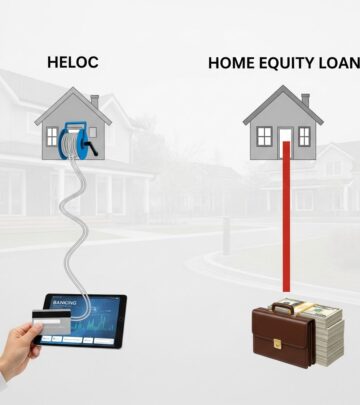
Home Equity Loans vs. HELOCs: Which Is Better for Bad Credit?
Borrowers with bad credit often find home equity loans more accessible than HELOCs. Several factors explain this difference:
Home Equity Loans:
– Generally have lower credit score requirements- Provide fixed interest rates with predictable monthly payments- Offer lump-sum funding at closing- Simplify budgeting due to consistent payment amounts
HELOCs:
– Typically require higher minimum credit scores- Feature variable interest rates that fluctuate with market conditions- Provide draw periods where you access funds as needed- Offer flexibility but payment uncertainty
For borrowers managing bad credit, the predictability and typically lower credit requirements of home equity loans make them the preferred choice. The fixed-rate structure also eliminates concerns about payment increases during economic cycles.
Frequently Asked Questions
What is the minimum credit score required for a home equity loan?
Most lenders require a minimum credit score of 640, though some progressive lenders accept scores as low as 620. A few institutions may consider scores as low as 580 for specific products, but these represent exceptions rather than the norm. When shopping for lenders, focus on those explicitly stating they work with fair-credit borrowers rather than assuming “as low as” marketing language applies to lower-tier credit scores.
Can I get a home equity loan with a 600 credit score?
Obtaining a home equity loan with a 600 credit score is challenging but not impossible. Some lenders, particularly credit unions and specialized home equity lenders, may consider applicants in this range if other factors are strong—specifically substantial home equity, low debt-to-income ratios, and stable income. However, expect fewer options and likely higher interest rates. Non-qualified loan products offer more flexibility but come with higher costs.
How much equity do I need to qualify for a home equity loan?
Most lenders require at least 15 to 20 percent equity in your home. This means your home’s value must exceed your mortgage balance by this percentage. For example, if your home is worth $300,000 and you owe $240,000, you have 20 percent equity. Some lenders permit borrowing up to 85-95 percent of your home’s value, though this depends on your creditworthiness and other factors.
Will applying for a home equity loan hurt my credit score?
Home equity loan applications do trigger a hard inquiry, which temporarily lowers your credit score by a few points. However, this impact is minimal and typically recovers within a few months. The key is to avoid multiple applications within a short timeframe. If you plan to shop multiple lenders, do so within a 14-45 day window; credit bureaus count multiple inquiries in this period as a single inquiry if they’re for the same loan type.
What’s the difference between CLTV and LTV?
Combined Loan-to-Value (CLTV) expresses the total percentage of your home’s value covered by all liens—your mortgage plus any home equity products. Loan-to-Value (LTV) refers only to the new loan compared to your home’s value. If your home is worth $300,000, you owe $210,000 on your mortgage, and you want to borrow $60,000 in home equity, your CLTV would be 90 percent (($210,000 + $60,000) / $300,000). Understanding this distinction helps you determine how much you can borrow.
How long does it take to get funded after approval?
Funding timelines vary by lender. Some online lenders fund within 7-14 days, while traditional banks may require 3-6 weeks. Ask your lender about their typical funding timeline and whether expedited options are available. Title searches, appraisals, and final underwriting reviews all contribute to the timeline.
Conclusion
Having bad or fair credit no longer means automatic rejection for home equity loans and HELOCs. Multiple lenders now recognize that borrowers with lower credit scores can be reliable, responsible borrowers when other factors—equity, income stability, and debt management—are favorable. By targeting lenders with explicit low-credit-score policies, understanding typical requirements, and employing strategic application techniques, homeowners with fair to poor credit can successfully access home equity financing at competitive rates. The key is thorough research, honest self-assessment of your qualifications, and persistence in finding the right lender match.
References
- Best Home Equity Lenders for Bad Credit in 2025 — Bankrate. 2025. https://www.bankrate.com/home-equity/best-home-equity-lenders-low-bad-credit/
- How To Get a Home Equity Loan With Bad Credit — Bankrate. 2025. https://www.bankrate.com/home-equity/home-equity-loan-bad-credit/
- MyFico Credit Score Ranges — MyFico. https://www.myfico.com/credit-education/credit-scores/credit-score-ranges
- Federal Reserve – Regulation Z: Truth in Lending Act — Federal Reserve Board. https://www.federalreserve.gov/regulations/12-cfr-1026.html
- Consumer Financial Protection Bureau – Home Equity Lines of Credit — CFPB. https://www.consumerfinance.gov/about-us/newsroom/
Similar Articles








Read full bio of Sneha Tete