Best High-Yield Savings Accounts and How to Choose One
Learn how high-yield savings accounts work, how they compare to average savings, and how to pick the best account for your money.
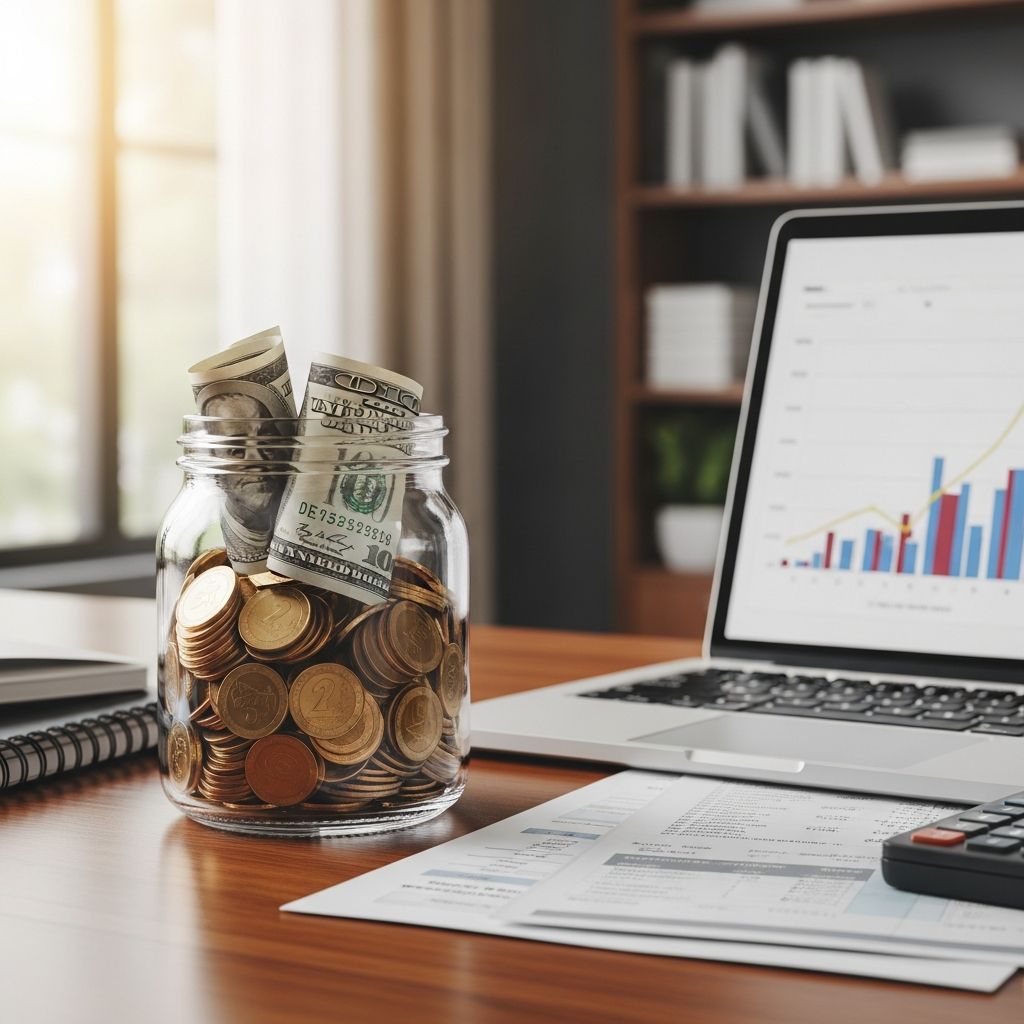
High-yield savings accounts have become one of the most effective tools for earning more interest on cash you want to keep safe and accessible. With the national average savings rate still under 0.50% APY at many banks, the best high-yield accounts can pay several times more, significantly boosting what you earn on emergency funds and short-term goals.
This guide explains what a high-yield savings account is, how it differs from a standard savings account, how much more you can realistically earn, and what to look for when comparing accounts. It follows the same core topics covered in MoneyRates-style rankings of the best high-yield savings accounts, but presents the information in fresh, detailed language.
What Is a High-Yield Savings Account?
A high-yield savings account (HYSA) works like a traditional savings account but offers a much higher interest rate, expressed as an annual percentage yield (APY). The account is typically found at online banks or credit unions that can pay more because they have lower overhead costs than branch-heavy institutions.
From a functional standpoint, a high-yield savings account usually offers:
- Principal safety – Balances at banks are generally insured by the Federal Deposit Insurance Corporation (FDIC) up to $250,000 per depositor, per insured bank, per ownership category.
- Stable value – Unlike investments such as stocks or bond funds, the account balance does not fluctuate with market prices.
- Ongoing interest – Interest accrues over time based on the APY, with compounding scheduled daily, monthly, or quarterly depending on the bank.
- Easy access – You can withdraw or transfer money, often via online banking, mobile apps, or linked checking accounts.
The key difference is not how the account behaves, but how much it pays. A high-yield account is simply one that offers a rate well above the national average.
How High-Yield Savings Accounts Compare to Average Savings Accounts
The interest rate gap between high-yield savings accounts and regular savings accounts is substantial. According to the FDIC, the national average rate on savings accounts remains under 0.50% APY at many institutions. By contrast, competitive high-yield accounts can pay close to 5.00% APY or more in some rate environments.
This gap exists for several reasons:
- Traditional banks often prioritize convenience and cross-selling and may not compete aggressively on savings rates.
- Online banks have lower operating costs and can pass some of those savings back to customers in the form of higher interest rates.
- Competitive marketplaces for deposits, such as online savings platforms, push certain banks to offer standout rates to attract customers.
Example: The Earnings Gap in Dollars
To see how powerful this difference can be, consider a simple illustration using typical figures from recent surveys of savings rates:
| Scenario | APY | Balance | Interest Earned in 1 Year (Approx.) |
|---|---|---|---|
| Traditional bank savings | 0.01% APY | $5,000 | About $0.50 |
| National average savings | 0.39% APY | $5,000 | About $19.50 |
| Competitive high-yield savings | 5.00% APY | $5,000 | About $250.00 |
On the same $5,000, a top high-yield savings account can generate hundreds of times the interest of a very low-yield account and more than ten times the interest of a typical average-rate account.
Core Features of the Best High-Yield Savings Accounts
MoneyRates-style rankings focus on accounts that combine high APYs with consumer-friendly features. While specific institutions change as rates move, the accounts that typically rise to the top share certain characteristics.
1. Competitive APY
The most obvious feature is a market-leading APY. When national averages cluster under 0.50%, the best high-yield accounts might pay four, ten, or even more times that amount.
Key aspects of APY to review include:
- Rate level – How the APY compares to other online savings accounts at the time you are shopping.
- Rate tiers – Whether the bank pays different yields at different balance levels, and what tier your expected balance will fall into.
- Promotional vs. ongoing rates – Whether a high rate is a temporary introductory offer or a standard rate without a short-term teaser period.
2. Low or No Minimum Balance Requirements
Many of the top high-yield savings accounts feature no minimum opening deposit or very modest requirements, allowing new savers to get started with small amounts. Others may require a few hundred dollars to open the account or to earn the best rate.
Important details to compare:
- Minimum opening deposit – The amount you must deposit to open the account.
- Minimum balance to earn APY – Some accounts pay interest only above a certain threshold.
- Minimum balance to avoid fees – If the account charges a monthly fee, a balance requirement might waive it.
3. Limited or No Monthly Fees
High-yield savings accounts are most valuable when you can earn interest without watching it get eroded by maintenance fees. Many of the best online savings accounts come with no monthly maintenance fee, regardless of balance.
When evaluating fees, look for:
- Monthly service charges or maintenance fees
- Excess withdrawal fees if you exceed a certain number of transfers
- ATM fees (if the account comes with ATM access)
4. Solid Access and Convenience
Although high-yield savings accounts are primarily for saving, not daily spending, ease of access still matters. The strongest accounts usually offer:
- Online and mobile banking for balance checks, transfers, and mobile deposits
- Fast transfers to linked checking accounts, often within one to three business days
- Optional ATM access at some institutions, sometimes with limited fee reimbursements
- 24/7 or extended customer support via phone, chat, or secure messaging
5. FDIC or NCUA Insurance
Safety is one of the biggest advantages of a high-yield savings account. Deposits at participating banks are covered by FDIC insurance up to $250,000 per depositor, per insured bank, per ownership category. Deposits at federally insured credit unions receive comparable protection through the National Credit Union Administration (NCUA). Federal insurance makes high-yield savings a lower-risk way to earn more on cash compared with market-based investments.
What to Consider When Choosing a High-Yield Savings Account
Beyond simply chasing the highest rate available, you should compare several factors to find the best fit for your needs.
Annual Percentage Yield (APY)
APY is the standardized way to compare savings yields across banks. It incorporates both the nominal interest rate and the effect of compounding over one year.
When comparing APYs:
- Ensure you are looking at the current APY, as savings rates are variable and can change at any time.
- Check for any requirements to earn the advertised APY, such as maintaining a minimum balance or completing specific activities.
- Remember that a slightly higher rate with no fees is often better than a marginally higher rate that comes with restrictive conditions.
Account Fees and Policies
Even if the APY is attractive, fees can reduce your effective earnings. Review the fee schedule carefully:
- Are there monthly maintenance fees? If so, can they be easily waived?
- Does the bank charge excess transaction fees if you make multiple transfers in a month?
- Are there fees for paper statements, outgoing transfers, or other services you are likely to use?
Access, Transfers, and ATM Availability
Because high-yield savings accounts are geared toward saving rather than daily spending, many do not include debit cards or extensive ATM networks. Instead, they often rely on:
- Electronic transfers (ACH) between your savings account and an external checking account
- Internal transfers to other accounts at the same bank
- Occasional ATM access in some high-yield savings products, sometimes with modest monthly fee reimbursements
Think about how frequently you will need to access your savings, how fast you may need funds in an emergency, and whether ATM access is important to you.
Online vs. Branch-Based Accounts
Most of the best high-yield savings accounts are offered by online-only banks, which tend to pay higher rates because they do not maintain costly physical branches. Surveys of savings institutions repeatedly find that online accounts earn significantly more than branch-based savings accounts.
Advantages of online savings accounts include:
- Higher APYs compared with typical branch accounts
- Low or no monthly fees
- Modern digital tools for managing your money from anywhere
However, if you prefer to deposit or withdraw cash in person, or if you feel more comfortable with a local branch, you may need to balance rate considerations with your personal banking preferences.
You Don’t Have to Accept Low or Falling Rates
One of the themes in rate surveys is that many households keep their savings at banks that pay far below the best available rates. Even when interest rates in the broader economy fall, there can still be a large gap between the national average and top-tier high-yield savings accounts.
To avoid leaving money on the table:
- Review your current savings rate at least once or twice a year.
- Compare it to leading high-yield savings accounts and online banks.
- Be willing to move your savings if your current bank is no longer competitive.
Because high-yield savings accounts are generally liquid and low-risk, switching to a better rate can be one of the simplest ways to increase your earnings on cash you already have.
How Compounding Boosts Your High-Yield Savings
Compounding is the process of earning interest not only on your original principal but also on interest that has already been added to your balance. The higher the APY and the longer you leave the money untouched, the more significant the effect.
You can estimate your future balance using the basic compound interest formula:
Future Value = Principal × (1 + r/n)^n×t
Where:
- Principal is your initial deposit
- r is the annual interest rate (in decimal form)
- n is the number of compounding periods per year
- t is the number of years
Even modest rate differences can add up to a large gap over several years, particularly on higher balances.Using a high-yield savings account for emergency funds, major purchases, or near-term goals allows you to harness compound interest while still keeping your money safe and accessible.
High-Yield Savings vs. Other Deposit Accounts
High-yield savings accounts exist alongside other federally insured deposit products, such as certificates of deposit (CDs) and money market accounts. Each has a different balance of yield, liquidity, and flexibility.
| Account Type | Main Strength | Liquidity | Typical Use |
|---|---|---|---|
| High-yield savings | High rate + flexibility | High (transfers allowed, some limits) | Emergency funds, near-term goals |
| Certificates of deposit (CDs) | Potentially higher fixed rate | Low (penalties for early withdrawal) | Money you can lock away for a set term |
| Money market accounts | Check-writing or debit features plus yield | Moderate (transaction limits may apply) | Blend of savings and limited transactions |
For many people, the flexibility of a high-yield savings account makes it the first choice for building an emergency fund or saving for expenses over the next one to five years, while CDs or other products may be better suited for funds that can be locked up longer.
Frequently Asked Questions (FAQs)
Q: Are high-yield savings accounts safe?
A: High-yield savings accounts at FDIC-insured banks or NCUA-insured credit unions are generally very safe. Deposits are protected up to $250,000 per depositor, per insured institution, per ownership category, significantly reducing the risk of loss compared with uninsured accounts or market-based investments.
Q: Can the interest rate on a high-yield savings account change?
A: Yes. Most high-yield savings accounts have variable rates that can go up or down based on market conditions and the bank’s pricing strategy. The APY you see when you open the account is not guaranteed indefinitely, so it is important to monitor your rate and compare it periodically to other options.
Q: How often can I withdraw money from a high-yield savings account?
A: While federal rules that once capped certain savings transfers at six per month have been relaxed, many banks still impose practical limits or fees after a set number of withdrawals. High-yield savings accounts are best used for occasional access rather than daily spending; for frequent transactions, pairing your savings account with a checking account is usually recommended.
Q: Do I need an online bank to get a high-yield savings rate?
A: Not strictly, but most of the highest savings rates are offered by online banks and digital divisions of larger institutions. Because these banks operate without extensive branch networks, they can often offer significantly higher yields than traditional
brick-and-mortar banks.
Q: Is a high-yield savings account better than investing?
A: High-yield savings accounts prioritize capital preservation and liquidity rather than maximum return. They typically earn less than long-term investments like diversified stock portfolios but carry much lower risk and are federally insured at participating institutions. Many people use high-yield savings for emergency funds and short-term goals while using investment accounts for long-term growth.
References
- National Rates and Rate Caps – Savings Account — Federal Deposit Insurance Corporation (FDIC). 2025-10-01. https://www.fdic.gov/resources/bankers/national-rates
- Synchrony High Yield Savings Account Review — MoneyRates. 2025-12-15. https://www.moneyrates.com/reviews/synchrony-bank-high-yield-savings-account-review.htm
- Best High-Yield Savings Accounts of January 2026 — Bankrate. 2026-01-05. https://www.bankrate.com/banking/savings/best-high-yield-interests-savings-accounts/
- Ways to Earn More Interest on Your Money in 2026 — MoneyRates. 2025-12-20. https://www.moneyrates.com/savings/ways-to-earn-more-interest-on-savings.htm
- Best Savings Accounts for January 2026 — MoneyRates. 2026-01-03. https://www.moneyrates.com/best-savings-accounts.htm
- How to Maximize Returns on Savings & Investments — MoneyRates. 2025-11-10. https://www.moneyrates.com/best-high-return-financial-accounts.htm
- MoneyRates: Navigating You to Smarter Banking Choices — MoneyRates. 2025-09-01. https://www.moneyrates.com
Similar Articles








Read full bio of medha deb