Compound Interest Investments: 7 Best Options To Grow Wealth
Maximize wealth growth with top compound interest investment vehicles and strategies.

Understanding Compound Interest Investments
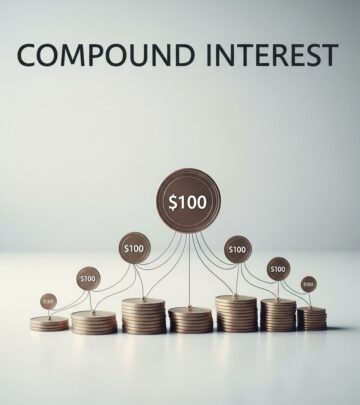
Compound interest is one of the most powerful forces in personal finance, often described as the eighth wonder of the world by financial experts. It represents the interest you earn not only on your initial investment but also on the accumulated interest from previous periods. This snowball effect creates exponential growth over time, making it an essential strategy for building long-term wealth.
The fundamental principle behind compound interest is straightforward: your money makes money, and that earned money makes additional money. For example, if you invest $1,000 at a 5% annual return, you earn $50 in the first year. In the second year, you earn 5% on $1,050 (your original investment plus accumulated interest), generating $52.50. This cycle continues indefinitely, with your earnings accelerating as the base amount grows larger.
Understanding which investments can harness the power of compound interest is crucial for anyone seeking to build sustainable wealth. Different investment vehicles offer varying levels of risk, return potential, and compounding frequency, allowing investors to choose options that align with their financial goals and risk tolerance.
Low-Risk Compound Interest Investments
For conservative investors prioritizing capital preservation, several low-risk investment vehicles offer reliable compound interest benefits. These options provide stability and predictability, making them ideal for those with shorter time horizons or lower risk tolerance.
High-Yield Savings Accounts
High-yield savings accounts represent one of the safest ways to earn compound interest on your money. These FDIC-insured accounts typically offer significantly higher interest rates than traditional savings accounts, often ranging from 4% to 5% annually. The interest compounds daily or monthly, meaning your earnings grow continuously throughout the year. High-yield savings accounts provide liquidity, allowing you to access your funds whenever needed without penalties.
Certificates of Deposit (CDs)
CDs are time-based investment products where you agree to keep your money deposited for a specific period, typically ranging from three months to five years. In exchange for this commitment, banks and credit unions offer fixed interest rates that are often higher than savings accounts. For instance, a five-year CD might offer 3.68% interest with an annual percentage yield (APY) of 3.75%. When you deposit $10,000 into such an account, you could earn around $1,930 in total interest by the end of the five-year term, thanks to the compounding effect. CDs are FDIC-insured up to $250,000, making them exceptionally safe investment vehicles.
Money Market Accounts
Money market accounts blend features of savings accounts and checking accounts, offering competitive interest rates alongside limited check-writing privileges and debit card access. These accounts compound interest regularly, typically daily or monthly, and provide easier access to your funds compared to CDs. Money market accounts are also FDIC-insured, making them a secure option for conservative investors seeking modest returns with flexibility.
Moderate-Risk Compound Interest Investments
Investors willing to accept moderate risk levels can access investment vehicles that typically generate higher returns than savings products, enabling faster wealth accumulation through compound interest.
Bonds and Bond Funds
Bonds represent loans extended to corporations or governments that agree to pay specified yields in return for investor capital. When you purchase a bond, you receive regular interest payments, and at maturity, the principal is returned. To truly benefit from compound interest with bonds, you must reinvest the interest payments into additional bonds or bond funds rather than spending them.
Bond funds offer an additional advantage by automatically reinvesting distributions, making compound interest accumulation seamless. These managed portfolios contain diversified collections of bonds with varying maturities and credit qualities. Bond funds can provide both current income through interest payments and capital appreciation potential, with the reinvested interest creating powerful compounding effects over extended periods.
Dividend-Paying Stocks
Dividend-paying stocks from established companies offer compound interest potential through regular dividend distributions. By reinvesting dividends through dividend reinvestment plans (DRIPs), investors purchase additional shares automatically with their dividend payments. This strategy leverages compound interest to accelerate wealth growth while also providing potential capital appreciation from stock price increases. Companies with long histories of consistent dividend payments and growth, often called dividend aristocrats, are particularly suitable for this approach.
Higher-Return Compound Interest Investments
For investors with longer time horizons and greater risk tolerance, higher-return investments can generate substantially faster wealth accumulation through compound interest.
Index Funds and Exchange-Traded Funds (ETFs)
Index funds and ETFs tracking broad market indices like the S&P 500 historically return approximately 10% annually over extended periods, though this varies by year. A more conservative 7% assumption demonstrates the power of compound interest effectively. Starting with $20,000 and assuming 7% annual returns, your investment grows to $21,400 in year one and $22,898 in year two—nearly $2,900 gained with only $98 from compound interest in year two alone. Over 30 years, this $20,000 would grow to approximately $152,200, showcasing the exponential power of long-term compound interest in stock market investments.
Real Estate Investment Trusts (REITs)
REITs pool investor capital to purchase and manage income-generating properties, distributing 90% of taxable income as dividends. These investments offer compound interest benefits through dividend reinvestment while providing exposure to real estate markets without direct property ownership. REIT dividends can be reinvested to purchase additional shares, accelerating wealth accumulation through compounding.
Key Strategies for Maximizing Compound Interest
Regardless of which investments you choose, several strategies amplify compound interest benefits:
Start Early
The most powerful variable in compound interest calculations is time. Beginning to invest in your twenties rather than your thirties adds an extra decade of compounding, often resulting in substantially larger final balances. Due to exponential growth patterns, early contributions have disproportionately large impacts on final wealth.
Contribute Consistently
Regular contributions combined with compound interest create powerful wealth-building momentum. Whether through monthly investments or annual additions, consistent contributions increase the base amount earning compound interest, accelerating growth rates significantly. Automated investment plans help maintain this discipline even during market volatility.
Reinvest All Distributions
Whether receiving bond interest, stock dividends, or fund distributions, reinvesting these payments rather than spending them is crucial for maximizing compound interest. Reinvestment purchases additional shares or units that themselves generate future earnings, creating the multiplier effect essential to compound interest power.
Maintain Long-Term Perspective
Compound interest truly accelerates over extended periods spanning decades. Investors must weather market cycles, economic recessions, and volatility without panic selling. The historical 7% average return mentioned for conservative investment approaches represents an average over decades, incorporating bull and bear markets alike. Maintaining investment discipline through varied economic conditions is essential for realizing compound interest benefits.
Utilize the Rule of 72
The Rule of 72 provides a quick method for estimating doubling time. Divide 72 by your expected annual return rate to calculate approximate years needed to double your investment. At 7% returns, your money doubles in approximately 10.3 years (72 ÷ 7 = 10.3). This simple tool helps investors understand growth trajectories and set realistic expectations.
Comparing Investment Options
| Investment Type | Risk Level | Typical Return | Compounding Frequency | Liquidity |
|---|---|---|---|---|
| High-Yield Savings Accounts | Very Low | 4-5% | Daily/Monthly | Immediate |
| Certificates of Deposit (CDs) | Very Low | 3-5% | Daily/Monthly | Fixed Term |
| Money Market Accounts | Very Low | 3-5% | Daily/Monthly | High |
| Bonds & Bond Funds | Low-Moderate | 3-6% | Monthly/Quarterly | High |
| Dividend Stocks | Moderate | 2-4% + Growth | Quarterly | High |
| Index Funds/ETFs | Moderate | 7-10% (Historical) | Monthly/Quarterly | High |
| REITs | Moderate-High | 4-8% | Monthly/Quarterly | High |
Understanding APY vs. Interest Rate
When evaluating compound interest investments, distinguishing between interest rate and annual percentage yield (APY) is essential. The interest rate represents the stated annual percentage, while APY accounts for compounding frequency effects. A 4% interest rate compounded daily results in an effective APY of approximately 4.07%. When comparing accounts, focus on APY rather than interest rate, as APY already incorporates compounding benefits and provides accurate growth expectations.
The Compound Interest Formula
Understanding the mathematical foundation of compound interest helps predict investment growth. The formula is:
A = P(1 + r/n)^(nt)
Where:
– A = Final amount
– P = Principal (initial investment)
– r = Annual interest rate (as decimal)
– n = Compounding periods per year
– t = Number of years
Using this formula, you can calculate precise growth projections for any investment scenario, adjusting variables to match your specific situation.
Frequently Asked Questions
Q: How does compound interest differ from simple interest?
A: Simple interest calculates earnings only on the principal amount, while compound interest earns on both principal and accumulated interest. Over time, compound interest generates substantially higher returns, making it favorable for savers but less favorable for borrowers taking loans at compound rates.
Q: What is the best compound interest investment for beginners?
A: High-yield savings accounts and CDs are ideal starting points, offering FDIC insurance, predictable returns, and low risk. As comfort and knowledge increase, investors can explore bonds, dividend stocks, and index funds with longer time horizons.
Q: How long does it take compound interest to significantly impact wealth?
A: While compound interest begins immediately, meaningful impacts typically emerge over 10-20 years. Using the Rule of 72, even modest 3% returns double money in 24 years, while 7% returns double wealth in approximately 10 years.
Q: Should I prioritize high returns or safety for compound interest investments?
A: This depends on your time horizon and risk tolerance. Younger investors with 30+ year horizons can tolerate market volatility for higher expected returns, while those nearing retirement should prioritize safety. Most investors benefit from diversified portfolios combining both approaches.
Q: Can I use compound interest with debt repayment?
A: Yes, but compound interest works against you with debt. Credit cards and student loans utilizing compound interest increase what you owe over time. Prioritizing debt repayment, especially high-interest debt, effectively provides guaranteed “returns” by avoiding compound interest charges.
Q: How frequently should I check on compound interest investments?
A: For long-term compound interest investing, checking quarterly or annually is sufficient. Frequent monitoring often encourages panic selling during market downturns, disrupting the compounding process. Set up automated contributions and allow time to work its magic.
References
- What Is Compound Interest? — Bankrate. 2024. https://www.bankrate.com/banking/what-is-compound-interest/
- Compound Interest Calculator — Bankrate. 2024. https://www.bankrate.com/banking/savings/compound-savings-calculator/
- Simple Interest vs. Compound Interest — Bankrate. 2024. https://www.bankrate.com/investing/compound-interest-vs-simple-interest/
- APY vs. Interest Rate: What’s The Difference? — Bankrate. 2024. https://www.bankrate.com/banking/savings/apy-vs-interest-rate/
- Rule Of 72: What It Is And How To Use It — Bankrate. 2024. https://www.bankrate.com/investing/what-is-the-rule-of-72/
- 7 Low-Risk Ways To Earn More Interest On Your Money — Bankrate. 2024. https://www.bankrate.com/banking/savings/low-risk-ways-to-earn-higher-interest/
- How to Invest in Your 20s: 7 Tips to Get Started — Bankrate. 2024. https://www.bankrate.com/investing/best-ways-to-get-into-investing-in-your-20s/
Similar Articles








Read full bio of medha deb