Best Charles Schwab Mutual Funds for Investors
Discover top-rated Charles Schwab mutual funds to build a diversified investment portfolio.
Investing in the Best Charles Schwab Mutual Funds
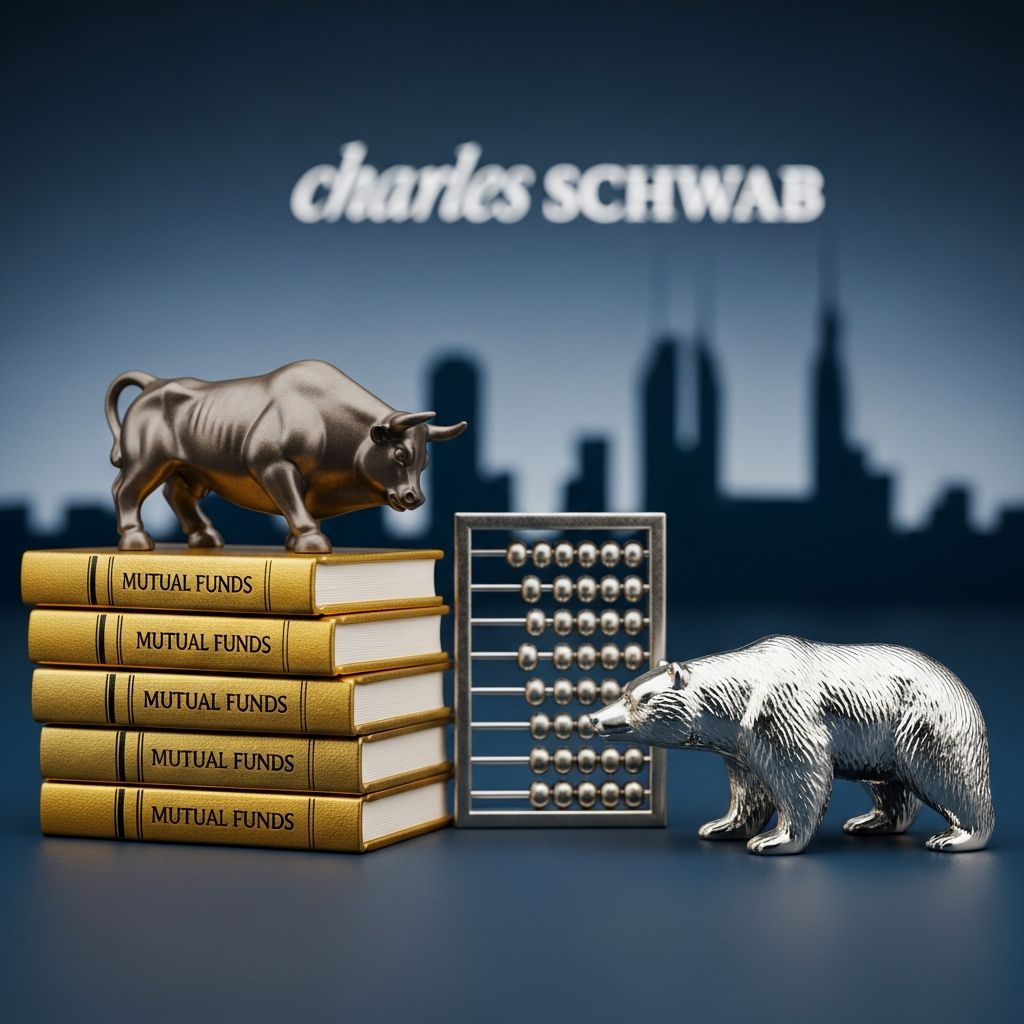
Charles Schwab has established itself as a leading investment platform offering investors access to a comprehensive selection of mutual funds designed to meet various financial goals and investment strategies. Whether you’re a beginner starting your investment journey or an experienced investor looking to diversify your portfolio, Charles Schwab provides tools, resources, and carefully curated fund selections to help you make informed decisions. The platform’s commitment to transparency, low costs, and quality offerings makes it an attractive choice for self-directed investors seeking to build wealth over time.
With decades of experience in the financial services industry, Charles Schwab has developed a robust ecosystem of mutual funds that cater to different risk tolerances, time horizons, and investment objectives. The company’s Select List methodology identifies funds that meet rigorous standards for performance, cost-efficiency, and risk management, ensuring that investors have access to quality options without unnecessary complexity.
Understanding Charles Schwab’s Mutual Fund Selection Process
Charles Schwab employs a disciplined approach to identifying and recommending mutual funds through its proprietary Select List system. This methodology ensures that only funds meeting specific criteria are included in the platform’s curated lists, helping investors navigate the vast universe of available options.
The Mutual Fund OneSource Select List
The Mutual Fund OneSource Select List represents Charles Schwab’s most comprehensive mutual fund selection tool. This prescreened list focuses on no-load, no-transaction-fee mutual funds that have demonstrated strong performance, competitive risk profiles, and reasonable expense ratios. The selection process evaluates funds across multiple dimensions, including historical performance, volatility, income generation capabilities, and cost structure.
Funds included in this list must participate in Charles Schwab’s Mutual Fund OneSource service, which provides investors with a centralized platform for fund research and comparison. The rigorous selection criteria mean that only funds offering the best combination of eligibility requirements, quantitative assessment metrics, and qualitative review factors make the final cut.
Performance and Risk Assessment
Charles Schwab’s selection process incorporates detailed performance analysis, examining how funds have performed relative to their benchmarks and peer groups across various market cycles. Risk assessment evaluates volatility, downside protection, and correlation with other asset classes, helping ensure that recommended funds align with stated investment objectives.
Index Funds: The Foundation of a Diversified Portfolio
Index funds remain among the most popular and cost-effective options available through Charles Schwab, particularly for investors seeking broad market exposure with minimal ongoing management costs.
Charles Schwab S&P 500 Index Fund (SWPPX)
The Charles Schwab S&P 500 Index Fund tracks the performance of the S&P 500 Index, providing investors with exposure to 500 of the largest publicly traded companies in the United States. This fund delivers broad market exposure across diverse industries including technology, healthcare, financials, consumer discretionary, and industrials. By holding a portfolio that mirrors the index’s composition, the fund provides investors with a straightforward way to participate in the long-term growth of the U.S. economy with minimal fees.
This index fund is particularly suitable for long-term investors building the foundation of their portfolio. The low expense ratio and passive management approach reduce drag on returns, allowing investors to benefit more directly from market gains. The fund’s broad diversification helps mitigate company-specific risk while maintaining exposure to the overall health and growth of the U.S. corporate sector.
Benefits of Index Fund Investing
Index funds offer several compelling advantages for individual investors. First, they provide instant diversification across numerous companies and sectors, reducing the impact of any single company’s poor performance on overall portfolio results. Second, their passive management structure results in lower fees compared to actively managed funds, leaving more of investors’ money working toward growth rather than paying for management costs. Third, index funds demonstrate consistency in their tracking of benchmark indices, providing predictable performance characteristics.
Target-Date Funds: Investing for a Specific Retirement Year
Target-date funds have become increasingly popular among investors planning for retirement, as these funds automatically adjust their asset allocation over time to become progressively more conservative as the target date approaches.
Schwab Target 2025 Index Fund (SWYDX)
The Schwab Target 2025 Index Fund is designed for investors expecting to need access to their funds around 2025. This fund maintains an asset allocation designed to provide capital appreciation combined with current income generation consistent with its target date. The fund’s composition emphasizes equity exposure for growth while incorporating fixed-income securities to provide stability and income.
This fund represents an excellent choice for investors who want a simplified investment approach without needing to manually rebalance or adjust their portfolio allocation. The predetermined asset mix provides a balanced approach suitable for investors approaching their target date of retirement or major financial milestone.
Schwab Target 2025 Fund (SWHRX)
The Schwab Target 2025 Fund takes a more active management approach compared to its index-based counterpart. This fund is specifically constructed for investors who expect to begin making gradual withdrawals from their investment around the target date. The fund’s strategy assumes that investors will draw down the portfolio to cover living expenses and other financial needs in retirement.
The key distinction between these target-date options lies in their glide path strategy and management approach. The index-based version relies on passive tracking of benchmark indices, while the actively managed version involves portfolio managers making tactical decisions to optimize the risk-return tradeoff as the fund approaches and passes its target date.
Target-Date Fund Advantages
Target-date funds offer several benefits for retirement investors. They eliminate the need to manually adjust asset allocation as retirement approaches, reducing the psychological burden of timing decisions. They provide a diversified portfolio structure from inception, avoiding the risks of underdiversification. Additionally, their automated glide path strategy helps ensure investors aren’t taking excessive risk near their retirement date when they can least afford significant portfolio losses.
Quality Rating Systems and Fund Selection
Charles Schwab leverages third-party rating systems, including Morningstar ratings, to help investors identify funds with strong historical performance and risk-adjusted returns.
Morningstar Four and Five Star Funds
Charles Schwab’s platform prominently features Schwab Funds that have received Morningstar’s highest ratings of four and five stars. These ratings represent Morningstar’s assessment that the funds have delivered superior risk-adjusted returns compared to peer funds in their categories. Funds earning five stars represent the highest tier of Morningstar’s rating system, indicating exceptional performance across multiple market cycles and conditions.
While historical performance doesn’t guarantee future results, Morningstar’s ratings provide a useful screening mechanism for identifying funds that have consistently executed their investment strategy effectively and managed risk appropriately relative to their objectives.
Research Tools and Selection Resources
Charles Schwab provides investors with comprehensive research tools designed to facilitate informed fund selection decisions.
Mutual Fund Screener
The Charles Schwab Mutual Fund Screener allows investors to filter funds based on multiple criteria including asset class, investment style, expense ratio, performance metrics, and risk characteristics. This tool enables investors to create customized lists of funds matching their specific investment requirements and constraints.
ETF Select List
Beyond mutual funds, Charles Schwab’s ETF Select List provides similar curation and screening for exchange-traded funds. This list identifies ETFs that meet Charles Schwab’s standards for cost-efficiency, consistency, and suitability for self-directed investors. The ETF market offers investors additional flexibility through intraday trading, tax efficiency, and often lower expense ratios compared to traditional mutual funds.
Building Your Charles Schwab Investment Portfolio
Core Portfolio Strategy
Many investors use Charles Schwab index funds as the core holdings in their portfolios, combining broad market index funds with targeted allocation to specific market segments or asset classes. This core-and-satellite approach provides a diversified foundation while allowing for more targeted investments in specific areas aligned with individual convictions or goals.
Diversification Across Asset Classes
Charles Schwab’s mutual fund offerings span multiple asset classes including U.S. equities, international equities, bonds, and mixed-asset funds. A well-constructed portfolio typically includes exposure to multiple asset classes, with the specific allocation depending on time horizon, risk tolerance, and financial objectives.
Cost Considerations
Expense ratios significantly impact long-term investment returns. Charles Schwab’s focus on low-cost options means that selected funds typically have expense ratios below peer averages, allowing more of investment returns to compound for investor benefit. Over decades of investing, even small differences in expense ratios can result in substantial variations in final portfolio values.
Frequently Asked Questions
Q: What makes Charles Schwab mutual funds different from other fund providers?
A: Charles Schwab differentiates itself through its Select List curation process, low-cost structure, comprehensive research tools, and commitment to transparency. The company’s reputation and emphasis on investor education also set it apart.
Q: Can I invest in Charles Schwab mutual funds if I bank elsewhere?
A: Yes, most Charles Schwab mutual funds are available through various financial institutions and platforms, though you may find the most competitive pricing and access through a Charles Schwab brokerage account.
Q: How often should I rebalance my Charles Schwab mutual fund portfolio?
A: Most financial advisors recommend rebalancing annually or when your portfolio allocation drifts more than five percentage points from your target allocation, though this depends on your specific circumstances.
Q: Are target-date funds appropriate for all investors?
A: Target-date funds work well for investors seeking a simplified approach to retirement investing, but investors with specific risk tolerances or unique circumstances may prefer more customized portfolio construction.
Q: What’s the minimum investment required for Charles Schwab mutual funds?
A: Minimum investments vary by fund type, but many Schwab funds have relatively low minimums, making them accessible to beginning investors. Specific minimums are detailed in each fund’s prospectus.
Q: How do expense ratios affect my investment returns?
A: Expense ratios are ongoing fees that reduce your returns annually. Even seemingly small differences of 0.5% annually compound significantly over time, making low-cost investing a crucial consideration.
Conclusion
Charles Schwab’s selection of mutual funds provides individual investors with access to quality investment options spanning multiple asset classes, investment styles, and time horizons. Whether you’re interested in passive index investing, automated target-date strategies, or actively managed approaches, Charles Schwab’s curated selection process helps simplify the fund selection process while emphasizing cost-efficiency and performance quality.
By leveraging Charles Schwab’s research tools, Select Lists, and quality ratings, investors can build diversified portfolios aligned with their specific financial goals and circumstances. The platform’s emphasis on transparency, low costs, and investor education makes it a valuable resource for both beginning and experienced investors seeking to build long-term wealth through mutual fund investing.
References
- Charles Schwab Expert Fund Picks — Charles Schwab Corporation. Accessed 2025-11-29. https://www.schwab.com/expert-fund-picks
- Charles Schwab S&P 500 Index Fund (SWPPX) — Charles Schwab Corporation. Accessed 2025-11-29. https://www.schwab.com/research/mutual-funds/quotes/fees/swppx
- Schwab Target 2025 Index Fund (SWYDX) — Charles Schwab Corporation. Accessed 2025-11-29. https://www.schwab.com/research/mutual-funds/quotes/fees/swydx
- Schwab Target 2025 Fund (SWHRX) — Charles Schwab Corporation. Accessed 2025-11-29. https://www.schwab.com/research/mutual-funds/quotes/risk/swhrx
- Mutual Fund OneSource Select List — Charles Schwab Corporation. Accessed 2025-11-29. https://www.schwab.com/research/mutual-funds/tools/select-lists/onesource
- 4 & 5 Star Funds – Charles Schwab — Charles Schwab Corporation. Accessed 2025-11-29. https://www.schwab.com/research/mutual-funds/tools/schwab-funds/four-five-star
Similar Articles








Read full bio of medha deb