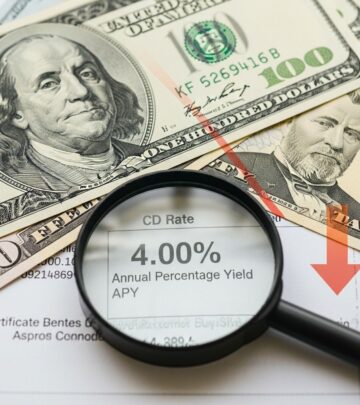
Best CD Rates 2025: Compare Top Yields Up To 4.25% APY
Discover the highest CD rates available and maximize your savings with competitive yields.

Best CD Rates: Find the Top Yields in 2025
Certificates of deposit (CDs) remain one of the most reliable and predictable ways to grow your savings with minimal risk. Unlike savings accounts or money market accounts, CDs lock in a fixed interest rate for a specified period, guaranteeing your returns regardless of market fluctuations. With current rates reaching up to 4.25% annual percentage yield (APY), now is an excellent time to consider opening a CD to maximize your savings potential.
Whether you’re planning for a short-term goal or looking to diversify your investment portfolio, understanding CD rates and how they work is essential to making informed financial decisions. This comprehensive guide covers everything you need to know about finding the best CD rates and selecting the right certificate of deposit for your financial goals.
Understanding CD Rates and How They Work
A certificate of deposit is a savings product offered by banks and credit unions where you agree to keep your money deposited for a fixed period in exchange for a guaranteed interest rate. The interest rate offered on a CD is expressed as an annual percentage yield (APY), which represents the actual return you’ll earn on your deposit over one year, including compounding.
CD rates vary based on several factors, including the length of the term, prevailing interest rates set by the Federal Reserve, and the financial institution’s competitive positioning. Shorter-term CDs typically offer lower rates, while longer-term CDs generally provide higher rates to compensate for locking your money away for an extended period. Understanding these dynamics helps you choose the CD term that best aligns with your financial timeline and goals.
Top CD Providers and Current Rates
The CD market features numerous banks and credit unions competing for your deposits by offering attractive rates. Here’s an overview of leading CD providers:
Online Banks Lead in Competitive Rates
Online banks typically offer higher CD rates than traditional brick-and-mortar banks because they have lower overhead costs. These institutions pass the savings to customers through better rates on deposit products. LimelightBank exemplifies this trend, offering rates ranging from 3.70% to 4.20% APY for terms between six months and three years, with a modest $1,000 minimum deposit requirement. This makes online banks particularly attractive for savers seeking competitive yields without unnecessary fees.
Comparing Banks by Term Length
Different banks specialize in different CD terms, and rates vary significantly based on the duration of your commitment. When comparing CD rates, it’s important to look at the specific term lengths offered by each institution. Some banks provide rates for standard terms like six months, one year, two years, and five years, while others offer more specialized terms like 18 months or 3.5 years.
| Bank Name | 6-Month Rate | 1-Year Rate | 3-Year Rate | 5-Year Rate | Minimum Deposit |
|---|---|---|---|---|---|
| LimelightBank | 3.70% APY | 3.95% APY | 4.20% APY | N/A | $1,000 |
| M.Y. Safra Bank | 3.25% APY | 3.85% APY | 4.15% APY | 3.95% APY | $2,500 |
Key Factors to Consider When Choosing a CD
Annual Percentage Yield (APY)
The APY represents the total amount you’ll earn on your CD deposit over one year. A higher APY means greater returns on your investment. When comparing CDs, always look at the APY rather than the interest rate, as APY accounts for compounding frequency. For example, a CD with 4.20% APY will generate more income than one offering 4.15% APY, even if the difference seems minimal.
Minimum Deposit Requirements
Different banks set varying minimum deposit requirements, ranging from as low as $500 to $25,000 or more. Your choice of bank should align with the amount of capital you’re willing to invest. Fortunately, many competitive institutions like LimelightBank maintain low minimum deposits of $1,000, making them accessible to a broad range of savers.
CD Term Length
CD terms typically range from three months to five years or longer. Shorter terms provide flexibility and quicker access to your funds, while longer terms usually offer higher rates. Consider your financial timeline: if you need access to funds within a year, a six-month or one-year CD may be more appropriate than a three or five-year commitment.
Early Withdrawal Penalties
One of the defining characteristics of a CD is that your funds are locked until maturity. Withdrawing money early typically incurs a penalty, which could reduce or eliminate your earnings. Always understand the early withdrawal penalty terms before committing to a CD. Some banks charge a flat fee, while others deduct a certain number of months’ worth of interest.
FDIC Insurance Protection
Ensure that any bank offering CDs is FDIC insured. This federal insurance protects your deposits up to $250,000 per depositor, per bank, in the event of bank failure. This protection makes CDs extremely safe investment vehicles for your money.
CD Rates by Term Length
Short-Term CDs (3-6 Months)
Short-term CDs are ideal for savers who may need access to their funds quickly or who want to test the waters with a new bank. These CDs typically offer lower rates, currently ranging from 3.50% to 3.80% APY. They’re excellent for parking emergency funds or money earmarked for near-term expenses while still earning competitive returns.
Medium-Term CDs (1-2 Years)
One-year and two-year CDs represent the middle ground, offering rates between 3.85% and 4.10% APY. These terms provide a good balance between earning higher interest and maintaining reasonable flexibility. Many savers choose these terms for money set aside for specific goals one to two years away.
Long-Term CDs (3-5 Years)
Long-term CDs typically offer the highest rates, reaching up to 4.25% APY or beyond. If you’re confident you won’t need your money for several years and want to lock in attractive rates, longer-term CDs provide superior returns. These are particularly useful for retirement savings, education funds, or other long-range financial goals.
Strategies for Maximizing CD Returns
CD Laddering
CD laddering is a strategy where you divide your funds among CDs with different maturity dates. For example, instead of investing $50,000 in a single five-year CD, you might invest $10,000 each in one-year, two-year, three-year, four-year, and five-year CDs. As each CD matures, you can reinvest at current rates or access the funds as needed. This approach provides flexibility while capturing competitive rates across the yield curve.
Comparing Banks Regularly
CD rates fluctuate based on broader economic conditions and competitive dynamics among banks. Regularly comparing rates at multiple institutions ensures you’re always getting the best available rates. What was the best rate last month may not be competitive today, so staying informed helps you time your CD purchases effectively.
Considering High-Yield Savings Alternatives
While CDs lock your money for fixed terms, high-yield savings accounts offer flexibility with competitive rates. If you value access to your funds, a high-yield savings account might be a better choice than a CD, even if the rate is slightly lower.
Special CD Products and Promotions
No-Penalty CDs
Some banks offer no-penalty CDs that allow withdrawal without penalty after an initial grace period. These products typically offer lower rates than traditional CDs but provide valuable flexibility for savers uncertain about their future liquidity needs.
Bump-Up CDs
Bump-up CDs allow you to increase your rate once during the CD term if rates rise. This feature provides some protection against interest rate increases while you’re locked into the CD.
Promotional Rates
Banks periodically offer promotional CD rates to attract deposits. Keeping an eye on these promotions can help you secure even better yields than standard rates.
How CD Rates Compare to Other Savings Options
CDs are just one component of a diversified savings strategy. High-yield savings accounts currently offer rates competitive with short-term CDs but with greater flexibility. Money market accounts provide another alternative with check-writing privileges. For longer-term investments, Treasury bonds, stocks, and mutual funds may offer better returns but with higher risk. Your choice depends on your risk tolerance, time horizon, and liquidity needs.
Frequently Asked Questions
Q: What is a Certificate of Deposit (CD)?
A: A CD is a savings product where you deposit money for a fixed period at a guaranteed interest rate. In exchange for keeping your money locked away, the bank pays you a higher rate than traditional savings accounts.
Q: How much can I earn with a CD?
A: Earnings depend on the APY, your principal amount, and the term length. With current rates reaching 4.25% APY, a $10,000 investment in a one-year CD would earn approximately $425 in interest.
Q: What happens if I withdraw money early from a CD?
A: Early withdrawal typically triggers a penalty, which could be a flat fee or forfeited interest. The penalty amount varies by bank and CD term. Some banks offer no-penalty CDs with lower rates but more flexibility.
Q: Are CDs safe?
A: Yes, CDs at FDIC-insured banks are very safe. Your deposits are protected up to $250,000 per bank, and you receive a guaranteed rate regardless of market conditions.
Q: Should I choose a short-term or long-term CD?
A: This depends on your needs. Short-term CDs offer flexibility and lower rates, while long-term CDs lock in higher rates. Consider when you’ll need the money and current economic outlook to make your decision.
Q: Can I open multiple CDs at different banks?
A: Yes. Opening CDs at different FDIC-insured banks allows you to benefit from FDIC protection on up to $250,000 at each institution, effectively multiplying your insurance coverage.
Q: How do I compare CD rates?
A: Compare the APY, term length, minimum deposit requirement, and early withdrawal penalties. Look at multiple banks, especially online banks, which typically offer more competitive rates than traditional banks.
Q: What is APY?
A: APY stands for Annual Percentage Yield. It represents the total amount you’ll earn on a CD over one year, including the effect of compounding interest, and is expressed as a percentage.
References
- Best CD Rates Of November 2025 — Bankrate. November 2025. https://www.bankrate.com/banking/cds/cd-rates/
- Federal Deposit Insurance Corporation: Deposit Insurance Coverage — FDIC. 2025. https://www.fdic.gov/resources/deposit-insurance/
- Understanding CDs: Types and How They Work — Consumer Financial Protection Bureau. 2024. https://www.consumerfinance.gov/
Similar Articles








Read full bio of medha deb