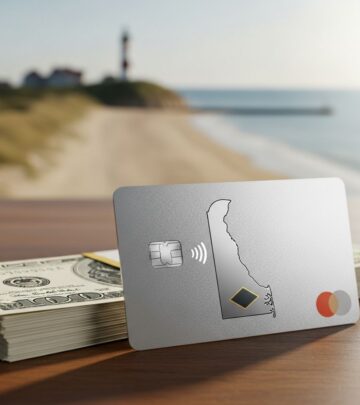
Best CD Rates in Delaware: Where to Earn More on Savings
Explore the top CD rates in Delaware, how they compare to national offers, and strategies to earn more while keeping your savings safe.

Certificates of deposit (CDs) remain a reliable way for Delaware savers to grow cash they will not need right away, especially in an environment where rates are still higher than long-term historical norms. This guide explains how to find the best CD rates in Delaware, why many top yields may come from online banks, and how to use strategies like laddering to earn more while keeping your savings federally insured.
Delaware CD Rates vs. National CD Rates
When you compare CD rates at local Delaware banks and credit unions to the best offers nationally, you will typically see a gap: top-yield online CDs often pay more than many branch-based options. National surveys from reputable rate trackers show leading CDs around the 4% APY range on select terms, even after recent rate cuts by the Federal Reserve.
Because Delaware is a small state with a relatively concentrated banking market, local brick-and-mortar institutions may not always compete aggressively on CD yields, especially for shorter terms. By contrast, online banks and credit unions can reach customers nationwide and frequently offer higher APYs to attract deposits.
Key Takeaways When Comparing Delaware and National CD Rates
- Local Delaware banks and credit unions may offer convenience and face-to-face service, but often pay modest CD rates compared with top online banks.
- Online and direct banks regularly appear in national best-rate tables, with some offering APYs near or above 4% on popular terms like 6- to 18-month CDs.
- Credit unions (including those open to Delaware residents through broad membership fields) can compete strongly, sometimes beating both local banks and national online banks on select terms.
- FDIC or NCUA insurance protects eligible deposits up to at least $250,000 per depositor, per insured institution, per ownership category, whether the institution is in Delaware or out of state.
How to Find the Best CD Rates Available to Delaware Savers
Finding the best CD in Delaware is less about geography and more about comparing offers nationwide that are available to state residents. Many top-yield online banks willingly open accounts for Delaware customers, and a growing number of regional banks and credit unions operate fully online CD products.
Steps to Shop for Top CD Rates
- Use reputable rate tables: Check current CD rankings from established financial publishers and comparison sites that track hundreds of institutions nationwide.
- Verify availability in Delaware: Before applying, confirm that the bank or credit union serves Delaware residents and that restrictions such as in-branch account opening do not apply.
- Check minimum deposit requirements: Some CDs have no minimum, while others require $500, $1,000, or much more. Choose an institution whose minimum fits your savings amount.
- Confirm insurance coverage: Look for FDIC-insured banks or NCUA-insured credit unions to ensure your deposits are federally protected.
- Review early withdrawal penalties: Know how much interest you would forfeit if you need to access funds before maturity.
Typical Minimum Deposit Ranges
| CD Type | Common Minimum Deposit | Who It Suits |
|---|---|---|
| Standard online bank CD | $0 to $1,000 | New savers, small balances, flexible budgets |
| Credit union CD (share certificate) | $500 to $1,000 | Members seeking competitive yields |
| Promotional or jumbo CD | $10,000+ | Larger savers seeking special high APYs |
Types of CDs Delaware Savers Should Consider
Even though CDs share a basic structure — a fixed term and a fixed or guaranteed rate for that term — you can choose among several types to align with your needs.
Traditional Fixed-Rate CDs
These are the standard CDs most Delaware savers will encounter. You deposit a lump sum, agree not to withdraw until maturity, and receive a fixed APY over the term. If you withdraw early, you pay a penalty, usually structured as a few months of interest.
No-Penalty CDs
No-penalty CDs allow you to withdraw full funds before maturity without paying a traditional early withdrawal penalty, typically after an initial lockout period (often around seven days after funding). Because of this added flexibility, rates on no-penalty CDs may be slightly lower than the best fixed-rate CDs, but still can be attractive compared with standard savings accounts.
High-Yield Online CDs
Online banks often publish some of the best CD rates in the country while allowing convenient digital account management. Many of these institutions serve Delaware residents and provide a streamlined online application process. With overhead costs lower than those of branch-based banks, they can afford to pay higher APYs to depositors.
Jumbo CDs
Jumbo CDs require a larger minimum deposit, such as $25,000 or more. Some banks reward bigger deposits with slightly higher rates, although in recent years the difference between regular and jumbo CD yields has often been small because of competition among institutions.
CD Laddering for Delaware Investors
One of the most useful strategies for Delaware savers is the CD ladder, which helps balance yield and liquidity while reducing timing risk around interest rate changes.
How a Basic CD Ladder Works
- Divide your total intended CD investment into equal parts (for example, five chunks of $5,000 each if you plan to invest $25,000).
- Open CDs with staggered maturities: 1-year, 2-year, 3-year, 4-year, and 5-year terms.
- As each CD matures, reinvest it into a new 5-year CD (or your longest chosen term) at the then-current rate.
- Over time, you will hold multiple long-term CDs with higher yields, but one CD will mature each year to provide liquidity.
Benefits of Laddering for Delaware Savers
- Rate diversification: You are not betting everything on today’s yields; maturing rungs let you capture future rate changes — helpful in periods when experts expect rates to drift down gradually from recent highs.
- Regular access to funds: One CD matures at predictable intervals, giving you planned opportunities to access or redirect cash.
- Psychological comfort: Laddering can make it easier to commit to longer terms, because you know part of your money will be available relatively soon.
CD Terms and Rate Environment
As of recent national data, many of the most competitive APYs cluster around shorter- and mid-range terms like 6, 12, or 18 months, with some top offers for 3- and 5-year CDs as well. In a shifting interest rate environment — especially after several Federal Reserve cuts — the traditional pattern of higher rates always being found on longer terms has not consistently held.
Typical CD Term Lengths
| Term | When It May Fit | Considerations |
|---|---|---|
| 3–6 months | Short waiting periods, near-term spending plans | More flexibility, but potentially lower APYs |
| 9–18 months | Popular middle ground for many national best-rate CDs | Good trade-off between yield and liquidity |
| 2–3 years | Intermediate savings goals (car, tuition buffer) | Rates may or may not exceed shorter terms, depending on market |
| 4–5 years | Longer-term goals, risk-averse investors | Locked-in yield for stability, but higher penalty if cashed out early |
Early Withdrawal Penalties
Before choosing any CD in Delaware, review the institution’s early withdrawal penalty. These penalties are designed to discourage breaking the CD before maturity and can significantly reduce the interest you earn if you need your cash early.
Common Penalty Structures
- Short-term CDs (12 months or less): Penalties often equal around three months of interest.
- Intermediate CDs (1–3 years): Penalties may range from three to six months of interest.
- Long-term CDs (3–5+ years): Some banks charge six months to one year of interest if you withdraw early.
For Delaware savers, penalties matter most if your plans could change. If there is a realistic chance you will need funds before the CD matures, consider either a no-penalty CD, a shorter term, or holding a portion of your savings in a high-yield savings or money market account instead.
CD Safety: Insurance for Delaware Depositors
One of the key attractions of CDs is safety. As long as you stay within coverage limits, your CD deposits at insured institutions are backed by the U.S. government through the Federal Deposit Insurance Corporation (FDIC) for banks or the National Credit Union Administration (NCUA) for credit unions.
FDIC and NCUA Coverage Basics
- Coverage limit: At least $250,000 per depositor, per insured institution, per ownership category (such as individual, joint, or certain retirement accounts).
- Covered products: CDs, checking, savings, and money market deposit accounts are typically insured; most investment products like mutual funds, stocks, and bonds are not.
- Delaware eligibility: Residents can open insured accounts at banks or credit unions anywhere in the country, not just those physically located in Delaware, provided the institution accepts out-of-state customers.
Always confirm that the institution is FDIC- or NCUA-insured and that your combined balances at that institution remain within coverage limits. For larger balances, you can spread CDs across multiple insured banks or credit unions to keep all funds protected.
How Rate Trends Affect Delaware CD Choices
CD yields are closely tied to broader interest rate policy and market expectations. Recent economic conditions have led analysts to anticipate that CD rates in early 2026 are likely to edge lower from the peak levels reached in 2023–2024, though they are still expected to remain attractive compared with long-term historical averages.
For Delaware savers, this environment means:
- You may benefit from locking in competitive rates now, especially on terms that fit your timeline and comfort level.
- Shorter-term CDs or ladder strategies can help you adapt if rates decline faster or slower than expected.
- Monitoring rate trends through reputable financial news and comparison tools can help you spot opportunities to refinance maturing CDs into better offers.
How to Choose the Right CD in Delaware
Given the wide range of choices, use a simple decision framework when selecting CDs.
Questions to Ask Before You Commit
- What is my time horizon? Match your term to when you will realistically need the money.
- How important is flexibility? If your situation could change, consider shorter terms or no-penalty CDs.
- Am I maximizing safety? Verify FDIC or NCUA coverage and stay within the $250,000 per depositor limit at each institution.
- Is the APY competitive? Compare the CD’s yield with national best-rate tables rather than just your local Delaware bank.
- What are the penalties? Understand early withdrawal costs before funding the CD.
Frequently Asked Questions (FAQs)
Q: Are there unique CD rules for Delaware residents?
A: No. CD rules, insurance coverage, and federal consumer protections are largely the same nationwide. Delaware residents can open CDs at any FDIC-insured bank or NCUA-insured credit union that serves their state, whether or not it has local branches.
Q: Is it better to use a Delaware bank or an online bank for CDs?
A: Many savers find better yields at online banks, but a Delaware-based bank or credit union may still be attractive if it offers competitive rates or you value in-person service. The key is to compare APYs, minimum deposits, and penalties across both local and national options.
Q: How much can I safely keep in CDs at one bank?
A: FDIC and NCUA insurance generally protect up to $250,000 per depositor, per insured institution, per ownership category. If you have more than that to invest in CDs, consider spreading your savings across multiple insured institutions or using additional ownership categories.
Q: Are CD earnings in Delaware subject to state income tax?
A: CD interest is typically subject to federal income tax and, in most cases, state income tax. Delaware taxes most forms of interest income, though specific tax situations vary by household. Consult a qualified tax professional for personalized guidance.
Q: Should I wait for higher CD rates before locking in?
A: Major financial outlets report that many experts expect CD rates to gradually decline from recent highs rather than rise further, barring a significant economic shock. Instead of waiting, Delaware savers might consider locking in attractive current rates on some of their funds while keeping part of their cash in shorter-term CDs or savings accounts for flexibility.
References
- Best CD rates Thursday, Jan. 1, 2026: Earn up to 4.18% APY — Fortune. 2026-01-01. https://fortune.com/article/cd-rates-1-1-26/
- Best CD Rates for January 2026 – MoneyRates — MoneyRates. 2026-01-09. https://www.moneyrates.com/cdrates.htm
- Best 1-Year CD Rates of January 2026 — Bankrate. 2026-01. https://www.bankrate.com/banking/cds/best-1-year-cd-rates/
- Best CD Rates of January 2026 — Bankrate. 2026-01. https://www.bankrate.com/banking/cds/cd-rates/
- What’s the CD rate forecast for January 2026? Here’s what experts predict — CBS News. 2025-12-19. https://www.cbsnews.com/news/whats-the-cd-rate-forecast-for-january-2026-heres-what-experts-predict/
- Current CD Rates, January 2026: APYs Drop — NerdWallet. 2026-01. https://www.nerdwallet.com/banking/learn/current-cd-rates
- Deposit Insurance at a Glance — Federal Deposit Insurance Corporation (FDIC). 2024-06-30. https://www.fdic.gov/resources/deposit-insurance/
Similar Articles








Read full bio of medha deb