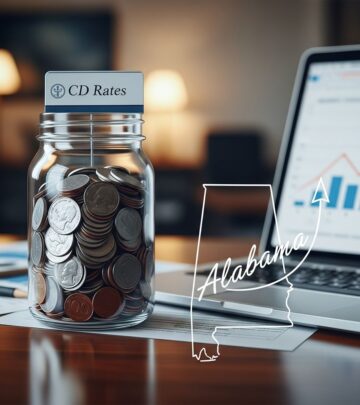
Best CD Rates in Alaska for Savers in 2025
Discover how to find the highest CD rates in Alaska, compare local and online options, and build a safer savings strategy.

Certificates of deposit (CDs) are a popular way for Alaskans to earn a predictable return on their savings while protecting their principal from market volatility. With interest rates still historically attractive compared to much of the last decade, locking in a competitive rate on a CD can help secure steady growth for your cash reserves.
Both Alaska-based financial institutions and nationwide online banks currently offer attractive CD yields across a range of terms. Understanding how CDs work, how to compare offers, and how local options stack up against online banks can help you choose the best account for your goals.
Why CDs Are Attractive for Alaska Savers in 2025
CDs are time deposits: you agree to keep your money in the account for a fixed term in exchange for a guaranteed interest rate. For many savers, especially those who want low risk and a known return, CDs can be more appealing than leaving funds in a standard savings account.
- Stable returns: Your rate is fixed for the full term, insulating you from short-term interest-rate volatility.
- FDIC/NCUA insurance: Deposits at banks are typically insured by the FDIC and deposits at credit unions by the NCUA, generally up to $250,000 per depositor, per institution, per ownership category.
- Higher rates than regular savings: National average CD rates remain above typical savings account rates at many institutions, especially for terms from 6–24 months.
- Good for defined goals: CDs work well for goals with a clear time horizon, such as a home down payment in 1–3 years or funding tuition at a specific date.
While the Federal Reserve’s rate path has moderated from the aggressive hikes of 2022–2023, CD yields remain elevated relative to most of the 2010s. That makes 2025 a reasonable time to lock in competitive returns if you do not need immediate liquidity.
Best CD Rates in Alaska: What to Expect
Alaska residents can choose from three broad categories of CD providers:
- Regional and community banks headquartered or operating primarily in Alaska
- Alaska credit unions serving specific employment groups, communities, or broader membership fields
- Online banks that are available nationwide and often offer above-average yields
Online banks frequently lead in headline APYs, but local banks and credit unions sometimes run special promotions for favored terms, especially 6-, 12-, and 18-month CDs.
Typical CD Terms and Rates
While individual institutions change offers frequently, you will typically see:
- Short-term CDs: 3–12 months, often with some of the highest APYs as banks compete for new deposits
- Medium-term CDs: 18–36 months, balancing yield and flexibility
- Long-term CDs: 3–5 years or more, with fixed rates offering protection if interest rates fall again
Because CD yields can shift quickly, always verify current rates directly with the bank or credit union before opening an account.
Popular Banks and Credit Unions in Alaska
Alaska’s financial landscape features a mix of regional banks, community banks, and member-owned credit unions. These institutions often emphasize local service and knowledge of the state’s unique economy and geography.
Well-Known Alaska-Based Banks
Several banks headquartered in Alaska or with significant local presence offer CDs alongside checking, savings, and lending products. While exact terms vary, you can usually expect:
- Minimum deposits starting around $500–$1,000 for standard CDs
- Tiered rates where higher balances or longer terms receive better APYs
- Branch access in larger Alaska cities and some rural communities
Local banks may not always match the very highest online CD rates, but they can be attractive for customers who value in-person service, integrated banking relationships, and easier access to staff for questions and account changes.
Alaska Credit Unions Offering CDs
Credit unions in Alaska frequently offer competitive share certificate (CD-equivalent) rates, sometimes with lower minimum deposits than traditional banks. Because they are member-owned, they often return profits to members via better rates and lower fees.
Common credit union CD characteristics include:
- Lower minimums, sometimes as low as $250–$500
- Special youth or starter CDs for younger savers
- Relationship-based bonuses for members who hold multiple products
Membership in Alaska credit unions may be based on employment, military affiliation, geographic location, or membership in partner organizations. Many allow you to qualify by joining an associated nonprofit organization, often with a modest one-time donation.
Online Banks Offering CDs in Alaska
Online banks have become some of the most popular sources of high-yield CDs nationwide, including for residents of Alaska. Because they operate without extensive branch networks, they can often keep overhead costs low and pass some of those savings along via higher rates.
Key Advantages of Online CDs
- Above-average interest rates: Many online banks post some of the best APYs available for popular CD terms.
- Lower minimum deposits: Minimums often start around $500 or less, and some banks have no minimum requirement at all.
- Nationwide access: You can open and fund accounts electronically from Alaska without visiting a branch.
- Efficient account opening: Digital applications and e-signatures streamline the process.
Online banks still provide robust deposit insurance, as they are typically chartered institutions with FDIC coverage, just like brick-and-mortar banks. Credit-union-style online providers are generally insured by NCUA.
Potential Drawbacks of Online CDs
- No physical branches: All interactions occur by phone, chat, or secure messaging.
- Funding timing: Moving money in or out can take a few days via ACH, especially when your CD matures and you close it.
- Early withdrawal logistics: You must contact customer service to request an early withdrawal, which may be less convenient than visiting a local branch.
Comparing CD Options: What to Look For
Choosing the best CD is not just about grabbing the highest headline APY. Several factors influence your actual return and convenience.
| Feature | Why It Matters | What to Check |
|---|---|---|
| APY (Annual Percentage Yield) | Determines how much interest you earn over the term. | Compare against national averages and top offers. |
| Term Length | Impacts liquidity and exposure to future rate changes. | Align term with your time horizon and risk tolerance. |
| Minimum Deposit | Determines how much cash you must commit upfront. | Verify you can meet and maintain the required minimum. |
| Early Withdrawal Penalty | Fee charged if you break the CD before maturity. | Understand whether penalty is months of interest or a flat amount. |
| Renewal Policy | Controls what happens at maturity. | Most CDs auto-renew if you do nothing; note your grace period. |
| Insurance Coverage | Protects your principal if the institution fails. | Confirm FDIC (banks) or NCUA (credit unions) coverage and limits. |
How to Build a CD Ladder in Alaska
A CD ladder is a strategy where you divide your savings into multiple CDs with staggered maturity dates. This can help you earn higher long-term rates while still keeping some money available each year (or more frequently) as CDs mature.
Example of a Simple 3-Year Ladder
- CD #1: 1-year term
- CD #2: 2-year term
- CD #3: 3-year term
When the 1-year CD matures, you can either use the funds or open a new 3-year CD. Over time, you maintain a mix of CDs maturing regularly while keeping most of your funds in longer, often higher-yielding terms.
Benefits of a CD Ladder
- Improved liquidity compared with placing all funds in a single long-term CD.
- Rate diversification across multiple terms, which reduces timing risk if interest rates move sharply.
- Smooth reinvestment opportunities as each rung matures, allowing you to capture higher rates if they rise.
Strategies for Alaska Savers: Local vs. Online
Many Alaska residents find that using both local and online CDs delivers the best combination of yield and convenience.
When Local Institutions Make Sense
- You value branch access for in-person support.
- You maintain multiple accounts at the same institution and may qualify for relationship rate bonuses.
- You prefer to keep your funds with organizations that directly support the local economy.
When Online Banks Are the Better Choice
- You want consistently top-tier APYs and are comfortable managing accounts digitally.
- You can easily move funds via ACH from your primary checking account.
- You want to build a CD ladder across multiple terms at competitive rates.
Steps to Open a CD in Alaska
Whether you choose a local bank, credit union, or online institution, the basic process is similar.
- Decide your term and amount
Identify how long you can commit the funds and how much you want to deposit without jeopardizing your emergency savings.
- Compare current offers
Use rate tables and bank websites to compare APYs, minimums, and penalties. Cross-check national averages to verify competitiveness.
- Confirm insurance and membership
Verify FDIC or NCUA coverage and confirm any membership requirements for credit unions.
- Apply online or in person
Provide identification, Social Security number, and funding details. Online banks usually complete this process fully electronically.
- Fund the CD
Transfer funds from an external bank account, use a check, or move money from an existing account at the same institution.
- Track maturity dates
Note when your CD matures and the grace period for making changes before automatic renewal.
Risks and Considerations
CDs are low-risk, but not risk-free. Before committing funds, consider the following:
- Liquidity risk: You may pay an early withdrawal penalty if you need your money before maturity. This penalty can reduce or even eliminate your interest earnings on short-term CDs.
- Inflation and opportunity cost: If inflation or market yields rise faster than your CD rate, your real (inflation-adjusted) return may be lower than anticipated.
- Reinvestment risk: When your CD matures, future rates may be lower, especially if the interest-rate cycle has turned downward.
- Concentration risk: Keeping more than $250,000 per depositor, per institution, in the same bank or credit union may leave part of your balance uninsured.
Frequently Asked Questions (FAQs)
Q: Are CDs a good choice for Alaska residents in 2025?
A: CDs can be a strong option in 2025 for Alaskans seeking predictable, low-risk returns, especially compared to many standard savings accounts. With national CD averages still elevated relative to much of the past decade, locking in a rate that fits your time horizon can be attractive if you do not need immediate access to the funds.
Q: Is it better to open a CD at a local Alaska bank or an online bank?
A: Online banks often offer higher APYs and lower minimum deposits, while local banks and credit unions provide branch access and personalized service. Many savers use a mix of both—keeping some CDs locally for convenience and placing others with online banks to capture top-tier rates.
Q: What is the minimum deposit for most CDs?
A: Minimum deposits typically range from $500 to $2,500 at many traditional banks, though some online banks offer CDs with minimums as low as $0–$1,000. Always confirm the institution’s specific requirement before you apply.
Q: Are CDs in Alaska insured?
A: CDs at FDIC-member banks are generally insured up to $250,000 per depositor, per insured bank, per ownership category. CDs at federally insured credit unions receive equivalent protection through the NCUA. These limits apply regardless of whether the institution is local to Alaska or operates online nationwide.
Q: What happens if I need to withdraw money from a CD early?
A: Most CDs charge an early withdrawal penalty if you pull funds before the maturity date. Penalties are commonly expressed as a number of days or months of interest, and they can substantially reduce your return on short-term CDs. Review the disclosure documents carefully before opening your account.
References
- National Rates and Rate Caps — Weekly Update — Federal Deposit Insurance Corporation (FDIC). 2025-01-06. https://www.fdic.gov/resources/bankers/national-rates/
- Best CD Rates of January 2026 — Bankrate. 2026-01-01. https://www.bankrate.com/banking/cds/cd-rates/
- Best CD Rates for January 2026 — MoneyRates. 2026-01-09. https://www.moneyrates.com/cdrates.htm
- Share Insurance Coverage — National Credit Union Administration (NCUA). 2024-09-01. https://ncua.gov/support-services/share-insurance
- The Best 5-Year CD Rates for 2026 — MoneyRates. 2026-01-05. https://www.moneyrates.com/cd/best-5-year-cd-rates.htm
- The Best 18-Month CDs for January 2026 — MoneyRates. 2026-01-09. https://www.moneyrates.com/cd/best-18-month-cds.htm
Similar Articles








Read full bio of medha deb