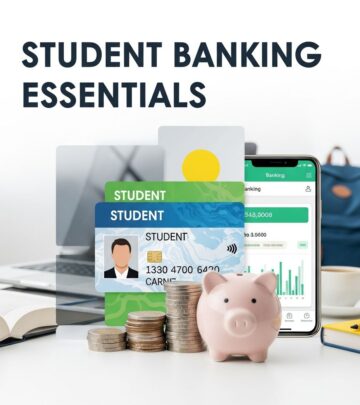
Best Banks and Credit Unions for Students 2026
Top student banking options: fee-free checking, savings tools, and financial education for young adults.

Best Banks and Credit Unions for Students for 2026
Finding the right bank as a student is a crucial decision that can set the foundation for lifelong financial success. Whether you’re entering high school, starting college, or beginning your first job, having access to a student-friendly banking account with low fees, educational resources, and convenient digital tools can make managing money easier and more affordable. The banking landscape for students has evolved significantly, with major financial institutions recognizing the importance of serving this demographic with tailored products and services.
In 2026, numerous banks and credit unions are competing to offer the best value to student customers. These institutions understand that students face unique financial challenges, including limited income, tight budgets, and the need to learn fundamental banking skills. As a result, many banks have developed specialized accounts that eliminate monthly maintenance fees, provide financial education, and offer tools to help students build better money management habits.
PNC – Best Overall
PNC Virtual Wallet Student stands out as the best overall banking option for students, offering a comprehensive solution designed specifically for young learners. This innovative account combines multiple functionalities into one unified platform, helping students organize their finances more effectively.
The Virtual Wallet Student account functions as three accounts in one: a Spend Account for everyday transactions, a Reserve Account that provides interest-bearing checking capabilities, and a Growth Account that serves as an interest-bearing savings vehicle. This three-tiered approach allows students to segment their money strategically, making it easier to differentiate between spending money, emergency reserves, and long-term savings goals.
One of the most attractive features of PNC Virtual Wallet Student is the zero monthly service fees for up to six years, eliminating a significant burden for budget-conscious students. Beyond account features, PNC goes further by providing financial webinars, educational articles, and budgeting calculators to help students understand fundamental financial concepts. This educational component sets PNC apart from competitors by investing in students’ financial literacy alongside providing banking services.
FourLeaf Credit Union – Best for High School Students
FourLeaf Credit Union earns recognition as the best option for high school students, providing accessible banking solutions tailored to younger account holders. This credit union demonstrates a commitment to serving the high school demographic with accounts specifically structured to meet their needs and circumstances.
High school students often lack extensive credit history or financial documentation required by traditional banks, making credit unions like FourLeaf an excellent alternative. Credit unions typically offer more flexible qualification requirements and personalized service compared to large national banks. FourLeaf’s student accounts come with features designed to encourage early financial responsibility and establish positive banking habits during the formative high school years.
Bank of America – Best for Checking
For the second consecutive year, Bank of America secures the top position for student checking accounts. As the second largest bank in the United States by consolidated assets, Bank of America brings extensive resources and nationwide accessibility to student banking.
Bank of America offers two checking account options specifically designed for students: the SafeBalance Banking account (available to those ages 16 and older) and the SafeBalance for Family Banking account (featuring parental controls and available to those ages six to 16). Both accounts share critical student-friendly features that address common concerns among young account holders.
Perhaps most importantly, both SafeBalance accounts automatically decline all overdrafts, preventing students from incurring costly overdraft fees—a common pitfall for inexperienced bank customers. Additionally, neither account charges monthly maintenance fees, making them accessible regardless of account balance. This approach removes financial barriers that might otherwise discourage teenagers from opening their first banking accounts.
Poppy Bank – Best High-Yield Savings
Poppy Bank distinguishes itself as the premier choice for students seeking competitive savings rates. In an environment where traditional savings accounts offer minimal interest, Poppy Bank’s high-yield savings accounts provide substantially better returns on deposits, allowing students’ money to work harder and grow faster.
High-yield savings accounts are particularly valuable for students who are building emergency funds or saving for specific goals like textbooks, technology, or post-graduation expenses. By earning higher interest rates, students can reach their savings targets more quickly without needing to contribute additional funds. Poppy Bank’s competitive rates make it an excellent choice for financially disciplined students who prioritize building savings alongside their banking needs.
Citizens – Best Free Account
Citizens Student Banking delivers exceptional value through completely fee-free banking for young account holders. This comprehensive offering includes both fee-free checking and savings accounts, making it an attractive option for students seeking transparent, straightforward banking without surprise charges.
Unlike some banks that waive fees only temporarily, Citizens eliminates fees across all student accounts with no expiration date. The accounts do not require minimum balances to maintain, and they never charge overdraft fees—a crucial protection for students still learning to manage their finances. This zero-fee structure provides complete peace of mind and removes the stress of budget-busting unexpected charges.
Citizens also offers unlimited fee-free ATM use, a significant advantage for students who frequently need cash. However, prospective customers should note that Citizens operates 991 branches in 11 states, making it primarily accessible to students in specific regions. Its ATM network includes 3,200 locations, which may be more limited than some national competitors but still provides reasonable accessibility for regional students.
Chase – Best for New Account Offer
Chase Bank attracts students through competitive new account opening incentives and benefits. For students seeking initial bonus rewards, Chase offers promotional offers that add immediate value to opening a new account.
Beyond promotional incentives, Chase provides extensive branch and ATM networks nationwide, making it convenient for students who transfer between campuses or relocate frequently. Chase’s digital banking platform includes intuitive mobile and online interfaces designed for modern banking, with features that appeal to technology-savvy students.
U.S. Bank Smartly Checking – Top-Tier Alternative
U.S. Bank Smartly Checking deserves special mention as a consistently high-performing option for student banking. This account explicitly targets young adults ages 18 through 24 and youth ages 13 through 17, with special benefits tailored to each age group.
The account features no monthly maintenance fees for customers under age 25, providing extended fee waiver benefits throughout the college years and early career phase. U.S. Bank operates in 28 states with a substantial branch network, offering convenience for regional students. The institution emphasizes digital tools and online banking capabilities that meet modern expectations for convenient, on-demand financial services.
Key Features to Consider When Choosing a Student Bank
When evaluating student banking options, several critical factors should influence your decision. Understanding these considerations helps ensure you select an account that best matches your specific financial needs and lifestyle.
Monthly Fees and Service Charges
The most important consideration for most students is eliminating unnecessary monthly maintenance fees. Many student accounts waive these fees for limited periods (often until age 25), while others eliminate fees entirely. Calculating potential annual fee savings is an excellent way to prioritize this factor when comparing options.
Overdraft Protection
Students benefit tremendously from overdraft protection mechanisms. Whether through automatic decline of overdraft transactions or generous grace periods, robust overdraft protections prevent costly overdraft fees that can rapidly accumulate and damage financial health.
ATM Access and Branch Network
Consider the bank’s branch and ATM availability in regions where you’ll be living and studying. A vast nationwide network provides flexibility, while regional banks might offer superior service in specific areas.
Interest Rates on Savings Accounts
Even modest interest rate differences add up over time. Comparing APY (Annual Percentage Yield) rates helps maximize earnings on saved funds, particularly for high-yield options.
Digital Banking Tools and Mobile Apps
Modern students expect robust digital banking platforms with intuitive mobile apps, bill pay features, mobile check deposit, and person-to-person payment options like Zelle.
Financial Education Resources
Banks offering financial webinars, educational articles, budgeting tools, and money management resources provide additional value beyond basic banking services.
Comparison Table of Top Student Bank Accounts
| Bank | Best For | Monthly Fee | Overdraft Fee | ATM Network |
|---|---|---|---|---|
| PNC Virtual Wallet Student | Overall best option | $0 (6 years) | Varies | Extensive |
| Bank of America SafeBalance | Checking accounts | $0 | $0 (auto-decline) | Nationwide |
| Citizens Student Banking | Free accounts | $0 | $0 | 3,200 ATMs |
| U.S. Bank Smartly Checking | No-fee banking | $0 (under 25) | Varies | 28 states |
| Poppy Bank Savings | High-yield savings | $0 | N/A | Online |
Frequently Asked Questions
Q: Do student bank accounts continue after graduation?
A: Many student accounts transition to standard accounts upon graduation or when the age limit is reached. However, some banks continue certain benefits or offer graduated account options. Check with your specific bank regarding post-graduation account terms and any fees that may apply.
Q: What age can I open a student bank account?
A: Requirements vary by bank. Some student accounts are available from age six (often requiring parental involvement), while others target ages 13 and up, and some begin at age 18. Most traditional student accounts require age 16 or older with minimal parental involvement.
Q: Can I use a student account if I’m not in school?
A: Requirements vary. Some banks require proof of student status (enrollment verification), while others base eligibility solely on age. Always verify specific requirements with your chosen bank before opening an account.
Q: Are there interest-bearing student checking accounts?
A: Yes, some student accounts offer interest on checking balances. However, rates are typically modest. PNC Virtual Wallet’s Reserve Account and some credit union accounts provide interest-bearing checking options.
Q: How do I access financial education resources provided by banks?
A: Most banks offer educational resources through their websites, mobile apps, or dedicated learning portals. Resources typically include webinars, articles, calculators, and budget templates accessible to account holders.
Q: Can I have parental controls on a student account?
A: Yes, several banks offer accounts with parental control features. Bank of America’s SafeBalance for Family Banking and similar products allow parents to monitor spending and set transaction limits for younger account holders.
References
- Best Banks and Credit Unions for Students for 2026 — Money. 2025-10-14. https://money.com/best-banks-for-students/
- Money.com ranks U.S. Bank in top 5 for student banking — U.S. Bank. 2023. https://www.usbank.com/about-us-bank/company-blog/article-library/Money-ranks-us-bank-in-top-five-for-student-banking.html
- How Money Ranked the 2025-2026 Best Banks — Money. 2025. https://money.com/best-banks/methodology/
- Here Are the Best Banks for College Students Across the U.S. — Money. 2025. https://money.com/best-banks-for-college-students/
- Best Banks in America — Money. 2025. https://money.com/best-banks/
Similar Articles








Read full bio of Sneha Tete