Best 5-Year CD Rates and How to Choose the Right One
Compare leading 5-year CD rates, understand how they work, and learn when a long-term CD makes sense for your savings strategy.

Five-year certificates of deposit (CDs) can lock in a fixed interest rate for a relatively long time, offering predictable returns and federal deposit insurance protection at eligible banks and credit unions. They are especially useful for savers with clear long-term goals who want stability rather than market volatility.
This guide explains how to compare the best 5-year CD rates, when a long-term CD makes sense, and how to decide between a 5-year CD and shorter terms or other savings options.
What Is a 5-Year CD?
A 5-year CD is a time deposit account where you agree to keep your money on deposit for 60 months in exchange for a fixed annual percentage yield (APY). During this term, the APY does not change, even if market interest rates rise or fall.
Key features of a 5-year CD typically include:
- Fixed term: 60 months from the day you open the CD.
- Fixed interest rate: The APY is set at opening and remains constant.
- Early withdrawal penalty: Banks usually charge a penalty if you withdraw principal before maturity, often a portion of interest earned.
- Deposit insurance: FDIC insurance at banks or NCUA insurance at qualifying credit unions, generally up to $250,000 per depositor, per institution, per ownership category.
How 5-Year CD Rates Work
CD rates reflect broader interest-rate conditions, competition among banks, and expectations for inflation and central bank policy. A 5-year CD usually pays a higher APY than shorter terms because you are committing your funds for longer.
Important rate concepts include:
- APY (Annual Percentage Yield): Expresses total interest earned in one year, including compounding.
- Nominal rate vs. APY: The nominal rate is the stated interest rate; APY is higher when interest compounds more frequently.
- Compounding frequency: Many banks compound interest daily or monthly, which impacts the final amount you earn.
Because a 5-year CD locks your rate, it can either protect you from falling rates or cause opportunity cost if market rates later rise above your locked-in APY.
Pros and Cons of a 5-Year CD
Before committing to a long-term CD, weigh the advantages and disadvantages relative to your needs and the interest-rate outlook.
| Pros of a 5-Year CD | Cons of a 5-Year CD |
|---|---|
| Typically higher APYs than shorter-term CDs of the same institution. | Funds are locked in; accessing money early usually triggers penalties. |
| Rate protection if interest rates fall in the future. | Opportunity cost if interest rates rise and your rate is below new offers. |
| Predictable returns ideal for specific long-term goals. | Not suitable for emergency funds or uncertain timelines. |
| Simple product with insured deposits at eligible institutions. | May lag returns of riskier assets such as stocks over long periods. |
How to Compare the Best 5-Year CD Rates
When evaluating 5-year CDs, do more than just glance at the top APY. Carefully comparing terms can prevent surprises and maximize your earnings.
Key Factors to Evaluate
- APY and rate: Even a small difference in APY can matter over five years. For example, on a $10,000 deposit, a 0.25 percentage-point difference in APY can add or subtract hundreds of dollars in interest over a long term.
- Minimum deposit: Some institutions require $1,000, $2,500, or more to open a 5-year CD, while others may allow a smaller minimum.
- Early withdrawal penalties: Penalties for 5-year CDs can be substantial, often equal to several months or more of interest.
- Compounding frequency: Daily or monthly compounding is preferable to annual compounding, assuming the same nominal rate.
- FDIC/NCUA insurance: Verify that deposits are within insurance limits and at covered institutions.
- Renewal terms: Many CDs automatically renew if you do not act at maturity; note any grace period to make changes.
Example: Comparing Two 5-Year CDs
| Feature | CD A | CD B |
|---|---|---|
| APY | 3.75% | 4.00% |
| Minimum Deposit | $500 | $2,500 |
| Compounding | Monthly | Daily |
| Early Withdrawal Penalty | 18 months of interest | 12 months of interest |
| Deposit Insurance | FDIC insured | FDIC insured |
In this illustration, CD B offers a higher APY and a lighter penalty but requires a larger minimum deposit. The best choice depends on your deposit amount and your likelihood of needing funds early.
When a 5-Year CD Makes Sense
A 5-year CD is not a universal solution. It tends to work best in scenarios where you prioritize stability and have a clear investment horizon.
Good Use Cases for a 5-Year CD
- Long-term savings goals: Funding a future home down payment, education costs, or a large future purchase when the timeline is roughly five years away.
- Risk-averse investors: People who prefer guaranteed, modest returns over stock market volatility may use 5-year CDs as part of their fixed-income allocation.
- Rate-lock strategy: If you believe rates are likely to fall, locking a 5-year rate can protect your earnings.
- Supplement to bonds: Long-term CDs can complement government or corporate bonds when you want insured principal and predictable returns.
Situations Where a 5-Year CD May Not Fit
- Emergency funds: Money you might need quickly belongs in more liquid accounts, such as savings or money market accounts, rather than a 5-year CD.
- Uncertain timing: If you are not sure when you will need funds, a shorter CD term or a CD ladder may be more flexible.
- Rising-rate expectations: If you expect rates to increase substantially, a shorter-term CD might make it easier to reinvest at higher rates later.
- Long-term growth goals: For objectives more than a decade away, diversified stock or bond portfolios may offer higher potential returns, albeit with more risk.
5-Year CD vs. Shorter-Term CDs
Choosing between a 5-year CD and shorter-term options, like 1- or 3-year CDs, requires balancing yield, flexibility, and your rate outlook.
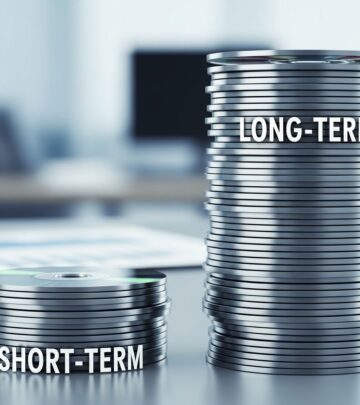
| Feature | Short-Term CDs (1–3 years) | 5-Year CDs |
|---|---|---|
| Typical Yield | Lower than 5-year CDs at the same bank, but still competitive | Generally higher, compensating for longer lock-in |
| Flexibility | Funds become available sooner; easier to adjust to new rates | Less flexible; penalties discourage early withdrawals |
| Interest Rate Risk | Less exposed to rate changes (you can reinvest sooner) | More exposed if rates rise after you lock in |
| Best For | Shorter-term goals or uncertain timing | Specific long-term goals and rate-lock strategies |
5-Year CDs vs. High-Yield Savings Accounts
High-yield savings accounts and 5-year CDs can both offer attractive yields, but they behave differently.
- Rate structure: Savings accounts have variable rates that banks can change at any time, while 5-year CDs lock in a fixed APY for the term.
- Liquidity: Savings balances can typically be withdrawn at any time without penalties, whereas CD withdrawals before maturity usually incur a penalty.
- Use case: Savings accounts are better for flexible goals and emergency funds; 5-year CDs fit planned, long-term savings where you can commit funds.
CD Laddering With 5-Year CDs
CD laddering is a strategy where you spread your money across multiple CDs with different maturities, such as 1-, 2-, 3-, 4-, and 5-year CDs. When shorter-term CDs mature, you can roll them into new 5-year CDs to maintain a ladder.
The idea is to balance higher long-term yields with periodic access to part of your principal.
Example 5-Year CD Ladder
| Year | CD Term at Start | Amount | Action at Maturity |
|---|---|---|---|
| Year 0 | 1-, 2-, 3-, 4-, and 5-year CDs | $2,000 each (for a total of $10,000) | Open one CD for each term |
| Year 1 | 1-year CD matures | $2,000 + interest | Reinvest into a new 5-year CD |
| Year 2 | Original 2-year CD matures | $2,000 + interest | Reinvest into a new 5-year CD |
| Years 3–5 | Remaining CDs mature each year | $2,000 + interest each year | Option to cash out or reinvest into 5-year CDs |
After a few years, your entire ladder consists of 5-year CDs, but one CD matures each year, giving you regular access to liquidity and the ability to adapt to changes in interest rates.
How to Open a 5-Year CD
Opening a 5-year CD is similar to opening other bank accounts, but pay close attention to the specific terms and disclosures.
Step-by-Step Process
- 1. Choose your institution: Compare APYs, minimum deposits, and penalties across banks and credit unions. Established financial comparison sites and official bank disclosures can help you identify leading offers.
- 2. Confirm deposit insurance: Make sure the bank is FDIC-insured or the credit union is NCUA-insured and that your total deposits fall within coverage limits.
- 3. Decide how much to deposit: Only commit funds you will not need for the full five years, aside from emergencies covered elsewhere.
- 4. Fund the CD: Transfer money from a linked bank account, mail a check, or move funds from another account at the same institution.
- 5. Review and store documentation: Save a copy of the account agreement, which outlines the APY, compounding, penalties, and maturity date.
Managing Your 5-Year CD
Once your 5-year CD is open, managing it mainly involves tracking maturity and understanding your options when the term ends.
Monitoring and Maturity
- Track your maturity date: Set reminders so you can decide whether to renew, move, or withdraw funds during any grace period.
- Review renewal rates: Banks may renew at then-current APYs, which may be higher or lower than your original rate.
- Assess your goals: As maturity approaches, reconsider your financial objectives, overall rate environment, and whether another 5-year CD is appropriate.
- Consider alternatives: At maturity, you may split funds between new CDs, savings accounts, or other investments depending on your risk tolerance and time horizon.
Frequently Asked Questions (FAQs)
Q: Are 5-year CDs safe?
A: 5-year CDs opened at FDIC-insured banks or NCUA-insured credit unions are generally considered safe up to applicable insurance limits, as long as you stay within coverage caps and the institution is properly insured.
Q: What happens if I need my money before the 5-year term ends?
A: You can typically withdraw funds early, but most institutions charge an early withdrawal penalty, which may equal several months or more of interest. In some cases, penalties can significantly reduce or eliminate the yield you earned, so it is best to use 5-year CDs only for money you can lock away.
Q: Are 5-year CDs better than bonds?
A: Neither is inherently better; they serve different purposes. Investment-grade bonds and bond funds can offer higher long-term returns but carry price volatility and credit risk, while insured CDs provide stable, predictable returns without market price swings when held to maturity. Your choice depends on risk tolerance and time horizon.
Q: How much can I put into a 5-year CD?
A: The maximum is usually limited by the bank’s policies and deposit insurance caps. Many people try to keep balances within insurance limits, often spreading larger sums across multiple institutions or ownership categories to maintain full protection.
Q: Can I open multiple 5-year CDs?
A: Yes. Many savers open multiple 5-year CDs at different institutions or with staggered maturity dates as part of a laddering strategy, which balances access to funds with the higher yields often available at longer terms.
References
- Best CD Rates for January 2026 — NerdWallet. 2026-01-02. https://www.nerdwallet.com/banking/best/cd-rates
- Best 5-Year CD Rates for January 2026 — Bankrate. 2026-01-02. https://www.bankrate.com/banking/cds/best-5-year-cd-rates/
- Best CD Rates of January 2026 — Bankrate. 2026-01-02. https://www.bankrate.com/banking/cds/cd-rates/
Similar Articles








Read full bio of medha deb