Money Advice From Benjamin Franklin: Timeless Lessons
Timeless wisdom from Benjamin Franklin on saving, spending wisely, and building wealth through frugality and industry.
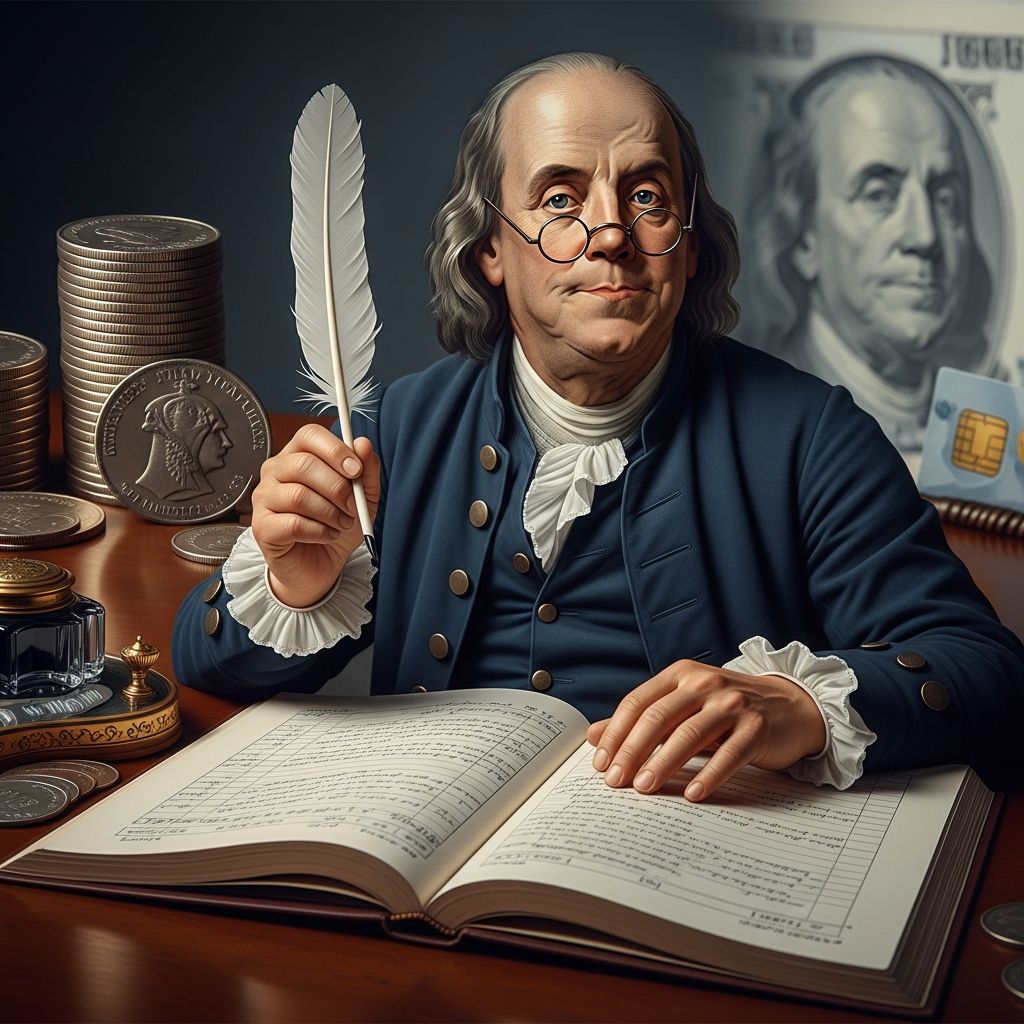
Benjamin Franklin, one of America’s founding fathers, was also a master of personal finance. His witty sayings from Poor Richard’s Almanack and life experiences offer lessons that remain relevant today. From emphasizing preparation to warning against small expenses, Franklin’s advice promotes discipline, frugality, and smart habits for building wealth.
“By failing to prepare, you are preparing to fail.”
This iconic quote underscores the importance of foresight in financial planning. Franklin believed that anticipation prevents disaster. In today’s world, this translates to building an emergency fund covering 3-6 months of living expenses. Unexpected events like job loss or medical bills can derail finances without preparation.
Start by automating transfers to a high-yield savings account. According to the Federal Reserve, 40% of Americans can’t cover a $400 emergency, highlighting the need for readiness. Budgeting apps or the 50/30/20 rule—50% needs, 30% wants, 20% savings—can help. Franklin’s ‘ounce of prevention is worth a pound of cure’ reinforces proactive saving over reactive spending.
“If you would know the value of money, try to borrow some.”
Franklin highlighted money’s true worth through the lens of debt. Borrowing reveals costs like interest rates, which can inflate expenses. High-interest debt, such as credit cards averaging 20% APR, erodes wealth quickly.
To apply this, prioritize paying off debt using the debt snowball or avalanche method. Live below your means to avoid borrowing. Franklin avoided debt by earning steadily, a strategy echoed in modern advice from financial experts.
“Our necessities never equal our wants.”
Franklin distinguished essential needs from desires, living frugally in Philadelphia with bread and water meals to build his printing business. This combated lifestyle inflation, where income rises lead to unnecessary spending.
Track spending for a month to identify wants vs. needs. Use the ’24-hour rule’ for non-essentials: wait before buying. Franklin’s spartan habits allowed wealth accumulation without luxury traps, proving moderation builds fortunes.
“A penny saved is a penny earned.”
Often misquoted—Franklin actually said ‘a penny saved is two pence clear’ in 1737’s Poor Richard’s Almanack—this celebrates small savings compounding over time. His Franklin Stove invention saved fuel costs for households, exemplifying innovation for efficiency.
- Review subscriptions and cancel unused ones.
- Shop sales and use cash-back apps.
- Cook at home instead of dining out, saving hundreds monthly.
Compound interest amplifies this: $10 daily saved at 7% return grows to over $150,000 in 30 years.
“Beware of little expenses. A small leak can sink a great ship.”
As Postmaster General, Franklin curbed waste. Small daily costs like coffee ($5/day = $1,800/year) accumulate. His experiment with loaves and water tested frugality.
Audit expenses: use spreadsheets or apps like Mint. Categorize and cut leaks—switch to generic brands, energy-efficient bulbs. Franklin’s vigilance prevented financial shipwrecks.
“Time is money.”
From ‘Advice to a Young Tradesman,’ idleness wastes earning potential. Earning 10 shillings daily but idling half costs more than spent sixpence—it’s five shillings lost opportunity.
Maximize time: side hustles, skill-building via free courses. Time-blocking schedules boosts productivity. Franklin’s 13 virtues included industry, rising early for efficiency.
“The good paymaster is lord of another man’s purse.”
Paying promptly builds credit and relationships. Delays burden others. Timely payments lower rates and open opportunities.
- Automate bills.
- Negotiate terms.
- Maintain 30% credit utilization.
“Beware of thinking all your own that you possess, and of living accordingly.”
Credit tempts overspending. Track income vs. expenses to reveal leaks. Franklin advised exact accounts for awareness.
| Category | Monthly Income | Expenses | Savings Opportunity |
|---|---|---|---|
| Food | – | $600 | $150 (meal prep) |
| Entertainment | – | $200 | $100 (free alternatives) |
| Transport | – | $300 | $50 (public transit) |
“Money is of a prolific generating nature.”
Franklin likened money to breeding sows: invested, it multiplies. Five shillings turned becomes more via compound growth. Start early with retirement accounts like 401(k)s matching contributions.
“Six pounds a year is but a groat a day.”
Small daily wastes sum large. A groat daily equals substantial yearly loss. Invest that ‘groat’ for advantage.
“Industry and frugality: the way to wealth.”
Wealth demands hard work and thrift. Get all honestly, save all (essentials excepted). Franklin’s life—from apprentice to millionaire—proves this.
Franklin’s Plan for Saving One Hundred Thousand Pounds
Addressing currency shortages, Franklin urged cutting superfluities: half imports unnecessary. Tips included rum with water, mending clothes. Modern parallel: reduce luxury spending for surplus.
Frequently Asked Questions (FAQs)
Q: Is ‘a penny saved is a penny earned’ Franklin’s exact quote?
A: No, he wrote ‘a penny saved is two pence clear’ in Poor Richard’s Almanack. The popular version simplifies it.
Q: How can I start an emergency fund like Franklin advised?
A: Save $1,000 first, then 3-6 months’ expenses in a high-yield account. Automate $20-50/paycheck.
Q: What does ‘time is money’ mean today?
A: Value productive hours; avoid procrastination. Use time for income-generating activities or learning.
Q: How to beware of little expenses?
A: Track spending weekly, cut $5-10 daily habits like lattes. Redirect to investments.
Q: Can Franklin’s advice build wealth now?
A: Yes, combining frugality, investing, and industry yields results, as compound growth shows.
References
- Founders Online: Advice to a Young Tradesman — Benjamin Franklin. 1748-07-21. https://founders.archives.gov/documents/Franklin/01-03-02-0130
- A Plan for Saving One Hundred Thousand Pounds — Benjamin Franklin via QCurtius. 2023-08-12. https://qcurtius.com/2023/08/12/some-business-and-money-advice-from-benjamin-franklin/
- Report on the Federal Reserve’s Economic Well-Being — Board of Governors of the Federal Reserve System. 2023. https://www.federalreserve.gov/publications/2023-economic-well-being-of-us-households-in-2022-executive-summary.htm
- The Way to Wealth — Benjamin Franklin. 1758. https://founders.archives.gov/documents/Franklin/01-25-02-0013
- Poor Richard’s Almanack — Benjamin Franklin. 1737. https://founders.archives.gov/documents/Franklin/01-02-02-0018
Similar Articles








Read full bio of medha deb