Monitor Your Checking Account: Stay Ahead of Fraud and Fees
Discover how regular checking account monitoring protects against fraud, avoids costly fees, and enhances your financial control and awareness.
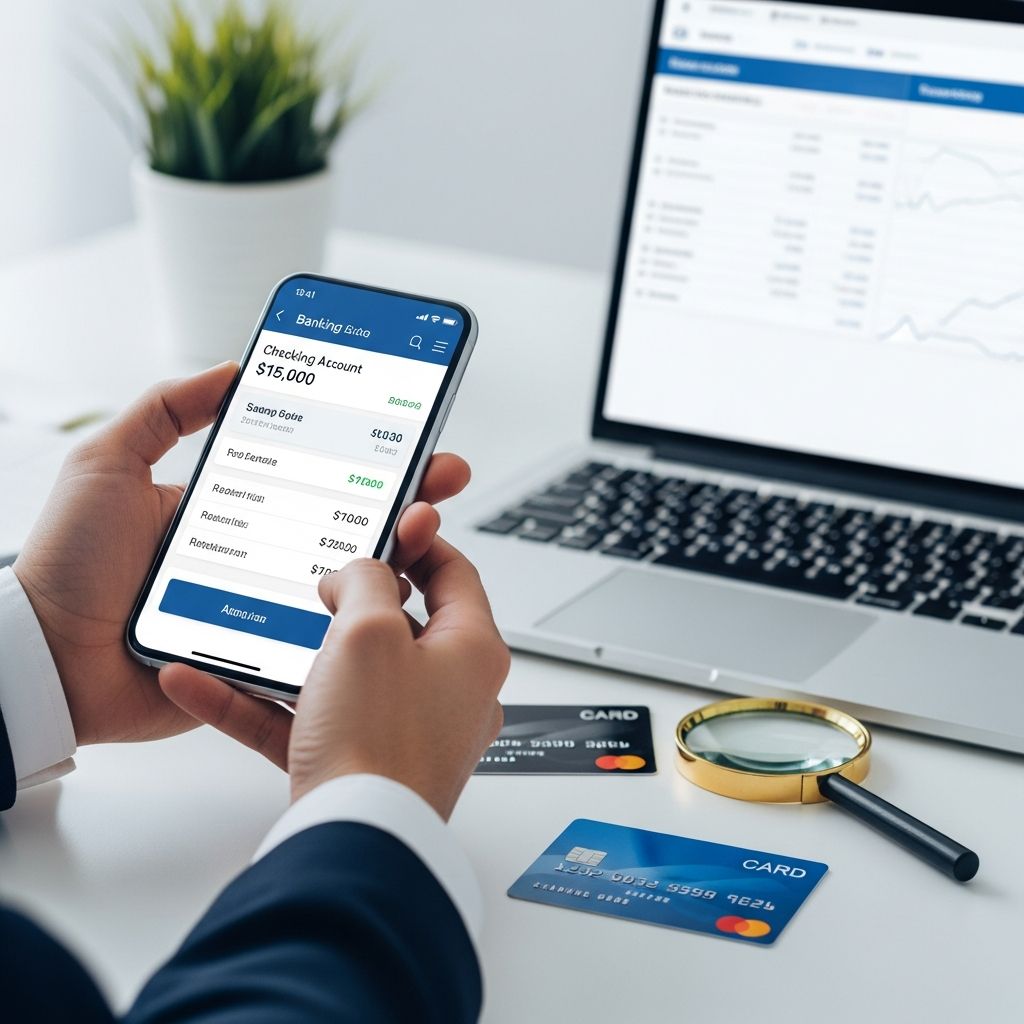
Regularly monitoring your checking account is essential in today’s digital banking landscape, where fraud risks and unexpected fees can erode your finances quickly. By staying vigilant, you can detect unauthorized transactions early, sidestep overdraft charges that average around $34 per incident, and gain a clearer picture of your spending habits for better financial health.
Benefits of Regular Checking Account Monitoring
There are compelling reasons to monitor your checking account consistently. This practice not only safeguards your money but also empowers you to make smarter financial decisions daily. Key advantages include early fraud detection, fee avoidance, improved financial management, account balance awareness, and spotting errors swiftly.
Early Fraud Detection
Checking your account frequently allows you to identify fraudulent activity before it escalates. For instance, if a thief initiates a small unauthorized transaction, spotting it promptly can prevent larger drains on your funds. Taylor Kovar, CFP and founder of 11 Financial, notes, “Spotting unauthorized charges early allows you to report them to your bank promptly, minimizing your liability and preventing further fraudulent activity.” Federal regulations like the Electronic Fund Transfer Act limit your liability to $50 if reported within two business days, underscoring the value of vigilance.
In an era of rising digital fraud, banks like those surveyed by MoneyRates report enhanced monitoring tools, but personal oversight remains crucial. Real-time app checks can flag suspicious patterns, such as unusual locations or amounts, enabling immediate freezes on your account.
Fee Avoidance
Overdraft fees continue to be a major pitfall, with averages reaching $34 in recent years, though some institutions have adjusted to $27.08 as of 2024 data. By monitoring balances, you avoid spending beyond available funds, thus dodging these charges along with returned payment fees. Online accounts, where 70.7% offer free checking compared to 32.4% of traditional ones, facilitate easier monitoring to prevent such issues.
Alerts for low balances act as a safeguard, notifying you via text, email, or app push when funds dip below your threshold. This proactive approach can save hundreds annually, especially for frequent transact users.
Improved Financial Management
Consistent monitoring reveals spending patterns, making it simpler to adhere to budgets and curb overspending. Daily checks provide granular insights into daily outflows, while monthly reviews offer a broader perspective on habits like dining out or subscriptions. Integration with budgeting apps in mobile platforms categorizes expenses automatically, aiding long-term planning.
For business owners, similar principles apply; dedicated accounts with reporting tools enhance visibility into cash flow, reducing errors and supporting growth decisions.
Account Balance Awareness
Knowing your exact balance prevents declined transactions and ensures bills are covered. This awareness informs timely transfers from savings or adjustments to upcoming expenditures. With mobile access, you can check anytime, avoiding surprises at checkout.
Features like round-up savings in apps like Current automatically siphon spare change, fostering saving without effort while maintaining balance oversight.
Identifying Errors and Discrepancies
Banks occasionally post incorrect charges or delays in deposits. Routine reviews catch these, allowing quick resolutions. Reconciling records monthly ensures accuracy, preventing compounded issues like fee waivers denials.
Traditional check registers or digital equivalents help track every entry, mirroring professional reconciliation practices.
Tools and Techniques for Effective Account Monitoring
Leveraging modern tools simplifies monitoring without constant manual effort. From apps to automated services, these methods fit various lifestyles.
Mobile Banking Apps
Most banks provide apps for on-the-go access, complete with customizable alerts for low balances, large purchases, deposits, or potential fraud. These notifications keep you informed in real-time, with high-rated apps like Current enabling spending tracking, budgeting, and category views.
- Pros: Instant notifications, no branch visits, free ATM networks.
- Cons: Potential cash deposit fees, fully digital experience.
Regular Account Statement Reviews
Monthly e-statements via online banking let you verify transactions comprehensively. Scrutinize for discrepancies, ensuring all debits match receipts.
Account Reconciliation
Match your records against statements to pinpoint errors or fraud. This systematic process maintains precision, ideal for high-activity accounts.
Traditional Methods
A check register manually logs deposits, withdrawals, and checks, preventing overdrafts for those preferring paper trails.
Automatic Account Monitoring Services
Banks and third-parties offer credit monitoring, spending analysis, and planning tools. Features like Positive Pay for businesses prevent check fraud.
Services with overdraft coverage up to $200 fee-free add security.
Checking Your Checking Account: What Works Best for You?
Tailor frequency to your needs: daily/weekly for heavy users, monthly/quarterly for low-activity ones. Consider account terms annually for updates on fees, alerts, and rates.
| Account Type | Recommended Frequency | Best Tools |
|---|---|---|
| High Activity (Daily Use) | Daily/Weekly | Mobile Apps, Alerts |
| Moderate Activity | Weekly/Monthly | Statements, Reconciliation |
| Low Activity | Monthly/Quarterly | Check Register, Auto Services |
Frequently Asked Questions (FAQs)
What is the average overdraft fee in 2026?
Overdraft fees average around $34, though some banks cap at lower amounts like $27.08 based on recent surveys; monitoring prevents them entirely.
How often should I check my checking account?
Daily for active users, weekly or monthly otherwise, adjusted to activity level and using alerts for efficiency.
Are mobile banking apps secure for monitoring?
Yes, with 24/7 fraud monitoring, zero-liability protection, and biometric logins in reputable apps.
Can monitoring help with budgeting?
Absolutely; it reveals patterns, supports categorization, and integrates with tools for projections and savings.
What if I spot fraud?
Report immediately to your bank to limit liability under federal law, often to $50 if prompt.
The Bottom Line
Proactive checking account monitoring yields dividends through fraud prevention, fee savings, and financial mastery. Though it requires effort, the protection and insights far outweigh the time invested, fostering robust financial health.
References
- Monitor Your Checking Account: Stay Ahead of Fraud and Fees — MoneyRates. 2026. https://www.moneyrates.com/checking/benefits-of-monitoring-your-checking-account.htm
- What Is Required When Opening a Checking Account? — MoneyRates. 2026. https://www.moneyrates.com/personal-finance/find-best-checking-account.htm
- Checking Account Fees Survey 2026: Analyzing Averages and Trends — MoneyRates. 2026-01-12. https://www.moneyrates.com/research-center/bank-fees/
- The Real Benefits of a Business Checking Account: 2025 Guide — MoneyRates. 2025. https://www.moneyrates.com/checking/business-checking-account-benefits.htm
- Current Checking Account 2026: Comprehensive Review — MoneyRates. 2026. https://www.moneyrates.com/checking/current-checking-review.htm
Similar Articles








Read full bio of Sneha Tete