Ben Bernanke: Economist, Crisis Leader, Nobel Prize Winner
Explore the life and legacy of Ben Bernanke, the Federal Reserve chairman who navigated the financial crisis.
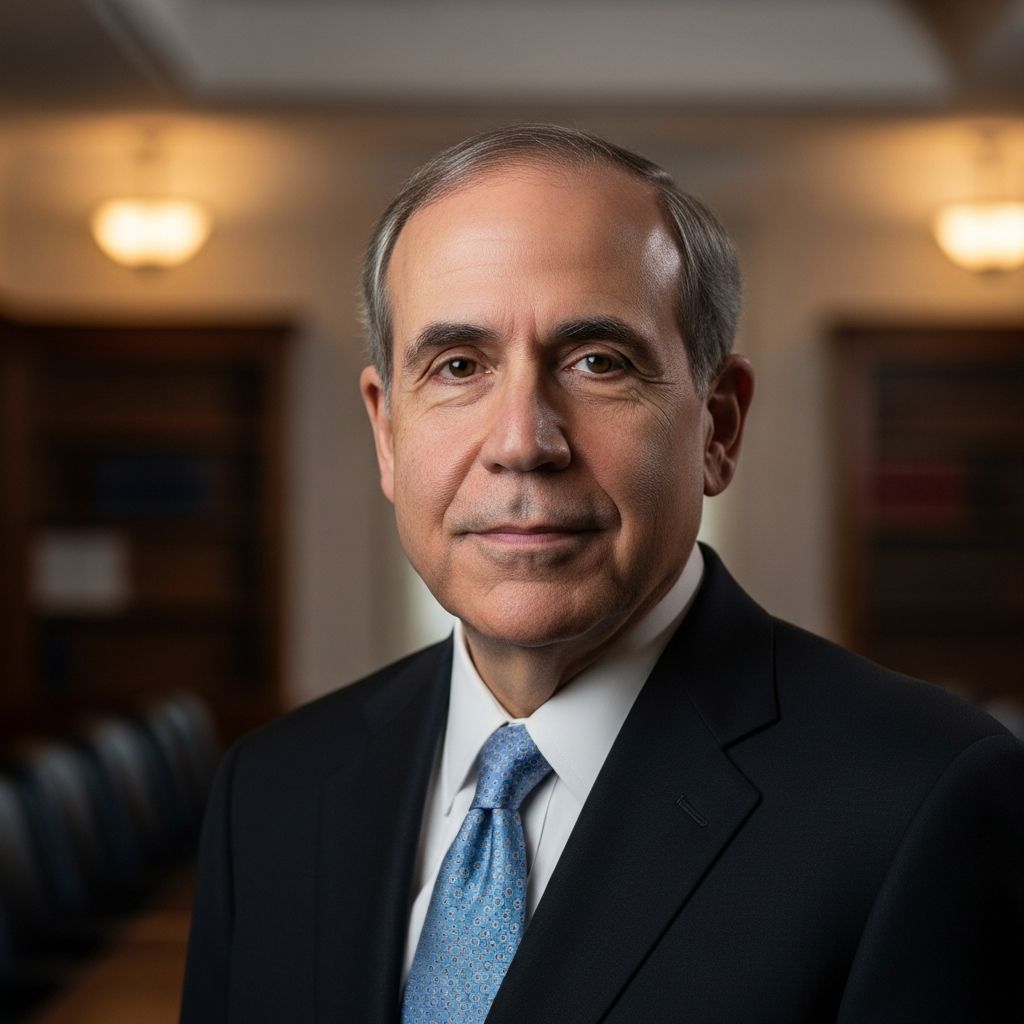
Who Is Ben Bernanke?
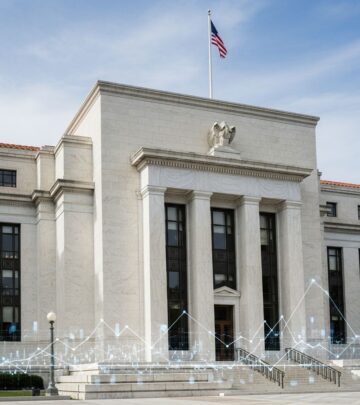
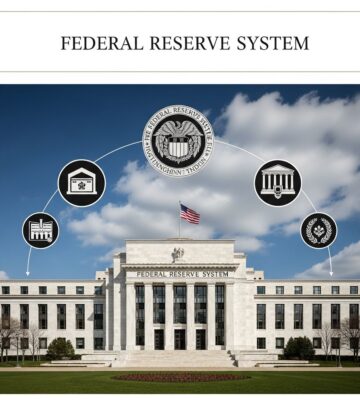
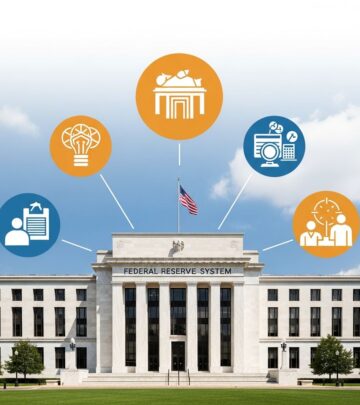
Ben Shalom Bernanke is a prominent American economist who served as the fourteenth chairman of the U.S. Federal Reserve from 2006 to 2014. Nominated by Presidents George W. Bush and Barack Obama, Bernanke played a crucial role in navigating the U.S. economy through one of the most challenging periods in modern financial history. His tenure marked a transformative era in Federal Reserve policy, characterized by unprecedented measures and enhanced transparency in central banking.
Before his appointment to the Federal Reserve, Bernanke established himself as a respected academic economist. He earned his Ph.D. from the Massachusetts Institute of Technology (MIT) and served as a tenured professor at Princeton University, where he chaired the Department of Economics from 1996 to 2002. His scholarly work focused extensively on monetary policy and economic crises, particularly the Great Depression—a focus that would prove invaluable during his tenure at the Fed.
Early Career and Academic Contributions
Bernanke’s academic career laid the foundation for his later policy decisions. His groundbreaking research on the causes of financial crises and the Great Depression earned him the 2022 Nobel Memorial Prize in Economic Sciences, which he shared with Douglas Diamond and Philip H. Dybvig. His analysis fundamentally changed how economists and policymakers understand the mechanisms of banking crises and their role in triggering economic downturns.
One of Bernanke’s key insights was demonstrating that banking crises can serve as a prime cause of economic crashes and depressions, rather than merely a consequence of economic downturns. He showed that financial distress increases the operating costs for banks in providing credit intermediation, causing them to curtail lending. This contraction in credit availability forces businesses to invest less and lay off staff, sparking recessions or deeper economic crises.
From August 2002 to June 2005, Bernanke served as a member of the Board of Governors of the Federal Reserve System, where he began to apply his research insights to real-world policymaking. During this period, he proposed the Bernanke doctrine and first discussed “the Great Moderation”—the theory that traditional business cycles have declined in volatility in recent decades through structural economic changes.
Path to Federal Reserve Chairman
In 2005, Bernanke was appointed chairman of President George W. Bush’s Council of Economic Advisers. His performance in this role impressed the administration, leading to his nomination to succeed Alan Greenspan as chairman of the Federal Reserve. Bernanke’s first term began on February 1, 2006, and he was confirmed for a second term on January 28, 2010, after being renominated by President Barack Obama.
The timing of Bernanke’s appointment proved prophetic, as his deep knowledge of the Great Depression would become essential within just a year. His academic expertise in financial crises positioned him perfectly to address the unprecedented challenges that emerged in 2007 and 2008.
Leadership During the 2008 Financial Crisis
When the global financial crisis erupted in 2007-2008, Bernanke demonstrated decisive leadership in implementing extraordinary measures to stabilize the economy. The crisis represented the most severe economic challenge since the Great Depression, and Bernanke’s response drew directly on his scholarly research.
Unprecedented Monetary Policy Measures
Under Bernanke’s guidance, the Federal Reserve took several bold actions. First, the Fed lowered its funds interest rate from 5.25% to nearly 0.0% within less than a year. When this conventional monetary policy tool proved insufficient to address the deepening liquidity crisis, Bernanke led the implementation of quantitative easing—a groundbreaking policy that the Federal Reserve had rarely, if ever, employed on such a scale.
Through quantitative easing, the Fed created approximately $1.3 trillion from November 2008 to June 2010 and used this money to purchase billions of dollars in mortgage-backed securities, long-term Treasury bonds, and other financial assets from banks and the government. This massive intervention was designed to inject liquidity into the financial system and stimulate economic growth when traditional interest rate cuts became ineffective.
Cooperation with Government and International Partners
Bernanke worked closely with Treasury secretaries Henry Paulson and Timothy Geithner to coordinate the government’s response to the crisis. He also collaborated with central banks and financial authorities from other nations, recognizing that the financial crisis was truly global in nature. In his 2015 book, “The Courage to Act,” Bernanke revealed that the world’s economy came dangerously close to collapse in 2007 and 2008, and that only the unprecedented efforts of the Fed and other agencies prevented an economic catastrophe that could have rivaled or exceeded the Great Depression.
Support for Economic Stimulus
Beyond Federal Reserve actions, Bernanke backed a $787 billion federal economic stimulus plan designed to support employment and consumer spending. The Federal Reserve also purchased billions in mortgage bonds to revive the housing market, which had been devastated by the subprime mortgage crisis. These comprehensive measures reflected Bernanke’s understanding of how credit contractions can spiral into severe recessions.
Reforms and Enhanced Transparency
Bernanke made several important reforms when he took over as chairman, building on his understanding of financial stability issues. He implemented subprime-lending reforms and developed a comprehensive plan to promote transparency and accountability at the Federal Reserve—a significant departure from the more secretive approach of his predecessor, Alan Greenspan.
Breaking the Secrecy Tradition
One of Bernanke’s most significant contributions was enhancing the Federal Reserve’s transparency and communications. He initiated quarterly press conferences to explain the decisions of the Federal Open Market Committee, making the central bank’s policy deliberations more accessible to the public, financial markets, and policymakers. This innovation helped demystify Federal Reserve decision-making and reduced uncertainty about future policy directions.
Forward Guidance and Inflation Targeting
Bernanke also introduced forward guidance on short-term interest rates, allowing the Fed to communicate its likely future policy path to market participants. Additionally, he adopted a formal inflation target of 2 percent, providing a clear numerical objective for monetary policy. These transparency measures helped stabilize expectations and improve the effectiveness of monetary policy during a period of significant economic uncertainty.
Economic Recovery and Legacy
While many of the long-term effects of Bernanke’s crisis-fighting measures were initially questioned by skeptics, he was eventually widely credited with helping to allay the worst effects of the Great Recession. The economy gradually recovered from 2009 onward, unemployment declined from its peak, and the financial system stabilized. In recognition of his leadership during this period, Bernanke was named Time magazine’s Person of the Year in 2009.
Recognition of Crisis Leadership
Bernanke’s calm demeanor and analytical approach earned him praise from President Obama, who referred to him as “the epitome of calm.” His willingness to deploy unconventional tools and think creatively about policy responses helped prevent a repeat of the 1930s Great Depression scenario. By the end of his tenure in January 2014, the U.S. economy was in recovery mode, and Bernanke had fundamentally changed the scope of what central banks could do during financial crises.
Nobel Prize Recognition
In 2022, Bernanke received the ultimate recognition for his life’s work when he was awarded the Nobel Memorial Prize in Economic Sciences, jointly with Douglas Diamond and Philip H. Dybvig, “for research on banks and financial crises.” The Nobel Committee specifically highlighted his analysis of the Great Depression and his framework for understanding how banking crises trigger deeper economic downturns.
Bernanke’s 40-year-old insights into the causes of the Great Depression and other financial crises remain central to modern-day economics. By illuminating how things can go wrong even in robust economies, he inspired significant improvements in economic policymaking that have made people’s economic lives more stable and secure throughout the world.
Criticisms and Controversies
Despite widespread praise for his crisis management, Bernanke faced criticisms from various quarters. Some observers argued that he allied himself too closely with Wall Street banks and that he underestimated the risks of inflation and unemployment in the aftermath of the crisis. His expansion of the Federal Reserve’s authority also prompted calls from Congress and others to limit the Fed’s powers, reflecting concerns about central bank overreach.
These criticisms reflected fundamental debates about the proper role of government intervention during financial crises—debates that continue to this day among economists and policymakers.
Post-Federal Reserve Career
After stepping down as Federal Reserve chairman on January 31, 2014, Bernanke transitioned to new roles. He published “The Courage to Act” in 2015, providing an insider’s account of the financial crisis and the Fed’s response. He has since served in various advisory capacities and continued to contribute to economic policy discussions, drawing on his vast experience and expertise.
Frequently Asked Questions
Q: How long did Ben Bernanke serve as Federal Reserve chairman?
A: Bernanke served as chairman for eight years, from February 1, 2006, to January 31, 2014, serving two full four-year terms.
Q: What is quantitative easing?
A: Quantitative easing is a monetary policy where the central bank purchases large amounts of financial assets, such as government bonds and mortgage-backed securities, to inject money into the economy and lower long-term interest rates when conventional policy tools are insufficient.
Q: Why did Bernanke’s academic work focus on the Great Depression?
A: Bernanke studied the Great Depression to understand the mechanisms of banking crises and their role in severe economic downturns. This research proved directly applicable to policymaking during the 2007-2008 financial crisis.
Q: Did Bernanke anticipate the 2008 financial crisis?
A: Although Bernanke did not foresee the exact timing of the crisis, his research on financial crises and banking instability made him well-prepared to respond when the crisis occurred. Neither he nor his predecessor Alan Greenspan anticipated the economic downturn.
Q: What was Bernanke’s relationship with the Treasury Department during the crisis?
A: Bernanke worked closely with Treasury Secretaries Henry Paulson and Timothy Geithner to coordinate the government’s response to the financial crisis, demonstrating the importance of cooperation between the Federal Reserve and the executive branch during emergencies.
Q: Why did Bernanke hold quarterly press conferences?
A: Bernanke held quarterly press conferences to enhance transparency at the Federal Reserve, explaining the decisions of the Federal Open Market Committee to the public. This initiative broke with tradition and helped demystify central banking.
Q: What did Bernanke win the Nobel Prize for?
A: Bernanke received the 2022 Nobel Memorial Prize in Economic Sciences for his groundbreaking research on banks and financial crises, particularly his analysis of the Great Depression and the role of banking failures in triggering economic downturns.
References
- Ben S. Bernanke – Federal Reserve History — Federal Reserve History. Accessed November 29, 2025. https://www.federalreservehistory.org/people/ben-s-bernanke
- Ben Bernanke | Research Starters – EBSCO — EBSCO. Accessed November 29, 2025. https://www.ebsco.com/research-starters/biography/ben-bernanke
- Ben Bernanke – Wikipedia — Wikimedia Foundation. Accessed November 29, 2025. https://en.wikipedia.org/wiki/Ben_Bernanke
- Dr. Ben Bernanke Recognized for World-Changing Economic Insights with Nobel Memorial Prize in Economic Sciences — Bush Center. 2022. https://www.bushcenter.org/publications/dr-ben-bernanke-recognized-for-world-changing-economic-insights-with-nobel-memorial-prize-in-economic-sciences
- Ben Bernanke – Biographical — Nobel Prize Organization. 2022. https://www.nobelprize.org/prizes/economic-sciences/2022/bernanke/biographical/
Similar Articles








Read full bio of medha deb