Bell Curve: Normal Distribution in Statistics
Understanding bell curves and normal distributions in finance, education, and data analysis.
Understanding the Bell Curve: A Comprehensive Guide to Normal Distribution
A bell curve, more formally known as a normal distribution, represents one of the most fundamental concepts in statistics and probability theory. This distinctive graph displays how a set of values is distributed across a population, with a characteristic bell-like shape that emerges from the statistical principle that values closer to the mean are more frequent than those at the extremes. The bell curve’s symmetrical structure and predictable properties have made it indispensable across numerous fields, from finance and quality control to education and medical research.
What is a Bell Curve?
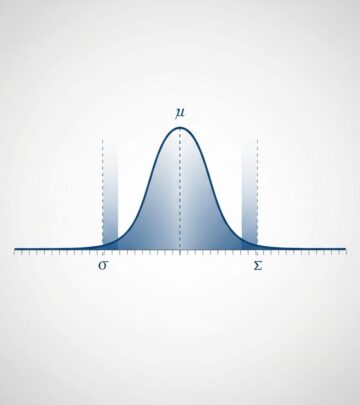
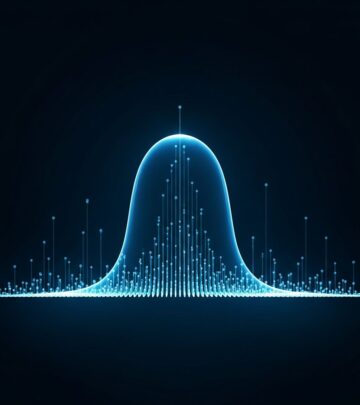
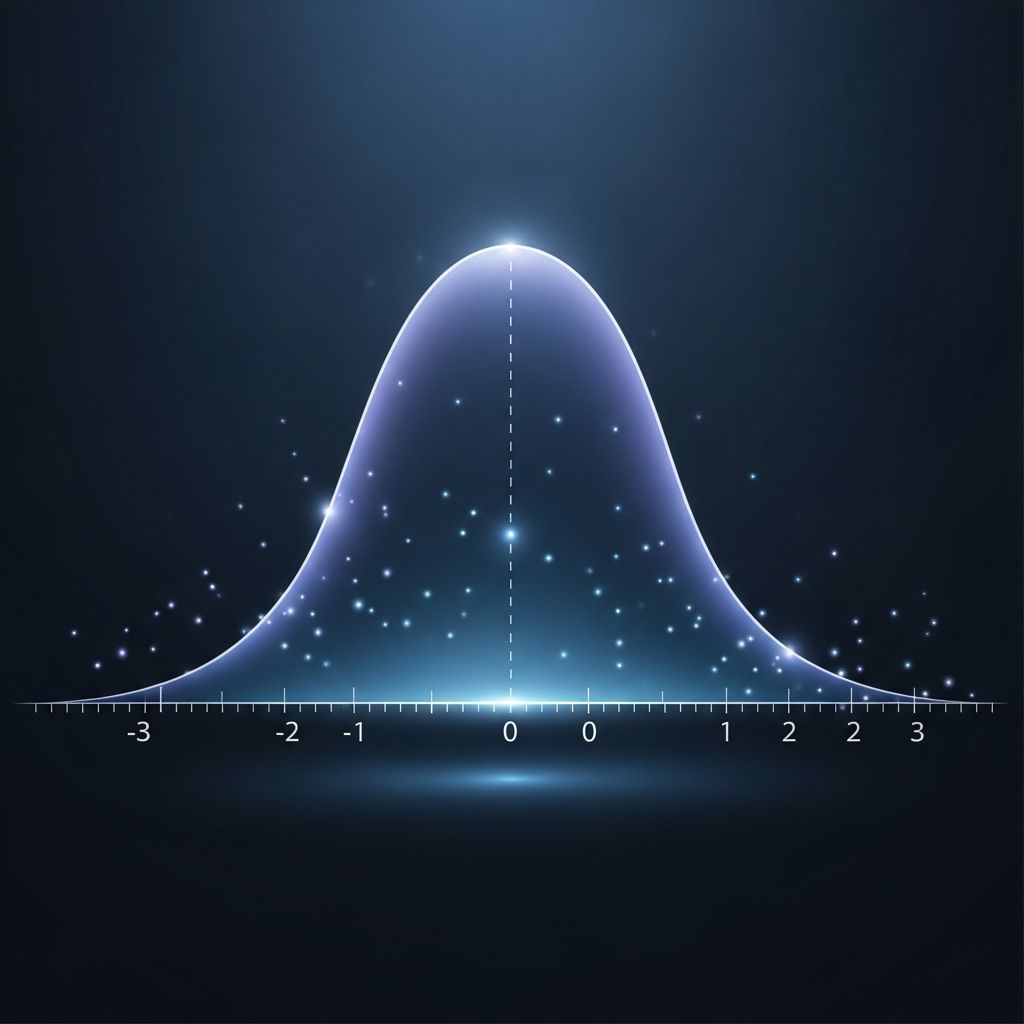
A bell curve is a type of graph illustrating the normal distribution of a set of values. At its core, the bell curve features a central peak that represents the mean—the average of all values in the dataset. From this peak, the curve tapers off symmetrically on both sides, creating the characteristic bell-like appearance that gives the distribution its name. This shape reflects a fundamental principle in statistics: values that cluster around the mean occur more frequently than values that deviate significantly from it.
The beauty of the bell curve lies in its predictability and universal applicability. When values follow a normal distribution pattern, they display an equal number of measurements occurring above and below the mean value. This symmetry makes the bell curve a powerful tool for understanding patterns in data across virtually all disciplines. It’s important to note that while all normal distributions are bell-shaped, not all bell-shaped distributions are normal distributions—normality requires specific mathematical properties to be satisfied.
Historical Origins of the Bell Curve
The concept of the bell curve traces its roots back to 1733, when French mathematician Abraham De Moivre made groundbreaking contributions to probability theory and the study of random distributions. De Moivre, building upon the foundational work of Dutch scientist Christiaan Huygens, expanded the mathematical understanding of probability and authored influential textbooks on the subject. Much of his pioneering research explored the probability of random occurrences and gambling scenarios, laying the mathematical groundwork for what would become the normal distribution.
De Moivre’s work was revolutionary because it demonstrated that certain random phenomena followed predictable patterns when observed in large numbers. This insight formed the basis for modern statistical analysis and has remained relevant for nearly three centuries. His contributions established the mathematical framework that statisticians and scientists use today to model uncertainty and variation in data.
Mathematical Properties of Bell Curves
Bell curves possess several key mathematical properties that define their shape and behavior. The most fundamental of these properties is their relationship to three central tendency measures: the mean, median, and mode.
Mean, Median, and Mode
In a perfectly normal distribution, the mean (average of all values), the median (the center point of the distribution), and the mode (the most frequently occurring value) all align at the peak of the curve. This convergence is a hallmark of true normal distributions and distinguishes them from other symmetrical distributions. The mean serves as the central reference point around which all other values are organized, determining the horizontal position of the bell curve on a graph.
Standard Deviation and Boundaries
Normal distributions are defined by two primary boundaries: the mean and the standard deviation. The standard deviation measures how spread out the values are from the mean. A smaller standard deviation indicates that values cluster tightly around the mean, resulting in a narrow, tall bell curve. Conversely, a larger standard deviation indicates greater spread, producing a wider, flatter bell curve. This flexibility in shape is why there are unlimited potential bell curves, as each represents a unique combination of mean and standard deviation values.
Symmetry and Distribution Properties
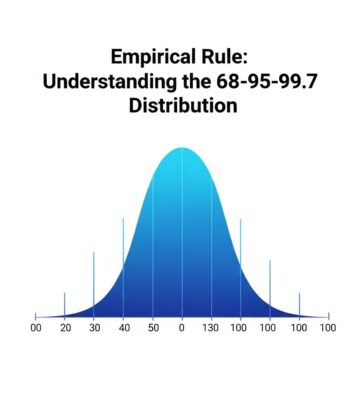
The symmetrical nature of the bell curve means that the distribution on either side of the mean is a mirror image. Approximately 68% of values fall within one standard deviation of the mean, about 95% fall within two standard deviations, and approximately 99.7% fall within three standard deviations. This predictability is what makes bell curves so valuable for making inferences about data and assessing probabilities.
Applications of Bell Curves in Finance
In the financial sector, bell curves play a crucial role in market analysis and risk assessment. Normal distribution is considered the most common type of distribution in stock market analysis and other financial statistical analyses. Financial professionals use bell curves to model stock returns, analyze market volatility, and assess investment risk. Understanding how asset returns are distributed helps investors make informed decisions about portfolio construction and risk management.
The bell curve enables analysts to calculate the probability of various market outcomes and to identify unusual market behavior that might warrant investigation. Options pricing models, risk assessment frameworks, and portfolio optimization techniques all rely on assumptions about normal distribution. However, financial markets occasionally exhibit behavior that deviates from perfect normality, particularly during periods of extreme volatility or market stress, which has led to ongoing refinements in financial modeling approaches.
Bell Curves in Educational Assessment
Perhaps no application of bell curves generates more discussion and debate than their use in grading systems. When teachers and professors grade on a curve, they distribute grades based on the bell curve pattern, where only a small percentage of students earn the highest grades, most receive middle-range grades, and some receive lower grades. This approach has become controversial for several important reasons.
Arguments Supporting Curve-Based Grading
Proponents of curve-based grading argue that this method helps maintain the excellence and prestige of top grades. By ensuring that only a small percentage of students receive the highest marks, curve grading theoretically preserves the meaning and value of A grades. Supporters contend that this approach prevents grade inflation and ensures that top marks genuinely represent exceptional performance relative to the entire class.
Criticisms of Curve-Based Grading
Opponents of bell curve grading raise substantial concerns about fairness and equity. The primary criticism is that curve grading penalizes students who perform at high absolute levels but are not among the very top performers in their class. If an entire class performs well, students with strong scores might still receive lower grades simply because others performed slightly better. This system can be particularly problematic in advanced classes where all students have demonstrated mastery of the material. Critics argue that grades should reflect absolute mastery of content rather than relative positioning within a group, and that curve grading can discourage collaboration and create unnecessary competition.
Bell Curves in Other Business Applications
Beyond finance and education, bell curves find applications across various business contexts. Quality control departments use normal distributions to monitor production consistency and identify defects. Human resources departments employ bell curves in performance management systems to assess employee productivity and potential. Marketing departments analyze consumer behavior using bell curves to understand purchasing patterns and preferences. In each case, the bell curve’s predictable properties enable organizations to identify outliers, establish benchmarks, and make data-driven decisions.
Normal Distribution vs. Other Distributions
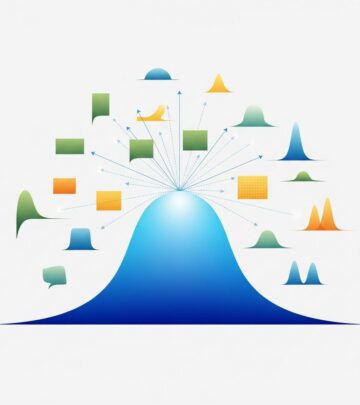
It’s important to understand that while bell curves are synonymous with normal distributions, other statistical distributions can also produce bell-shaped graphs when plotted. Some distributions, such as the t-distribution or Poisson distribution under certain parameters, may appear bell-shaped but possess different mathematical properties and should not be treated as normal distributions. Correctly identifying whether data follows a true normal distribution is crucial for selecting appropriate statistical tests and making valid inferences.
The Importance of Bell Curves in Statistics
Bell curves hold paramount importance in statistics because they represent random variables whose distributions are initially unknown. The Central Limit Theorem, one of statistics’ most powerful principles, demonstrates that the distribution of sample means approaches normality regardless of the underlying population distribution. This remarkable property makes bell curves invaluable for conducting hypothesis tests, constructing confidence intervals, and making predictions about population characteristics based on sample data.
Understanding bell curves enables statisticians and researchers to quantify uncertainty, assess whether observed differences are statistically significant, and communicate findings with appropriate confidence levels. Without the bell curve framework, much of modern statistical inference would be impossible, making it a cornerstone of evidence-based decision-making across disciplines.
Frequently Asked Questions (FAQs)
Q: Who developed the concept of the bell curve?
A: French mathematician Abraham De Moivre developed the concept of the bell curve in 1733 through his work on probability theory and random distributions. He built upon earlier work by Dutch scientist Christiaan Huygens and made groundbreaking contributions to understanding how random phenomena follow predictable patterns.
Q: What’s the difference between a normal distribution and a bell curve?
A: The terms are often used interchangeably. A bell curve is the graphical representation of a normal distribution. Normal distribution is the mathematical concept describing how values are distributed, and a bell curve is the visual manifestation of this distribution showing the characteristic bell shape.
Q: What do standard deviation and mean represent in a bell curve?
A: The mean is the average of all values and represents the center point of the bell curve. The standard deviation measures how spread out values are from the mean. Together, these two parameters completely define the shape and position of a normal distribution.
Q: Is grading on a curve fair?
A: This remains debated in education. Supporters argue it maintains grade standards, while critics contend it penalizes high-performing students who aren’t in the absolute top tier and can discourage collaboration among students.
Q: Why are bell curves important in finance?
A: Bell curves are essential in finance because normal distribution is the most common distribution used in stock market analysis, risk assessment, and options pricing. They help analysts model returns, calculate probabilities of different outcomes, and manage investment risk.
Q: Can all bell-shaped distributions be treated as normal distributions?
A: No. While some distributions produce bell-shaped graphs, they may not be true normal distributions. Different distributions have different mathematical properties, so correctly identifying whether data follows a normal distribution is crucial for selecting appropriate statistical methods.
References
- Introduction to the Normal Distribution (Bell Curve) — Saul McLeod, Simply Psychology. 2023-10-11. https://www.simplypsychology.org/normal-distribution.html
- Bell Curve Definition: Normal Distribution Meaning Example in Finance — Andrew Bloomenthal, Investopedia. 2024-08-15. https://www.investopedia.com/terms/b/bell-curve.asp
- We Need to Let Go of the Bell Curve — Adrian Gore, Harvard Business Review. 2022-01-14. https://hbr.org/2022/01/we-need-to-let-go-of-the-bell-curve
- Bell Curve Definition — Shelley R. Goldberg, U.S. News & World Report. 2023-12-08. https://money.usnews.com/investing/term/bell-curve
Similar Articles








Read full bio of Sneha Tete