What Do I Need to Open a Business Bank Account in 2026?
Complete step-by-step guide to opening a business bank account, from documentation to funding and digital setup for 2026.

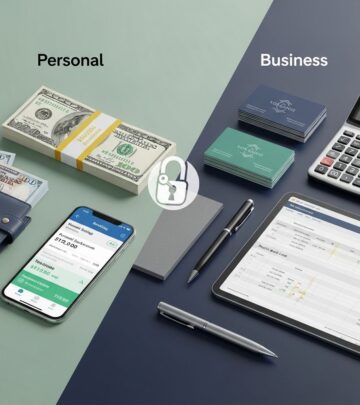
Opening a business bank account is a foundational step for any entrepreneur aiming to separate personal and business finances, protect personal liability, and streamline operations. In 2026, the process remains straightforward but requires careful preparation of documents, selection of the right bank, and understanding of fees and features. This comprehensive guide covers every essential aspect, from choosing account types to funding and setting up digital banking, ensuring new business owners can launch their financial foundation efficiently.
Why You Need a Business Bank Account
A dedicated business bank account centralizes cash flow management and provides critical personal liability protection by keeping business transactions separate from personal ones. Unlike personal accounts, business accounts enable professional payment processing, such as accepting credit and debit cards, which personal accounts typically prohibit. This separation also helps establish business credit, facilitating access to loans, suppliers on credit terms, and other financing options essential for growth.
Key benefits include:
- Liability protection: Shields personal assets from business debts and lawsuits.
- Professional image: Builds credibility with vendors, clients, and partners.
- Tax simplicity: Simplifies bookkeeping and IRS compliance by isolating business expenses.
- Payment processing: Supports merchant services for card payments via platforms like Stripe.
- Financing access: Transaction history supports business credit building for loans.
For small businesses, maintaining separate accounts is often legally required for LLCs and corporations, while sole proprietors benefit from enhanced organization.
Types of Business Bank Accounts
Banks offer various account types tailored to business needs. The primary options include checking, savings, and merchant services accounts.
- Business checking accounts: Ideal for daily operations like paying bills, receiving payments, and writing checks. They come in basic and premium tiers with varying transaction limits.
- Business savings accounts: Earn interest on excess funds while providing easy access. Useful for emergency funds or short-term savings; consider pairing with checking.
- Merchant services accounts: Enable credit/debit card acceptance, often linked to checking for seamless fund deposits.
Many experts recommend starting with at least a checking and savings account to track expenses and save for taxes effectively.
How to Choose the Right Bank and Account
Selecting the optimal bank involves comparing fees, features, and accessibility. Traditional banks offer in-person service, while online banks provide lower fees and 24/7 digital tools.
Compare Account Fees and Transaction Limits
Monthly fees for business checking range from $0 to $30, averaging $15 for basic accounts. Waive fees by maintaining minimum balances ($2,000–$25,000), meeting transaction thresholds, or using linked services.
Transaction limits: Free transactions cap at 125–550 monthly; excess fees are $0.40–$0.50 each. Cash deposits often free up to $5,000, then ~$0.30 per $100.
| Account Type | Monthly Fee | Min. Balance to Waive | Free Transactions |
|---|---|---|---|
| Basic Checking | $0–$15 | $0–$2,000 | 125–200 |
| Premium Checking | $15–$30 | $5,000–$25,000 | 300–550 |
| Online Bank Basic | $0 | None | Unlimited (varies) |
Online banks like Found offer no-fee accounts with bonuses for new users.
Select Your Account Tier
Match tiers to transaction volume:
- Basic: Low/no minimums, suits startups (e.g., $25 opening deposit).
- Premium: Higher limits, integrations for growing firms.
Forecast earnings/spending to avoid fees; prioritize digital tools, mobile apps, and integrations (e.g., QuickBooks).
Required Documents to Open a Business Bank Account
Documentation varies by structure but generally includes personal ID and business proof. Prepare in advance for quick approval.
- Government-issued ID: Driver’s license or passport for all owners (tax ID required for non-U.S. citizens).
- EIN (Employer Identification Number): From IRS; sole proprietors may use SSN.
- Business formation documents: Articles of Incorporation/Organization, DBA (if applicable).
- Business license/permits: State/local as needed.
- Operating agreement/partnership docs: For LLCs/partnerships.
- Proof of address: Utility bill or lease.
- Business plan overview: Enhances credibility, detailing operations and projections.
For multiple owners, provide ID and ownership proof for each (over 25% stake).
Step-by-Step Process to Open Your Account
- Choose bank/account: Research online/in-branch options.
- Gather documents: Organize digital/physical copies.
- Submit application: Online (5–10 mins) or in-person; include owner details.
- Fund account: Minimum $0–$1,000 via transfer, check, or cash.
- Activate services: Set up online banking, debit cards.
Approval typically instant online or 1–2 days in-branch.
Fund Your New Account
Initial deposits: $0–$1,000. Methods: EFT (free), check, cash (in-person), wire ($15–$30 outgoing).
Set Up Online and Mobile Banking
Post-approval, enroll for:
- Real-time balances/transactions.
- 12–18 months history, e-statements.
- Mobile: Check deposits, transfers, bill pay.
Apps provide 24/7 access, enhancing efficiency.
Common Fees and How to Avoid Them
Beyond monthly fees:
- Overdraft: $30–$35; opt for alerts.
- Wire transfers: $15–$30 incoming/outgoing.
- Cash deposits: After free limit.
Strategies: Meet balance/transaction mins, use digital payments.
Frequently Asked Questions (FAQs)
Do I need a separate savings account for my business?
Yes, recommended for interest-earning reserves, taxes, and emergencies alongside checking.
What is the minimum deposit to open?
Varies: $0–$1,000; some online banks require none.
Can sole proprietors open a business account?
Yes, using SSN; EIN optional but beneficial.
How long does approval take?
Instant online; 1–2 days in-branch.
Are there sign-up bonuses?
Yes, many banks offer for new accounts.
Bottom Line
Opening a business bank account in 2026 is simple with proper docs and research. It safeguards assets, builds credit, and professionalizes operations—start today for long-term success.
References
- Beginners Guide to Opening a Business Bank Account — MoneyRates. 2025. https://www.moneyrates.com/personal-finance/beginners-guide-to-opening-a-business-bank-account.htm
- How to Open a Business Bank Account — Money.com. 2025. https://money.com/how-to-open-a-business-bank-account/
- How to Open a Business Checking Account — Bankrate. 2025. https://www.bankrate.com/small-business/how-to-open-a-business-checking-account/
- Business Bank Accounts 101 — Stripe. 2025. https://stripe.com/resources/more/business-bank-accounts-101
- Open a Business Bank Account — U.S. Small Business Administration (SBA). 2025. https://www.sba.gov/business-guide/launch-your-business/open-business-bank-account
Similar Articles








Read full bio of Sneha Tete