Basics of Forming a Limited Liability Company (LLC)
Complete guide to understanding LLC structure, benefits, formation steps, and tax implications.
Understanding Limited Liability Companies (LLCs)
A Limited Liability Company, commonly referred to as an LLC, is a business structure that combines the liability protection of a corporation with the tax efficiency and flexibility of a partnership or sole proprietorship. For entrepreneurs and small business owners, understanding the basics of forming and operating an LLC is crucial to making informed decisions about their business structure. An LLC provides a legal framework that protects owners’ personal assets while allowing the business to operate with reduced regulatory complexity compared to traditional corporations.
The LLC structure has become increasingly popular among small business owners, freelancers, and entrepreneurs since it gained widespread legal recognition in the 1990s. The flexibility of the LLC structure, combined with liability protection and favorable tax treatment, makes it an attractive option for many business ventures. However, before deciding to form an LLC, it is essential to understand both the advantages and disadvantages, as well as the specific steps required to establish one.
Key Advantages of Forming an LLC
One of the primary reasons entrepreneurs choose to form an LLC is the liability protection it offers. This feature separates personal assets from business liabilities, meaning that if the business faces legal action or debt obligations, the owner’s personal savings, home, and other assets are generally protected from creditors.
Primary Benefits Include:
- Limited Liability Protection: Members are not personally responsible for the debts or liabilities of the business. Creditors can only pursue business assets, not personal assets of the owners.
- Pass-Through Taxation: By default, LLCs are taxed as partnerships or sole proprietorships (depending on the number of members), meaning the business itself does not pay income taxes. Instead, profits pass through to members’ personal tax returns, avoiding double taxation.
- Operational Flexibility: LLCs have fewer regulatory requirements and formalities compared to corporations. There is no requirement for a board of directors, annual shareholder meetings, or extensive record-keeping.
- Professional Credibility: Operating under an LLC structure can enhance business credibility with clients, customers, and financial institutions, as it demonstrates a formal business organization.
- Ease of Ownership Transfer: Ownership stakes in an LLC can be more easily transferred compared to certain other business structures, providing flexibility for founders and investors.
- Reduced Compliance Burden: LLCs require less paperwork and compliance than S-corporations or C-corporations, making them more cost-effective to establish and maintain.
Disadvantages and Limitations of LLCs
While LLCs offer numerous advantages, they are not without limitations. Prospective business owners should carefully consider these drawbacks before forming an LLC.
Key Disadvantages Include:
- Self-Employment Taxes: Unlike corporations, LLC members must pay self-employment taxes (Social Security and Medicare taxes) on all business income, which can represent a significant tax burden.
- Limited Life Span: In many states, an LLC automatically dissolves when a member leaves or passes away, unless the operating agreement specifies otherwise. This can create succession challenges.
- State-Level Variation: LLC laws vary significantly from state to state, making it more complex for businesses operating in multiple jurisdictions.
- Formation and Maintenance Costs: While generally less expensive than corporations, forming an LLC still involves filing fees, legal expenses, and ongoing compliance costs such as annual reports and renewal fees.
- Difficulty Raising Capital: LLCs may face challenges in attracting venture capital or institutional investors, as these investors often prefer the corporate structure.
- Perceived Complexity: Some customers or business partners may be unfamiliar with the LLC structure and question its legitimacy compared to traditional corporations.
Understanding Liability Protection in an LLC
The liability protection offered by an LLC is one of its most valuable features, but it is important to understand its scope and limitations. LLC members are generally protected from personal liability for the debts and actions of the business and other members. This means that if the business is sued or faces financial obligations, creditors cannot pursue members’ personal assets to satisfy those obligations.
However, this liability protection is not absolute. Courts may “pierce the corporate veil” and hold members personally liable in certain circumstances, such as when members commingle personal and business funds, fail to follow operating procedures, or conduct business fraudulently. Additionally, members can still be held personally liable for their own negligence or misconduct, and for certain types of debts like employee payroll taxes.
Steps to Forming an LLC
Forming an LLC involves several straightforward steps, though the specific requirements vary by state. Here is a general overview of the LLC formation process.
Step 1: Choose a Business Name
Select a unique business name that complies with your state’s naming requirements. Most states require that the LLC name include “LLC” or “L.L.C.” and may require the name to include certain descriptive terms. You should also check that the name is available and not already registered by another business. Most states allow you to conduct a name search through the Secretary of State’s office.
Step 2: File Articles of Organization
The primary document required to form an LLC is the Articles of Organization (also called a Certificate of Formation in some states). This document is filed with your state’s Secretary of State office and includes basic information about your business, such as the LLC name, business purpose, registered agent information, and member details. Filing fees typically range from $50 to $500, depending on the state.
Step 3: Appoint a Registered Agent
Most states require LLCs to designate a registered agent—either a member of the LLC or a third-party service—who is responsible for receiving legal documents and official correspondence on behalf of the business. The registered agent must have a physical address in the state where the LLC is formed.
Step 4: Create an Operating Agreement
While not required in all states, it is highly recommended that you create an operating agreement. This internal document outlines the LLC’s management structure, member roles and responsibilities, profit and loss distribution, decision-making procedures, and procedures for adding or removing members. The operating agreement serves as a contract among members and helps prevent disputes.
Step 5: Obtain an Employer Identification Number (EIN)
An EIN, also called a Federal Employer Identification Number (FEIN), is a unique nine-digit number assigned by the Internal Revenue Service (IRS). Even single-member LLCs should obtain an EIN, as it is required for opening a business bank account, hiring employees, and filing business tax returns. You can apply for an EIN for free through the IRS website.
Step 6: Register for State and Local Taxes
Depending on your business activities and location, you may need to register for state income tax, sales tax, employment tax, and other local taxes. Contact your state’s revenue or tax department to determine which registrations are necessary for your specific business.
Step 7: Obtain Licenses and Permits
Depending on your industry and location, you may need to obtain various business licenses and permits to operate legally. These might include general business licenses, professional licenses, health permits, or industry-specific permits. Check with your local city or county government to determine what is required.
LLC Taxation Options
One of the advantages of the LLC structure is the flexibility it offers in taxation. By default, the IRS treats single-member LLCs as sole proprietorships and multi-member LLCs as partnerships for tax purposes. However, LLCs have the option to elect alternative tax treatment.
Default Tax Treatment (Pass-Through Taxation):
Under the default pass-through taxation model, the LLC itself does not pay income taxes. Instead, profits and losses pass through to members’ personal income tax returns, where they are taxed at individual rates. This avoids the double taxation that occurs with C-corporations.
S-Corporation Election:
An LLC can elect to be taxed as an S-corporation by filing Form 2553 with the IRS. This election can potentially save members money on self-employment taxes, as S-corporation owners can take a reasonable salary and receive additional distributions as dividends, which are not subject to self-employment tax. However, this election involves more complex accounting and payroll requirements.
C-Corporation Election:
An LLC can also elect to be taxed as a C-corporation, though this is less common and generally not advantageous for small businesses, as it results in double taxation (the business pays corporate income tax, and shareholders pay tax on dividends).
Operating an LLC Effectively
Once your LLC is formed, maintaining it properly is essential to preserve liability protection and ensure compliance with state requirements. Key operational considerations include:
- Maintain Separate Finances: Keep business and personal finances completely separate by opening a dedicated business bank account and using business credit cards. This separation is critical for maintaining liability protection.
- Follow Operating Procedures: Adhere to the procedures outlined in your operating agreement, such as member voting on major decisions and documenting important business decisions.
- File Annual Reports: Most states require LLCs to file annual reports and pay associated fees to maintain their active status. Missing these deadlines can result in administrative dissolution.
- Keep Detailed Records: Maintain comprehensive records of all business transactions, member meetings, and important decisions. Good record-keeping is essential for tax preparation and legal protection.
- Renew Licenses and Permits: Keep all business licenses, permits, and registrations current by renewing them according to state and local requirements.
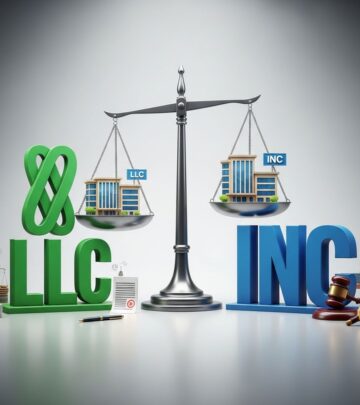
Comparing LLC to Other Business Structures
To determine whether an LLC is the right choice for your business, it is helpful to compare it to other common business structures.
| Aspect | LLC | Sole Proprietorship | Partnership | Corporation |
|---|---|---|---|---|
| Liability Protection | Yes | No | Limited (General Partnership) | Yes |
| Taxation | Pass-through (flexible) | Pass-through | Pass-through | Double (C-corp); Pass-through (S-corp) |
| Formation Complexity | Low-Medium | Very Low | Low | High |
| Administrative Burden | Low-Medium | Very Low | Low | High |
| Capital Raising | Moderate | Limited | Limited | Excellent |
| Cost to Form | $100-$500 | $0-$100 | $200-$500 | $500-$2,000+ |
Frequently Asked Questions About LLCs
Q: Can a single person form an LLC?
A: Yes, single-member LLCs are permitted in all U.S. states. A single-member LLC is treated as a sole proprietorship for tax purposes unless you elect otherwise with the IRS.
Q: What is the cost of forming an LLC?
A: Formation costs typically include state filing fees (ranging from $50 to $500), legal fees if you hire an attorney (typically $300-$1,500), and optional costs such as business license fees and registered agent services. Total costs usually range from $100 to $1,000 depending on state and services used.
Q: How long does it take to form an LLC?
A: Standard processing times vary by state, typically ranging from 1 to 7 business days. Expedited filing options are available in some states for additional fees, reducing processing time to 24 hours or less.
Q: Do I need an operating agreement for my LLC?
A: While not legally required in most states, an operating agreement is highly recommended. It clarifies member rights and responsibilities, helps prevent disputes, and demonstrates serious business organization to creditors and investors.
Q: Can an LLC have foreign members?
A: Yes, most states allow non-U.S. citizens and foreign entities to become LLC members. However, they may be subject to additional tax requirements and federal regulations.
Q: What happens to an LLC if a member leaves?
A: This depends on your operating agreement and state law. Some LLCs automatically dissolve when a member departs, while others allow remaining members to continue operating. A well-drafted operating agreement should address this scenario clearly.
Q: Can I convert my sole proprietorship to an LLC?
A: Yes, converting a sole proprietorship to an LLC is straightforward in most cases. You file Articles of Organization with your state, obtain a new EIN, and transfer assets to the LLC. This is generally treated as a non-taxable event.
Q: Does an LLC need to have a board of directors?
A: No, unlike corporations, LLCs are not required to have a board of directors. Instead, LLCs can be member-managed (all members participate in management) or manager-managed (designated managers handle operations).
Conclusion
Forming a Limited Liability Company offers entrepreneurs a balanced approach to business organization, combining liability protection with operational flexibility and favorable tax treatment. By understanding the fundamentals of LLC formation, the advantages and disadvantages of this structure, and the ongoing operational requirements, business owners can make informed decisions about whether an LLC is the right choice for their venture. While the formation process is relatively straightforward, taking time to properly establish your LLC—including creating a comprehensive operating agreement and maintaining separate finances—will help protect your personal assets and set your business up for long-term success.
References
- Limited Liability Company (LLC) — U.S. Small Business Administration (SBA). 2025. https://www.sba.gov/business-guide/launch-your-business/choose-business-structure
- How to Form an LLC — Internal Revenue Service (IRS). 2024. https://www.irs.gov/businesses/small-businesses-self-employed/limited-liability-company-llc
- Uniform Limited Liability Company Act — Uniform Law Commission. 2006. https://www.uniformlaws.org/
- LLC Formation and Operating Agreement Guide — National Federation of Independent Business (NFIB). 2024. https://www.nfib.com/business-resources
- Self-Employment Tax for LLC Members — Internal Revenue Service (IRS). 2024. https://www.irs.gov/businesses/small-businesses-self-employed/self-employment-tax-social-security-and-medicare-tax
- State LLC Formation Requirements and Fees — National Association of Secretaries of State (NASS). 2024. https://www.nass.org/
Similar Articles








Read full bio of medha deb