Navigating Financial Relief: Comparing Bankruptcy and Debt Consolidation
Understand the key differences between bankruptcy and debt consolidation to make the right financial decision.
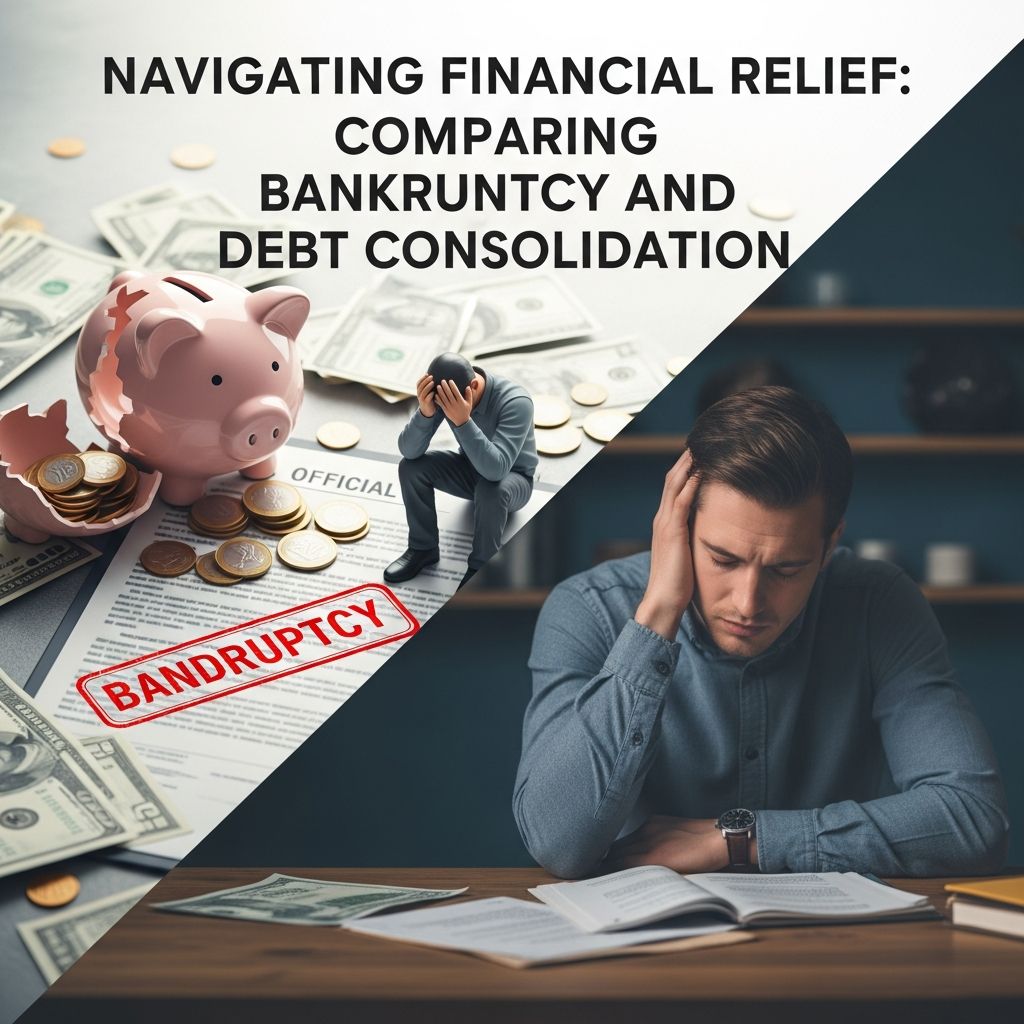
When facing mounting debt and financial pressure, individuals often find themselves at a crossroads, forced to choose between different paths toward financial recovery. Two prominent options that emerge in these challenging circumstances are bankruptcy and debt consolidation. While both strategies aim to address overwhelming debt, they operate through fundamentally different mechanisms and carry distinctly different consequences for your financial future. Understanding the nuances between these two approaches is essential for making an informed decision that aligns with your specific circumstances, income level, and long-term financial goals.
Understanding the Fundamental Mechanisms
Debt consolidation and bankruptcy represent two distinctly different approaches to managing financial distress, each operating under different legal and financial frameworks. These solutions address debt in contrasting ways, which is why understanding their core mechanics is crucial for anyone considering either option.
How Debt Consolidation Works
Debt consolidation functions as a private financial arrangement designed to simplify your debt management structure. This strategy involves combining multiple existing debts into a single, unified payment structure. Typically, this occurs through obtaining a new loan that pays off your various creditors, leaving you with one primary obligation rather than juggling numerous monthly payments. The consolidation loan may carry a lower interest rate than your original debts, which could result in reduced monthly payments and potentially lower total interest costs over the repayment period.
The consolidation process remains a private transaction between you and a lending institution or financial service provider. It does not involve court proceedings or government oversight, making it a more straightforward process in terms of administrative requirements. You maintain control over your financial decisions, and the arrangement depends primarily on your ability to secure appropriate financing terms.
How Bankruptcy Functions
Bankruptcy, by contrast, is a formal legal process administered through federal courts. Rather than simply reorganizing existing debt, bankruptcy allows for either the elimination or substantial restructuring of your financial obligations under the protection of federal law. The most common bankruptcy filing types for individuals are Chapter 7 and Chapter 13, each offering different pathways and protections.
Chapter 7 bankruptcy typically involves a liquidation process where eligible assets may be sold to satisfy creditor claims, with remaining unsecured debts being discharged. Chapter 13 bankruptcy, conversely, establishes a court-supervised repayment plan that generally spans three to five years, allowing you to repay debts at levels you can actually afford. The critical distinction is that bankruptcy provides formal legal protections that debt consolidation cannot offer.
Credit Score Impact and Recovery Timeline
The impact on your credit profile represents one of the most significant differences between these two approaches, with profound implications for your financial future.
Debt Consolidation’s Credit Effects
Debt consolidation typically causes an initial, temporary decline in your credit score when you apply for the consolidation loan. This dip occurs because lenders conduct a hard inquiry into your credit history, and opening a new credit account temporarily affects your credit metrics. However, this negative impact is generally modest and temporary in nature. As you consistently make on-time payments on your consolidation loan, your credit score typically begins to recover and improve over time. Many individuals find that within months of maintaining regular payments, their credit profile strengthens considerably.
This recovery potential makes debt consolidation particularly attractive for those who still possess relatively healthy credit standing and want to avoid more severe credit damage.
Bankruptcy’s Credit Consequences
Bankruptcy creates far more severe and lasting damage to your credit profile. A bankruptcy filing remains visible on your credit report for seven to ten years, depending on the chapter filed, creating a substantial barrier to obtaining favorable credit terms during this extended period. The initial credit score impact is typically severe, with some individuals experiencing drops of 100 points or more.
However, it’s important to note that bankruptcy filing alone does not permanently destroy your ability to rebuild creditworthiness. While the bankruptcy notation remains on your record, individuals have demonstrated the capacity to rebuild their credit scores substantially within 12 to 24 months after discharge by obtaining secured credit cards, making timely payments, and gradually reestablishing creditworthy behavior.
Eligibility Requirements and Qualification Criteria
The path to accessing each option involves different requirements and qualification hurdles.
Qualifying for Debt Consolidation
Accessing debt consolidation typically requires maintaining at least a fair credit score and demonstrating stable income. Lenders need to be confident that you can reliably make payments on the consolidation loan, making employment stability and income verification critical components of the application process. This requirement effectively excludes individuals with severely damaged credit profiles or unstable income situations from accessing traditional debt consolidation solutions.
Bankruptcy Eligibility Considerations
Bankruptcy eligibility involves a different set of criteria, primarily centered on a means test that evaluates your income level relative to your state’s median income. This test determines whether you qualify for Chapter 7 (liquidation) or must pursue Chapter 13 (reorganization). Unlike debt consolidation, bankruptcy does not require good credit, making it accessible to individuals whose credit has already been severely damaged by missed payments, defaults, or other financial crises.
Comparing Key Characteristics
| Characteristic | Debt Consolidation | Bankruptcy |
|---|---|---|
| Process Type | Private financial arrangement through a lender | Federal legal proceeding overseen by courts |
| Debt Handling | Combines multiple debts into one payment; debt amount remains unchanged | Chapter 7: Eliminates unsecured debts; Chapter 13: Restructures debts into affordable repayment plan |
| Credit Impact | Temporary decrease; can improve with consistent on-time payments | Significant, long-lasting damage; remains on credit report 7-10 years |
| Creditor Protections | No automatic legal protection; creditors can continue collection actions | Automatic stay halts lawsuits, garnishments, foreclosures, and collection calls |
| Asset Protection | Depends on collateral requirements of consolidation loan | Chapter 13 protects primary assets; Chapter 7 may require asset liquidation |
| Timeline | Variable; depends on loan terms | Chapter 13: 3-5 years; Chapter 7: 3-6 months average |
| Public Record | Remains private between you and lender | Public court filing; accessible to anyone researching bankruptcy records |
Understanding Legal Protections and Creditor Interactions
One of the most significant distinctions between these approaches involves the legal protections each provides against creditor actions.
Bankruptcy’s Automatic Stay Protection
Upon filing for bankruptcy, an automatic stay goes into effect immediately, creating a powerful legal shield that halts all creditor actions. This protection stops lawsuits against you, prevents wage garnishments, halts foreclosure proceedings, and silences collection calls and letters. This immediate relief provides breathing room during an intensely stressful financial period, allowing you to stabilize your situation under court protection.
The automatic stay remains in effect throughout your bankruptcy proceeding, ensuring that creditors must work within the bankruptcy framework rather than pursuing independent collection actions against you.
Debt Consolidation’s Lack of Creditor Protection
Debt consolidation provides no such automatic legal protection. If consolidation creditors decline to cooperate with your consolidation arrangement, they retain the legal right to pursue collection actions against you. Lawsuits, wage garnishments, and other collection efforts can continue even after you’ve established a consolidation plan. This vulnerability represents a significant weakness of the consolidation approach, particularly for individuals facing active lawsuits or aggressive collection efforts.
Financial Outcomes and Debt Reduction Potential
The actual financial outcomes of each approach differ substantially in terms of total debt reduction and long-term financial impact.
Consolidation’s Payment Simplification
Debt consolidation primarily functions as a payment simplification tool. While it may reduce your monthly payment amount through a lower interest rate, the total debt you must repay typically remains unchanged. You’re essentially reorganizing the same financial obligation into a more manageable payment structure, not reducing the underlying debt amount. Over time, if you don’t address your spending patterns, consolidated debt can actually grow due to accumulated interest and additional charges.
Bankruptcy’s Debt Elimination Capacity
Bankruptcy offers genuine debt reduction capability. Chapter 7 bankruptcy completely eliminates most unsecured debts, including credit card balances, medical bills, and personal loans. Chapter 13 bankruptcy reduces your total debt obligation through a court-approved plan that requires payment of only what you can afford, with remaining balances often discharged after the repayment period concludes. Additionally, once you file for Chapter 13 bankruptcy, your existing debt stops accruing interest and late fees, allowing your payments to actually reduce principal amounts rather than servicing perpetually growing interest.
Determining Which Option Suits Your Situation
When Debt Consolidation Makes Sense
Debt consolidation represents an appropriate choice if you:
- Maintain steady, reliable income and employment stability
- Possess fair to good credit standing (generally a FICO score of 650 or above)
- Are current on your debt payments or only slightly behind
- Face no active lawsuits or foreclosure proceedings
- Want to avoid the credit damage and public record implications of bankruptcy
- Can qualify for a consolidation loan with genuinely favorable interest rate terms
When Bankruptcy Becomes Necessary
Bankruptcy becomes the more appropriate option when you:
- Are significantly behind on debt payments and cannot realistically catch up
- Face foreclosure or repossession threats
- Are experiencing active lawsuits or wage garnishment proceedings
- Have poor credit scores (generally below 670) making consolidation financing unavailable
- Have already attempted other debt relief strategies without meaningful improvement
- Face genuine financial hardship with insufficient income to support debt repayment
- Have explored consolidation options but cannot qualify for favorable terms
Frequently Asked Questions
Can I consolidate debt if I have poor credit?
Traditional debt consolidation typically requires at least fair credit standing. However, if your credit has deteriorated significantly, you might explore alternatives such as debt management programs through nonprofit credit counseling agencies, though these offer less protection than bankruptcy. If consolidation truly isn’t accessible and your financial situation is severe, bankruptcy may represent your most viable path forward.
How long does bankruptcy remain on my credit report?
Chapter 7 bankruptcy typically appears on your credit report for ten years from the filing date, while Chapter 13 bankruptcy generally remains for seven years. However, many individuals successfully rebuild their credit profiles substantially within the first two years following discharge, even while the bankruptcy notation still appears on their report.
Will consolidating my debt stop creditor calls?
Debt consolidation does not automatically stop creditor harassment or collection attempts. Only bankruptcy’s automatic stay provides legal protection that compels creditors to cease collection efforts. Once your consolidation loan is funded and creditors are paid off, calls should cease, but during the consolidation process, creditors retain their right to pursue collection actions.
Can I protect my home or car through bankruptcy?
Chapter 13 bankruptcy specifically protects your primary residence and vehicle as long as you maintain payments within your court-approved repayment plan. Chapter 7 bankruptcy may result in asset liquidation to satisfy creditor claims, though many states provide exemptions protecting primary residences and vehicles up to certain values. Consulting with a bankruptcy attorney can clarify what protections apply in your specific jurisdiction.
Is bankruptcy truly a fresh start?
Bankruptcy provides a legal fresh start by discharging debts, but it does not erase the historical record of your financial struggles. While bankruptcy eliminates the legal obligation to repay discharged debts, the bankruptcy notation remains visible on credit reports for years, affecting your borrowing capacity during the recovery period. However, many individuals find that despite this notation, they can rebuild creditworthiness through disciplined financial management.
Making Your Decision
Choosing between bankruptcy and debt consolidation demands careful consideration of your specific financial circumstances, credit profile, income stability, and the severity of your financial distress. While debt consolidation generally produces less credit damage and remains preferable when accessible, it only works if you can qualify for financing and if your creditors cooperate with the arrangement. Bankruptcy, though more severe in its immediate credit impact, offers comprehensive debt elimination or reduction capabilities and powerful legal protections that consolidation cannot provide.
Neither option represents a perfect solution, but both can help you transition from financial crisis to eventual stability. The optimal choice depends entirely on matching the tool to your particular situation, which is why consulting with a financial advisor or bankruptcy attorney can provide invaluable guidance tailored to your circumstances.
References
- Debt Consolidation Vs. Bankruptcy: Which Is Right For You? — Bankrate. 2024. https://www.bankrate.com/personal-finance/debt/debt-consolidation-vs-bankruptcy/
- Bankruptcy vs Debt Consolidation: Which is Better for You? — Simon Fitzgerald. 2024. https://www.simonfitzgerald.com/general-info-about-bankruptcy/bankruptcy-vs-debt-consolidation/
- Debt Consolidation vs Bankruptcy Whats the Difference — Mid Florida Credit Union. 2024. https://www.midflorida.com/resources/insights-and-blogs/insights/loans-credit/debt-consolidation-vs-bankruptcy-whats-the-difference
- Differences Between Chapter 13 Bankruptcy and Debt Consolidation — Brock and Stout. 2024. https://www.brockandstout.com/blog/differences-between-chapter-13-bankruptcy-and-debt-consolidation/
- Bankruptcy vs. Debt Consolidation: Which Is Better for You? — Experian. 2024. https://www.experian.com/blogs/ask-experian/bankruptcy-or-debt-consolidation-which-is-better-for-you/
- Debt Consolidation vs Bankruptcy (Chapter 13 & Chapter 7) — Scura. 2024. https://www.scura.com/blog/debt-consolidation-vs-bankruptcy-chapter-13-chapter-7/
- Bankruptcy on the Official U.S. Courts Website — United States Courts. 2024. https://www.uscourts.gov/
Similar Articles








Read full bio of Sneha Tete