Bankruptcy Types: 6 Chapters Explained And How They Work
Discover the key bankruptcy chapters, from personal liquidation to business reorganization, and how they impact your financial future.

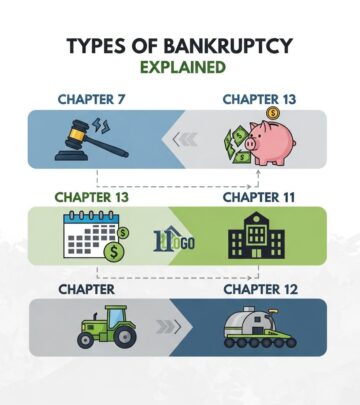
Bankruptcy serves as a federal legal mechanism to help individuals and entities overwhelmed by debt achieve relief through structured processes. Primarily governed by the U.S. Bankruptcy Code, it offers pathways like liquidation of assets or debt reorganization, depending on the chapter filed under. For consumers, Chapters 7 and 13 dominate filings, while others target businesses or specific sectors.
Understanding the Bankruptcy Framework
The U.S. features six bankruptcy chapters, each tailored to distinct filers and debt scenarios. Personal options focus on consumer debts such as credit cards and medical bills, whereas business-oriented chapters address operational continuity. Filing triggers an automatic stay, halting creditor actions like collections or foreclosures, providing immediate breathing room.
Key distinctions arise in how debts—secured (backed by collateral like homes or cars) versus unsecured (like credit cards)—are treated. Exemptions protect essential assets, varying by state, allowing most filers to retain basics like clothing, vehicles up to a value, and retirement funds.
Chapter 7: The Liquidation Option
Chapter 7, known as straight bankruptcy or liquidation, suits low-income individuals unable to repay debts. A court-appointed trustee sells non-exempt assets to pay creditors, discharging remaining eligible unsecured debts without further repayment.
Eligibility hinges on the means test, comparing income to state medians. Those above the median must prove inability to fund a Chapter 13 plan. The process spans 4-6 months, offering swift relief but potentially requiring asset surrender.
- Pros: Rapid discharge of debts like medical bills and credit cards; no repayment plan needed.
- Cons: Possible loss of non-exempt property; stays on credit report for 10 years.
Businesses filing Chapter 7 must cease operations, unlike individuals who continue normal life post-discharge.
Chapter 13: Reorganization for Wage Earners
Chapter 13 enables individuals with regular income to keep assets while repaying debts over 3-5 years via a court-approved plan. Ideal for those failing the Chapter 7 means test or aiming to retain homes/cars by catching up on arrears.
Plans prioritize secured debts and priority unsecured claims (e.g., taxes), with remaining unsecured debts often partially paid or discharged. Filers propose plans based on disposable income, confirmed by the court after creditor input.
| Aspect | Chapter 7 | Chapter 13 |
|---|---|---|
| Duration | 4-6 months | 3-5 years |
| Asset Handling | Liquidates non-exempt | Retains all if plan followed |
| Eligibility | Means test pass | Regular income, debt limits |
| Debt Discharge | Quick, most unsecured | After plan completion |
This table highlights core differences, aiding decision-making.
Business and Specialized Bankruptcies
Chapter 11: Reorganization for Enterprises
Chapter 11 allows businesses to restructure debts while operating, proposing plans to creditors for approval. High-net-worth individuals may also qualify. It involves complex negotiations, often costly, but preserves going concerns.
Unlike Chapter 7, assets remain with the debtor (debtor-in-possession), enabling continuity. Plans can cram down secured debts or extend payments.
Chapter 12: Aid for Family Farmers and Fishermen
Designed for family farmers/fishermen with regular income, Chapter 12 mirrors Chapter 13 but offers flexible repayment (up to 5 years) accommodating seasonal cash flows. Debts reorganize, with discharge of unpaid balances post-plan.
Chapter 9: Municipal Debt Adjustment
Exclusively for municipalities like cities or counties, Chapter 9 facilitates debt restructuring without liquidation. It requires creditor consent and state authorization, protecting public services.
Chapter 15: Cross-Border Cases
Chapter 15 coordinates U.S. courts with foreign bankruptcy proceedings involving U.S. assets. It promotes international cooperation without primary adjudication.
Impacts on Credit and Rebuilding Strategies
Bankruptcy notations linger: Chapter 7 for 10 years, Chapter 13 for 7 years on credit reports, complicating loans and rentals initially. Scores drop significantly but recover with positive behaviors.
- Secure a secured credit card or credit-builder loan post-discharge.
- Pay bills on time and keep utilization low.
- Monitor reports for errors via AnnualCreditReport.com.
Many lenders view post-bankruptcy filers favorably after 2 years, especially with steady employment.
Navigating Eligibility and Filing Steps
All filers complete credit counseling from approved agencies within 180 days pre-filing. Schedules detail assets, debts, income, expenses. Attorney representation is advisable, though pro se possible.
- Gather financial documents.
- Complete counseling.
- File petition and schedules.
- Attend 341 meeting with trustee.
- Complete plan (if Chapter 13) or await discharge.
Costs include filing fees (~$300-$350) plus attorney fees varying by chapter/complexity.
Common Myths and Realities
Myth: Bankruptcy erases all debts. Reality: Non-dischargeable debts like student loans, child support, most taxes persist.
Myth: You lose everything. Reality: Exemptions shield most assets for typical filers.
Frequently Asked Questions
What debts survive bankruptcy?
Student loans (unless undue hardship proven), alimony, child support, recent taxes, and fraud-related debts typically remain.
Can I file bankruptcy more than once?
Yes, but waiting periods apply: 8 years between Chapter 7s, 2-4 years between 7 and 13.
Does bankruptcy stop foreclosure?
The automatic stay halts it temporarily; Chapter 13 allows curing arrears.
How soon can I buy a home after bankruptcy?
2-4 years for conventional loans, sooner with FHA/VA.
Is bankruptcy public record?
Yes, accessible via PACER, but not routinely publicized.
Choosing the Right Path Forward
Assess income, assets, and goals: opt for Chapter 7 for quick unsecured debt wipeout if eligible; Chapter 13 to save property. Consult professionals for personalized advice, as outcomes vary by jurisdiction and circumstances. Bankruptcy, while stigmatized, equips millions for fresh starts annually.
References
- Every Type of Bankruptcy Explained — Upsolve. 2023. https://upsolve.org/learn/every-type-of-bankruptcy-explained/
- Your Guide to Bankruptcy for Individuals — Illinois State Bar Association. 2023. https://www.isba.org/public/guide/bankruptcy
- What Are the Types of Bankruptcy? — Experian. 2023. https://www.experian.com/blogs/ask-experian/what-are-the-types-of-bankruptcy/
- Personal Bankruptcy — EBSCO Research Starters. 2023. https://www.ebsco.com/research-starters/business-and-management/personal-bankruptcy
- Which type of bankruptcy should I file? — People’s Law Library. 2023. https://www.peoples-law.org/node/496/printable/print
- Bankruptcy Basics — United States Courts. 2023-10-01. https://www.uscourts.gov/court-programs/bankruptcy/bankruptcy-basics
Similar Articles








Read full bio of Sneha Tete