Bankruptcy’s Lasting Mark on Your Credit Report
Discover how long bankruptcy lingers on your credit history, its score impact, and proven strategies to rebuild financial standing effectively.
Declaring bankruptcy offers a legal pathway to manage overwhelming debt, but it leaves a significant footprint on your credit profile. This public record signals to lenders a history of financial distress, typically resulting in an immediate and substantial decline in credit scores. The duration and severity depend on the bankruptcy chapter filed and your pre-filing credit health.
Understanding the Core Effects on Credit Scores
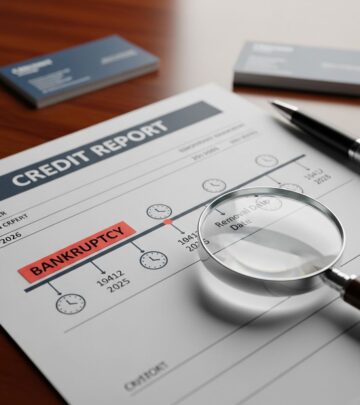
When you file for bankruptcy, credit bureaus like Experian, Equifax, and TransUnion record it as a major derogatory item. This entry overshadows other positive factors in scoring models such as FICO, which prioritize payment history above all. Expect an initial plunge because the filing indicates an inability to meet prior obligations, prompting lenders to view you as higher risk.
The drop’s magnitude varies widely. Individuals with strong scores above 780 might lose 200 to 240 points, landing in the poor range and complicating access to favorable loans. Those with middling scores around 680 could see reductions of 130 to 150 points. If your score was already low due to delinquencies, the hit might be milder, around 100 to 200 points, as the bankruptcy consolidates existing negatives.
Chapter 7 vs. Chapter 13: Key Differences in Credit Consequences
Not all bankruptcies impact credit identically. Chapter 7, often called liquidation bankruptcy, wipes out unsecured debts like credit cards but stays on reports for a full 10 years from filing. It aggressively discharges obligations, potentially resetting your financial slate but with prolonged visibility to creditors.
Chapter 13, a reorganization plan, allows debt repayment over 3-5 years and remains visible for 7 years. This shorter timeline reflects the partial repayment effort, which some models view slightly less harshly. However, both types trigger similar initial drops of 160-220 points.
| Aspect | Chapter 7 | Chapter 13 |
|---|---|---|
| Report Duration | 10 years | 7 years |
| Typical Score Drop | 160-240 points | 100-220 points |
| Debt Handling | Liquidation/Discharge | Repayment Plan |
| Post-Filing Access | Limited unsecured credit | Possible secured retention |
Short-Term Disruptions: What Happens Right After Filing
Upon filing, your score plummets almost instantly as bureaus update records. Discharged accounts shift to a “zero balance” status, but the bankruptcy notation dominates. Credit utilization may paradoxically worsen initially if revolving accounts close without new credit lines, pushing ratios higher.
- Access Restrictions: Lenders freeze new applications until discharge, often denying unsecured credit.
- Utilization Spike: Loss of limits increases ratios, a key score factor comprising 30% of FICO.
- First-Year Focus: Scores bottom out within months, emphasizing the need for stability.
Paradoxically, some see modest gains post-discharge. Studies note average improvements of 69 points within a month due to erased delinquencies and lower debt loads. This reset can outperform ongoing collections.
Medium-Term Recovery: Timeline and Expectations
From one to three years post-filing, proactive habits drive rebound. Consistent on-time payments on remaining obligations rebuild payment history, the heaviest FICO weight. As the bankruptcy ages, its relative weight diminishes against new positive data.
Scores often climb significantly by year three if you avoid new negatives. Lower utilization from debt discharge aids this, freeing cash flow for timely bills. Expect gradual progress: from sub-500 to fair ranges (580-669) with diligence.
Long-Term Outlook: Beyond the 7-10 Year Shadow
Even as the notation persists up to 10 years, its scoring influence fades after 3-5 years amid robust rebuilding. By year 7, many achieve good scores (670+), qualifying for competitive rates. Full removal marks a clean slate, though habits formed matter more than erasure.
For those starting low, bankruptcy can catalyze improvement by halting collections and enabling focus on essentials. High starters face steeper climbs but recover comparably with effort.
Practical Tactics to Accelerate Credit Rebuilding
Rebound requires strategy. Start with free annual credit reports from AnnualCreditReport.com to verify accuracy and track progress.
- Secured Cards: Deposit-backed cards report positive activity without risk, ideal first step.
- Become Authorized User: Piggyback on a trusted person’s excellent account for instant boost.
- Utility Payments: Request reporting for on-time bills to pad history.
- Debt Management: Avoid new debt; maintain utilization under 30%.
Credit-builder loans, where payments build savings and history, offer structured gains. Experian Boost incorporates alternative data like streaming payments for extras lift.
Common Myths About Bankruptcy and Credit
- Myth: Bankruptcy Ruins Credit Forever. False—impact lessens over time with good habits.
- Myth: Better Than Collections. Often true; stops multiple negatives.
- Myth: No New Credit Possible. Secured options exist immediately post-discharge.
Frequently Asked Questions
How soon can I get a mortgage after bankruptcy?
Waiting periods vary: 2-4 years for FHA/VA post-Chapter 13 discharge, 4 years for conventional after Chapter 7.
Does bankruptcy affect employment?
Rarely directly, but finance roles may check reports; focus industries.
Can I file bankruptcy again if needed?
Chapter 7 requires 8-year gap; Chapter 13, 2-6 years depending on prior type.
Will renting be harder?
Landlords review reports; offer larger deposits or co-signers to mitigate.
What’s the fastest rebuild path?
Secured credit, on-time payments, low utilization—gains visible in 6-12 months.
Strategic Financial Moves Post-Bankruptcy
Beyond credit, cultivate budgeting via apps tracking expenses. Emergency funds prevent relapse. Consult NFCC-certified counselors for plans. Over time, scores reflect resilience, not just history.
Bankruptcy, while daunting, provides discharge absent in alternatives like debt settlement, where forgiven amounts count as taxable income. View it as a tool, not defeat, positioning for stability.
References
- How Bankruptcy Affects Your Credit Score — O’Connell & Aronowitz. 2023. https://oalaw.com/blog/bankruptcy/how-bankruptcy-affects-your-credit-score/
- How Does Bankruptcy Affect Your Credit Score? — Lewis Van Sickle. 2024. https://lewisvansickle.com/blog/how-does-bankruptcy-affect-your-credit-score/
- Understanding the Impact of Bankruptcy on Your Credit Score — Matthews & Megna. 2023. https://www.matthewsandmegna.com/posts/understanding-the-impact-of-bankruptcy-on-your-credit-score
- How Will Filing Bankruptcy Impact My Credit Score? — Debt.org. 2025-01-15. https://www.debt.org/bankruptcy/how-will-filing-bankruptcy-impact-my-credit-score/
- How Does Filing Bankruptcy Affect Your Credit? — Experian. 2025. https://www.experian.com/blogs/ask-experian/how-does-filing-bankruptcy-affect-your-credit/
- Bankruptcy and Your Credit Score FAQs — Nolo. 2024. https://www.nolo.com/legal-encyclopedia/bankruptcy-your-credit-faq.html
- Will Bankruptcy Ruin My Credit Score? — Acker Warren. 2024. https://www.ackerwarren.com/blog/will-bankruptcy-ruin-my-credit-score
Similar Articles








Read full bio of Sneha Tete