Bankruptcy: Definition, Types, and Legal Process
Complete guide to bankruptcy: Understanding types, processes, and financial implications for individuals and businesses.

What is Bankruptcy?
Bankruptcy is a legal process that allows individuals, businesses, and other entities to seek relief from overwhelming debt when they are unable to pay their creditors. The bankruptcy process is governed by federal law and provides debtors with a formal mechanism to either reorganize their finances and repay debts under a court-supervised plan, or liquidate their assets to satisfy creditor claims. When someone or a business files for bankruptcy, it triggers an automatic stay that halts collection activities, wage garnishments, and other creditor actions, providing temporary protection while the bankruptcy case proceeds.
The primary goal of bankruptcy is to give debtors a fresh financial start by either eliminating eligible debts entirely or establishing a manageable repayment schedule. For creditors, bankruptcy ensures an orderly and fair distribution of available assets according to established priority rules, rather than allowing individual creditors to pursue collection actions that might benefit some creditors at the expense of others.
Understanding Insolvency vs. Bankruptcy
It is important to distinguish between insolvency and bankruptcy, as these terms are often confused. Insolvency is a financial condition where a person or business has liabilities exceeding assets, meaning they lack sufficient resources to pay their debts. Bankruptcy, by contrast, is a legal status that results from filing a petition in court. A debtor may be insolvent without being bankrupt, and conversely, not all bankruptcies involve insolvency in the strictest sense. Insolvency is essentially the financial problem, while bankruptcy is the legal solution.
Types of Bankruptcy
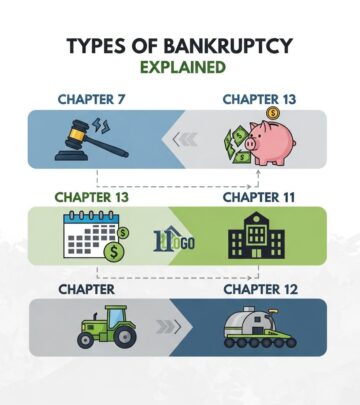
The bankruptcy code provides several chapters, each designed for different situations and types of debtors. The most common types are:
Chapter 7 Bankruptcy
Chapter 7 bankruptcy, often called “liquidation bankruptcy,” is the most common form of bankruptcy filing for individuals. In a Chapter 7 filing, a bankruptcy trustee is appointed to liquidate the debtor’s non-exempt assets and distribute the proceeds to creditors according to priority rules. Most consumer debts, including credit card balances, medical bills, and personal loans, can be discharged through Chapter 7. However, certain debts cannot be discharged, including student loans (with limited exceptions), child support, alimony, recent tax obligations, and court fines.
The benefits of Chapter 7 include relatively quick resolution, typically completed within three to six months, and the elimination of unsecured debts. The primary disadvantage is that non-exempt assets may be seized and sold. Additionally, Chapter 7 has income limitations; higher-income debtors may be required to use Chapter 13 instead through a means test evaluation.
Chapter 11 Bankruptcy
Chapter 11 bankruptcy is primarily designed for businesses, though individuals with significant debts may also file under this chapter. Unlike Chapter 7’s liquidation approach, Chapter 11 focuses on business reorganization, allowing the debtor to continue operating while creating a plan to repay creditors over time. This chapter is commonly used by large corporations experiencing financial difficulties, as it provides flexibility in restructuring operations, renegotiating contracts, and reducing debt burdens.
Chapter 11 proceedings are complex, lengthy, and expensive, often taking several years to complete. The business typically remains under “debtor in possession” status, meaning management retains control of operations while working with creditors to develop an acceptable reorganization plan. Chapter 11 is less commonly used by individuals due to its complexity and costs.
Chapter 13 Bankruptcy
Chapter 13 bankruptcy, also called “reorganization bankruptcy” or “wage earner’s plan,” is designed for individuals with regular income who wish to repay their debts through a court-approved repayment plan. Rather than liquidating assets, the debtor proposes a plan to repay creditors over three to five years, typically through monthly payments to a bankruptcy trustee who then distributes funds to creditors.
Chapter 13 is advantageous for those who have missed mortgage or car payments and wish to catch up, as the plan can accommodate these arrearages. It also allows debtors to retain their assets and may provide protection against foreclosure. However, Chapter 13 requires sufficient income to support a feasible repayment plan, and the process is longer than Chapter 7, with ongoing court involvement throughout the repayment period.
Chapter 12 Bankruptcy
Chapter 12 bankruptcy is a specialized form designed exclusively for family farmers and fishing operations with regular income. It operates similarly to Chapter 13 but with provisions tailored to agricultural operations, including favorable treatment of farm debt and extended repayment periods that may exceed five years.
The Bankruptcy Filing Process
Filing for bankruptcy involves several important steps and requirements:
- Credit Counseling: Before filing, debtors must complete a credit counseling course from an approved agency within 180 days of filing. This requirement aims to educate debtors about debt management alternatives.
- Petition Preparation: The debtor (or their attorney) must complete detailed bankruptcy petitions and schedules disclosing all assets, liabilities, income, expenses, and financial transactions. These documents must be accurate and complete.
- Filing and Automatic Stay: Once the petition is filed with the bankruptcy court, an automatic stay takes effect immediately, halting most collection activities, lawsuits, wage garnishments, and foreclosure proceedings.
- Trustee Appointment: A bankruptcy trustee is assigned to oversee the case, manage assets (in liquidation cases), and ensure compliance with bankruptcy laws.
- Meeting of Creditors: Also called the “341 meeting,” this is a formal meeting where the trustee and creditors can question the debtor about their financial situation and the information provided in bankruptcy schedules.
- Debt Discharge or Repayment Plan: In Chapter 7, eligible debts are discharged. In Chapter 13 or 11, the court approves a repayment plan that the debtor must follow.
- Financial Management Course: Before discharge, debtors must complete an approved financial management educational course.
Impact of Bankruptcy on Credit
Filing for bankruptcy has significant consequences for a debtor’s credit profile. A bankruptcy filing appears on credit reports and severely damages credit scores, potentially reducing scores by 100-200 points or more, depending on the initial score. The impact diminishes over time, but the bankruptcy record remains on credit reports for seven to ten years, depending on the chapter filed.
The negative credit impact affects the ability to obtain new credit, secure favorable interest rates on loans, rent housing, and in some cases, obtain employment. However, many individuals find that rebuilding credit after bankruptcy is faster than anticipated, as some lenders specialize in post-bankruptcy financing, and credit scores can recover within two to three years with responsible financial management.
Advantages and Disadvantages of Bankruptcy
| Advantages | Disadvantages |
|---|---|
| Elimination or reduction of overwhelming debt | Severe damage to credit score and rating |
| Automatic stay stops collection actions and harassment | Bankruptcy appears on credit reports for 7-10 years |
| Fresh financial start through debt discharge | Loss of non-exempt assets in Chapter 7 |
| Protection against wage garnishment | Difficulty obtaining credit at reasonable rates |
| Legal protection against lawsuits by creditors | Higher insurance premiums and employment challenges |
| Opportunity to restructure business (Chapter 11) | Court fees and attorney costs involved in filing |
Alternatives to Bankruptcy
Before resorting to bankruptcy, individuals and businesses should explore alternatives:
- Debt Consolidation: Combining multiple debts into a single loan with potentially lower interest rates.
- Negotiation with Creditors: Working directly with creditors to reduce interest rates, extend payment terms, or settle for less than owed.
- Credit Counseling: Professional guidance on budgeting, debt management, and financial planning.
- Debt Management Plans: Structured programs that negotiate with creditors on behalf of the debtor.
- Forbearance or Deferment: Temporarily reducing or pausing payments on specific debts, particularly student loans.
- Loan Modification: Restructuring mortgage terms to make payments more manageable.
Debts That Cannot Be Discharged
Certain obligations cannot be eliminated through bankruptcy, regardless of the chapter filed:
- Child support and alimony obligations
- Most federal and state income taxes within a certain timeframe
- Student loans (though exceptions exist for undue hardship)
- Criminal fines and restitution orders
- Debts from fraud or willful injury
- HOA fees and property taxes
- Court-imposed fines
Bankruptcy for Businesses
When businesses file for bankruptcy, the process differs from individual filings. Chapter 7 results in business liquidation and closure. Chapter 11 allows business reorganization and continued operation. Chapter 13 is not available to businesses. Business bankruptcy can involve complex issues including employee obligations, supplier contracts, and secured lending arrangements. Many businesses use Chapter 11 to restructure operations, renegotiate contracts, and emerge as viable entities, as demonstrated by numerous examples of major corporations that have successfully reorganized through bankruptcy.
Life After Bankruptcy
Recovery from bankruptcy is possible with disciplined financial management. Credit can improve relatively quickly through responsible behavior such as making on-time payments, maintaining low credit card balances, and avoiding new excessive debt. Many individuals successfully rebuild their financial lives within a few years of discharge. However, bankruptcy serves as a permanent reminder of past financial challenges and continues to affect financial decisions and opportunities for an extended period.
Frequently Asked Questions (FAQs)
Q: How long does bankruptcy stay on your credit report?
A: Chapter 7 bankruptcy remains on credit reports for 10 years from the filing date, while Chapter 13 remains for 7 years. However, the impact on credit scores diminishes over time with responsible financial behavior.
Q: Can you file for bankruptcy more than once?
A: Yes, you can file for bankruptcy multiple times, but there are waiting periods between filings. You must wait 8 years between Chapter 7 filings, 4 years between Chapter 13 filings after a Chapter 7, and 2 years between Chapter 13 filings.
Q: Will bankruptcy eliminate all my debts?
A: No. While Chapter 7 can discharge most unsecured debts, certain obligations like child support, student loans, and taxes cannot be eliminated. Chapter 13 involves repayment rather than discharge.
Q: Can I keep my home or car during bankruptcy?
A: It depends on the chapter and whether you continue making payments. Chapter 13 explicitly allows retaining property while paying through a repayment plan. Chapter 7 may allow retention of mortgaged or financed property if you maintain payments.
Q: Do I need an attorney to file for bankruptcy?
A: While not legally required, bankruptcy law is complex, and attorney representation significantly improves outcomes. Many bankruptcy attorneys offer free initial consultations and flexible payment arrangements.
Q: Will bankruptcy affect my job?
A: Federal law prohibits most employers from discriminating against employees solely based on bankruptcy filing. However, certain positions requiring financial trustworthiness or security clearances may be affected.
References
- Bankruptcy Code — United States Congress. 2024. https://www.law.cornell.edu/uscode/text/11
- Bankruptcy Basics — United States Courts. 2024. https://www.uscourts.gov/services-forms/bankruptcy/bankruptcy-basics
- Credit Impact of Bankruptcy — Federal Trade Commission. 2023. https://www.ftc.gov/articles/how-debt-management-and-debt-settlement-works
- Chapter 7 and Chapter 13 Bankruptcy Comparison — American Bar Association. 2024. https://www.americanbar.org/groups/public_services/bankruptcy_insolvency_reorganization_practice/
- Nondischargeable Debts in Bankruptcy — United States Courts. 2024. https://www.uscourts.gov/
Similar Articles








Read full bio of medha deb