Banking Trends 2026
Discover the pivotal shifts in banking for 2026, from AI innovations to regulatory demands and payment revolutions.
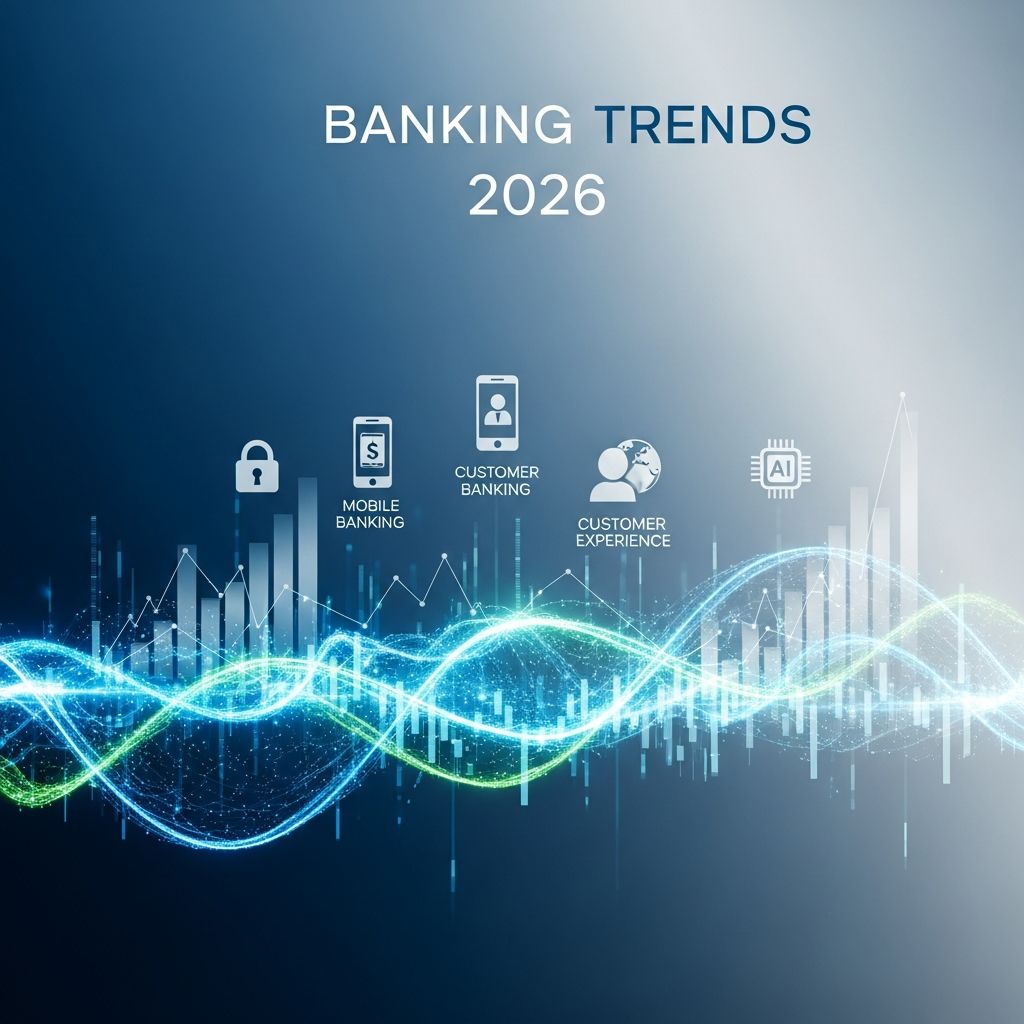
The banking sector in 2026 stands at a transformative crossroads, propelled by rapid technological advancements, evolving regulatory landscapes, and shifting customer expectations. Institutions are no longer just managing transactions; they are redefining financial relationships through intelligent systems and sustainable practices. This article delves into the most influential trends shaping the industry, offering insights into how banks can adapt and thrive.
AI as the Core Engine of Banking Operations
Artificial intelligence has evolved from experimental tools to indispensable assets in banking. In 2026, AI drives predictive analytics, prescriptive advice, and protective measures, enabling banks to anticipate customer needs and safeguard assets proactively. Agentic AI, capable of reasoning and executing complex tasks autonomously, is maturing, handling everything from KYC verification to real-time fraud detection.
Banks are transitioning from generative AI pilots to integrated platforms where AI agents collaborate across systems. This shift supports anticipatory banking, where services are tailored not just to past behaviors but to future probabilities, boosting engagement and revenue.
- Predictive AI: Forecasts customer behaviors to preempt service demands.
- Prescriptive AI: Recommends optimal financial actions, like investment adjustments.
- Protective AI: Monitors for anomalies in real-time, preventing losses.
According to industry analysis, nearly 60% of credit unions and half of banks have deployed generative AI, with agentic systems now on executive agendas.
Regulatory Compliance: From Burden to Strategic Advantage
Compliance is no longer a cost center but a primary business driver in 2026. Banks face heightened scrutiny on ESG factors, climate risks, cybersecurity, and data privacy, necessitating robust frameworks. AI-powered regulatory platforms automate sanctions updates and workflows, reducing costs and enhancing risk management.
Financial crime compliance benefits from autonomous tools that monitor transactions in real-time, ensuring adherence amid complex global regulations. Institutions prioritizing ROI-driven training are better equipped to navigate these changes.
| Regulatory Focus | Key Challenges | AI Solutions |
|---|---|---|
| ESG & Climate Risk | Measuring impact | Data analytics for reporting |
| Cybersecurity | Threat evolution | Behavioral monitoring |
| Data Privacy | Compliance gaps | Automated audits |
Payment Innovations Redefining Transactions
Payments in 2026 emphasize speed, context, and seamlessness. Instant payments, digital wallets, stablecoins, and ISO 20022 standards enable richer data exchange, aiding reconciliation for businesses and consumers. Banks are adopting always-on treasury management, integrating automation into ERP systems for real-time liquidity.
Cross-border payments leverage stablecoins, while value-driven merchant acquiring bundles payments with AI-optimized services, helping banks compete with fintechs. Priorities include open banking (75% of leaders) and embedded finance (58%).
- Digital wallets and instant payments for everyday use.
- Stablecoins for efficient cross-border transfers.
- AI agents projected to manage 15-25% of U.S. e-commerce by 2030.
Hyper-Personalization and Customer Engagement
Customer experiences are hyper-personalized through advanced analytics and AI, delivering tailored offers that drive satisfaction and loyalty. Digital channels—online (96%), mobile (95%)—feature fewer steps, virtual assistants, and consistent interfaces, reducing friction.
Anticipatory banking uses unified data platforms to provide context-rich insights, evolving from disconnected solutions to holistic views. This personalization differentiates banks in a competitive landscape dominated by fintech challengers.
Battle for the Balance Sheet Amid New Competitors
Traditional revenue from deposits and loans, comprising two-thirds of bank income, faces erosion from fintechs, stablecoins, and private credit. Agentic AI empowers customers to optimize funds effortlessly, pressuring banks to reprice products and integrate offerings.
Banks must forge fintech partnerships and shift from silos to ecosystem models to defend liquidity and profitability.
Cybersecurity and Fraud Prevention Evolutions
Fraud risks escalate with digital expansion, prompting digital identity solutions combining verified data and behavioral analysis. Unified fraud intelligence leverages behavioral data for proactive defense. Banks operationalize smarter controls in digital channels for seamless security.
Operational Efficiency Through Technology Integration
Banks overcome legacy systems, data quality issues (89%), and privacy concerns (93%) by executing AI and cloud strategies. Real-time treasury and money-with-context features enhance decision-making. Cloud-powered AI agents and generative tools form the backbone of resilient operations.
Sustainability and ESG Integration
A sharpened focus on ESG integrates climate risk assessments into core strategies, aligning with regulatory demands and investor expectations. Banks modernize learner experiences for staff training on these imperatives.
Future Outlook: Speed with Safeguards
2026 banking thrives on accelerated progress: modernizing channels, payments, and AI while prioritizing trust and utility. Leaders harmonize human expertise with tech for personalized, secure experiences.
Frequently Asked Questions (FAQs)
What are the dominant banking trends in 2026?
Key trends include AI maturation, regulatory emphasis on ESG and cybersecurity, payment modernizations like instant and stablecoin options, and hyper-personalized customer experiences.
How is AI transforming banking operations?
AI enables predictive, prescriptive, and protective functions via agentic systems that automate workflows, enhance KYC, and deliver anticipatory services.
What payment innovations should banks prioritize?
Focus on ISO 20022, digital wallets, stablecoins, open banking, and embedded finance for faster, data-rich transactions.
How are regulations impacting banks in 2026?
Compliance drives business strategy, with AI tools automating responses to ESG, privacy, and financial crime rules.
What challenges threaten traditional bank revenues?
Fintechs, stablecoins, and private credit erode deposit and loan dominance, requiring integrated models and partnerships.
References
- 8 Bank Regulatory Trends of 2026 — OnCourse Learning. 2026. https://www.oncourselearning.com/resources/8-bank-regulatory-trends-2026
- Banking Top Trends 2026 — Capgemini. 2026. https://www.capgemini.com/insights/research-library/banking-top-trends-2026/
- 2026 Banking Trends — KPMG. 2026. https://kpmg.com/us/en/articles/2026/banking-trends.html
- Top Banking Trends for 2026 — Accenture. 2026. https://www.accenture.com/us-en/insights/banking/accenture-banking-trends-2026
- The Top 5 Financial Data Technology Trends and Predictions for 2026 — Alkali. 2026. https://www.alkami.com/blog/the-top-5-financial-data-technology-trends-and-predictions-for-2026/
- Five Payment Trends to Watch for in 2026 — J.P. Morgan. 2026. https://www.jpmorgan.com/insights/payments/trends-innovation/five-payment-trends-in-2026
Similar Articles








Read full bio of Sneha Tete