Banking Identifiers Explained: Routing vs Account Numbers
Master the essential difference between your bank's routing number and your unique account identifier.
When managing your finances, you’ll frequently encounter two numerical codes that work in tandem to process transactions: your routing number and your account number. While these identifiers may seem interchangeable to the uninitiated, they serve distinct and complementary purposes within the banking system. Understanding their differences is essential for anyone who needs to set up direct deposits, arrange wire transfers, pay bills electronically, or manage multiple accounts. This comprehensive guide breaks down what each number represents, how they function together, and why both are crucial for modern banking.
The Foundation: What These Numbers Do
At their core, routing numbers and account numbers are two separate identification systems that financial institutions use to process transactions accurately and securely. The routing number acts as a universal identifier for the bank or credit union itself, while the account number serves as your personal financial identifier within that institution. Together, they create a complete address for your money, ensuring that funds reach their intended destination during any financial transaction.
Think of the relationship between these two numbers as comparable to a mailing address. The routing number functions like the city and state portion of an address, identifying the general location where your money resides. The account number, meanwhile, acts like the specific street address and house number, pinpointing exactly which account receives or sends the funds.
Decoding the Routing Number
A routing number is a nine-digit code that serves as the official identifier for a particular bank or credit union. These numbers are distributed by the American Bankers Association, which is why you may also hear them referred to as ABA routing numbers. Each financial institution receives its own unique routing number, allowing the banking system to direct transactions to the correct institution.
The routing number operates exclusively within the United States banking system and serves a critical function in processing checks and electronic transfers. When you write a check or initiate an electronic transfer, the routing number tells the Federal Reserve and other financial institutions which bank should receive the funds. In many cases, a single routing number serves all customers of a particular bank branch, regardless of their individual account status.
However, larger financial institutions and banks that have undergone mergers sometimes maintain multiple routing numbers. These institutions may have different routing numbers based on factors such as the geographical location where you opened your account, the type of transaction being processed (wire transfers versus ACH transfers), or historical reasons related to bank consolidations. This means that if you maintain accounts at different branches of a large national bank, you might encounter different routing numbers depending on which branch opened your account.
Key characteristics of routing numbers include:
- Always consist of exactly nine digits
- Remain constant across all accounts at a specific bank or branch
- Serve as the official bank identifier in the U.S. banking system
- May vary within larger financial institutions based on location or account type
- Are typically public information that banks willingly share
Understanding Account Numbers
Your account number is a unique identifier assigned specifically to your individual checking or savings account. Unlike routing numbers, which are shared among all customers of a bank, each account receives its own distinct number. This number typically contains between eight and twelve digits, and in some cases may include letters. The account number essentially serves as your personal financial signature, distinguishing your account from millions of others held at the same institution.
Account numbers represent the most sensitive piece of information associated with your bank account. Because this number uniquely identifies your financial account, protecting it is absolutely critical for preventing fraud and unauthorized access to your funds. When you maintain multiple accounts at the same bank—such as both a checking account and a savings account—each account receives its own unique number, even though they share the same routing number.
The account number is assigned directly by your financial institution according to their internal numbering systems and processes. This means that the sequence of digits in your account number follows patterns and logic unique to your specific bank. While routing numbers follow a standardized format established by the American Bankers Association, account numbers can vary significantly in their structure from one bank to another.
Essential features of account numbers include:
- Vary in length from eight to twelve characters
- May include both numbers and letters
- Remain unique to each individual account
- Are assigned by the financial institution internally
- Change when you open new accounts, even at the same bank
- Should be protected as sensitive personal financial information
How These Numbers Work Together
While routing numbers and account numbers serve different purposes, they function as a team in the banking system. When you provide instructions for a financial transaction—whether that’s a direct deposit, bill payment, or wire transfer—you’re essentially giving two pieces of information: the routing number tells the banking system which institution houses your money, and the account number specifies which account within that institution should receive or send the funds.
Consider a typical scenario: Your employer uses your routing and account number to set up direct deposit for your paycheck. The routing number directs your paycheck to the correct bank, while the account number ensures it deposits into your specific account rather than someone else’s account at the same bank. Without both pieces of information, the transaction would fail or reach the wrong destination.
This dual-identifier system provides both efficiency and security. The routing number allows the banking system to quickly locate the correct financial institution, while the account number provides the precise location within that institution where money should be directed. Most financial transactions in the modern banking system—from ACH transfers to electronic bill payments to mobile wallet transactions—rely on this combination of identifiers.
Locating Your Numbers
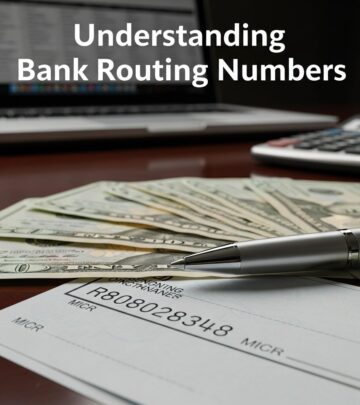
Both your routing and account numbers appear in specific locations that make them relatively easy to locate when you need them. On a paper check, the routing number appears first (on the left), followed by your account number, with the check number appearing last on the right. This standardized format has remained consistent across the banking industry for decades.
Beyond physical checks, you have several other methods for accessing these numbers:
- Online banking portal: Log into your bank’s website and navigate to account details or statement information
- Mobile banking application: Most banks include routing and account numbers in the app’s account information section
- Bank statement: Both numbers typically appear on official statements sent by your bank
- Customer service contact: Call your bank directly and speak with a representative who can provide your numbers
- Bank’s official website: Many banks publish their routing numbers publicly for customer convenience
When You’ll Need These Numbers
Your routing and account numbers become necessary for a variety of important financial transactions and account setup procedures. Understanding which situations require these numbers helps you know when to have them readily available and when to keep them private.
| Transaction Type | Routing Number | Account Number |
|---|---|---|
| Direct Deposit Setup | Required | Required |
| Wire Transfer | Required | Required |
| ACH Transfer | Required | Required |
| Automatic Bill Payment | Required | Required |
| Check Ordering | Not Needed | Required |
| Third-Party Payment Apps | Required | Required |
| In-Branch Deposits | Not Needed | Not Always |
The most common applications for these numbers include enrolling in payroll direct deposit at your workplace, transferring funds between your own accounts at different banks, sending money to friends or family members through electronic transfer services, setting up automatic payments for regular bills, and linking your bank account to financial technology applications like Venmo, Zelle, or PayPal.
Security Considerations and Best Practices
While routing numbers are generally considered public information that banks openly share, account numbers represent highly sensitive personal financial data. The distinction between the sensitivity levels of these two identifiers is important for understanding how to protect your financial information.
Your routing number presents minimal security risk if disclosed. Because a routing number only identifies the bank itself and not a specific account, someone who knows only your routing number cannot access your funds or open unauthorized accounts. You can safely share your routing number with employers, payroll services, and other legitimate financial entities without concern.
Your account number, by contrast, requires careful protection. Anyone who possesses both your routing and account numbers could potentially initiate unauthorized transactions from your account. For this reason, you should never write your account number on checks that will be mailed, avoid sharing it through unsecured communication channels, and be cautious about providing it to businesses with which you’re unfamiliar.
Best practices for protecting your banking information include:
- Never share your account number via email or text message
- Verify that websites are secure (look for “https” and a padlock icon) before entering banking information
- Avoid writing account numbers on documentation unless absolutely necessary
- Shred documents containing banking information before discarding them
- Monitor your account statements regularly for unauthorized transactions
- Use strong, unique passwords for your online banking accounts
- Enable two-factor authentication if your bank offers it
Frequently Asked Questions
Do I need both numbers for every transaction?
Most electronic transactions require both your routing and account numbers to process correctly. However, some transactions conducted in person at a bank branch may only require your account number, since the bank staff already knows the institution’s routing number. For any transaction conducted remotely—whether electronically, by mail, or through a third party—both numbers are typically necessary.
Can a bank have multiple routing numbers?
Yes, particularly large banks and those formed through mergers may maintain multiple routing numbers. Different routing numbers might apply depending on your account’s location, the type of transaction, or historical reasons related to how the bank consolidated its operations. If you’re unsure which routing number applies to your specific account, contact your bank directly.
What happens if I use the wrong routing number?
If you provide an incorrect routing number, your transaction may be delayed or rejected entirely. The funds might be sent to the wrong bank, requiring time to correct and reroute. Always verify the correct routing number for your specific bank and account type before initiating important transactions.
Is my account number the same across all my accounts at one bank?
No. Each account you maintain at a financial institution receives its own unique account number. If you have both a checking account and savings account at the same bank, they will have different account numbers, though they share the same routing number.
Can I find my routing number online?
Yes. Most banks publish their routing numbers on their official websites, and many online databases compile routing numbers for all major U.S. financial institutions. However, ensure you’re using official sources to avoid obtaining incorrect information.
Conclusion: The Complete Banking Picture
Routing numbers and account numbers represent two essential components of modern banking infrastructure. The routing number identifies the financial institution that holds your account, while the account number identifies your specific account within that institution. Together, these two identifiers enable the precise routing of funds through the banking system, whether you’re receiving a paycheck through direct deposit, sending money to another account, or setting up automatic bill payments.
By understanding the purpose, format, and proper use of each number, you can navigate banking transactions with confidence. Remember to treat your account number as sensitive personal information requiring protection, while your routing number can be shared freely with legitimate financial entities. When in doubt about which number to use or how to locate either identifier, don’t hesitate to contact your bank’s customer service department for clarification. This knowledge empowers you to manage your finances securely and efficiently in an increasingly digital banking landscape.
References
- Routing vs. Account Number: What are the Main Differences? — Wise. 2024. https://wise.com/us/blog/routing-vs-account-number
- Routing Number vs. Account Number: What’s the Difference? — Experian. https://www.experian.com/blogs/ask-experian/what-is-the-difference-between-routing-and-account-numbers/
- Routing vs Account Number: What’s the Difference? — SoFi. https://www.sofi.com/learn/content/routing-number-vs-account-number/
- Routing Number vs Account Number: What’s the Difference? — Remitly. https://www.remitly.com/blog/finance/routing-number-account-number/
- Bank Account Number vs. Routing Number: Key Differences — SBI Cal Bank. https://www.sbical.bank/education-center/bank-account-number-vs-routing-number
Similar Articles








Read full bio of medha deb