Bank Trust Departments 101: A Complete Guide
Learn how bank trust departments manage assets, administer trusts, and provide professional fiduciary services for your wealth.
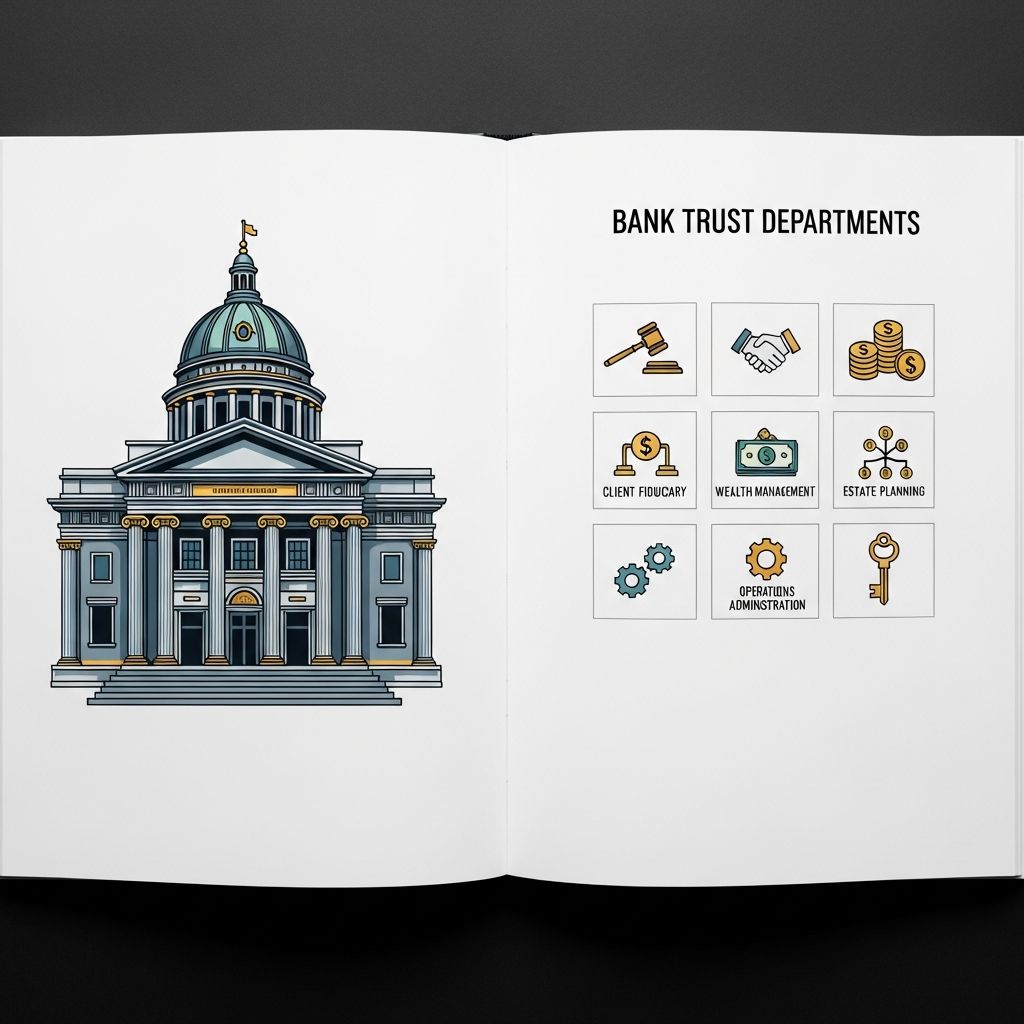
Bank Trust Departments 101: Understanding Professional Wealth Management
Bank trust departments represent one of the oldest and most sophisticated services offered by traditional financial institutions. These specialized divisions combine investment expertise, legal knowledge, and fiduciary responsibility to manage assets and administer trusts on behalf of individuals and families. Understanding how bank trust departments operate is essential for anyone considering establishing a trust or seeking professional asset management services.
A bank trust department functions as a fiduciary entity, meaning it has a legal obligation to act in the best interest of its clients. This distinction sets bank trust departments apart from standard banking services like checking accounts, savings accounts, and loans. Bank trust departments employ trained trust officers and investment professionals who work together to ensure that assets are managed according to the grantor’s wishes and applicable legal requirements.
What Is a Bank Trust Department?
A bank trust department is a specialized division within a financial institution that acts as an agent, fiduciary, and trustee for clients. Nearly every substantial city has at least one bank trust company or trust department offering these professional services. These departments handle various responsibilities that require expertise, objectivity, and strict legal compliance.
Bank trust departments differ from traditional banking because they focus exclusively on fiduciary and trustee services rather than deposit-taking and lending activities. While a traditional bank primarily handles checking accounts, savings accounts, and loan products, a bank trust department specializes in managing assets that clients have placed under trust arrangements.
The scope of a bank trust department’s work encompasses several key functions: managing investment portfolios, administering trust documents, handling distribution of assets to beneficiaries, managing tax compliance, and serving as trustee or co-trustee for various trust arrangements. This comprehensive approach requires ongoing coordination between investment managers, administrative staff, legal professionals, and tax specialists.
Understanding Trusts and Their Purpose
A trust is a legal arrangement where one party (the grantor or settlor) transfers ownership of assets to another party (the trustee) to be held and managed for the benefit of a third party (the beneficiaries). Trusts can vary dramatically in complexity, ranging from straightforward arrangements to intricate structures involving multiple beneficiaries and sophisticated investment strategies.
The primary purposes of establishing a trust typically include:
- Estate tax reduction: Properly structured trusts can minimize estate taxes and maximize wealth transfer to heirs
- Probate avoidance: Assets held in trusts bypass the probate process, reducing delays and costs
- Asset protection: Trusts provide a layer of protection for assets and can shield them from creditors
- Legacy planning: Trusts allow you to specify exactly how and when beneficiaries receive distributions
- Disability planning: Trusts can designate management of your affairs if you become incapacitated
- Family harmony: Clear trust terms reduce confusion and potential family disputes
Many people mistakenly believe that only the extremely wealthy establish trusts. In reality, trusts can be effective wealth management tools for families at virtually any income level. A bank trust department can help tailor a trust structure to match your specific family situation and financial goals.
Core Services Offered by Bank Trust Departments
Bank trust departments typically specialize in two primary service areas: trust administration and investment management. Many also offer executor services and specialized services such as employer retirement plan administration and oil and gas asset management.
Trust Administration Services
Trust administration involves the day-to-day management and oversight of trust operations according to the terms outlined in the trust document. Bank trust departments provide customized solutions that vary based on each client’s unique circumstances and trust requirements.
Key trust administration duties include:
- Asset distributions: Following the grantor’s intentions regarding when, why, and how beneficiaries receive distributions. This is often cited as the most challenging aspect of trust administration, particularly when managing multiple beneficiaries with different needs and expectations.
- Tax compliance: Filing trust tax returns with federal and state tax authorities and ensuring full tax compliance. It’s important to note that bank trust departments typically handle tax filing and compliance but do not provide tax planning strategies. For comprehensive tax planning, many clients benefit from engaging a CPA alongside their bank trust department.
- Record keeping: Maintaining detailed records of all trust transactions, distributions, investments, and administrative actions for transparency and audit purposes.
- Legal compliance: Ensuring that all trust operations comply with applicable state and federal laws, including fiduciary duty requirements.
- Beneficiary communication: Maintaining regular contact with beneficiaries and providing them with necessary information regarding trust performance and distributions.
Investment Management Services
Bank trust departments employ professional investment managers who develop and execute investment strategies tailored to each trust’s specific goals and circumstances. These professionals utilize various investment vehicles to build diversified portfolios.
Investment management services typically include:
- Portfolio construction: Building diversified portfolios using stocks, bonds, mutual funds, and exchange-traded funds (ETFs)
- Specialized asset management: Handling unique or complex assets such as real estate holdings, business interests, oil and gas properties, and other non-traditional investments
- Long-term strategic planning: Developing investment strategies aligned with the trust’s long-term objectives and the beneficiaries’ needs
- Regular monitoring and rebalancing: Continuously monitoring portfolio performance and making adjustments as necessary to maintain desired asset allocations
- Professional expertise: Leveraging the knowledge of experienced portfolio managers to optimize returns within appropriate risk parameters
Additional Fiduciary Roles
Bank trust departments can serve as the sole trustee or as a co-trustee alongside individual family members. The choice between sole trustee and co-trustee arrangements significantly impacts trust governance and decision-making processes.
When serving as a sole trustee, the bank trust department has full authority to make all trust decisions, including distributions and investments. As a co-trustee, the bank works alongside individual trustees, typically providing professional expertise and investment management while individual co-trustees may offer family perspective and input on distribution decisions.
It’s crucial that co-trustee arrangements include clear decision-making protocols. Disagreement between co-trustees regarding distributions and investments can create operational stalemates where nothing gets accomplished. Individual co-trustees often work best when their role is focused on providing guidance, perspective, and oversight rather than having equal decision-making authority on all matters.
Understanding Bank Trust Department Fees
Bank trust departments charge fees for the services they provide, typically structured in two main categories:
1. Investment Management Fees: These fees compensate the trust department for professional investment management services and are typically calculated as a percentage of assets under management. Fees may range based on the size of the portfolio and the complexity of investment management required.
2. Trust Administration Fees: These fees cover the costs of trust administration, including distributions, tax compliance, record keeping, legal compliance, and beneficiary communication. Administration fees may be charged as a flat annual fee, as an hourly rate for services provided, or as a percentage of trust assets.
It’s important to understand that the fees you see quoted typically only include investment management and trust administration costs. Back-office trust operations, marketing expenses, and client educational services represent additional costs that the bank trust department incurs but which are not separately itemized in fee disclosures.
Fee structures and service levels vary significantly among bank trust departments. Premium service providers such as Bessemer Trust, JP Morgan Trust Company, and Northern Trust typically charge higher fees in exchange for personalized white-glove service, sophisticated investment strategies, and comprehensive support. Regional and local bank trust departments may offer more cost-efficient options with fewer frills but still provide competent, professional service.
Choosing the Right Bank Trust Department
Selecting a bank trust department can feel overwhelming given the numerous options available. Many individuals default to using the trust department at their primary banking institution, but this may not represent the best choice for your specific circumstances and needs.
When evaluating potential bank trust departments, consider the following factors:
Assess the Institution’s DNA: Beyond fees, evaluate the fundamental character and values of the bank trust company. Consider its reputation, track record, investment philosophy, and approach to client service. Does the institution align with your values and priorities?
Evaluate Experience and Expertise: Consider the trust department’s experience with trusts similar to yours and their expertise in managing the types of assets your trust will hold. Specialized knowledge matters, particularly for complex asset types.
Consider Service Level: Determine what level of service matches your needs and budget. Premium service providers offer extensive personalized support, while cost-conscious options may provide adequate service with less hand-holding.
Negotiate Fees: Don’t accept quoted fees without negotiation. Many trust departments have flexibility in their fee structures, and demonstrating knowledge of available options strengthens your negotiating position.
Examine the Trust Department’s Stability: Research the institution’s financial stability and longevity. You want a trustee that will remain in operation throughout the trust’s existence.
Review Client Services: Ask detailed questions about how the trust department handles distributions, communicates with beneficiaries, manages investments, and handles disputes or concerns.
Bank Trust Departments and Fiduciary Responsibilities
As a fiduciary, a bank trust department assumes significant legal and ethical responsibilities. The primary fiduciary duty is the management and care of property belonging to others. This duty is not taken lightly and is enforced through state and federal regulations.
Bank trust departments must demonstrate the ability to identify, assess, and manage risks associated with trust operations. The board of directors and senior management of a bank must have systems in place to ensure compliance with all fiduciary obligations and applicable laws.
When a bank trust department serves as trustee, it becomes legally bound to follow the terms of the trust document. This obligation ensures that the trust operates exactly as the grantor intended, protecting both beneficiaries’ interests and the grantor’s legacy.
The Evolution and Importance of Bank Trust Departments
Bank trust departments represent one of the oldest services within traditional banking institutions. Their longevity reflects the enduring importance of professional wealth management and asset administration. As family wealth becomes more complex and estate planning strategies become more sophisticated, the role of bank trust departments continues to evolve.
These departments provide invaluable services by bringing objectivity, professional expertise, and institutional continuity to wealth management. Unlike individual trustees who may lack investment expertise, die, become incapacitated, or move away, bank trust departments offer permanence and consistency over decades.
Frequently Asked Questions About Bank Trust Departments
Q: What’s the difference between a bank trust department and a trust company?
A: A bank trust department is a division within a traditional bank that offers trustee services alongside other banking services. A trust company is a standalone corporation focused exclusively on fiduciary and trust services. Trust companies may be affiliated with a bank or operate independently.
Q: Can I name myself as trustee while also using a bank trust department?
A: Yes. You can serve as co-trustee with a bank trust department, allowing you to maintain involvement while benefiting from professional management and oversight. This arrangement is common and can provide the best of both worlds.
Q: Are bank trust department services insured by the FDIC?
A: No. Trust and investment services offered through bank trust departments are not insured by the FDIC and are not guaranteed by the bank. These investments are subject to market risk, including possible loss of principal.
Q: How much does it cost to use a bank trust department?
A: Costs vary significantly based on the institution, the size of the trust, investment complexity, and service level. Typical arrangements include investment management fees of 0.5% to 1.5% of assets annually, plus trust administration fees. Many departments will negotiate fees based on your specific circumstances.
Q: Can a bank trust department manage specialized assets like real estate or businesses?
A: Yes. Most bank trust departments have experience managing specialized and complex assets including real estate, business interests, oil and gas properties, and other non-traditional investments. Ask about their specific experience with the types of assets your trust will hold.
Q: What happens if I become disabled and my trust includes a bank trust department as trustee?
A: The bank trust department will assume management of your financial affairs and investment decisions if your trust document designates them to do so during your incapacity. This provides professional management when you need it most.
References
- What Does a Trust Department Do? — First Western Bank & Trust. 2024. https://www.firstwestern.bank/what-does-a-trust-department-do/
- Understanding Trustee Responsibilities — Huntington Bank. 2024. https://www.huntington.com/private-bank/insights/estate-planning/understanding-trustee-responsibilities
- Trust/Fiduciary Activities — Federal Deposit Insurance Corporation (FDIC). 2024. https://www.fdic.gov/banker-resource-center/trustfiduciary-activities
- What is a Bank Trust Company? — Wealth Advisors Trust. 2024. https://www.wealthadvisorstrust.com/blog/bank-trust-company
- What is the Trustee’s Role? — The First National Bank & Trust Co. 2024. https://www.bankfnbt.com/trust/trust-services/what-is-the-trustees-role/
Similar Articles








Read full bio of Sneha Tete