Bank Reconciliation: Definition, Process & Examples
Master bank reconciliation: Compare statements, identify discrepancies, and maintain accurate financial records.
What Is Bank Reconciliation?
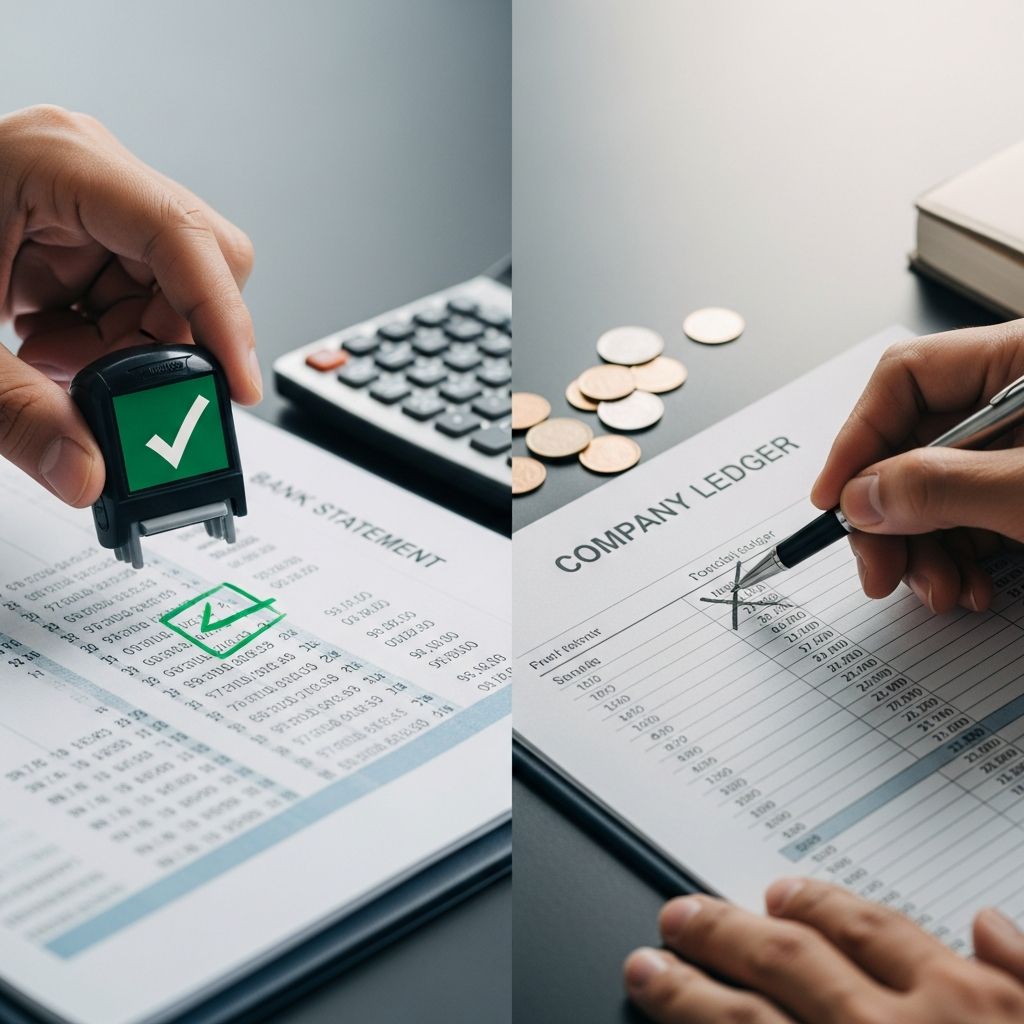
Bank reconciliation is a critical accounting process that compares a company’s internal cash records with the transactions listed on its bank statement. This essential financial control activity ensures that both sets of records agree and accurately reflect the company’s actual cash position. During this process, accountants and business owners investigate any differences between their accounting records (also called the cash book) and the bank’s official statement to identify discrepancies and make necessary adjustments.
The primary purpose of bank reconciliation is to verify that all cash transactions have been properly recorded and that the company’s cash balance is accurate. Without regular reconciliation, discrepancies can accumulate, making it increasingly difficult to identify errors, detect fraud, or maintain reliable financial records. Most companies perform bank reconciliations monthly, though larger organizations with higher transaction volumes may reconcile more frequently, such as weekly or even daily.
Why Bank Reconciliation Matters
Bank reconciliation serves multiple critical functions in financial management and organizational integrity. Understanding why this process matters helps businesses appreciate its value beyond simple compliance.
Accuracy in Financial Reporting
Bank reconciliation ensures that financial statements reflect accurate cash balances and transaction information. This accuracy is fundamental for preparing reliable balance sheets, cash flow statements, and income statements. When financial reports contain errors due to unreconciled discrepancies, they can mislead investors, creditors, and internal stakeholders about the company’s true financial position. By maintaining reconciled accounts, companies provide transparent and trustworthy financial information to all parties who rely on these statements.
Fraud Detection and Prevention
Regular bank reconciliation serves as a powerful tool for detecting unauthorized transactions, forged checks, embezzlement, or fraudulent wire transfers. When accountants carefully review bank statements and compare them to company records, unusual patterns or unexpected entries become visible. Early detection of suspicious activities can prevent significant financial losses and help organizations protect their assets. The reconciliation process creates a documented audit trail showing how transactions were reviewed and verified.
Error Identification and Correction
Both banks and companies occasionally make data entry errors, omit transactions, or record amounts incorrectly. Bank reconciliation identifies these unintentional mistakes through systematic comparison and verification. Correcting these errors promptly ensures the reliability of financial data, strengthens relationships with banking institutions, and maintains the integrity of accounting records. What might seem like minor discrepancies can compound over time if left unaddressed.
Cash Flow Management
Accurate knowledge of available cash is essential for effective business planning and decision-making. Bank reconciliation provides a clear, verified picture of cash balances, allowing management to make informed decisions about expenditures, investments, and strategic initiatives. By understanding precisely what cash is available and when it will be received or disbursed, businesses can better manage working capital and avoid liquidity problems.
Common Reasons for Discrepancies
The ending cash balance on a company’s books rarely matches the ending balance on the bank statement, even for well-organized businesses. Understanding common sources of these differences is essential for effective reconciliation.
Outstanding Checks
Outstanding checks are payments that a company has recorded in its accounting records and issued to vendors or employees, but which have not yet been presented to the bank for payment. These checks reduce the company’s book balance but do not yet appear as deductions on the bank statement. Until the recipient deposits and clears the check, the bank statement will show a higher balance than the company’s records.
Deposits in Transit
Deposits in transit (also called uncleared deposits) are funds that a company has recorded and deposited at the bank, but which have not yet been processed and credited to the account. This commonly occurs with deposits made near the end of the month or deposits made electronically that require processing time. The company’s records show these deposits, increasing the book balance, but the bank statement does not reflect them until they clear.
Bank Fees and Charges
Banks deduct various fees for services such as account maintenance, wire transfers, overdraft protection, or returned checks. These fees typically appear on the bank statement but may not yet be recorded in the company’s accounting books. Once identified during reconciliation, these fees must be recorded as adjustments to the company’s cash balance.
Interest Income
Banks may credit interest earned on account balances directly to the bank statement. Companies often do not immediately record this interest in their books and only discover it during the reconciliation process. Interest income must be added to the company’s cash records and recorded as income.
NSF Checks and Returned Deposits
Nonsufficient funds (NSF) checks are customer checks deposited by the company that were returned unpaid because the customer lacked sufficient funds. These checks create a discrepancy because the company initially recorded them as deposits, increasing the cash balance, but the bank has reversed the transaction. Returned deposits similarly create discrepancies requiring investigation and adjustment.
Recording Errors
Both the company and the bank may make data entry mistakes, transpose numbers, duplicate transactions, or fail to record transactions altogether. Identifying and correcting these errors during reconciliation maintains the accuracy and reliability of financial records.
Step-by-Step Bank Reconciliation Process
Successfully reconciling bank accounts requires a systematic approach. Following a structured process ensures consistency and helps identify discrepancies efficiently.
Step 1: Gather Documentation
Begin by collecting the current bank statement and your company’s accounting records for the same period. Ensure you have all supporting documentation for recent transactions, including deposit receipts, check registers, and any correspondence with the bank regarding special items or adjustments.
Step 2: Compare Opening Balances
Verify that the opening balance shown on the current bank statement matches the ending balance from the previous month’s reconciliation. If these do not match, investigate the discrepancy before proceeding further, as this indicates either an error in the previous reconciliation or a transaction that was not properly recorded.
Step 3: Match Transactions
Systematically compare transactions recorded in your company’s cash ledger with those listed on the bank statement. Begin by matching transaction amounts rather than descriptions, as banks may word transaction descriptions differently than your company records. Create a checklist of all deposits, withdrawals, and other credits or debits to ensure complete coverage. Check off each matching transaction in both records.
Step 4: Identify Discrepancies
Note any transactions appearing in one record but not the other. Categorize discrepancies as outstanding checks, deposits in transit, bank fees, interest income, errors, or other items requiring investigation. Document the amount and reason for each discrepancy.
Step 5: Adjust Balances
Make necessary adjustments to reconcile the two balances. The bank statement balance should be adjusted for outstanding checks and deposits in transit. The company’s book balance should be adjusted for bank fees, interest income, and any errors discovered in the company’s records. Record adjusting journal entries in the accounting system to update the cash account.
Step 6: Verify Final Balances
After making all adjustments, verify that the revised balance in the company’s records matches the adjusted balance on the bank statement. If the balances do not match, re-examine discrepancies and ensure all adjustments have been recorded correctly. Once balances align, the reconciliation is complete.
Bank Reconciliation Statement Format
A bank reconciliation statement is a formal document that presents the reconciliation analysis in a standardized format. This statement serves as an audit trail and provides clear documentation of how discrepancies were identified and resolved.
Typical bank reconciliation statement format:
| Item | Bank Statement | Company Books |
| Ending Balance | $[Amount] | $[Amount] |
| Add: Deposits in Transit | $[Amount] | — |
| Less: Outstanding Checks | $(Amount) | — |
| Add: Interest Income | — | $[Amount] |
| Less: Bank Fees | — | $(Amount) |
| Less: NSF Checks | — | $(Amount) |
| Adjusted Balance | $[Amount] | $[Amount] |
When completed correctly, both columns should show identical adjusted balances, confirming that the reconciliation is accurate.
Modern Bank Reconciliation Methods
Companies today employ various approaches to bank reconciliation, depending on transaction volume, organizational structure, and technological capabilities.
Monthly Reconciliation
The traditional monthly reconciliation occurs once per month after receiving the bank statement. This approach works well for small to medium-sized businesses with moderate transaction volumes and clear monthly closing procedures.
Continuous Reconciliation
Larger companies with high transaction volumes often perform continuous reconciliation, checking transactions daily or weekly. This method involves comparing company records to the bank’s online transaction history at frequent intervals, allowing for quicker identification of discrepancies and reducing the accumulation of unresolved items. Continuous reconciliation supports real-time cash management and faster error detection.
Inter-Company Reconciliation
Organizations with multiple bank accounts across different entities or subsidiaries must reconcile transactions between these various accounts and consolidated company records. This process ensures accurate consolidation of financial information across the entire organization.
Automated Reconciliation Software
Many modern companies use specialized accounting software to automate portions of the bank reconciliation process. These systems can automatically match transactions, flag discrepancies, and generate reconciliation statements. Automation reduces manual work, minimizes errors, and enables real-time updates, though manual review remains essential for identifying unusual items and confirming accuracy.
Best Practices for Effective Bank Reconciliation
Implementing best practices ensures that bank reconciliation remains an effective control activity and provides maximum value to the organization.
- Perform reconciliations promptly: Complete reconciliation within a few days of receiving the bank statement while transactions are fresh in your mind and supporting documentation is readily available.
- Assign responsibility clearly: Designate specific individuals responsible for reconciliation and ensure they understand the importance of accuracy and completeness.
- Maintain detailed documentation: Keep all bank statements, supporting documents, and reconciliation statements organized and accessible for audit purposes.
- Investigate all discrepancies: Do not ignore or defer investigation of unexplained differences; prompt investigation prevents small problems from becoming significant issues.
- Segregate duties: Have different individuals prepare the reconciliation and review it to prevent errors and detect potential fraud.
- Use checklists: Develop standardized checklists to ensure all reconciliation steps are completed consistently each period.
- Review for reasonableness: Ensure that adjusted balances and adjusting entries make sense in the context of business operations.
- Retain supporting documentation: Keep reconciliation statements and supporting documents for several years to support audit procedures and legal compliance.
Frequently Asked Questions
Q: How often should businesses perform bank reconciliation?
A: Most businesses reconcile monthly after receiving their bank statement. However, larger organizations or those with high transaction volumes may reconcile weekly or daily using continuous reconciliation methods. The frequency depends on the company’s size, transaction volume, and risk tolerance.
Q: What is the difference between book balance and bank balance?
A: Book balance is the cash amount shown in the company’s accounting records, while bank balance is the amount shown on the official bank statement. These typically differ due to outstanding checks, deposits in transit, bank fees, and timing differences. Bank reconciliation explains and adjusts for these differences.
Q: What should I do if I find an error during reconciliation?
A: If you discover an error made by your company, record an adjusting journal entry to correct the cash account. If you discover a bank error, contact the bank immediately to report the discrepancy and request correction. Document the error, the date reported, and the bank’s response in your reconciliation file.
Q: Can bank reconciliation help detect fraud?
A: Yes, regular bank reconciliation is an important fraud detection tool. Unusual transactions, unexpected withdrawals, forged checks, or unexplained deposits often become visible during reconciliation. Careful review of reconciliation statements can reveal suspicious patterns requiring further investigation.
Q: What if the bank balance and book balance do not match after reconciliation?
A: Re-examine all discrepancies and ensure all adjusting entries have been recorded correctly. Verify that you have identified all outstanding checks and deposits in transit. If balances still do not match, investigate whether transactions were recorded on different dates or whether duplicate entries exist. Contact your bank if you suspect a banking error.
Q: Is bank reconciliation required for compliance purposes?
A: Yes, bank reconciliation is generally required for compliance with accounting standards and internal control frameworks. Many regulatory requirements and audit procedures specifically require documented evidence of regular bank reconciliation. This is particularly important for highly regulated industries and companies preparing for external audits.
References
- Definition & Example of Bank Reconciliation — Corporate Finance Institute. 2025. https://corporatefinanceinstitute.com/resources/accounting/bank-reconciliation/
- What Is a Bank Reconciliation? A Definition With Examples — NetSuite. 2025. https://www.netsuite.com/portal/resource/articles/accounting/bank-reconciliation.shtml
- What is a Bank Reconciliation? Complete Guide — Sage Advice US. 2025. https://www.sage.com/en-us/blog/what-is-bank-reconciliation/
- What Is Bank Reconciliation? Importance, Template, & Examples — Upflow. 2025. https://upflow.io/blog/business-to-business-payments/bank-reconciliation
- Best Practices for Bank Reconciliations — State Auditor’s Office, Washington. 2023-05. https://sao.wa.gov/sites/default/files/2023-05/Best-Practices-for-Bank-Reconciliations.pdf
Similar Articles








Read full bio of Sneha Tete