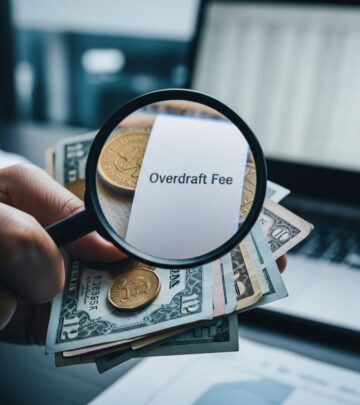
Bank Overdraft Fees: What Consumers Should Know
Understand how overdraft fees work, how banks charge them, and the best strategies you can use to reduce or avoid these costly fees.

Overdraft fees can quietly drain money from your checking account, especially if you live close to the edge of your balance. Understanding how overdrafts work, when fees are charged, and what choices you have with your bank can help you keep more of your own money.
This guide explains overdraft fees in clear language, covers the latest industry and regulatory trends, and offers practical steps you can take today to minimize or avoid these charges.
What Is an Overdraft?
An overdraft happens when a transaction is larger than the money available in your account, but your bank or credit union still pays it. In that case, the institution is effectively advancing you money to cover the shortage and may charge an overdraft fee for doing so.
Common transactions that can cause an overdraft include:
- Debit card purchases at stores or online
- ATM withdrawals or transfers
- Checks that clear when funds are insufficient
- Automatic bill payments (ACH) such as utilities or subscriptions
If the bank decides not to pay the transaction, the item is typically returned unpaid and may trigger a separate non-sufficient funds (NSF) fee, though many banks have reduced or eliminated NSF fees in recent years.
Overdraft vs. Declined or Returned Transactions
When your account does not have enough money to cover a transaction, two main outcomes are possible:
- Overdraft paid: The bank approves and pays the transaction, temporarily pushing your balance below zero, and may charge an overdraft fee.
- Item declined or returned: The bank refuses the transaction or returns the payment, which might incur an NSF fee, although many banks now set that fee at $0.
Some banks give you a grace period or a small buffer before charging a fee. For example, certain accounts waive overdraft fees if your negative balance stays within a small threshold (such as $50) and allow you until the next business day to bring the account back to a positive balance.
Types of Overdraft and NSF Fees
Overdraft-related charges can come in several forms. Knowing the differences helps you evaluate account terms more accurately.
Standard overdraft fees
Standard overdraft fees are charged when the bank pays a transaction that exceeds your available balance. According to recent checking account surveys, the average overdraft fee is around the high twenties per transaction, though many large banks have moved to lower or eliminate these charges.
Non-sufficient funds (NSF) fees
NSF fees apply when the bank declines or returns an item instead of paying it. Many institutions have reduced NSF fees to $0 so customers are not penalized when a transaction is returned unpaid.
Overdraft protection transfer fees
Some banks offer overdraft protection transfers, where money is automatically moved from a linked account (such as savings or a secondary checking account) to cover a shortfall. The bank may charge a separate transfer fee, although several major banks have eliminated these charges as part of broader overdraft reforms.
Daily caps and repeat-fee policies
To limit how much a customer can be charged in a single day, many banks cap the number of overdraft fees they will assess. For example, an institution might restrict overdraft charges to two or three per day and offer a grace period to allow customers time to fix the deficit.
| Type of Fee | When It Applies | Typical Modern Practice |
|---|---|---|
| Overdraft fee | Bank pays transaction that exceeds balance | Average around mid-$20s per item; many banks have cut fees or eliminated them. |
| NSF fee | Bank declines or returns transaction unpaid | Frequently reduced to $0 at many large banks. |
| Overdraft protection transfer fee | Funds moved from linked account to cover shortfall | Often eliminated or set at $0 as part of fee reforms. |
How Much Do Overdraft Fees Cost?
The cost of overdraft fees varies by institution but has historically been substantial. In recent years, the average overdraft fee reported in national surveys has hovered around $27 per transaction, though that figure is declining as more banks adjust their fee structures.
At the same time, total overdraft and NSF fee revenue remains high. Consumer advocates estimate that banks collected over $10 billion annually in recent years from overdraft and related fees, though that number has been trending downward as more institutions reduce or eliminate some charges.
The most important point for consumers is that overdraft fees can compound quickly. A negative balance, several small card purchases, and recurring bills hitting the account on the same day can each trigger a separate fee if your bank does not cap daily charges.
How Overdraft Programs Work
Bank overdraft services are typically marketed as a convenience or safety net. In practice, each bank designs its program a little differently, but most follow a few common patterns.
Courtesy overdraft coverage
Many institutions provide courtesy overdraft coverage, meaning they may choose to pay transactions at their discretion when you do not have enough money in your account. This is not guaranteed; the bank reserves the right to pay or decline a transaction based on its internal policies.
Overdraft protection via linked accounts or credit
Some banks allow you to link another account or line of credit to your checking account. Common options include:
- Transfers from a linked savings account
- Transfers from a secondary checking account
- Advances from an overdraft line of credit or credit card
These options can be less expensive than paying standard overdraft fees, although interest or transfer fees may still apply.
Grace periods and small negative balance cushions
To help customers avoid fees, some banks now provide:
- A small negative balance cushion (for example, not charging a fee unless your account is more than $50 overdrawn)
- A 24-hour or next-day grace period to bring your balance back to positive before fees are assessed
These features can be especially helpful if you are paid regularly and can quickly cover a brief shortfall.
Your Right to Opt In or Opt Out
Under federal regulations, banks cannot charge overdraft fees on most ATM and one-time debit card transactions unless you explicitly opt in to the overdraft program for those transactions. This rule, originally adopted by the Federal Reserve and now administered by the Consumer Financial Protection Bureau (CFPB), requires banks to:
- Give you a clear disclosure describing the overdraft service and the fees
- Obtain your affirmative consent (opt in) before charging overdraft fees on covered transactions
- Allow you to opt out at any time at no cost
This means you can choose whether your bank will pay everyday debit card purchases and ATM withdrawals into overdraft and charge a fee, or simply decline those transactions when funds are insufficient.
Recent Changes and Regulatory Trends
Overdraft fees have attracted substantial attention from regulators and lawmakers. Several developments are reshaping how these fees work, particularly at large institutions.
CFPB actions and overdraft rulemaking
The Consumer Financial Protection Bureau has characterized certain overdraft practices as “exploitative junk fees” and has proposed and finalized regulations to limit these charges at very large banks. Under a final rule published at the end of 2024, covered large financial institutions generally must:
- Either limit overdraft fees to a benchmark fee (set at $5) or to a calculated breakeven fee based on their actual costs and losses
- Or treat overdraft services that exceed those thresholds as a form of credit subject to Truth in Lending Act (TILA) protections and Regulation Z disclosures
When overdraft fees exceed the allowed amounts, the bank must treat the product as “overdraft credit,” which requires a separate credit account, disclosures of interest and fees, and compliance with consumer credit rules.
State-level reforms
Some states have begun to restrict overdraft and NSF fees for certain institutions. For example, a California law effective in 2026 prohibits state-chartered credit unions from charging overdraft or nonsufficient funds fees on some consumer accounts, signaling a broader trend toward tighter oversight at the state level.
Industry changes at major banks
In addition to regulatory pressure, market competition has pushed many large institutions to reduce or eliminate overdraft fees. Several major banks have:
- Cut overdraft fees by more than half
- Eliminated NSF fees entirely
- Removed overdraft protection transfer fees
- Introduced low- or no-overdraft-fee account options
Even with these changes, overdraft-related income remains significant at some banks, which is why consumer advocates and regulators continue to focus on this area.
How to Reduce or Avoid Overdraft Fees
While reforms are helping, the most reliable savings come from how you manage your accounts. Consider the following strategies to reduce or avoid overdraft fees:
1. Use low- or no-overdraft-fee accounts
Many banks and credit unions now offer accounts designed to limit overdraft charges. Features may include:
- No overdraft fees on debit card purchases and ATM withdrawals
- Transactions simply declined when funds are insufficient
- No NSF fees on returned items
- Monthly fees that are low or can be waived with direct deposit
2. Set up alerts and monitor your balance
Most institutions offer free text or email alerts that notify you when your balance falls below a certain amount or when large transactions post. Combining alerts with regular mobile banking checks can prevent many overdrafts.
3. Link a backup account or line of credit
Linking a savings account or line of credit to your checking account can provide a cheaper way to cover shortfalls. Be sure to compare:
- Transfer fees (if any)
- Interest rates on credit lines
- Daily or monthly limits on transfers
4. Take advantage of grace periods and buffers
If your bank offers a grace period or a small negative balance cushion, learn exactly how it works. For example, some institutions do not charge overdraft fees unless your account is more than a set amount overdrawn (such as $50) and give you until the next business day to fix the balance.
5. Reorder automatic payments and due dates
When possible, schedule automatic payments and subscription charges for just after your paycheck clears. This reduces the likelihood of a shortfall in the days before payday.
6. Consider opting out of overdraft on cards
If you would rather have a transaction declined than pay a large fee, you can opt out of overdraft coverage for everyday debit card and ATM transactions. This can be a powerful way to stop unexpected charges.
Questions to Ask Your Bank About Overdrafts
To choose the best account and manage it effectively, ask your bank or credit union:
- What is your overdraft fee, and how many times per day can it be charged?
- Do you charge an NSF fee if a transaction is returned, and how much is it?
- Do you offer no-fee or limited-fee accounts?
- Can I link another account or line of credit for overdraft protection, and what does it cost?
- Do you provide a grace period or small negative balance cushion before charging a fee?
- How do I opt in or out of overdraft coverage for card transactions?
Frequently Asked Questions (FAQs)
Q: Is it better to have overdraft protection or not?
A: It depends on your preferences and financial situation. Overdraft protection can prevent declined transactions or returned payments, which may be important for bills such as rent or utilities. However, it can also lead to frequent fees if you regularly spend more than your available balance. Some people prefer to opt out for everyday card transactions so purchases are simply declined instead of triggering a fee.
Q: Do all banks charge overdraft fees?
A: No. A growing number of banks and credit unions have reduced overdraft fees substantially, capped daily fees, or eliminated them entirely on certain accounts. Others still charge traditional overdraft fees but may offer low-cost or no-overdraft accounts alongside their standard products.
Q: Can I get an overdraft fee refunded?
A: Many institutions may waive one or more overdraft fees as a courtesy, especially if you rarely overdraw your account. It is not guaranteed, but calling your bank promptly, explaining what happened, and asking politely for a one-time courtesy refund often leads to a positive outcome.
Q: How do overdraft rules affect debit card and ATM transactions?
A: Banks must obtain your explicit consent before charging overdraft fees on most ATM and one-time debit card transactions. If you do not opt in, those transactions will generally be declined when funds are insufficient instead of being approved with a fee.
Q: Will new regulations eliminate overdraft fees?
A: Current and proposed rules do not completely eliminate overdraft fees but aim to limit them, especially at large banks. Under the CFPB’s overdraft rule for very large institutions, banks must either keep fees at or below a benchmark amount (such as $5) or treat overdrafts as a form of credit with full consumer protections. At the same time, competitive pressure is pushing many institutions to reduce or eliminate some overdraft charges voluntarily.
References
- Overdraft Lending: Very Large Financial Institutions — Consumer Financial Protection Bureau / Federal Register. 2024-12-30. https://www.federalregister.gov/documents/2024/12/30/2024-29699/overdraft-lending-very-large-financial-institutions
- Banks That Have Cut or Eliminated Overdraft Fees — Bankrate. 2025-01-02 (approx., article updated 2025). https://www.bankrate.com/banking/checking/banks-eliminated-overdraft-fees/
- Overdrafts and Returns Explained — Huntington Bank. 2024-05-01 (last updated, approx.). https://www.huntington.com/Personal/checking/overdraft-fees-explained
- Myths vs. Facts – CFPB’s Overdraft Final Rule — American Bankers Association. 2025-01-08. https://www.aba.com/advocacy/policy-analysis/myths-vs-facts-cfpbs-overdraft-final-rule
- Congress Repeals CFPB’s Overdraft Rule — Congressional Research Service, IN12513. 2025-03-04. https://www.congress.gov/crs-product/IN12513
- Overdraft fee income is on the rise at these big banks — American Banker. 2025-10-21. https://www.americanbanker.com/news/overdraft-fee-income-is-on-the-rise-at-these-big-banks
- New Consumer Law Changes Taking Effect in 2026 — National Consumer Law Center. 2025-11-15. https://library.nclc.org/article/new-consumer-law-changes-taking-effect-2026
Similar Articles








Read full bio of Sneha Tete