Bank Loans vs Online Lenders: Best Choice?
Discover key differences in rates, speed, eligibility, and convenience to decide between traditional banks and modern online lenders for your next personal loan.
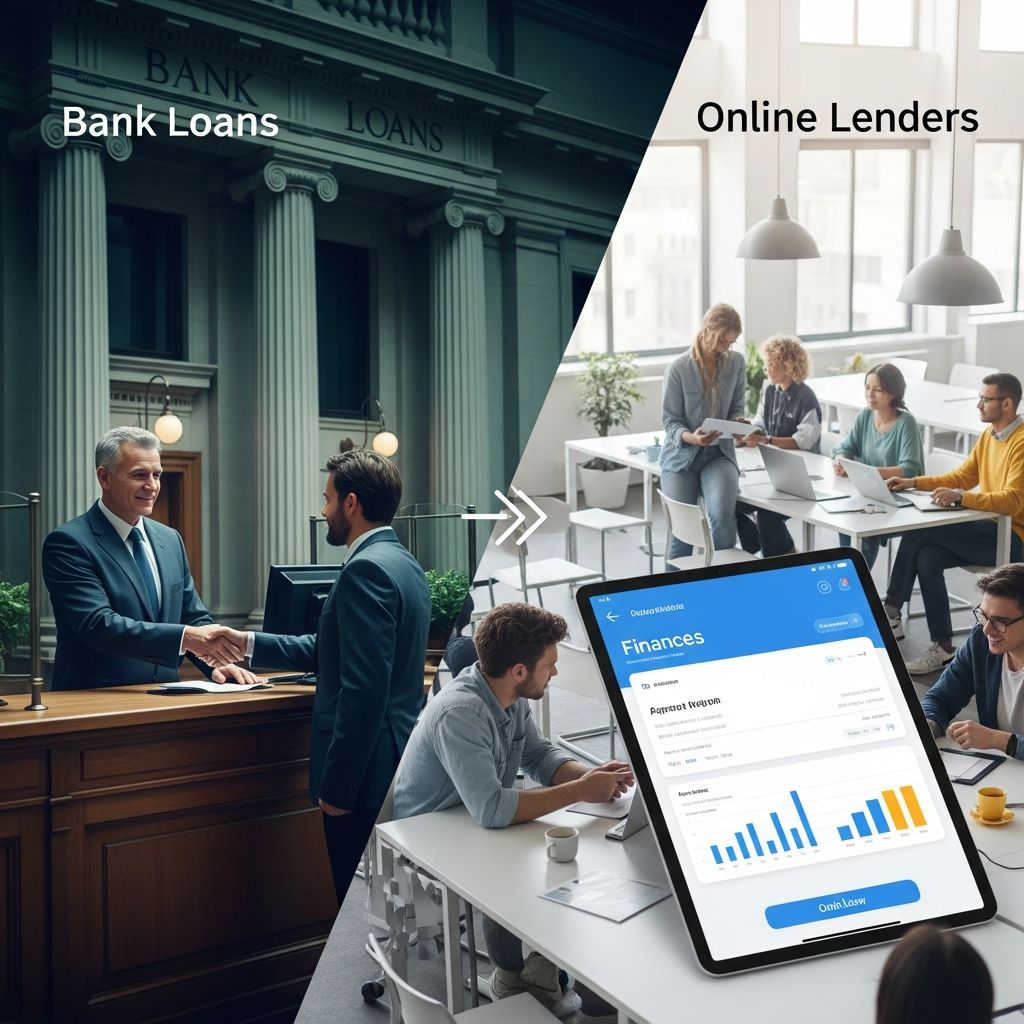
Choosing between a
personal loan
from a traditional bank or an online lender depends on your financial profile, urgency, and preferences for service. Banks often provide lower rates for qualified borrowers, while online lenders excel in speed and accessibility.Understanding Personal Loan Basics
Personal loans offer unsecured funding for expenses like debt consolidation, home improvements, or emergencies. Unlike secured loans, they rely on your creditworthiness without collateral. Average rates range from 6% to 36% APR, influenced by credit scores above 670 typically securing better terms.
Banks and credit unions operate physical branches with established reputations, whereas online lenders use digital platforms for efficiency. Both types underwent regulatory oversight, but online options may involve fintech marketplaces connecting borrowers to partner banks.
Key Comparison Factors
Evaluate lenders based on rates, approval timelines, eligibility, fees, and support. The table below summarizes core differences:
| Factor | Banks/Credit Unions | Online Lenders |
|---|---|---|
| Interest Rates | Lower (6-12% for excellent credit) | Higher (10-36%, flexible for fair credit) |
| Application Time | Days to weeks, may require branch visit | Minutes to hours, fully online |
| Funding Speed | 1-5 business days | Same day or next day possible |
| Credit Requirements | Good credit (670+), relationship perks | Accepts fair/poor credit options |
| Customer Service | In-person support | 24/7 digital/chat |
Advantages of Traditional Bank Loans
- Competitive Rates: Banks leverage low funding costs to offer APRs as low as 6% for customers with strong credit histories and existing relationships.
- Personalized Guidance: Meet loan officers face-to-face for tailored advice, ideal for first-time borrowers or complex needs.
- Relationship Benefits: Loyal customers may access rate discounts, higher limits, or waived fees. For instance, pre-existing account data simplifies verification.
- Security and Regulation: FDIC-insured institutions provide robust fraud protection and borrower rights under federal laws.
- Product Bundling: Combine with checking, savings, or mortgages for streamlined finances.
These perks suit those valuing trust and integration over speed. However, stringent underwriting means denials for subprime profiles.
Benefits of Online Lender Personal Loans
- Rapid Processing: Applications take under 10 minutes, with approvals in minutes and funds deposited same-day via ACH.
- Broad Accessibility: No branch visits; apply anytime from anywhere, perfect for rural residents or busy professionals.
- Pre-Qualification Tools: Soft credit checks let you compare rates from multiple lenders without score impact.
- Inclusive Eligibility: Many specialize in fair credit (580-669), offering second-chance financing unavailable at banks.
- Transparent Comparisons: Aggregator sites display offers side-by-side, aiding informed decisions.
Online platforms prioritize convenience, though higher rates and digital-only interactions may deter some.
Potential Drawbacks to Consider
Banks’ processes demand extensive documentation and patience, often requiring in-person signatures for new customers. Delays frustrate urgent needs.
Online lenders counter with agility but charge premiums: average APRs exceed banks by 5-10 points for similar profiles. Hidden fees like origination (1-8%) add costs, and scam risks persist despite regulation—verify licensing via state registries.
Interest Rates and Costs Breakdown
Prime borrowers (740+ FICO) snag bank rates under 10%, per Federal Reserve data on consumer lending. Online alternatives average 12-15% but cap at 36% legally.
| Credit Score | Bank APR Range | Online APR Range |
|---|---|---|
| Excellent (740+) | 6-9% | 7-11% |
| Good (670-739) | 9-13% | 11-18% |
| Fair (580-669) | 14-20% or denied | 18-30% |
Factor in fees: Banks minimize these for insiders; online lenders apply origination charges upfront, effectively raising APRs.
Application Processes Compared
Bank journeys start online but pivot to branches for verification, income proof, and ID checks—totaling 3-7 days.
Online flows upload docs digitally: pull credit reports, verify employment via paystubs, and e-sign agreements. AI streamlines decisions.
- Bank: Relationship check → Documents → Interview → Approval.
- Online: Prequalify → Apply → Auto-review → Fund.
Eligibility and Qualification Insights
Banks prioritize banking history alongside credit: steady deposits boost odds. Minimum scores hover at 660-680.
Online lenders focus on debt-to-income (under 40%) and recent payment behavior, accommodating thinner files or past issues.
Funding Speed and Repayment Flexibility
Online wins: 70% of applicants receive funds next business day. Banks lag due to manual reviews.
Repayment: Both offer 24-84 month terms, autopay discounts (0.25-0.50%). Banks permit in-branch payments; online mandates electronic.
When to Choose Each Option
- Opt for Banks If: Excellent credit, existing customer, prefer guidance, lowest rates prioritized.
- Choose Online If: Urgent funds, fair credit, value convenience, shopping multiple offers.
- Hybrid Tip: Many banks now match online speeds; test prequals everywhere.
Steps to Secure the Best Personal Loan
- Check FICO score via AnnualCreditReport.com.
- Prequalify with 3-5 lenders (2 banks, 3 online).
- Compare APR, fees, terms using calculators.
- Read fine print for prepayment penalties.
- Apply to top pick; avoid multiple hard pulls.
Aim for loans under 36% DTI post-approval.
Frequently Asked Questions (FAQs)
Are online personal loans safe?
Yes, if from licensed lenders checked via CFPB or state sites. Use HTTPS sites and monitor statements.
Do banks offer better rates than online lenders?
Often yes for top-tier credit, but shop both.
How fast can I get loan funds online?
Many within 24 hours post-approval.
Does applying hurt my credit?
Prequals no; formal apps ding 5 points temporarily.
Can I get a loan with bad credit?
Online yes, at higher rates; build credit first.
Final Tips for Smart Borrowing
Prioritize needs over wants, borrow minimally, and repay early if no penalties. Tools like NerdWallet or bank simulators aid choices. In 2026, digital banks blur lines, offering best of both.
References
- Banks vs. Online Lenders— How do they compare? — Americas Loans. 2023. https://www.americashloans.net/blog/2023/banks-vs-online-lenders/
- Applying for a Personal Loan Online vs. In Person — Discover. 2025-06-23. https://www.discover.com/personal-loans/resources/learn-about-personal-loans/applying-for-a-personal-loan-online-versus-a-physical-branch/
- Should You Get a Personal Loan With a Bank or Online Lender? — Experian. N/A. https://www.experian.com/blogs/ask-experian/should-you-get-personal-loan-from-bank-or-online-lender/
- Bank Loans vs. Online Loans: Which is the Better Choice for You? — Moneyfellows. N/A. https://moneyfellows.com/en-us/3elmelgeib-home/bank-loans-vs-online-loans-which-is-the-better-choice-for-you/
- Should You Apply for a Loan Online vs. In Person? How to Choose — NerdWallet. N/A. https://www.nerdwallet.com/personal-loans/learn/online-loan-or-bank-loan
- Banks vs. Online Lenders: Which Option Should Borrowers Choose? — MyFICO. N/A. https://www.myfico.com/credit-education/blog/banks-vs-online-lenders
Similar Articles








Read full bio of medha deb