Bank Draft: Definition, How It Works, and Uses
Understand bank drafts: secure payment instruments guaranteed by financial institutions for large transactions.
What Is a Bank Draft?
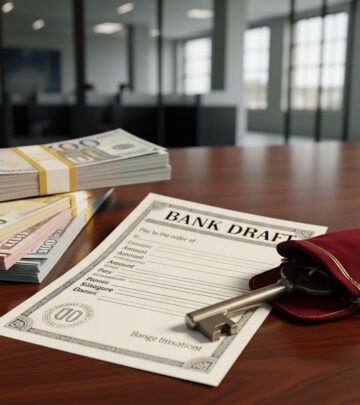
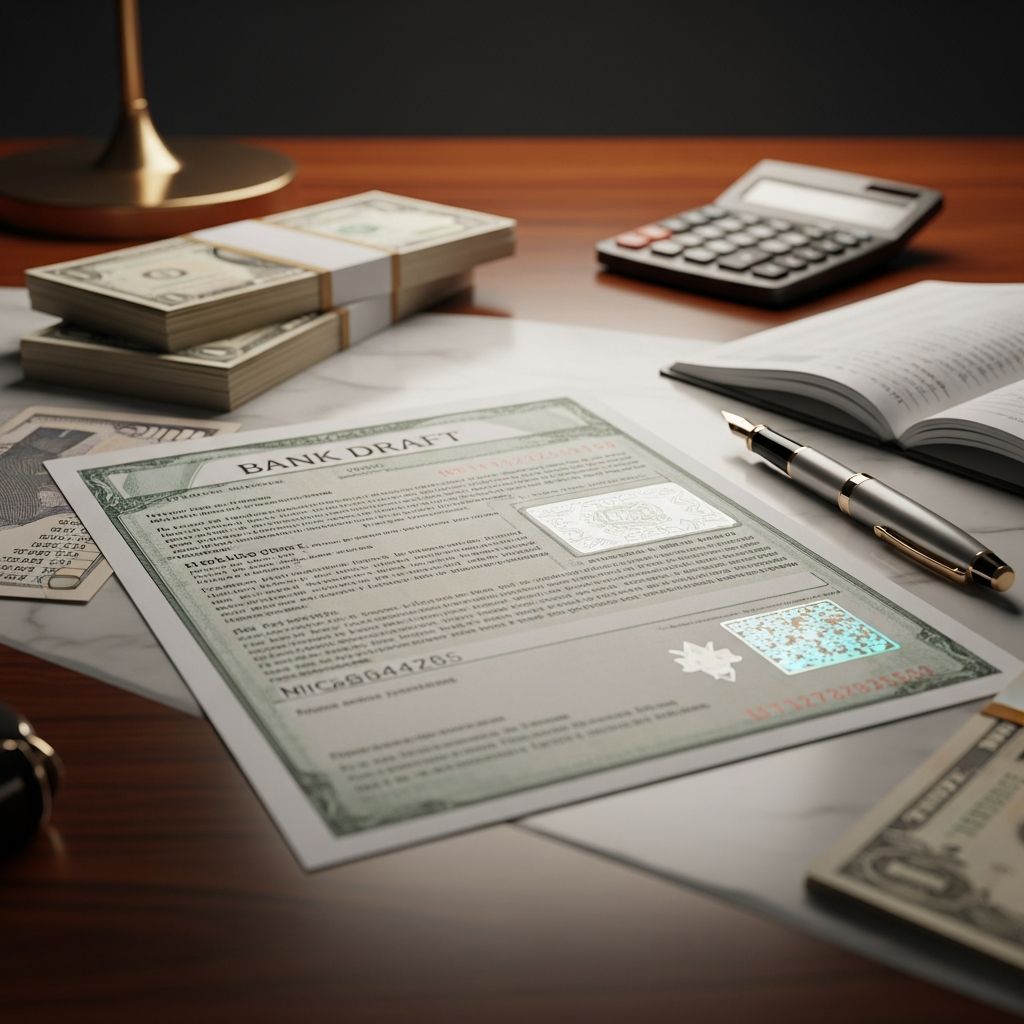
A bank draft, also known as a banker’s draft, bank check, or teller’s check, is a payment instrument issued by a financial institution that guarantees funds are available for a specific transaction. Unlike a personal check, which could potentially bounce due to insufficient funds, a bank draft carries the full backing and guarantee of the issuing bank. This makes it a secure and reliable method for making payments, particularly for large transactions where recipients need assurance that funds will be available.
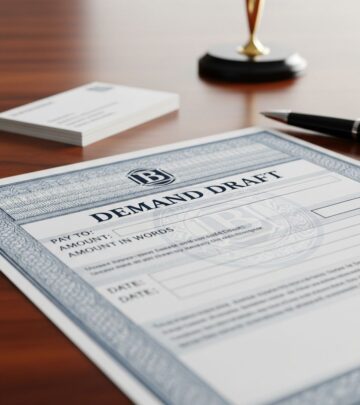
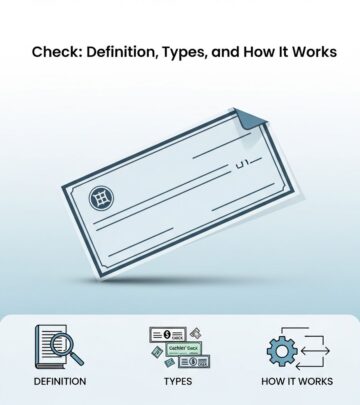
A bank draft is essentially a paper document that resembles a traditional check in appearance. However, the critical difference lies in the guarantee of payment. When a bank issues a draft, it withdraws the specified funds from the payer’s account and holds them in reserve, ensuring that the payee receives the guaranteed payment regardless of the payer’s account status. The draft is typically made out to the specific person or entity receiving the payment and includes identifying information such as the payee’s name, the payment amount, a serial number, watermarks, and sometimes micro-encoding for security purposes.
How Bank Drafts Work
Understanding the mechanics of a bank draft helps clarify why they are considered a secure payment method. The process involves several distinct steps that ensure both the payer and payee are protected.
Step 1: Request and Verification
The process begins when an individual or business requests a bank draft from their financial institution. This request can be made at a bank branch or through other authorized channels. Upon receiving the request, the bank conducts a verification process to confirm that the requesting party has sufficient funds in their account to cover the requested draft amount. This verification is essential to the bank’s ability to guarantee the funds.
Step 2: Fund Withdrawal and Reserve
Once the bank confirms that adequate funds are available, it withdraws the specified amount from the payer’s account. Rather than immediately transferring these funds to the payee, the bank deposits them into its own reserve account. These funds remain segregated and protected until the draft is presented for payment by the payee. This reserve mechanism is what allows the bank to guarantee the availability of funds.
Step 3: Draft Issuance
The bank then creates and issues the bank draft as a formal document. This document contains the payee’s name, the payment amount, and other security features. Importantly, unlike a personal check, the bank draft does not include the payer’s account number. Instead, it carries the bank’s guarantee and identifying information. The payer is responsible for delivering the draft to the intended payee.
Step 4: Presentation and Deposit
When the payee receives the bank draft, they can deposit it at any financial institution, similar to how a personal check would be deposited. The payee can deposit the draft at a bank, at an ATM, or through their financial institution’s mobile app. Before the funds are credited to the payee’s account, the receiving bank verifies the payee’s identity against the name on the draft to prevent fraudulent deposit.
Step 5: Fund Transfer and Availability
After identity verification, the funds from the reserve account are deposited into the payee’s account. The time required for funds to become available typically ranges from one to four business days, depending on the financial institutions involved and their processing procedures.
Bank Draft vs. Other Payment Methods
Bank drafts are often compared to other payment instruments because they serve similar purposes but have important distinctions.
| Payment Method | Issued By | Fund Guarantee | Maximum Amount | Best Use |
|---|---|---|---|---|
| Bank Draft | Financial Institution | Guaranteed by Bank | No Limit | Large Purchases, International Payments |
| Personal Check | Account Holder | Not Guaranteed | Available Funds | Routine Payments, Bills |
| Cashier’s Check | Financial Institution | Guaranteed by Bank | No Limit | Large Purchases, Real Estate |
| Money Order | Post Office or Retailer | Guaranteed | Up to $999.99 | Small to Medium Payments |
Bank Draft vs. Personal Check
A personal check originates directly from the account holder and represents a promise to pay. However, the recipient has no way of verifying whether sufficient funds exist in the payer’s account until the check is processed. If insufficient funds are available, the check bounces, and the transaction fails. In contrast, a bank draft is backed by the financial institution itself, which has already verified and reserved the funds, making it a far more reliable payment method.
Bank Draft vs. Cashier’s Check
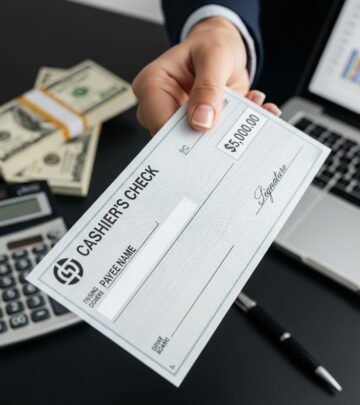
Bank drafts and cashier’s checks serve similar purposes and both carry bank guarantees. The primary difference lies in who is responsible for payment. With a bank draft, the bank issues the draft on behalf of the payer, and the payer’s name appears on the document. With a cashier’s check, the bank is the payer, and the bank’s name appears on the check. Despite this distinction, both instruments provide recipients with the same level of assurance regarding fund availability.
Bank Draft vs. Money Order
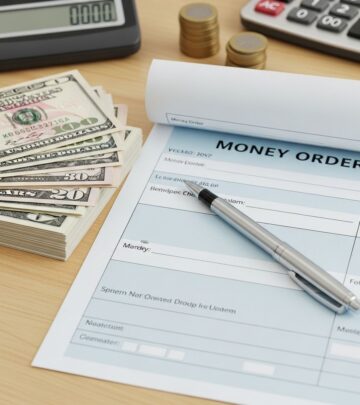
Money orders are limited to amounts up to $999.99 and are typically obtained from post offices or retail locations. Bank drafts have no maximum amount limit, making them more suitable for large transactions. Additionally, bank drafts can be issued in foreign currencies and do not require the recipient’s banking information for processing.
Advantages of Bank Drafts
Bank drafts offer numerous benefits that make them an attractive payment option for various situations:
Security and Guarantee
The most significant advantage of a bank draft is the absolute guarantee of payment. Unlike personal checks, which may bounce, bank drafts are backed by the financial institution’s reserve account. Recipients can be confident that the funds are available and will be deposited as promised. This security feature is particularly valuable in high-value transactions where payment reliability is critical.
No Maximum Limit
Bank drafts have no upper limit on the amount that can be transferred, making them ideal for large purchases such as real estate, vehicles, or significant business transactions. Other payment methods like money orders have restrictive maximum amounts that make them impractical for substantial payments.
No Payee Information Required
Unlike electronic transfers, bank drafts do not require the recipient’s banking information, account numbers, or routing numbers. This reduces the risk of identity theft or fraudulent access to the payee’s account and provides greater privacy for the recipient.
Convenience for Large Sums
Bank drafts offer a more convenient and safer method for transferring large amounts of cash than physically withdrawing and carrying significant sums of money. They eliminate the security risks associated with transporting large quantities of currency.
International Flexibility
Bank drafts can be issued in most major currencies and are commonly used for cross-border purchases and international investments. This versatility makes them valuable for global business transactions and international real estate purchases.
Widely Accepted
Bank drafts are accepted by financial institutions worldwide and can be deposited at virtually any bank, making them highly portable and universally recognized as legitimate payment instruments.
Disadvantages of Bank Drafts
Despite their advantages, bank drafts come with certain limitations and risks that users should understand:
Non-Cancellable Nature
Once a bank draft is delivered to the payee, it cannot be canceled. The transaction is considered complete from the payer’s perspective, even if circumstances change or the payee fails to deposit it immediately. This irreversibility makes it critical to ensure accuracy before obtaining and delivering a draft.
Fraud and Loss Risk
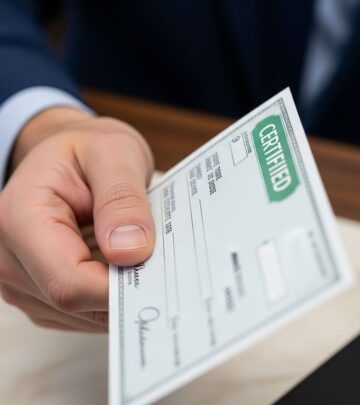
If a bank draft is lost, stolen, or altered, and fraudulent parties cash it, the bank typically bears no responsibility for replacing the lost funds. In such cases, the payer may suffer significant financial loss, particularly problematic since bank drafts are generally used for large transactions. Unlike certified checks with specific protections, bank drafts offer limited recourse in fraud scenarios.
Physical Document Vulnerability
Because bank drafts are physical documents, they are subject to risks similar to cash, including loss, damage, or theft. They require secure handling and should be deposited promptly to minimize exposure to these risks.
Processing Time
Although faster than some alternatives, bank drafts still require one to four business days for funds to become available after deposit. This processing time delay may be inconvenient for situations requiring immediate access to funds.
Fees
Most financial institutions charge a fee for issuing bank drafts, typically ranging from minimal amounts to several dollars per draft. However, many banking accounts include a certain number of free drafts per year for frequent users.
Common Uses for Bank Drafts
Bank drafts are particularly well-suited for specific transactions and circumstances:
Real Estate Transactions
Bank drafts are commonly used as earnest money deposits or down payments in real estate purchases, providing sellers with assurance of the buyer’s financial commitment and ability to complete the transaction.
Vehicle Purchases
When purchasing vehicles, particularly high-value automobiles, bank drafts provide dealers with guaranteed payment, reducing their risk in the transaction.
Business-to-Business Payments
Large business transactions and payments between companies often utilize bank drafts to ensure payment reliability and reduce credit risk.
International Transactions
For cross-border payments and international investments, bank drafts provide a secure method that overcomes currency and banking system differences.
How to Obtain a Bank Draft
Acquiring a bank draft is a straightforward process. Simply visit your financial institution—either in person at a branch or through online banking—and request a bank draft. A bank representative or teller will verify your account details and confirm that you have sufficient funds to cover the requested amount. The bank will then withdraw the funds and issue you the draft, which you can take with you or have mailed directly to the payee in some cases.
What If You Lose Your Bank Draft?
If you lose a bank draft before delivering it to the payee, contact your financial institution immediately. The bank can verify whether the draft has been deposited and, if not, may issue a replacement. However, you will typically remain responsible for the original draft, meaning if it is later found and deposited by someone else, you bear the financial loss. Most institutions require customers to sign an indemnity agreement assuming this responsibility when a replacement is issued.
Protecting Against Bank Draft Fraud
To safeguard against fraud and loss, recipients of bank drafts should deposit them into their accounts as quickly as possible. Prompt deposit minimizes the window during which the document could be lost or stolen. Additionally, verify that all information on the draft is accurate before accepting it, and keep records of the draft number and amount for your records.
Frequently Asked Questions
Q: Do bank drafts expire?
A: Most bank drafts do not have expiration dates and remain valid indefinitely. However, some financial institutions may decline to honor drafts that are several months old. It is best to confirm your bank’s policy and deposit drafts promptly.
Q: Can bank drafts be used internationally?
A: Yes, bank drafts can be issued in various currencies and are commonly used for international transactions. However, the receiving financial institution must be able to process foreign currency deposits.
Q: How long does it take for a bank draft to clear?
A: Bank drafts typically clear within one to four business days after being deposited, depending on the financial institutions and processing systems involved.
Q: Are bank drafts safer than personal checks?
A: Yes, bank drafts are significantly safer than personal checks because they are guaranteed by the financial institution. Personal checks can bounce if insufficient funds are available, while bank drafts cannot.
Q: What is the maximum amount for a bank draft?
A: Bank drafts have no maximum amount limit, making them suitable for transactions of any size, unlike money orders which are limited to approximately $1,000.
Q: Do I need the payee’s account information for a bank draft?
A: No, bank drafts do not require the payee’s account information, routing number, or banking details. You only need the payee’s name.
References
- Bank Draft – Overview, How It Works, Advantages, & Disadvantages — Corporate Finance Institute. 2025. https://corporatefinanceinstitute.com/resources/wealth-management/bank-draft/
- What is a bank draft? — National Bank of Canada. 2025. https://www.nbc.ca/personal/advice/banking/what-is-a-bank-draft.html
- What is a Bank Draft and How Does It Work? — Bill.com. 2025. https://www.bill.com/learning/bank-draft
- Federal Deposit Insurance Corporation (FDIC) Protection — U.S. Federal Deposit Insurance Corporation. 2025. https://www.fdic.gov/
- Bank Draft: The Key to Effective and Reliable Business Transactions — Zil Money. 2025. https://zilmoney.com/bank-draft-the-key-to-effective-and-reliable-business-transactions/
Similar Articles








Read full bio of medha deb